SUBSCRIBE TO OUR FREE NEWSLETTER
Daily news & progressive opinion—funded by the people, not the corporations—delivered straight to your inbox.
5
#000000
#FFFFFF
To donate by check, phone, or other method, see our More Ways to Give page.
Daily news & progressive opinion—funded by the people, not the corporations—delivered straight to your inbox.
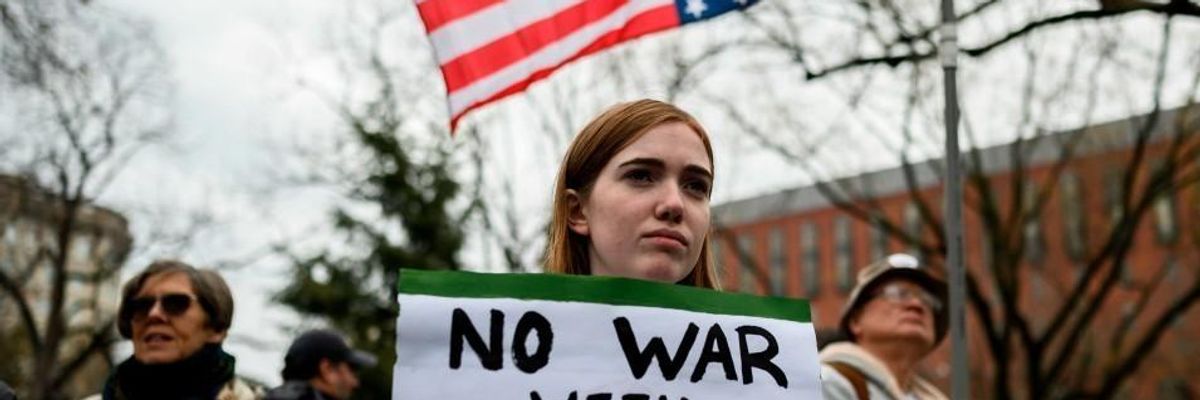
Progressive group Win Without War tweeted Monday that "the Trump administration's maximum pressure against Iran has been a maximum failure." (Photo: Andrew Caballero-Reynolds/AFP/via Getty Images)
Rep. Ro Khanna on Monday called for strengthened diplomacy to "prevent catastrophic war" with Iran amid swirling fears the Trump administration is recklessly sabotaging the Biden White House's prospects for such diplomatic efforts.
The post from Khanna (D-Calif.) tweet was shared by Win Without War, which earlier on Monday sounded a similar note as Sen. Chris Murphy.
"A Monday morning reminder that the Trump administration's maximum pressure against Iran has been a maximum failure," the group tweeted.
The lawmaker's tweet came in the wake of the Friday assassination of top Iranian nuclear scientist Mohsen Fakhrizadeh as he traveled by car east of Tehran. Questions remain about who ordered and carried out the killing. Iran has accused Israel of being behind the murder.
It is unclear if the U.S. was involved; adding to suspicions it was are President Donald Trump's Friday share of a tweet describing the killing as a "major psychological and professional blow" to Iran; reports of secret meeting just over a week ago between Israeli Prime Minister Benjamin Netanyahu, Saudi Crown Prince Mohammed bin Salman, and Secretary of State Mike Pompeo; and the Trump administration's continued escalation of tensions between Iran and the U.S. including through crippling sanctions.
Among the foreign policy analysts seeing the killing as an effort to thwart diplomacy, including hopes for a revived nuclear deal--the Joint Comprehensive Plan of Action--is Iranian American journalist and host of "The Iran Podcast" Negar Mortazavi.
Speaking to Democracy Now! Monday, Mortazavi called the assassination "a political move to first try to provoke Iran into a violent retaliation and basically pull Iran into a wider military conflict with the United States and then also complicate future negotiations between Tehran and Washington when President-elect Biden enters office."
"I think the Biden administration should prioritize returning to diplomacy, to the nuclear deal and make it fast and clean, to then continue follow-on negotiations beyond the JCPOA," she said.
Suggestions the Trump White House is hampering future diplomacy for Biden preceded the scientist's death.
Assal Rad, Senior Research Fellow with the National Iranian American Council (NIAC), wrote at Responsible Statecraft last week: "That it is difficult to even ascertain what the goal of this administration's Iran policy was, or is, exemplifies the incoherence of Trump's whole presidency. Now, in their waning days, Pompeo has promised even more sanctions, using every tool at his disposal to make it more difficult for a future Biden administration to return to diplomacy, despite the fact that the majority of Americans have long favored diplomatic solutions with Iran."
The situation has drawn the eyes of the European Council on Foreign Relations, which warned Monday that "[a]ny escalation in advance of Biden's inauguration would greatly complicate diplomatic efforts." A joint statement from six of its members added:
It is critical for the stability of the Middle East that the United States and Iran urgently cool tensions and restore diplomatic engagement on a range of issues. This should start with rehabilitating the nuclear deal, which is a critical global non-proliferation agreement, and move towards the wider set of issues fueling regional instability that is so detrimental to European interests.
With European support, a Biden administration can take advantage of the positive signaling from the Rouhani government--in its final eight months left in office--welcoming Biden's stated aim of returning to the JCPOA and readiness to 'walk the path of diplomacy' with Iran.
Sen. Bernie Sanders (I-Vt.) made a similar plea for diplomacy over the weekend.
"The assassination of Mohsen Fakhrizadeh was reckless, provocative, and illegal," Sanders tweeted Saturday. "As a new administration takes power, it was clearly intended to undermine U.S.-Iran diplomacy. We must not allow that to happen. Diplomacy, not murder, is the best path forward."
Dear Common Dreams reader, It’s been nearly 30 years since I co-founded Common Dreams with my late wife, Lina Newhouser. We had the radical notion that journalism should serve the public good, not corporate profits. It was clear to us from the outset what it would take to build such a project. No paid advertisements. No corporate sponsors. No millionaire publisher telling us what to think or do. Many people said we wouldn't last a year, but we proved those doubters wrong. Together with a tremendous team of journalists and dedicated staff, we built an independent media outlet free from the constraints of profits and corporate control. Our mission has always been simple: To inform. To inspire. To ignite change for the common good. Building Common Dreams was not easy. Our survival was never guaranteed. When you take on the most powerful forces—Wall Street greed, fossil fuel industry destruction, Big Tech lobbyists, and uber-rich oligarchs who have spent billions upon billions rigging the economy and democracy in their favor—the only bulwark you have is supporters who believe in your work. But here’s the urgent message from me today. It's never been this bad out there. And it's never been this hard to keep us going. At the very moment Common Dreams is most needed, the threats we face are intensifying. We need your support now more than ever. We don't accept corporate advertising and never will. We don't have a paywall because we don't think people should be blocked from critical news based on their ability to pay. Everything we do is funded by the donations of readers like you. When everyone does the little they can afford, we are strong. But if that support retreats or dries up, so do we. Will you donate now to make sure Common Dreams not only survives but thrives? —Craig Brown, Co-founder |
Rep. Ro Khanna on Monday called for strengthened diplomacy to "prevent catastrophic war" with Iran amid swirling fears the Trump administration is recklessly sabotaging the Biden White House's prospects for such diplomatic efforts.
The post from Khanna (D-Calif.) tweet was shared by Win Without War, which earlier on Monday sounded a similar note as Sen. Chris Murphy.
"A Monday morning reminder that the Trump administration's maximum pressure against Iran has been a maximum failure," the group tweeted.
The lawmaker's tweet came in the wake of the Friday assassination of top Iranian nuclear scientist Mohsen Fakhrizadeh as he traveled by car east of Tehran. Questions remain about who ordered and carried out the killing. Iran has accused Israel of being behind the murder.
It is unclear if the U.S. was involved; adding to suspicions it was are President Donald Trump's Friday share of a tweet describing the killing as a "major psychological and professional blow" to Iran; reports of secret meeting just over a week ago between Israeli Prime Minister Benjamin Netanyahu, Saudi Crown Prince Mohammed bin Salman, and Secretary of State Mike Pompeo; and the Trump administration's continued escalation of tensions between Iran and the U.S. including through crippling sanctions.
Among the foreign policy analysts seeing the killing as an effort to thwart diplomacy, including hopes for a revived nuclear deal--the Joint Comprehensive Plan of Action--is Iranian American journalist and host of "The Iran Podcast" Negar Mortazavi.
Speaking to Democracy Now! Monday, Mortazavi called the assassination "a political move to first try to provoke Iran into a violent retaliation and basically pull Iran into a wider military conflict with the United States and then also complicate future negotiations between Tehran and Washington when President-elect Biden enters office."
"I think the Biden administration should prioritize returning to diplomacy, to the nuclear deal and make it fast and clean, to then continue follow-on negotiations beyond the JCPOA," she said.
Suggestions the Trump White House is hampering future diplomacy for Biden preceded the scientist's death.
Assal Rad, Senior Research Fellow with the National Iranian American Council (NIAC), wrote at Responsible Statecraft last week: "That it is difficult to even ascertain what the goal of this administration's Iran policy was, or is, exemplifies the incoherence of Trump's whole presidency. Now, in their waning days, Pompeo has promised even more sanctions, using every tool at his disposal to make it more difficult for a future Biden administration to return to diplomacy, despite the fact that the majority of Americans have long favored diplomatic solutions with Iran."
The situation has drawn the eyes of the European Council on Foreign Relations, which warned Monday that "[a]ny escalation in advance of Biden's inauguration would greatly complicate diplomatic efforts." A joint statement from six of its members added:
It is critical for the stability of the Middle East that the United States and Iran urgently cool tensions and restore diplomatic engagement on a range of issues. This should start with rehabilitating the nuclear deal, which is a critical global non-proliferation agreement, and move towards the wider set of issues fueling regional instability that is so detrimental to European interests.
With European support, a Biden administration can take advantage of the positive signaling from the Rouhani government--in its final eight months left in office--welcoming Biden's stated aim of returning to the JCPOA and readiness to 'walk the path of diplomacy' with Iran.
Sen. Bernie Sanders (I-Vt.) made a similar plea for diplomacy over the weekend.
"The assassination of Mohsen Fakhrizadeh was reckless, provocative, and illegal," Sanders tweeted Saturday. "As a new administration takes power, it was clearly intended to undermine U.S.-Iran diplomacy. We must not allow that to happen. Diplomacy, not murder, is the best path forward."
Rep. Ro Khanna on Monday called for strengthened diplomacy to "prevent catastrophic war" with Iran amid swirling fears the Trump administration is recklessly sabotaging the Biden White House's prospects for such diplomatic efforts.
The post from Khanna (D-Calif.) tweet was shared by Win Without War, which earlier on Monday sounded a similar note as Sen. Chris Murphy.
"A Monday morning reminder that the Trump administration's maximum pressure against Iran has been a maximum failure," the group tweeted.
The lawmaker's tweet came in the wake of the Friday assassination of top Iranian nuclear scientist Mohsen Fakhrizadeh as he traveled by car east of Tehran. Questions remain about who ordered and carried out the killing. Iran has accused Israel of being behind the murder.
It is unclear if the U.S. was involved; adding to suspicions it was are President Donald Trump's Friday share of a tweet describing the killing as a "major psychological and professional blow" to Iran; reports of secret meeting just over a week ago between Israeli Prime Minister Benjamin Netanyahu, Saudi Crown Prince Mohammed bin Salman, and Secretary of State Mike Pompeo; and the Trump administration's continued escalation of tensions between Iran and the U.S. including through crippling sanctions.
Among the foreign policy analysts seeing the killing as an effort to thwart diplomacy, including hopes for a revived nuclear deal--the Joint Comprehensive Plan of Action--is Iranian American journalist and host of "The Iran Podcast" Negar Mortazavi.
Speaking to Democracy Now! Monday, Mortazavi called the assassination "a political move to first try to provoke Iran into a violent retaliation and basically pull Iran into a wider military conflict with the United States and then also complicate future negotiations between Tehran and Washington when President-elect Biden enters office."
"I think the Biden administration should prioritize returning to diplomacy, to the nuclear deal and make it fast and clean, to then continue follow-on negotiations beyond the JCPOA," she said.
Suggestions the Trump White House is hampering future diplomacy for Biden preceded the scientist's death.
Assal Rad, Senior Research Fellow with the National Iranian American Council (NIAC), wrote at Responsible Statecraft last week: "That it is difficult to even ascertain what the goal of this administration's Iran policy was, or is, exemplifies the incoherence of Trump's whole presidency. Now, in their waning days, Pompeo has promised even more sanctions, using every tool at his disposal to make it more difficult for a future Biden administration to return to diplomacy, despite the fact that the majority of Americans have long favored diplomatic solutions with Iran."
The situation has drawn the eyes of the European Council on Foreign Relations, which warned Monday that "[a]ny escalation in advance of Biden's inauguration would greatly complicate diplomatic efforts." A joint statement from six of its members added:
It is critical for the stability of the Middle East that the United States and Iran urgently cool tensions and restore diplomatic engagement on a range of issues. This should start with rehabilitating the nuclear deal, which is a critical global non-proliferation agreement, and move towards the wider set of issues fueling regional instability that is so detrimental to European interests.
With European support, a Biden administration can take advantage of the positive signaling from the Rouhani government--in its final eight months left in office--welcoming Biden's stated aim of returning to the JCPOA and readiness to 'walk the path of diplomacy' with Iran.
Sen. Bernie Sanders (I-Vt.) made a similar plea for diplomacy over the weekend.
"The assassination of Mohsen Fakhrizadeh was reckless, provocative, and illegal," Sanders tweeted Saturday. "As a new administration takes power, it was clearly intended to undermine U.S.-Iran diplomacy. We must not allow that to happen. Diplomacy, not murder, is the best path forward."