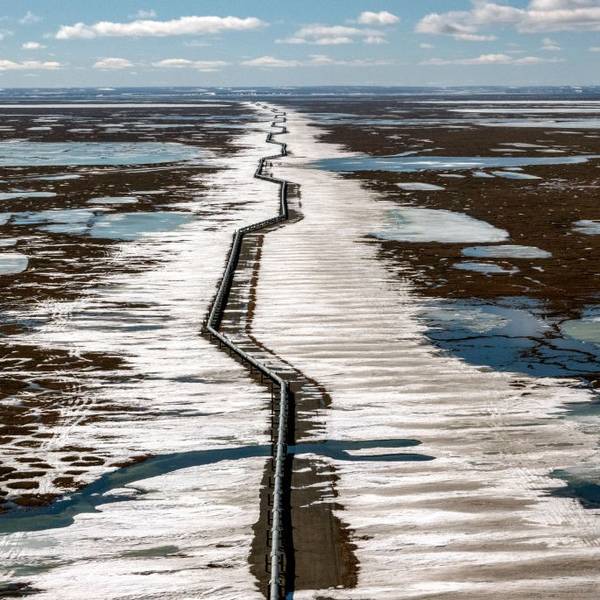

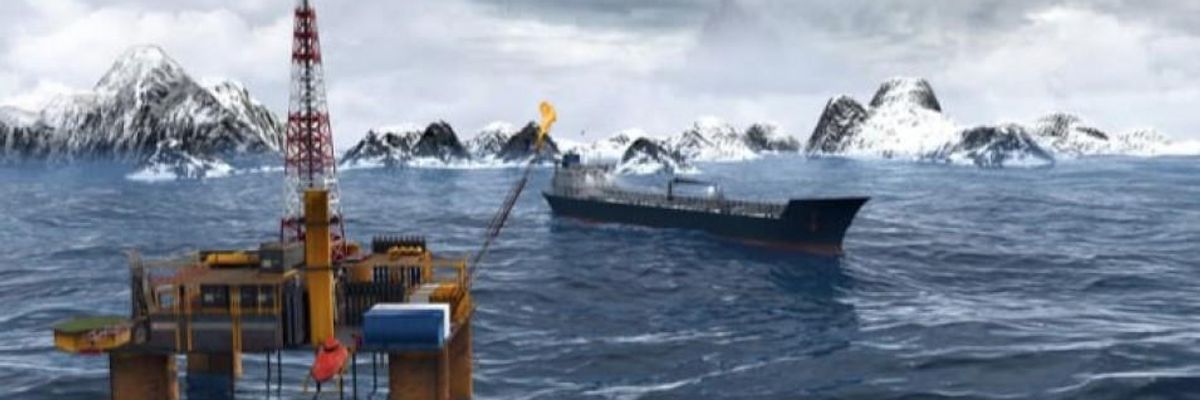
Under a new proposal from the Office of the Comptroller of the Currency, banks will no longer be able to deny loans to the fossil fuel and other controversial yet legal industries unless it is proven they are at risk of default. (Photo: vitstudio/Shutterstock)
Trump Administration Accused of Trying to Bully Banks Into Financing Arctic Fossil Fuel Extraction
"Contrary to the claims of oil-backed politicians, banks don't want to finance more drilling in the Arctic not because of some vast liberal conspiracy, but because it's bad business," said a Sierra Club leader.
Responding to grassroots pressure and shareholder activism, five of the six largest U.S. banks have decided they want no part of financing fossil fuel drilling in Alaska's Arctic National Wildlife Refuge--but that isn't stopping the Trump administration from what critics on Friday called bullying banks into funding oil and gas extraction.
"No amount of saber-rattling in the final days of the Trump administration is going to change the fact that Arctic drilling is a risky investment that any savvy financial institution would stay far away from."
--Ben Cushing, Sierra Club
The Wall Street Journal reports the Office of the Comptroller of the Currency on Friday proposed a new rule that would bar financial institutions from refusing to lend to entire categories of lawful businesses. In the name of "fair access," the proposed rule would force banks to finance not only the fossil fuel industry that is largely responsible for the ever-worsening climate emergency, but also other highly controversial sectors such as for-profit private prisons and firearms manufacturers.
"We need to stop the weaponization of banking as a political tool," Brian Brooks, the acting comptroller, told the Journal. "It's creating real economic dislocations."
Under the proposal--which came on the heels of complaints by Republican politicians that banks are discriminating against Big Oil--institutional lenders would only be permitted to decline loans if an applicant failed to meet "quantitative, impartial, risk-based standards established by the bank in advance."
The proposal will be open for public comment until January 4, 2021 before it is subject to final approval. That would leave Brooks just over two weeks to enact the measure before President Donald Trump leaves office on January 20. The financial services industry is likely to push back against the proposal, fearing it could force banks to finance individuals, entitites, or endeavors against their will.
Critics say the measure is meant to compel banks to finance destructive drilling in the pristine Arctic National Wildlife Refuge, which is home to the Gwich'in Indigenous people and hundreds of animal species. On Tuesday, the Trump administration began accepting requests from fossil fuel companies staking claims to where they want to drill for oil and natural gas. This, as Arctic temperatures warm to record high and Arctic sea ice recedes to record low levels.
Sierra Club campaign representative Ben Cushing fired back against GOP "discrimination" claims.
"Contrary to the claims of oil-backed politicians, banks don't want to finance more drilling in the Arctic not because of some vast liberal conspiracy, but because it's bad business," he said in a statement Friday. "The idea that this constitutes discrimination is ludicrous. No amount of saber-rattling in the final days of the Trump administration is going to change the fact that Arctic drilling is a risky investment that any savvy financial institution would stay far away from."
We are at a crossroads
This country and this world are at a monumental crossroads. In a few short weeks, US voters will have an opportunity to beat back the forces of fascism and confront the billionaires who are rigging the economy, our media system, and our democracy, making it increasingly impossible for ordinary people to get by. We’re not just talking about the election. We’re talking about what must be done once these fascist elements are vanquished from power. We need a bolder set of solutions than what either major party has so far been willing to offer and a working-class movement ready to fight like hell for it. Trump didn't emerge from nowhere. The conditions that fueled MAGA authoritarianism were created by decades of radical neoliberal economic policies and a corrupt political system dominated by corporate interests. They slashed taxes on the super-rich, promising that the benefits would trickle down. They said giveaways to the corporate titans would make life more affordable for the rest of us. It was all bullshit. And when a bitter, betrayed populace searches for someone to blame, right-wing demagogues have little trouble finding scapegoats. People know when they're being lied to, but you won't hear any of this from the corporate media. Only independent journalism—powered and funded by people who believe in building a better world—can deliver truly trustworthy daily news. Our Fall Campaign is underway, and we need your help. To power our newsroom through the rest of the year, we need to raise $125,000 by midnight on October 31. So if you share our vision, please contribute whatever you can to sustain our work. |
Responding to grassroots pressure and shareholder activism, five of the six largest U.S. banks have decided they want no part of financing fossil fuel drilling in Alaska's Arctic National Wildlife Refuge--but that isn't stopping the Trump administration from what critics on Friday called bullying banks into funding oil and gas extraction.
"No amount of saber-rattling in the final days of the Trump administration is going to change the fact that Arctic drilling is a risky investment that any savvy financial institution would stay far away from."
--Ben Cushing, Sierra Club
The Wall Street Journal reports the Office of the Comptroller of the Currency on Friday proposed a new rule that would bar financial institutions from refusing to lend to entire categories of lawful businesses. In the name of "fair access," the proposed rule would force banks to finance not only the fossil fuel industry that is largely responsible for the ever-worsening climate emergency, but also other highly controversial sectors such as for-profit private prisons and firearms manufacturers.
"We need to stop the weaponization of banking as a political tool," Brian Brooks, the acting comptroller, told the Journal. "It's creating real economic dislocations."
Under the proposal--which came on the heels of complaints by Republican politicians that banks are discriminating against Big Oil--institutional lenders would only be permitted to decline loans if an applicant failed to meet "quantitative, impartial, risk-based standards established by the bank in advance."
The proposal will be open for public comment until January 4, 2021 before it is subject to final approval. That would leave Brooks just over two weeks to enact the measure before President Donald Trump leaves office on January 20. The financial services industry is likely to push back against the proposal, fearing it could force banks to finance individuals, entitites, or endeavors against their will.
Critics say the measure is meant to compel banks to finance destructive drilling in the pristine Arctic National Wildlife Refuge, which is home to the Gwich'in Indigenous people and hundreds of animal species. On Tuesday, the Trump administration began accepting requests from fossil fuel companies staking claims to where they want to drill for oil and natural gas. This, as Arctic temperatures warm to record high and Arctic sea ice recedes to record low levels.
Sierra Club campaign representative Ben Cushing fired back against GOP "discrimination" claims.
"Contrary to the claims of oil-backed politicians, banks don't want to finance more drilling in the Arctic not because of some vast liberal conspiracy, but because it's bad business," he said in a statement Friday. "The idea that this constitutes discrimination is ludicrous. No amount of saber-rattling in the final days of the Trump administration is going to change the fact that Arctic drilling is a risky investment that any savvy financial institution would stay far away from."