SUBSCRIBE TO OUR FREE NEWSLETTER
Daily news & progressive opinion—funded by the people, not the corporations—delivered straight to your inbox.
5
#000000
#FFFFFF
To donate by check, phone, or other method, see our More Ways to Give page.
Daily news & progressive opinion—funded by the people, not the corporations—delivered straight to your inbox.
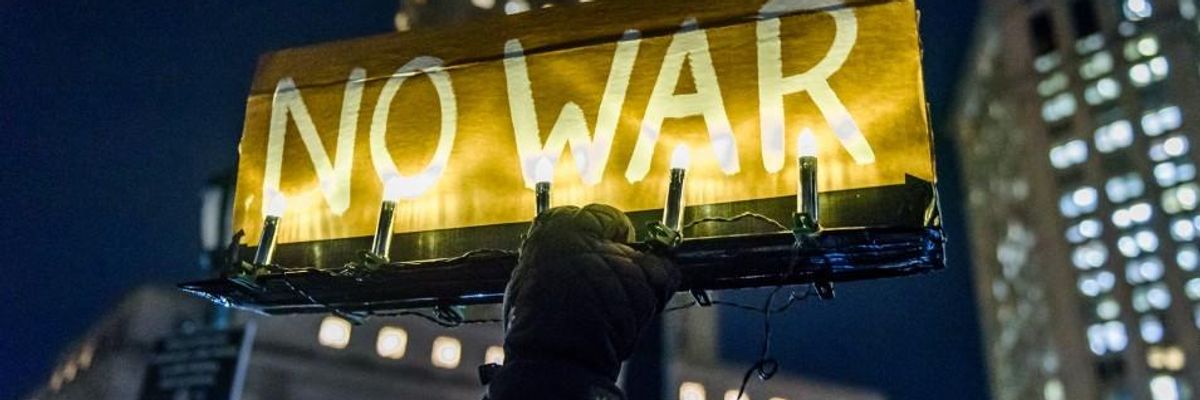
A "commitment to sustaining peace is more urgent than ever," United Nations Secretary-General Antonio Guterres said Wednesday. (Photo by Erik McGregor/LightRocket via Getty Images)
United Nations Secretary-General Antonio Guterres warned Wednesday that the coronavirus pandemic "risks exacerbating conflicts or fomenting new ones."
The global crisis makes clear that a "commitment to sustaining peace is more urgent than ever," Guterres said in his remarks to the U.N. Security Council.
But, he said, three barriers are standing in the way to achieving lasting peace, including dwindling public trust in governments and public instituions and the international economic crisis that stands to deepen existing inequality.
Guterres said an additional danger was the "weakening of the social fabric."
"We have seen many peaceful protests, and in a number of countries, Covid-19 has been an excuse for harsh crackdowns and a spike in state repression," he said.
The secretary general further lamented that not all parties heeded his call earlier this year for a global ceasefire in order to focus "on the true fight of our lives," referring to the pandemic.
Going forward, Guterres said, it's imperative policymakers help ensure "that International Financial Institutions--the World Bank, the IMF, and others--integrate sustaining peace as a priority and as a core element of Covid-19 recovery strategies and building back better."
"Covid-19 is a human tragedy," said Guterres, "but we can mitigate the impacts by the choices we make."
The call to "build back better" was echoed by Guterres's predecessor, Ban Ki-moon.
"The experience of this crisis should also spur us to change our priorities and our understandings of what threats and values really matter," Ban said in his remarks to the Security Council.
"I believe the U.N. and its member states have a generational opportunity to use this concept to help build back better, further catalyze greater inclusivity, and steer humanity and our planet towards a more peaceful and sustainable and future," he said.
Dear Common Dreams reader, It’s been nearly 30 years since I co-founded Common Dreams with my late wife, Lina Newhouser. We had the radical notion that journalism should serve the public good, not corporate profits. It was clear to us from the outset what it would take to build such a project. No paid advertisements. No corporate sponsors. No millionaire publisher telling us what to think or do. Many people said we wouldn't last a year, but we proved those doubters wrong. Together with a tremendous team of journalists and dedicated staff, we built an independent media outlet free from the constraints of profits and corporate control. Our mission has always been simple: To inform. To inspire. To ignite change for the common good. Building Common Dreams was not easy. Our survival was never guaranteed. When you take on the most powerful forces—Wall Street greed, fossil fuel industry destruction, Big Tech lobbyists, and uber-rich oligarchs who have spent billions upon billions rigging the economy and democracy in their favor—the only bulwark you have is supporters who believe in your work. But here’s the urgent message from me today. It's never been this bad out there. And it's never been this hard to keep us going. At the very moment Common Dreams is most needed, the threats we face are intensifying. We need your support now more than ever. We don't accept corporate advertising and never will. We don't have a paywall because we don't think people should be blocked from critical news based on their ability to pay. Everything we do is funded by the donations of readers like you. When everyone does the little they can afford, we are strong. But if that support retreats or dries up, so do we. Will you donate now to make sure Common Dreams not only survives but thrives? —Craig Brown, Co-founder |
United Nations Secretary-General Antonio Guterres warned Wednesday that the coronavirus pandemic "risks exacerbating conflicts or fomenting new ones."
The global crisis makes clear that a "commitment to sustaining peace is more urgent than ever," Guterres said in his remarks to the U.N. Security Council.
But, he said, three barriers are standing in the way to achieving lasting peace, including dwindling public trust in governments and public instituions and the international economic crisis that stands to deepen existing inequality.
Guterres said an additional danger was the "weakening of the social fabric."
"We have seen many peaceful protests, and in a number of countries, Covid-19 has been an excuse for harsh crackdowns and a spike in state repression," he said.
The secretary general further lamented that not all parties heeded his call earlier this year for a global ceasefire in order to focus "on the true fight of our lives," referring to the pandemic.
Going forward, Guterres said, it's imperative policymakers help ensure "that International Financial Institutions--the World Bank, the IMF, and others--integrate sustaining peace as a priority and as a core element of Covid-19 recovery strategies and building back better."
"Covid-19 is a human tragedy," said Guterres, "but we can mitigate the impacts by the choices we make."
The call to "build back better" was echoed by Guterres's predecessor, Ban Ki-moon.
"The experience of this crisis should also spur us to change our priorities and our understandings of what threats and values really matter," Ban said in his remarks to the Security Council.
"I believe the U.N. and its member states have a generational opportunity to use this concept to help build back better, further catalyze greater inclusivity, and steer humanity and our planet towards a more peaceful and sustainable and future," he said.
United Nations Secretary-General Antonio Guterres warned Wednesday that the coronavirus pandemic "risks exacerbating conflicts or fomenting new ones."
The global crisis makes clear that a "commitment to sustaining peace is more urgent than ever," Guterres said in his remarks to the U.N. Security Council.
But, he said, three barriers are standing in the way to achieving lasting peace, including dwindling public trust in governments and public instituions and the international economic crisis that stands to deepen existing inequality.
Guterres said an additional danger was the "weakening of the social fabric."
"We have seen many peaceful protests, and in a number of countries, Covid-19 has been an excuse for harsh crackdowns and a spike in state repression," he said.
The secretary general further lamented that not all parties heeded his call earlier this year for a global ceasefire in order to focus "on the true fight of our lives," referring to the pandemic.
Going forward, Guterres said, it's imperative policymakers help ensure "that International Financial Institutions--the World Bank, the IMF, and others--integrate sustaining peace as a priority and as a core element of Covid-19 recovery strategies and building back better."
"Covid-19 is a human tragedy," said Guterres, "but we can mitigate the impacts by the choices we make."
The call to "build back better" was echoed by Guterres's predecessor, Ban Ki-moon.
"The experience of this crisis should also spur us to change our priorities and our understandings of what threats and values really matter," Ban said in his remarks to the Security Council.
"I believe the U.N. and its member states have a generational opportunity to use this concept to help build back better, further catalyze greater inclusivity, and steer humanity and our planet towards a more peaceful and sustainable and future," he said.