

SUBSCRIBE TO OUR FREE NEWSLETTER
Daily news & progressive opinion—funded by the people, not the corporations—delivered straight to your inbox.
5
#000000
#FFFFFF
To donate by check, phone, or other method, see our More Ways to Give page.
Daily news & progressive opinion—funded by the people, not the corporations—delivered straight to your inbox.
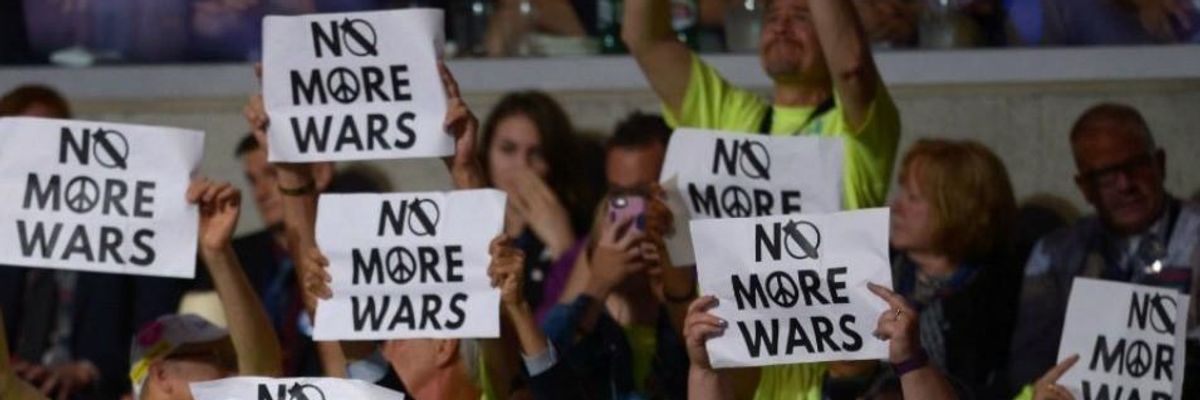
The U.S. blocked a U.N. global ceasefire resolution amid the global pandemic on Friday, objecting to language that even indirectly praised the World Health Organization. (Photo: via EuroYankee)
International diplomats were stunned and frustrated Friday night after the U.S. again blocked a United Nations resolution to call for a global ceasefire during the coronavirus pandemic.
The U.S. objected to any mention of the World Health Organization (WHO) in the resolution. President Donald Trump has claimed WHO withheld information from world governments about the coronavirus, and that the global health agency was privy to information about the virus originating in a lab in China.
The president has offered no evidence of the claims.
U.N. Secretary-General Antonio Guterres has called on governments around the world to enact ceasefires in conflicts, convincing armed factions in more than a dozen countries to call for temporary truces as the world battles the pandemic.
For six weeks the U.S. delegation to the U.N. Security Council has objected to references to WHO within the resolution, forcing French officials to lead an effort to reach a compromise.
France was confident this week that the U.S. would agree to a resolution containing the phrase "specialized health agencies," appeasing both the U.S. and China, which has insisted on a reference to WHO.
But on Friday, the U.S. announced it would not support the resolution and blocked the Security Council from holding a vote.
Diplomats on the council were perplexed over how to proceed.
"Obviously they have changed their mind within the American system so that wording is still not good enough for them," one official told The Guardian. "It might be that they just need a bit more time to settle it amongst themselves, or it might be that someone very high up has made a decision they don't want it, and therefore it won't happen. It is unclear at this moment, which one it is."
Helen Clark, former prime minister of New Zealand, wrote that the U.S. is playing the "blame game" rather than joining with other countries to focus efforts on the global health crisis and put fighting on hold.
In addition to rejecting the ceasefire resolution, Trump has also withheld funding for WHO in recent weeks, claiming the agency mismanaged the crisis and that "So much death has been caused by their mistakes."
The U.S. has had far less success than a number of other wealthy countries at "flattening the curve." Earlier this month the Centers for Disease Control and Prevention (CDC) projected a sharp rise in Covid-19 cases and deaths, with deaths reaching 3,000 per day by June 1, as the Trump administration pushed states to reopen their economies. Republican-led states have taken an aggressive approach to forcing Americans back to work amid widespread fears of the deadly virus, with Ohio urging employers to report workers who don't report to their jobs after industries reopen and threatening a loss of unemployment benefits.
Meanwhile in several other countries, with widespread testing that began weeks ago when Trump was publicly downplaying the pandemic and robust economic relief packages designed to keep people at home without worrying about a loss of income, cases have been dropping for weeks.
New Zealand announced late last month that it "effectively eliminated" Covid-19, with new cases in the single digits. The government spent 4% of its G.D.P. on an economic relief package which covered the wages of all New Zealanders who had to self-isolate, and doubled its healthcare spending.
South Korea has also been praised for flattening the curve with widespread testing early on in the global pandemic, and countries including Denmark and Germany have seen success at reducing cases with early adoption of strict lockdowns.
According to a Foreign Policy report last month the Trump administration is also reluctant to sign the resolution because a ceasefire could impede its counterterrorism operations and key ally Israel's ability to conduct military operations throughout the Middle East.
"It's bad enough that Trump is responsible for so many deaths in his own country, now he is actively complicit in causing even more across the globe," tweeted human rights advocate Dan Sohege of the U.K. charity Stand for All.
Former British Green Party leader Natalie Bennett called the U.S. "an obstructive force in international affairs."
The Security Council is set to continue negotiations on the resolution next week.
Dear Common Dreams reader, It’s been nearly 30 years since I co-founded Common Dreams with my late wife, Lina Newhouser. We had the radical notion that journalism should serve the public good, not corporate profits. It was clear to us from the outset what it would take to build such a project. No paid advertisements. No corporate sponsors. No millionaire publisher telling us what to think or do. Many people said we wouldn't last a year, but we proved those doubters wrong. Together with a tremendous team of journalists and dedicated staff, we built an independent media outlet free from the constraints of profits and corporate control. Our mission has always been simple: To inform. To inspire. To ignite change for the common good. Building Common Dreams was not easy. Our survival was never guaranteed. When you take on the most powerful forces—Wall Street greed, fossil fuel industry destruction, Big Tech lobbyists, and uber-rich oligarchs who have spent billions upon billions rigging the economy and democracy in their favor—the only bulwark you have is supporters who believe in your work. But here’s the urgent message from me today. It's never been this bad out there. And it's never been this hard to keep us going. At the very moment Common Dreams is most needed, the threats we face are intensifying. We need your support now more than ever. We don't accept corporate advertising and never will. We don't have a paywall because we don't think people should be blocked from critical news based on their ability to pay. Everything we do is funded by the donations of readers like you. When everyone does the little they can afford, we are strong. But if that support retreats or dries up, so do we. Will you donate now to make sure Common Dreams not only survives but thrives? —Craig Brown, Co-founder |
International diplomats were stunned and frustrated Friday night after the U.S. again blocked a United Nations resolution to call for a global ceasefire during the coronavirus pandemic.
The U.S. objected to any mention of the World Health Organization (WHO) in the resolution. President Donald Trump has claimed WHO withheld information from world governments about the coronavirus, and that the global health agency was privy to information about the virus originating in a lab in China.
The president has offered no evidence of the claims.
U.N. Secretary-General Antonio Guterres has called on governments around the world to enact ceasefires in conflicts, convincing armed factions in more than a dozen countries to call for temporary truces as the world battles the pandemic.
For six weeks the U.S. delegation to the U.N. Security Council has objected to references to WHO within the resolution, forcing French officials to lead an effort to reach a compromise.
France was confident this week that the U.S. would agree to a resolution containing the phrase "specialized health agencies," appeasing both the U.S. and China, which has insisted on a reference to WHO.
But on Friday, the U.S. announced it would not support the resolution and blocked the Security Council from holding a vote.
Diplomats on the council were perplexed over how to proceed.
"Obviously they have changed their mind within the American system so that wording is still not good enough for them," one official told The Guardian. "It might be that they just need a bit more time to settle it amongst themselves, or it might be that someone very high up has made a decision they don't want it, and therefore it won't happen. It is unclear at this moment, which one it is."
Helen Clark, former prime minister of New Zealand, wrote that the U.S. is playing the "blame game" rather than joining with other countries to focus efforts on the global health crisis and put fighting on hold.
In addition to rejecting the ceasefire resolution, Trump has also withheld funding for WHO in recent weeks, claiming the agency mismanaged the crisis and that "So much death has been caused by their mistakes."
The U.S. has had far less success than a number of other wealthy countries at "flattening the curve." Earlier this month the Centers for Disease Control and Prevention (CDC) projected a sharp rise in Covid-19 cases and deaths, with deaths reaching 3,000 per day by June 1, as the Trump administration pushed states to reopen their economies. Republican-led states have taken an aggressive approach to forcing Americans back to work amid widespread fears of the deadly virus, with Ohio urging employers to report workers who don't report to their jobs after industries reopen and threatening a loss of unemployment benefits.
Meanwhile in several other countries, with widespread testing that began weeks ago when Trump was publicly downplaying the pandemic and robust economic relief packages designed to keep people at home without worrying about a loss of income, cases have been dropping for weeks.
New Zealand announced late last month that it "effectively eliminated" Covid-19, with new cases in the single digits. The government spent 4% of its G.D.P. on an economic relief package which covered the wages of all New Zealanders who had to self-isolate, and doubled its healthcare spending.
South Korea has also been praised for flattening the curve with widespread testing early on in the global pandemic, and countries including Denmark and Germany have seen success at reducing cases with early adoption of strict lockdowns.
According to a Foreign Policy report last month the Trump administration is also reluctant to sign the resolution because a ceasefire could impede its counterterrorism operations and key ally Israel's ability to conduct military operations throughout the Middle East.
"It's bad enough that Trump is responsible for so many deaths in his own country, now he is actively complicit in causing even more across the globe," tweeted human rights advocate Dan Sohege of the U.K. charity Stand for All.
Former British Green Party leader Natalie Bennett called the U.S. "an obstructive force in international affairs."
The Security Council is set to continue negotiations on the resolution next week.
International diplomats were stunned and frustrated Friday night after the U.S. again blocked a United Nations resolution to call for a global ceasefire during the coronavirus pandemic.
The U.S. objected to any mention of the World Health Organization (WHO) in the resolution. President Donald Trump has claimed WHO withheld information from world governments about the coronavirus, and that the global health agency was privy to information about the virus originating in a lab in China.
The president has offered no evidence of the claims.
U.N. Secretary-General Antonio Guterres has called on governments around the world to enact ceasefires in conflicts, convincing armed factions in more than a dozen countries to call for temporary truces as the world battles the pandemic.
For six weeks the U.S. delegation to the U.N. Security Council has objected to references to WHO within the resolution, forcing French officials to lead an effort to reach a compromise.
France was confident this week that the U.S. would agree to a resolution containing the phrase "specialized health agencies," appeasing both the U.S. and China, which has insisted on a reference to WHO.
But on Friday, the U.S. announced it would not support the resolution and blocked the Security Council from holding a vote.
Diplomats on the council were perplexed over how to proceed.
"Obviously they have changed their mind within the American system so that wording is still not good enough for them," one official told The Guardian. "It might be that they just need a bit more time to settle it amongst themselves, or it might be that someone very high up has made a decision they don't want it, and therefore it won't happen. It is unclear at this moment, which one it is."
Helen Clark, former prime minister of New Zealand, wrote that the U.S. is playing the "blame game" rather than joining with other countries to focus efforts on the global health crisis and put fighting on hold.
In addition to rejecting the ceasefire resolution, Trump has also withheld funding for WHO in recent weeks, claiming the agency mismanaged the crisis and that "So much death has been caused by their mistakes."
The U.S. has had far less success than a number of other wealthy countries at "flattening the curve." Earlier this month the Centers for Disease Control and Prevention (CDC) projected a sharp rise in Covid-19 cases and deaths, with deaths reaching 3,000 per day by June 1, as the Trump administration pushed states to reopen their economies. Republican-led states have taken an aggressive approach to forcing Americans back to work amid widespread fears of the deadly virus, with Ohio urging employers to report workers who don't report to their jobs after industries reopen and threatening a loss of unemployment benefits.
Meanwhile in several other countries, with widespread testing that began weeks ago when Trump was publicly downplaying the pandemic and robust economic relief packages designed to keep people at home without worrying about a loss of income, cases have been dropping for weeks.
New Zealand announced late last month that it "effectively eliminated" Covid-19, with new cases in the single digits. The government spent 4% of its G.D.P. on an economic relief package which covered the wages of all New Zealanders who had to self-isolate, and doubled its healthcare spending.
South Korea has also been praised for flattening the curve with widespread testing early on in the global pandemic, and countries including Denmark and Germany have seen success at reducing cases with early adoption of strict lockdowns.
According to a Foreign Policy report last month the Trump administration is also reluctant to sign the resolution because a ceasefire could impede its counterterrorism operations and key ally Israel's ability to conduct military operations throughout the Middle East.
"It's bad enough that Trump is responsible for so many deaths in his own country, now he is actively complicit in causing even more across the globe," tweeted human rights advocate Dan Sohege of the U.K. charity Stand for All.
Former British Green Party leader Natalie Bennett called the U.S. "an obstructive force in international affairs."
The Security Council is set to continue negotiations on the resolution next week.

