SUBSCRIBE TO OUR FREE NEWSLETTER
Daily news & progressive opinion—funded by the people, not the corporations—delivered straight to your inbox.
5
#000000
#FFFFFF
To donate by check, phone, or other method, see our More Ways to Give page.
Daily news & progressive opinion—funded by the people, not the corporations—delivered straight to your inbox.
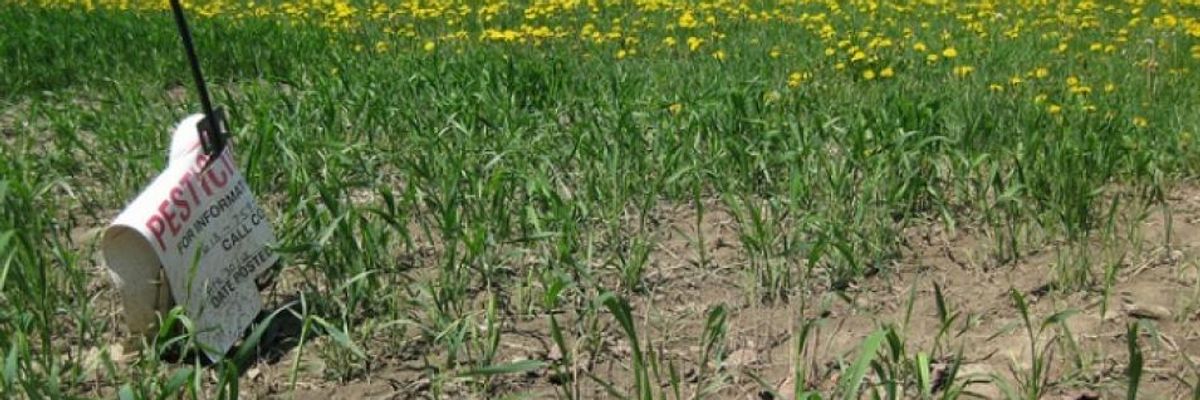
"It would be great to see all the candidates join Elizabeth Warren in taking the No Big Ag Money Pledge," said Citizens Regeneration Lobby's Alexis Baden-Mayer. (Photo: Peter Blanchard/flickr/cc)
Food system justice and environmental advocates on Wednesday urged all Democratic presidential hopefuls to follow in the footsteps of Sen. Elizabeth Warren in signing a pledge rejecting campaign cash from food and agribusiness corporations.
The Massachusetts senator, said advocacy group Friends of the Earth, is "leading the way."
"We applaud Sen. Warren for listening to voters that overwhelmingly support candidates rejecting Big Ag's money and influence," said Lisa Archer, food and agriculture director for Friends of the Earth Action. "We urge all presidential candidates to take the No Big Ag Money pledge and prioritize our families, farmers, food chain workers, our planet, and our democracy over Big Ag's profits."
The "No Big Ag Money Pledge" was launched last week. It states (pdf):
I pledge not to take contributions over $200 from large food and agribusiness corporation executives, lobbyists, and PACs and instead prioritize the health of our families, farmers, food chain workers, our planet, and our democracy.
The document lists dozens of companies that fall under that category, including giants Bayer, Caterpillar, Tyson, General Mils, and Sodexo. Rejecting cash from those entities, says the coalition behind the pledge, would show that presidential candidates won't favor the interests of factory farms over those of family farms.
If the opinion of likely Democratic caucus-goers in Iowa serve as a guide, candidates would be wise to sign on to the plege.
According to a poll (pdf) out earlier this month--commissioned by Friends of the Earth Action and conducted by Lake Research Partners--77 percent of these likely caucus-goers agree that presidential candidates should reject campaign contributions from Big Ag. Sixty-four percent also said they support breaking up the biggest food and agriculture corporations--a proposal backed by Warren and Democratic primary rival Sen. Bernie Sanders.
Make no mistake, Big Ag wields significant power. As Friends of the Earth outlined in a statement last week,
Currently in the United States, four corporations (many of them foreign owned) control 84 percent of the market for beef, 70 percent of the market for soy, 66 percent of the market for hogs, 80 percent of the market for corn, 59 percent of the market for poultry, 84 percent of the market for pesticides, and 60 percent of the market for seeds.
The food and family farms groups say that campaigns not accepting contributions from these interests would be a step towards neutering their political influence.
"It would be great to see all the candidates join Elizabeth Warren in taking the No Big Ag Money Pledge," said Alexis Baden-Mayer, political director of Citizens Regeneration Lobby. "It's time to stop agribusiness monopolies from using campaign cash and lobbying dollars to put a stranglehold on federal food and farm policy."
Dear Common Dreams reader, It’s been nearly 30 years since I co-founded Common Dreams with my late wife, Lina Newhouser. We had the radical notion that journalism should serve the public good, not corporate profits. It was clear to us from the outset what it would take to build such a project. No paid advertisements. No corporate sponsors. No millionaire publisher telling us what to think or do. Many people said we wouldn't last a year, but we proved those doubters wrong. Together with a tremendous team of journalists and dedicated staff, we built an independent media outlet free from the constraints of profits and corporate control. Our mission has always been simple: To inform. To inspire. To ignite change for the common good. Building Common Dreams was not easy. Our survival was never guaranteed. When you take on the most powerful forces—Wall Street greed, fossil fuel industry destruction, Big Tech lobbyists, and uber-rich oligarchs who have spent billions upon billions rigging the economy and democracy in their favor—the only bulwark you have is supporters who believe in your work. But here’s the urgent message from me today. It's never been this bad out there. And it's never been this hard to keep us going. At the very moment Common Dreams is most needed, the threats we face are intensifying. We need your support now more than ever. We don't accept corporate advertising and never will. We don't have a paywall because we don't think people should be blocked from critical news based on their ability to pay. Everything we do is funded by the donations of readers like you. When everyone does the little they can afford, we are strong. But if that support retreats or dries up, so do we. Will you donate now to make sure Common Dreams not only survives but thrives? —Craig Brown, Co-founder |
Food system justice and environmental advocates on Wednesday urged all Democratic presidential hopefuls to follow in the footsteps of Sen. Elizabeth Warren in signing a pledge rejecting campaign cash from food and agribusiness corporations.
The Massachusetts senator, said advocacy group Friends of the Earth, is "leading the way."
"We applaud Sen. Warren for listening to voters that overwhelmingly support candidates rejecting Big Ag's money and influence," said Lisa Archer, food and agriculture director for Friends of the Earth Action. "We urge all presidential candidates to take the No Big Ag Money pledge and prioritize our families, farmers, food chain workers, our planet, and our democracy over Big Ag's profits."
The "No Big Ag Money Pledge" was launched last week. It states (pdf):
I pledge not to take contributions over $200 from large food and agribusiness corporation executives, lobbyists, and PACs and instead prioritize the health of our families, farmers, food chain workers, our planet, and our democracy.
The document lists dozens of companies that fall under that category, including giants Bayer, Caterpillar, Tyson, General Mils, and Sodexo. Rejecting cash from those entities, says the coalition behind the pledge, would show that presidential candidates won't favor the interests of factory farms over those of family farms.
If the opinion of likely Democratic caucus-goers in Iowa serve as a guide, candidates would be wise to sign on to the plege.
According to a poll (pdf) out earlier this month--commissioned by Friends of the Earth Action and conducted by Lake Research Partners--77 percent of these likely caucus-goers agree that presidential candidates should reject campaign contributions from Big Ag. Sixty-four percent also said they support breaking up the biggest food and agriculture corporations--a proposal backed by Warren and Democratic primary rival Sen. Bernie Sanders.
Make no mistake, Big Ag wields significant power. As Friends of the Earth outlined in a statement last week,
Currently in the United States, four corporations (many of them foreign owned) control 84 percent of the market for beef, 70 percent of the market for soy, 66 percent of the market for hogs, 80 percent of the market for corn, 59 percent of the market for poultry, 84 percent of the market for pesticides, and 60 percent of the market for seeds.
The food and family farms groups say that campaigns not accepting contributions from these interests would be a step towards neutering their political influence.
"It would be great to see all the candidates join Elizabeth Warren in taking the No Big Ag Money Pledge," said Alexis Baden-Mayer, political director of Citizens Regeneration Lobby. "It's time to stop agribusiness monopolies from using campaign cash and lobbying dollars to put a stranglehold on federal food and farm policy."
Food system justice and environmental advocates on Wednesday urged all Democratic presidential hopefuls to follow in the footsteps of Sen. Elizabeth Warren in signing a pledge rejecting campaign cash from food and agribusiness corporations.
The Massachusetts senator, said advocacy group Friends of the Earth, is "leading the way."
"We applaud Sen. Warren for listening to voters that overwhelmingly support candidates rejecting Big Ag's money and influence," said Lisa Archer, food and agriculture director for Friends of the Earth Action. "We urge all presidential candidates to take the No Big Ag Money pledge and prioritize our families, farmers, food chain workers, our planet, and our democracy over Big Ag's profits."
The "No Big Ag Money Pledge" was launched last week. It states (pdf):
I pledge not to take contributions over $200 from large food and agribusiness corporation executives, lobbyists, and PACs and instead prioritize the health of our families, farmers, food chain workers, our planet, and our democracy.
The document lists dozens of companies that fall under that category, including giants Bayer, Caterpillar, Tyson, General Mils, and Sodexo. Rejecting cash from those entities, says the coalition behind the pledge, would show that presidential candidates won't favor the interests of factory farms over those of family farms.
If the opinion of likely Democratic caucus-goers in Iowa serve as a guide, candidates would be wise to sign on to the plege.
According to a poll (pdf) out earlier this month--commissioned by Friends of the Earth Action and conducted by Lake Research Partners--77 percent of these likely caucus-goers agree that presidential candidates should reject campaign contributions from Big Ag. Sixty-four percent also said they support breaking up the biggest food and agriculture corporations--a proposal backed by Warren and Democratic primary rival Sen. Bernie Sanders.
Make no mistake, Big Ag wields significant power. As Friends of the Earth outlined in a statement last week,
Currently in the United States, four corporations (many of them foreign owned) control 84 percent of the market for beef, 70 percent of the market for soy, 66 percent of the market for hogs, 80 percent of the market for corn, 59 percent of the market for poultry, 84 percent of the market for pesticides, and 60 percent of the market for seeds.
The food and family farms groups say that campaigns not accepting contributions from these interests would be a step towards neutering their political influence.
"It would be great to see all the candidates join Elizabeth Warren in taking the No Big Ag Money Pledge," said Alexis Baden-Mayer, political director of Citizens Regeneration Lobby. "It's time to stop agribusiness monopolies from using campaign cash and lobbying dollars to put a stranglehold on federal food and farm policy."