SUBSCRIBE TO OUR FREE NEWSLETTER
Daily news & progressive opinion—funded by the people, not the corporations—delivered straight to your inbox.
5
#000000
#FFFFFF
To donate by check, phone, or other method, see our More Ways to Give page.
Daily news & progressive opinion—funded by the people, not the corporations—delivered straight to your inbox.
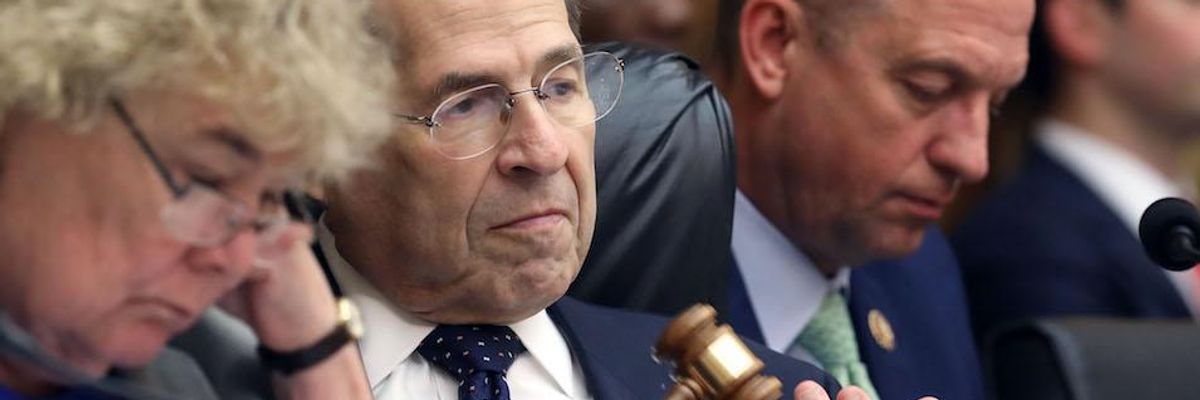
Rep. Jerry Nadler (D-N.Y.) presides over a mark-up hearing where members may vote to hold Attorney General William Barr in contempt of Congress for not providing an unredacted copy of special prosecutor Robert Mueller's report. (Photo: Chip Somodevilla/Getty Images)
The House Judiciary Committee Wednesday voted to hold Attorney General William Barr in contempt over his refusal to turn over the unredacted Mueller report to Congress--the latest escalation in a constitutional crisis between the two theoretically co-equal branches of government.
"We are at a brink of importance between democracy and dictatorship if we ignore checks and balances" -- Rep. Pramila Jayapal
The vote came as the White House asserted executive privilege to block the report's release, a decision that Rep. Jerry Nadler (D-N.Y.), chair of the House Judiciary Committee, called Tuesday evening "the behavior of this lawless administration." Nadler subpoenaed the full report in mid-April.
The 24 to 16 vote came down on party lines, with one abstention.
After the vote, Nadler told reporters, "We are now in a constitutional crisis."
In earlier remarks to the committee Wednesday, Nadler said that the issue was bigger than just the report--by asserting executive privilege to block congressional subpoenas, the White House was attacking Congress itself.
"This is unprecedented," said Nadler. "If allowed to go unchecked, this obstruction means the end of congressional oversight. As a co-equal branch of government, we should not and cannot allow this to continue."
Other Democrats, like Rep. Pramila Jayapal (D-Wash.) echoed that sentiment.
"We are at a brink of importance between democracy and dictatorship if we ignore checks and balances," said Jayapal.
Barr's withholding from the committee the unredacted report is just the one of a series of moves taken by the Attorney General that have frustrated House Democrats.
The AG, after enduring a contentious hearing in the Republican-led Senate Judiciary Committee on April 30, chose to skip his scheduled testimony two days later, on May 3, in the Democrat-majority House.
At the time, Nadler warned that Barr's intransigence could lead to contempt, but left the door open to negotiations with the Department of Justice for the report's release.
Once Barr refused to turn over the unredacted report, Nadler and his committee moved to hold the attorney general in contempt.
Progressives welcomed the committee's contempt vote and expressed concern over the White House's assertion of executive privilege.
"Congress is a coequal branch of government whether President Trump likes it or not," said Karen Hobert Flynn, president of Common Cause.
Flynn warned that a lax approach to the administration's stubborn behavior on subpoenas could have damaging effects down the line.
"Congressional tolerance of Trump administration slow-walking of document and witness requests have only led to outright stonewalling," said Flynn, "and that deeply disturbing pattern must be ended now."
"Trump. Is. Hiding. Something," tweeted liberal advocacy group MoveOn ahead of the vote.
Journalist Dan Froomkin called on the media to contextualize Trump's actions.
"Trump's assertion of executive privilege is insanely overbroad, unprecedented and basically nuts," said Froomkin. "Any article that doesn't indicate that instantly is doing its readers a disservice."
Legal analyst Neal Katyal, meanwhile, hearkened back to an earlier time in American history.
"Ah," said Katyal. "The Full Nixon."
Dear Common Dreams reader, It’s been nearly 30 years since I co-founded Common Dreams with my late wife, Lina Newhouser. We had the radical notion that journalism should serve the public good, not corporate profits. It was clear to us from the outset what it would take to build such a project. No paid advertisements. No corporate sponsors. No millionaire publisher telling us what to think or do. Many people said we wouldn't last a year, but we proved those doubters wrong. Together with a tremendous team of journalists and dedicated staff, we built an independent media outlet free from the constraints of profits and corporate control. Our mission has always been simple: To inform. To inspire. To ignite change for the common good. Building Common Dreams was not easy. Our survival was never guaranteed. When you take on the most powerful forces—Wall Street greed, fossil fuel industry destruction, Big Tech lobbyists, and uber-rich oligarchs who have spent billions upon billions rigging the economy and democracy in their favor—the only bulwark you have is supporters who believe in your work. But here’s the urgent message from me today. It's never been this bad out there. And it's never been this hard to keep us going. At the very moment Common Dreams is most needed, the threats we face are intensifying. We need your support now more than ever. We don't accept corporate advertising and never will. We don't have a paywall because we don't think people should be blocked from critical news based on their ability to pay. Everything we do is funded by the donations of readers like you. When everyone does the little they can afford, we are strong. But if that support retreats or dries up, so do we. Will you donate now to make sure Common Dreams not only survives but thrives? —Craig Brown, Co-founder |
The House Judiciary Committee Wednesday voted to hold Attorney General William Barr in contempt over his refusal to turn over the unredacted Mueller report to Congress--the latest escalation in a constitutional crisis between the two theoretically co-equal branches of government.
"We are at a brink of importance between democracy and dictatorship if we ignore checks and balances" -- Rep. Pramila Jayapal
The vote came as the White House asserted executive privilege to block the report's release, a decision that Rep. Jerry Nadler (D-N.Y.), chair of the House Judiciary Committee, called Tuesday evening "the behavior of this lawless administration." Nadler subpoenaed the full report in mid-April.
The 24 to 16 vote came down on party lines, with one abstention.
After the vote, Nadler told reporters, "We are now in a constitutional crisis."
In earlier remarks to the committee Wednesday, Nadler said that the issue was bigger than just the report--by asserting executive privilege to block congressional subpoenas, the White House was attacking Congress itself.
"This is unprecedented," said Nadler. "If allowed to go unchecked, this obstruction means the end of congressional oversight. As a co-equal branch of government, we should not and cannot allow this to continue."
Other Democrats, like Rep. Pramila Jayapal (D-Wash.) echoed that sentiment.
"We are at a brink of importance between democracy and dictatorship if we ignore checks and balances," said Jayapal.
Barr's withholding from the committee the unredacted report is just the one of a series of moves taken by the Attorney General that have frustrated House Democrats.
The AG, after enduring a contentious hearing in the Republican-led Senate Judiciary Committee on April 30, chose to skip his scheduled testimony two days later, on May 3, in the Democrat-majority House.
At the time, Nadler warned that Barr's intransigence could lead to contempt, but left the door open to negotiations with the Department of Justice for the report's release.
Once Barr refused to turn over the unredacted report, Nadler and his committee moved to hold the attorney general in contempt.
Progressives welcomed the committee's contempt vote and expressed concern over the White House's assertion of executive privilege.
"Congress is a coequal branch of government whether President Trump likes it or not," said Karen Hobert Flynn, president of Common Cause.
Flynn warned that a lax approach to the administration's stubborn behavior on subpoenas could have damaging effects down the line.
"Congressional tolerance of Trump administration slow-walking of document and witness requests have only led to outright stonewalling," said Flynn, "and that deeply disturbing pattern must be ended now."
"Trump. Is. Hiding. Something," tweeted liberal advocacy group MoveOn ahead of the vote.
Journalist Dan Froomkin called on the media to contextualize Trump's actions.
"Trump's assertion of executive privilege is insanely overbroad, unprecedented and basically nuts," said Froomkin. "Any article that doesn't indicate that instantly is doing its readers a disservice."
Legal analyst Neal Katyal, meanwhile, hearkened back to an earlier time in American history.
"Ah," said Katyal. "The Full Nixon."
The House Judiciary Committee Wednesday voted to hold Attorney General William Barr in contempt over his refusal to turn over the unredacted Mueller report to Congress--the latest escalation in a constitutional crisis between the two theoretically co-equal branches of government.
"We are at a brink of importance between democracy and dictatorship if we ignore checks and balances" -- Rep. Pramila Jayapal
The vote came as the White House asserted executive privilege to block the report's release, a decision that Rep. Jerry Nadler (D-N.Y.), chair of the House Judiciary Committee, called Tuesday evening "the behavior of this lawless administration." Nadler subpoenaed the full report in mid-April.
The 24 to 16 vote came down on party lines, with one abstention.
After the vote, Nadler told reporters, "We are now in a constitutional crisis."
In earlier remarks to the committee Wednesday, Nadler said that the issue was bigger than just the report--by asserting executive privilege to block congressional subpoenas, the White House was attacking Congress itself.
"This is unprecedented," said Nadler. "If allowed to go unchecked, this obstruction means the end of congressional oversight. As a co-equal branch of government, we should not and cannot allow this to continue."
Other Democrats, like Rep. Pramila Jayapal (D-Wash.) echoed that sentiment.
"We are at a brink of importance between democracy and dictatorship if we ignore checks and balances," said Jayapal.
Barr's withholding from the committee the unredacted report is just the one of a series of moves taken by the Attorney General that have frustrated House Democrats.
The AG, after enduring a contentious hearing in the Republican-led Senate Judiciary Committee on April 30, chose to skip his scheduled testimony two days later, on May 3, in the Democrat-majority House.
At the time, Nadler warned that Barr's intransigence could lead to contempt, but left the door open to negotiations with the Department of Justice for the report's release.
Once Barr refused to turn over the unredacted report, Nadler and his committee moved to hold the attorney general in contempt.
Progressives welcomed the committee's contempt vote and expressed concern over the White House's assertion of executive privilege.
"Congress is a coequal branch of government whether President Trump likes it or not," said Karen Hobert Flynn, president of Common Cause.
Flynn warned that a lax approach to the administration's stubborn behavior on subpoenas could have damaging effects down the line.
"Congressional tolerance of Trump administration slow-walking of document and witness requests have only led to outright stonewalling," said Flynn, "and that deeply disturbing pattern must be ended now."
"Trump. Is. Hiding. Something," tweeted liberal advocacy group MoveOn ahead of the vote.
Journalist Dan Froomkin called on the media to contextualize Trump's actions.
"Trump's assertion of executive privilege is insanely overbroad, unprecedented and basically nuts," said Froomkin. "Any article that doesn't indicate that instantly is doing its readers a disservice."
Legal analyst Neal Katyal, meanwhile, hearkened back to an earlier time in American history.
"Ah," said Katyal. "The Full Nixon."