SUBSCRIBE TO OUR FREE NEWSLETTER
Daily news & progressive opinion—funded by the people, not the corporations—delivered straight to your inbox.
5
#000000
#FFFFFF
To donate by check, phone, or other method, see our More Ways to Give page.
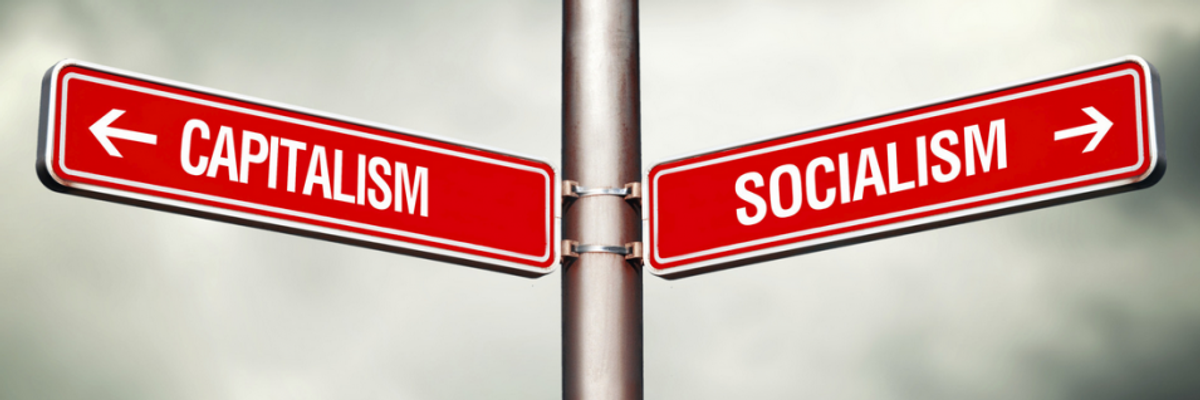
House Minority Leader Nancy Pelosi (D-Calif.) may believe that the Democratic Party is "capitalist, and that's just the way it is," but a new Gallup poll out Monday shows that support for capitalism among Democratic voters has hit a record low while a steady majority of the Democratic base has a favorable view of socialism.
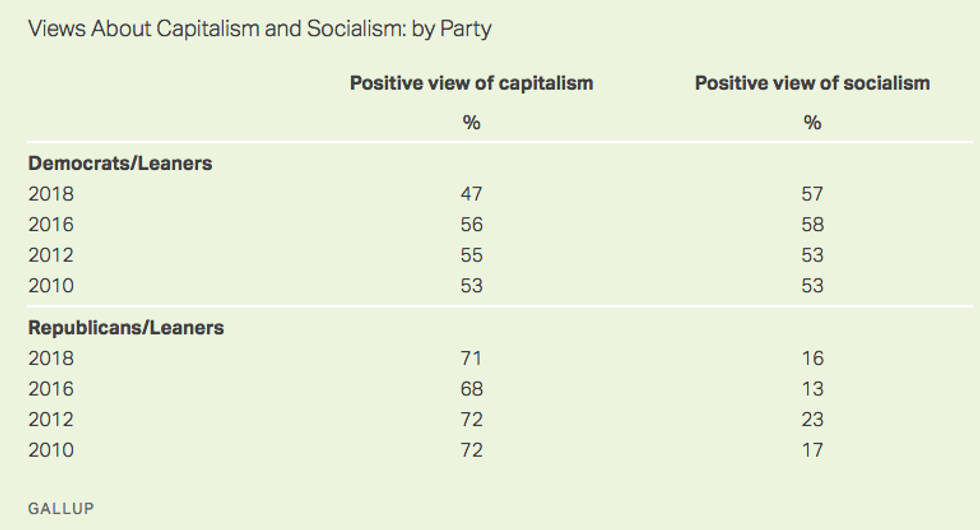
"For the first time in Gallup's measurement over the past decade, Democrats have a more positive image of socialism than they do of capitalism," Gallup noted in a summary of its findings, which come as socialist candidates continue to surpass expectations, garner widespread enthusiasm, and win elections across the nation.
"Attitudes toward socialism among Democrats have not changed materially since 2010, with 57 percent today having a positive view. The major change among Democrats has been a less upbeat attitude toward capitalism, dropping to 47 percent positive this year--lower than in any of the three previous measures."
Unsurprisingly, millennials--many of whom came of age in the midst of the worst financial meltdown since the Great Depression--have a particularly unfavorable view of capitalism, regardless of party affiliation.
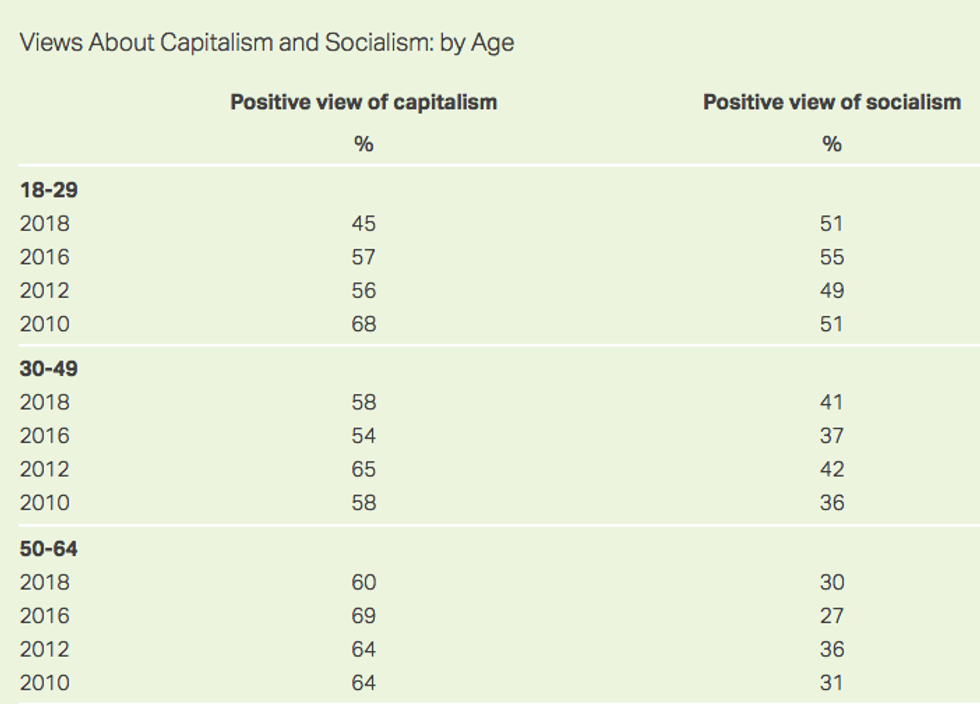
According to Gallup, just 45 percent of millennials view capitalism favorably, down from 68 percent in 2010. By contrast, 51 percent of millennials view socialism favorably.
"The system has failed tens of millions of people who want and deserve something better," Kenneth Zinn, political director of National Nurses United, wrote in response to the new data. "A change is gonna come."
While Gallup's latest survey was met with the typical and expected fear-mongering from right-wing defenders of capitalism--a system that has delivered immense wealth to the very top in the U.S. while leaving tens of millions of Americans impoverished and unable to afford basic necessities--progressives viewed the new numbers as a good sign but noted that they also show there is still tremendous work ahead.
"People seem excited about this poll," noted The New Republic's Sarah Jones in a tweet on Monday. "I'd just add that it also reveals a need for democratic socialists to educate voters. The decline in support for capitalism didn't correlate to increased support for socialism overall."
As Common Dreams reported, a survey conducted by the progressive policy shop Data for Progress (DFP) last month showed that American voters are overwhelmingly supportive of "unabashedly left" policies like a federal jobs guarantee and ending cash bail.
Echoing Jones, DFP concluded that converting "favorable impressions into durable support will require activists and politicians to put these issues on the national agenda and make a forceful case for them over time."
House Minority Leader Nancy Pelosi (D-Calif.) may believe that the Democratic Party is "capitalist, and that's just the way it is," but a new Gallup poll out Monday shows that support for capitalism among Democratic voters has hit a record low while a steady majority of the Democratic base has a favorable view of socialism.
"For the first time in Gallup's measurement over the past decade, Democrats have a more positive image of socialism than they do of capitalism," Gallup noted in a summary of its findings, which come as socialist candidates continue to surpass expectations, garner widespread enthusiasm, and win elections across the nation.
"Attitudes toward socialism among Democrats have not changed materially since 2010, with 57 percent today having a positive view. The major change among Democrats has been a less upbeat attitude toward capitalism, dropping to 47 percent positive this year--lower than in any of the three previous measures."
Unsurprisingly, millennials--many of whom came of age in the midst of the worst financial meltdown since the Great Depression--have a particularly unfavorable view of capitalism, regardless of party affiliation.
According to Gallup, just 45 percent of millennials view capitalism favorably, down from 68 percent in 2010. By contrast, 51 percent of millennials view socialism favorably.
"The system has failed tens of millions of people who want and deserve something better," Kenneth Zinn, political director of National Nurses United, wrote in response to the new data. "A change is gonna come."
While Gallup's latest survey was met with the typical and expected fear-mongering from right-wing defenders of capitalism--a system that has delivered immense wealth to the very top in the U.S. while leaving tens of millions of Americans impoverished and unable to afford basic necessities--progressives viewed the new numbers as a good sign but noted that they also show there is still tremendous work ahead.
"People seem excited about this poll," noted The New Republic's Sarah Jones in a tweet on Monday. "I'd just add that it also reveals a need for democratic socialists to educate voters. The decline in support for capitalism didn't correlate to increased support for socialism overall."
As Common Dreams reported, a survey conducted by the progressive policy shop Data for Progress (DFP) last month showed that American voters are overwhelmingly supportive of "unabashedly left" policies like a federal jobs guarantee and ending cash bail.
Echoing Jones, DFP concluded that converting "favorable impressions into durable support will require activists and politicians to put these issues on the national agenda and make a forceful case for them over time."
House Minority Leader Nancy Pelosi (D-Calif.) may believe that the Democratic Party is "capitalist, and that's just the way it is," but a new Gallup poll out Monday shows that support for capitalism among Democratic voters has hit a record low while a steady majority of the Democratic base has a favorable view of socialism.
"For the first time in Gallup's measurement over the past decade, Democrats have a more positive image of socialism than they do of capitalism," Gallup noted in a summary of its findings, which come as socialist candidates continue to surpass expectations, garner widespread enthusiasm, and win elections across the nation.
"Attitudes toward socialism among Democrats have not changed materially since 2010, with 57 percent today having a positive view. The major change among Democrats has been a less upbeat attitude toward capitalism, dropping to 47 percent positive this year--lower than in any of the three previous measures."
Unsurprisingly, millennials--many of whom came of age in the midst of the worst financial meltdown since the Great Depression--have a particularly unfavorable view of capitalism, regardless of party affiliation.
According to Gallup, just 45 percent of millennials view capitalism favorably, down from 68 percent in 2010. By contrast, 51 percent of millennials view socialism favorably.
"The system has failed tens of millions of people who want and deserve something better," Kenneth Zinn, political director of National Nurses United, wrote in response to the new data. "A change is gonna come."
While Gallup's latest survey was met with the typical and expected fear-mongering from right-wing defenders of capitalism--a system that has delivered immense wealth to the very top in the U.S. while leaving tens of millions of Americans impoverished and unable to afford basic necessities--progressives viewed the new numbers as a good sign but noted that they also show there is still tremendous work ahead.
"People seem excited about this poll," noted The New Republic's Sarah Jones in a tweet on Monday. "I'd just add that it also reveals a need for democratic socialists to educate voters. The decline in support for capitalism didn't correlate to increased support for socialism overall."
As Common Dreams reported, a survey conducted by the progressive policy shop Data for Progress (DFP) last month showed that American voters are overwhelmingly supportive of "unabashedly left" policies like a federal jobs guarantee and ending cash bail.
Echoing Jones, DFP concluded that converting "favorable impressions into durable support will require activists and politicians to put these issues on the national agenda and make a forceful case for them over time."