SUBSCRIBE TO OUR FREE NEWSLETTER
Daily news & progressive opinion—funded by the people, not the corporations—delivered straight to your inbox.
5
#000000
#FFFFFF
To donate by check, phone, or other method, see our More Ways to Give page.
Daily news & progressive opinion—funded by the people, not the corporations—delivered straight to your inbox.
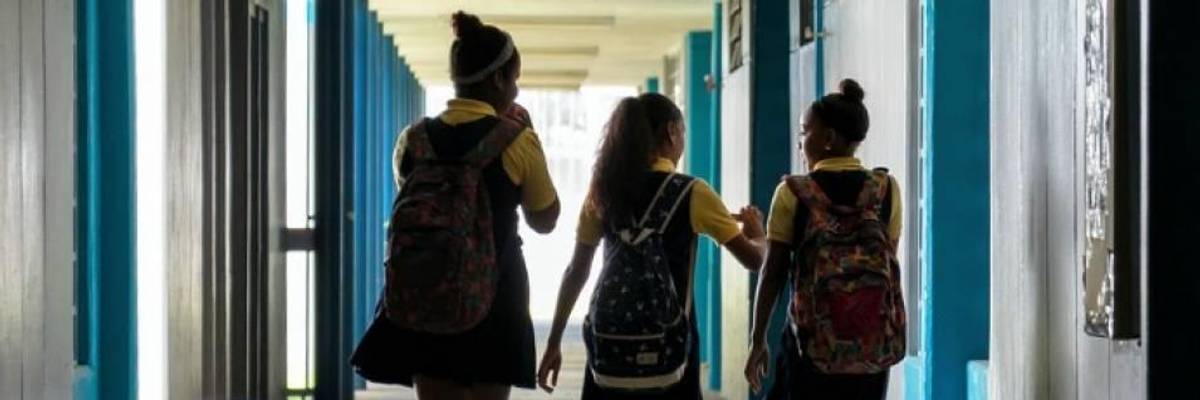
Education historian Diane Ravtich called the new ruling from Puerto Rico's high court a "victory for rapacious billionaires" and charter proponents like Education Secretary Betsy DeVos. (Photo: Lorie Shaull/flickr/cc)
Puerto Rico's controversial plan to overhaul the island's education system moved forward after its high court issued a ruling this week overturning a lower court's finding that charter schools and vouchers were unconstitutional.
" Disaster capitalism strikes again!" commented education historian Diane Ravitch, who also called it a "victory for rapacious billionaires, [Education Secretary and charter school proponent] Betsy DeVos, and DFER [Democrats for Education Reform]."
"Instead of putting the PR economy on a path to recovery," Ravitch added, "the disaster capitalists will give them charters and vouchers."
The legal challenge was brought forth by teachers' union La Asociacion de Maestros de Puerto Rico (AMPR), soon after the Gov. Ricardo Rossello signed into law "education reform" legislation creating a charter schools pilot program in 10 percent of public schools and offering private school vouchers to 3 percent of students. The plan has been promoted heavily by Julia Keleher, Puerto Rico's non-Puerto Rican Education Secretary.
"To say charters are public schools when they are going to be administered, directed, and controlled by private hands is clearly an illegal and unconstitutional contradiction," AMPR president Aida Diaz said at the time.
In response to the new ruling, Providence Journal education reporter Linda Borg posed a question on social media:
Also referring to post-Katrina New Orleans, Jeremy Aponte, a member of the Boston Teachers Union's Puerto Rican educators group and Jessica Tang, president of the union, recently wrote, about how the devastating in 2005 "was used as an opportunity for the dismantling of a public education system that primarily served low-income black students."
They described the transformation as a failure for the community:
Currently there is not a single public school in the New Orleans School District. The purported successes of the charter school movement have not come to fruition. Charter schools have maintained segregation, decreased accessibility to local schools, and have underserved students with special needs. They have reduced the number of veteran black teachers and administrators from the impacted communities in a favor of teachers with no background, connection, or cultural competency in the predominantly black school district.
"Puerto Rico must be able to develop a public education system that serves the needs of the communities and the people who call Puerto Rico home. The temporary exodus of families, due to the lengthy rebuilding process, cannot become an opportunity to pillage the public education system," they argued.
Dear Common Dreams reader, It’s been nearly 30 years since I co-founded Common Dreams with my late wife, Lina Newhouser. We had the radical notion that journalism should serve the public good, not corporate profits. It was clear to us from the outset what it would take to build such a project. No paid advertisements. No corporate sponsors. No millionaire publisher telling us what to think or do. Many people said we wouldn't last a year, but we proved those doubters wrong. Together with a tremendous team of journalists and dedicated staff, we built an independent media outlet free from the constraints of profits and corporate control. Our mission has always been simple: To inform. To inspire. To ignite change for the common good. Building Common Dreams was not easy. Our survival was never guaranteed. When you take on the most powerful forces—Wall Street greed, fossil fuel industry destruction, Big Tech lobbyists, and uber-rich oligarchs who have spent billions upon billions rigging the economy and democracy in their favor—the only bulwark you have is supporters who believe in your work. But here’s the urgent message from me today. It's never been this bad out there. And it's never been this hard to keep us going. At the very moment Common Dreams is most needed, the threats we face are intensifying. We need your support now more than ever. We don't accept corporate advertising and never will. We don't have a paywall because we don't think people should be blocked from critical news based on their ability to pay. Everything we do is funded by the donations of readers like you. When everyone does the little they can afford, we are strong. But if that support retreats or dries up, so do we. Will you donate now to make sure Common Dreams not only survives but thrives? —Craig Brown, Co-founder |
Puerto Rico's controversial plan to overhaul the island's education system moved forward after its high court issued a ruling this week overturning a lower court's finding that charter schools and vouchers were unconstitutional.
" Disaster capitalism strikes again!" commented education historian Diane Ravitch, who also called it a "victory for rapacious billionaires, [Education Secretary and charter school proponent] Betsy DeVos, and DFER [Democrats for Education Reform]."
"Instead of putting the PR economy on a path to recovery," Ravitch added, "the disaster capitalists will give them charters and vouchers."
The legal challenge was brought forth by teachers' union La Asociacion de Maestros de Puerto Rico (AMPR), soon after the Gov. Ricardo Rossello signed into law "education reform" legislation creating a charter schools pilot program in 10 percent of public schools and offering private school vouchers to 3 percent of students. The plan has been promoted heavily by Julia Keleher, Puerto Rico's non-Puerto Rican Education Secretary.
"To say charters are public schools when they are going to be administered, directed, and controlled by private hands is clearly an illegal and unconstitutional contradiction," AMPR president Aida Diaz said at the time.
In response to the new ruling, Providence Journal education reporter Linda Borg posed a question on social media:
Also referring to post-Katrina New Orleans, Jeremy Aponte, a member of the Boston Teachers Union's Puerto Rican educators group and Jessica Tang, president of the union, recently wrote, about how the devastating in 2005 "was used as an opportunity for the dismantling of a public education system that primarily served low-income black students."
They described the transformation as a failure for the community:
Currently there is not a single public school in the New Orleans School District. The purported successes of the charter school movement have not come to fruition. Charter schools have maintained segregation, decreased accessibility to local schools, and have underserved students with special needs. They have reduced the number of veteran black teachers and administrators from the impacted communities in a favor of teachers with no background, connection, or cultural competency in the predominantly black school district.
"Puerto Rico must be able to develop a public education system that serves the needs of the communities and the people who call Puerto Rico home. The temporary exodus of families, due to the lengthy rebuilding process, cannot become an opportunity to pillage the public education system," they argued.
Puerto Rico's controversial plan to overhaul the island's education system moved forward after its high court issued a ruling this week overturning a lower court's finding that charter schools and vouchers were unconstitutional.
" Disaster capitalism strikes again!" commented education historian Diane Ravitch, who also called it a "victory for rapacious billionaires, [Education Secretary and charter school proponent] Betsy DeVos, and DFER [Democrats for Education Reform]."
"Instead of putting the PR economy on a path to recovery," Ravitch added, "the disaster capitalists will give them charters and vouchers."
The legal challenge was brought forth by teachers' union La Asociacion de Maestros de Puerto Rico (AMPR), soon after the Gov. Ricardo Rossello signed into law "education reform" legislation creating a charter schools pilot program in 10 percent of public schools and offering private school vouchers to 3 percent of students. The plan has been promoted heavily by Julia Keleher, Puerto Rico's non-Puerto Rican Education Secretary.
"To say charters are public schools when they are going to be administered, directed, and controlled by private hands is clearly an illegal and unconstitutional contradiction," AMPR president Aida Diaz said at the time.
In response to the new ruling, Providence Journal education reporter Linda Borg posed a question on social media:
Also referring to post-Katrina New Orleans, Jeremy Aponte, a member of the Boston Teachers Union's Puerto Rican educators group and Jessica Tang, president of the union, recently wrote, about how the devastating in 2005 "was used as an opportunity for the dismantling of a public education system that primarily served low-income black students."
They described the transformation as a failure for the community:
Currently there is not a single public school in the New Orleans School District. The purported successes of the charter school movement have not come to fruition. Charter schools have maintained segregation, decreased accessibility to local schools, and have underserved students with special needs. They have reduced the number of veteran black teachers and administrators from the impacted communities in a favor of teachers with no background, connection, or cultural competency in the predominantly black school district.
"Puerto Rico must be able to develop a public education system that serves the needs of the communities and the people who call Puerto Rico home. The temporary exodus of families, due to the lengthy rebuilding process, cannot become an opportunity to pillage the public education system," they argued.