SUBSCRIBE TO OUR FREE NEWSLETTER
Daily news & progressive opinion—funded by the people, not the corporations—delivered straight to your inbox.
5
#000000
#FFFFFF
To donate by check, phone, or other method, see our More Ways to Give page.
Daily news & progressive opinion—funded by the people, not the corporations—delivered straight to your inbox.
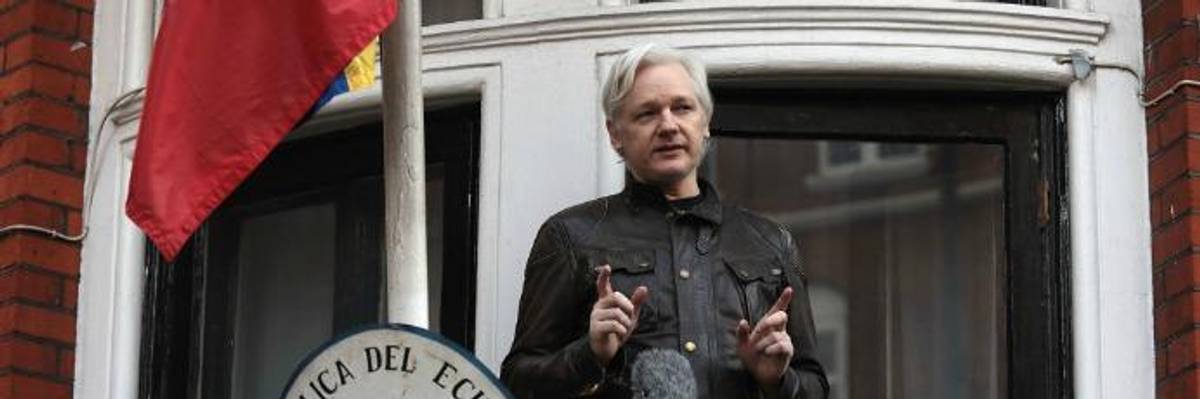
Julian Assange speaks to the media from the balcony of the Embassy Of Ecuador on May 19, 2017 in London, England. (Photo: Jack Taylor/Getty Images)
Amid new reports that Ecuador is preparing to withdraw asylum protections from WikiLeaks founder Julian Assange and hand him over to British authorities within the next few weeks, journalists are raising alarm at the serious threats to press freedom such a move could spawn, given that the U.K. may decide to extradite Assange to the United States--where he could face "prosecution for the act of publishing documents."
"The Obama administration was eager to prosecute Assange and WikiLeaks for publishing hundreds of thousands of classified documents, but ultimately concluded that there was no way to do so without either also prosecuting newspapers such as the New York Times and the Guardian which published the same documents," notes The Intercept's Glenn Greenwald, who reported on Saturday that Ecuadorian President Lenin Moreno is "close to finalizing" a deal to eject Assange from Ecuador's London embassy, where he has been living since 2012.
However, top Trump administration officials are not at all concerned about the dangerous precedents prosecuting Assange could set, Greenwald notes, citing a "deranged" speech by U.S. Secretary of State Mike Pompeo in which he declared "we can no longer allow Assange and his colleagues the latitude to use free speech values against us."
"When it comes to press freedom threats," Greenwald argues, the very real possibility that Trump could attempt to prosecute Assange "would not be in the same universe as name-calling tweets by Trump directed at various TV personalities."
"It should not be this difficult for journalists to set aside their personal emotions about Assange to recognize the profound dangers--not just to press freedoms but to themselves--if the U.S. government succeeds in keeping Assange imprisoned for years to come, all due to its attempts to prosecute him for publishing classified or stolen documents," Greenwald concludes. That seems the highly likely scenario once Ecuador hands over Assange to the U.K."
In response to Greenwald's reporting, many journalists echoed the sentiment that, whatever one feels about Assange, any true defender of press freedom should denounce efforts by the Trump administration to prosecute him for "merely publishing classified information the same way journalists regularly do."
Writing for Consortium News, Italian journalist Stefania Maurizi--who has worked on documents released by WikiLeaks for years, noted: "Like its work or not, WikiLeaks is an independent media organization that doesn't have to rely on traditional media to publish its scoops. Indeed it was founded to bypass the legal qualms traditional media may have about publishing classified information."
"Thanks to WikiLeaks, it has been possible to reveal the true face of the U.S. wars in Afghanistan and in Iraq (Afghan War Logs, Iraq War Logs Files, and Collateral Murder), the identities of Guantanamo detainees (Gitmo Files), the scandals and embarrassing diplomatic deals contained in 251,287 U.S. diplomacy cables, such as pressure from the U.S. to neutralize Italian prosecutors investigating the extraordinary rendition of the Milan cleric, Abu Omar (Cablegate)," Maurizi observes.
Dear Common Dreams reader, It’s been nearly 30 years since I co-founded Common Dreams with my late wife, Lina Newhouser. We had the radical notion that journalism should serve the public good, not corporate profits. It was clear to us from the outset what it would take to build such a project. No paid advertisements. No corporate sponsors. No millionaire publisher telling us what to think or do. Many people said we wouldn't last a year, but we proved those doubters wrong. Together with a tremendous team of journalists and dedicated staff, we built an independent media outlet free from the constraints of profits and corporate control. Our mission has always been simple: To inform. To inspire. To ignite change for the common good. Building Common Dreams was not easy. Our survival was never guaranteed. When you take on the most powerful forces—Wall Street greed, fossil fuel industry destruction, Big Tech lobbyists, and uber-rich oligarchs who have spent billions upon billions rigging the economy and democracy in their favor—the only bulwark you have is supporters who believe in your work. But here’s the urgent message from me today. It's never been this bad out there. And it's never been this hard to keep us going. At the very moment Common Dreams is most needed, the threats we face are intensifying. We need your support now more than ever. We don't accept corporate advertising and never will. We don't have a paywall because we don't think people should be blocked from critical news based on their ability to pay. Everything we do is funded by the donations of readers like you. When everyone does the little they can afford, we are strong. But if that support retreats or dries up, so do we. Will you donate now to make sure Common Dreams not only survives but thrives? —Craig Brown, Co-founder |
Amid new reports that Ecuador is preparing to withdraw asylum protections from WikiLeaks founder Julian Assange and hand him over to British authorities within the next few weeks, journalists are raising alarm at the serious threats to press freedom such a move could spawn, given that the U.K. may decide to extradite Assange to the United States--where he could face "prosecution for the act of publishing documents."
"The Obama administration was eager to prosecute Assange and WikiLeaks for publishing hundreds of thousands of classified documents, but ultimately concluded that there was no way to do so without either also prosecuting newspapers such as the New York Times and the Guardian which published the same documents," notes The Intercept's Glenn Greenwald, who reported on Saturday that Ecuadorian President Lenin Moreno is "close to finalizing" a deal to eject Assange from Ecuador's London embassy, where he has been living since 2012.
However, top Trump administration officials are not at all concerned about the dangerous precedents prosecuting Assange could set, Greenwald notes, citing a "deranged" speech by U.S. Secretary of State Mike Pompeo in which he declared "we can no longer allow Assange and his colleagues the latitude to use free speech values against us."
"When it comes to press freedom threats," Greenwald argues, the very real possibility that Trump could attempt to prosecute Assange "would not be in the same universe as name-calling tweets by Trump directed at various TV personalities."
"It should not be this difficult for journalists to set aside their personal emotions about Assange to recognize the profound dangers--not just to press freedoms but to themselves--if the U.S. government succeeds in keeping Assange imprisoned for years to come, all due to its attempts to prosecute him for publishing classified or stolen documents," Greenwald concludes. That seems the highly likely scenario once Ecuador hands over Assange to the U.K."
In response to Greenwald's reporting, many journalists echoed the sentiment that, whatever one feels about Assange, any true defender of press freedom should denounce efforts by the Trump administration to prosecute him for "merely publishing classified information the same way journalists regularly do."
Writing for Consortium News, Italian journalist Stefania Maurizi--who has worked on documents released by WikiLeaks for years, noted: "Like its work or not, WikiLeaks is an independent media organization that doesn't have to rely on traditional media to publish its scoops. Indeed it was founded to bypass the legal qualms traditional media may have about publishing classified information."
"Thanks to WikiLeaks, it has been possible to reveal the true face of the U.S. wars in Afghanistan and in Iraq (Afghan War Logs, Iraq War Logs Files, and Collateral Murder), the identities of Guantanamo detainees (Gitmo Files), the scandals and embarrassing diplomatic deals contained in 251,287 U.S. diplomacy cables, such as pressure from the U.S. to neutralize Italian prosecutors investigating the extraordinary rendition of the Milan cleric, Abu Omar (Cablegate)," Maurizi observes.
Amid new reports that Ecuador is preparing to withdraw asylum protections from WikiLeaks founder Julian Assange and hand him over to British authorities within the next few weeks, journalists are raising alarm at the serious threats to press freedom such a move could spawn, given that the U.K. may decide to extradite Assange to the United States--where he could face "prosecution for the act of publishing documents."
"The Obama administration was eager to prosecute Assange and WikiLeaks for publishing hundreds of thousands of classified documents, but ultimately concluded that there was no way to do so without either also prosecuting newspapers such as the New York Times and the Guardian which published the same documents," notes The Intercept's Glenn Greenwald, who reported on Saturday that Ecuadorian President Lenin Moreno is "close to finalizing" a deal to eject Assange from Ecuador's London embassy, where he has been living since 2012.
However, top Trump administration officials are not at all concerned about the dangerous precedents prosecuting Assange could set, Greenwald notes, citing a "deranged" speech by U.S. Secretary of State Mike Pompeo in which he declared "we can no longer allow Assange and his colleagues the latitude to use free speech values against us."
"When it comes to press freedom threats," Greenwald argues, the very real possibility that Trump could attempt to prosecute Assange "would not be in the same universe as name-calling tweets by Trump directed at various TV personalities."
"It should not be this difficult for journalists to set aside their personal emotions about Assange to recognize the profound dangers--not just to press freedoms but to themselves--if the U.S. government succeeds in keeping Assange imprisoned for years to come, all due to its attempts to prosecute him for publishing classified or stolen documents," Greenwald concludes. That seems the highly likely scenario once Ecuador hands over Assange to the U.K."
In response to Greenwald's reporting, many journalists echoed the sentiment that, whatever one feels about Assange, any true defender of press freedom should denounce efforts by the Trump administration to prosecute him for "merely publishing classified information the same way journalists regularly do."
Writing for Consortium News, Italian journalist Stefania Maurizi--who has worked on documents released by WikiLeaks for years, noted: "Like its work or not, WikiLeaks is an independent media organization that doesn't have to rely on traditional media to publish its scoops. Indeed it was founded to bypass the legal qualms traditional media may have about publishing classified information."
"Thanks to WikiLeaks, it has been possible to reveal the true face of the U.S. wars in Afghanistan and in Iraq (Afghan War Logs, Iraq War Logs Files, and Collateral Murder), the identities of Guantanamo detainees (Gitmo Files), the scandals and embarrassing diplomatic deals contained in 251,287 U.S. diplomacy cables, such as pressure from the U.S. to neutralize Italian prosecutors investigating the extraordinary rendition of the Milan cleric, Abu Omar (Cablegate)," Maurizi observes.