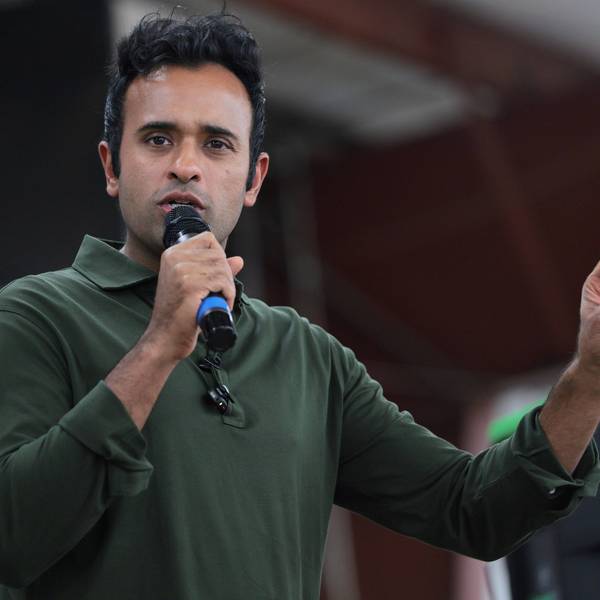

Billionaire and Blackwater founder Erik Prince appealed to President Donald Trump to privatize the Afghan war in a pair of videos published Tuesday. (Photo: Wars of Waste/YouTube)
Notorious War Profiteer Erik Prince Refuses To Give Up Dream of Mercenary Takeover of Afghan War
The billionaire's pitch comes as the White House is reportedly "preparing for a government-wide appraisal" of the war strategy
Notorious billionaire and war profiteer Erik Prince, who founded the disgraced mercenary firm Blackwater, is once again appealing to President Donald Trump to privatize the 17-year-old war in Afghanistan.
As the Trump White House is "preparing for a government-wide appraisal" of the war in the coming months--as Reuters reported Tuesday, citing "several current U.S. officials and other former officials and advisers with direct knowledge"--Prince is refusing to give up his dream of a mercenary takeover of the war.
While world leaders headed to Brussels for the NATO summit, Prince published a pair of videos on YouTube Tuesday. Backed by suspenseful music as well as clips of the 9/11 terrorist attacks and U.S. military operations in the Middle East, Prince urges Trump "to appoint a special presidential envoy and empower them to wage an unconventional war against the Taliban and Daesh forces."
Prince also delved into his master plan in an op-ed for RealClearPolitics and an exclusive interview with The Independent. His privatization pitch--he prefers the euphemisms "rationalizing and restructuring"--is not new. As the newspaper noted, "It was a strategy he put forward once before to the White House, where it received the backing of Steve Bannon, then Mr. Trump's chief strategist, and his son-in-law Jared Kushner."
While the president rejected Prince's proposal--which was criticized by Trump's then-national security adviser H.R. McMaster, then-Secretary of State Rex Tillerson, and Defense Secretary James Mattis--when he unveiled his administration's Afghanistan "strategy" last August, rather than scaling back the war effort or ending the conflict, Trump opted to send thousands of more troops, in a move that peace advocates warned would undoubtably lead to more bloodshed.
Since then, the newspaper reported, "there have been changes, with the extraordinary churn, in the Trump administration, and the current Secretary of State, Mike Pompeo, and National Security Adviser John Bolton will be much more receptive, Mr. Prince believes, to his plan." And although Prince sold Blackwater--which rebranded as ACADEMI--in 2010, he "will make money from the Afghan project if he is associated with it."
When Prince pitched his privatization to the Trump While House last year--and promoted it through a series of op-eds--critics quickly pointed to his past blunders, particularly the 2007 Nisour Square massacre, and slammed him for trying to "tak[e] advantage of an opportunity to shill for his latest collection of well-compensated mercenaries." Prince is now chairman of the Hong Kong-based private equity firm Frontier Services Group, whose "business involves selling 'force protection' to clients in countries including Afghanistan."
Prince is also the brother of Education Secretary Betsy DeVos and served as an advisor to the Trump transition team. He is involved with Special Counsel Robert Mueller's investigation into alleged Russian election interference due to a 2017 meeting in Seychelles between Prince and the CEO of the Russian government's $10 billion sovereign wealth fund, which reportedly occurred to establish a "back-channel line of communication" between Trump and Russian President Vladimir Putin. He has denied the reported details about the meeting and told The Independent he has "no concern at all" about the Mueller probe.
We are at a crossroads
This country and this world are at a monumental crossroads. In a few short weeks, US voters will have an opportunity to beat back the forces of fascism and confront the billionaires who are rigging the economy, our media system, and our democracy, making it increasingly impossible for ordinary people to get by. We’re not just talking about the election. We’re talking about what must be done once these fascist elements are vanquished from power. We need a bolder set of solutions than what either major party has so far been willing to offer and a working-class movement ready to fight like hell for it. Trump didn't emerge from nowhere. The conditions that fueled MAGA authoritarianism were created by decades of radical neoliberal economic policies and a corrupt political system dominated by corporate interests. They slashed taxes on the super-rich, promising that the benefits would trickle down. They said giveaways to the corporate titans would make life more affordable for the rest of us. It was all bullshit. And when a bitter, betrayed populace searches for someone to blame, right-wing demagogues have little trouble finding scapegoats. People know when they're being lied to, but you won't hear any of this from the corporate media. Only independent journalism—powered and funded by people who believe in building a better world—can deliver truly trustworthy daily news. Our Fall Campaign is underway, and we need your help. To power our newsroom through the rest of the year, we need to raise $125,000 by midnight on October 31. So if you share our vision, please contribute whatever you can to sustain our work. |
Notorious billionaire and war profiteer Erik Prince, who founded the disgraced mercenary firm Blackwater, is once again appealing to President Donald Trump to privatize the 17-year-old war in Afghanistan.
As the Trump White House is "preparing for a government-wide appraisal" of the war in the coming months--as Reuters reported Tuesday, citing "several current U.S. officials and other former officials and advisers with direct knowledge"--Prince is refusing to give up his dream of a mercenary takeover of the war.
While world leaders headed to Brussels for the NATO summit, Prince published a pair of videos on YouTube Tuesday. Backed by suspenseful music as well as clips of the 9/11 terrorist attacks and U.S. military operations in the Middle East, Prince urges Trump "to appoint a special presidential envoy and empower them to wage an unconventional war against the Taliban and Daesh forces."
Prince also delved into his master plan in an op-ed for RealClearPolitics and an exclusive interview with The Independent. His privatization pitch--he prefers the euphemisms "rationalizing and restructuring"--is not new. As the newspaper noted, "It was a strategy he put forward once before to the White House, where it received the backing of Steve Bannon, then Mr. Trump's chief strategist, and his son-in-law Jared Kushner."
While the president rejected Prince's proposal--which was criticized by Trump's then-national security adviser H.R. McMaster, then-Secretary of State Rex Tillerson, and Defense Secretary James Mattis--when he unveiled his administration's Afghanistan "strategy" last August, rather than scaling back the war effort or ending the conflict, Trump opted to send thousands of more troops, in a move that peace advocates warned would undoubtably lead to more bloodshed.
Since then, the newspaper reported, "there have been changes, with the extraordinary churn, in the Trump administration, and the current Secretary of State, Mike Pompeo, and National Security Adviser John Bolton will be much more receptive, Mr. Prince believes, to his plan." And although Prince sold Blackwater--which rebranded as ACADEMI--in 2010, he "will make money from the Afghan project if he is associated with it."
When Prince pitched his privatization to the Trump While House last year--and promoted it through a series of op-eds--critics quickly pointed to his past blunders, particularly the 2007 Nisour Square massacre, and slammed him for trying to "tak[e] advantage of an opportunity to shill for his latest collection of well-compensated mercenaries." Prince is now chairman of the Hong Kong-based private equity firm Frontier Services Group, whose "business involves selling 'force protection' to clients in countries including Afghanistan."
Prince is also the brother of Education Secretary Betsy DeVos and served as an advisor to the Trump transition team. He is involved with Special Counsel Robert Mueller's investigation into alleged Russian election interference due to a 2017 meeting in Seychelles between Prince and the CEO of the Russian government's $10 billion sovereign wealth fund, which reportedly occurred to establish a "back-channel line of communication" between Trump and Russian President Vladimir Putin. He has denied the reported details about the meeting and told The Independent he has "no concern at all" about the Mueller probe.
Notorious billionaire and war profiteer Erik Prince, who founded the disgraced mercenary firm Blackwater, is once again appealing to President Donald Trump to privatize the 17-year-old war in Afghanistan.
As the Trump White House is "preparing for a government-wide appraisal" of the war in the coming months--as Reuters reported Tuesday, citing "several current U.S. officials and other former officials and advisers with direct knowledge"--Prince is refusing to give up his dream of a mercenary takeover of the war.
While world leaders headed to Brussels for the NATO summit, Prince published a pair of videos on YouTube Tuesday. Backed by suspenseful music as well as clips of the 9/11 terrorist attacks and U.S. military operations in the Middle East, Prince urges Trump "to appoint a special presidential envoy and empower them to wage an unconventional war against the Taliban and Daesh forces."
Prince also delved into his master plan in an op-ed for RealClearPolitics and an exclusive interview with The Independent. His privatization pitch--he prefers the euphemisms "rationalizing and restructuring"--is not new. As the newspaper noted, "It was a strategy he put forward once before to the White House, where it received the backing of Steve Bannon, then Mr. Trump's chief strategist, and his son-in-law Jared Kushner."
While the president rejected Prince's proposal--which was criticized by Trump's then-national security adviser H.R. McMaster, then-Secretary of State Rex Tillerson, and Defense Secretary James Mattis--when he unveiled his administration's Afghanistan "strategy" last August, rather than scaling back the war effort or ending the conflict, Trump opted to send thousands of more troops, in a move that peace advocates warned would undoubtably lead to more bloodshed.
Since then, the newspaper reported, "there have been changes, with the extraordinary churn, in the Trump administration, and the current Secretary of State, Mike Pompeo, and National Security Adviser John Bolton will be much more receptive, Mr. Prince believes, to his plan." And although Prince sold Blackwater--which rebranded as ACADEMI--in 2010, he "will make money from the Afghan project if he is associated with it."
When Prince pitched his privatization to the Trump While House last year--and promoted it through a series of op-eds--critics quickly pointed to his past blunders, particularly the 2007 Nisour Square massacre, and slammed him for trying to "tak[e] advantage of an opportunity to shill for his latest collection of well-compensated mercenaries." Prince is now chairman of the Hong Kong-based private equity firm Frontier Services Group, whose "business involves selling 'force protection' to clients in countries including Afghanistan."
Prince is also the brother of Education Secretary Betsy DeVos and served as an advisor to the Trump transition team. He is involved with Special Counsel Robert Mueller's investigation into alleged Russian election interference due to a 2017 meeting in Seychelles between Prince and the CEO of the Russian government's $10 billion sovereign wealth fund, which reportedly occurred to establish a "back-channel line of communication" between Trump and Russian President Vladimir Putin. He has denied the reported details about the meeting and told The Independent he has "no concern at all" about the Mueller probe.