

SUBSCRIBE TO OUR FREE NEWSLETTER
Daily news & progressive opinion—funded by the people, not the corporations—delivered straight to your inbox.
5
#000000
#FFFFFF
To donate by check, phone, or other method, see our More Ways to Give page.
Daily news & progressive opinion—funded by the people, not the corporations—delivered straight to your inbox.
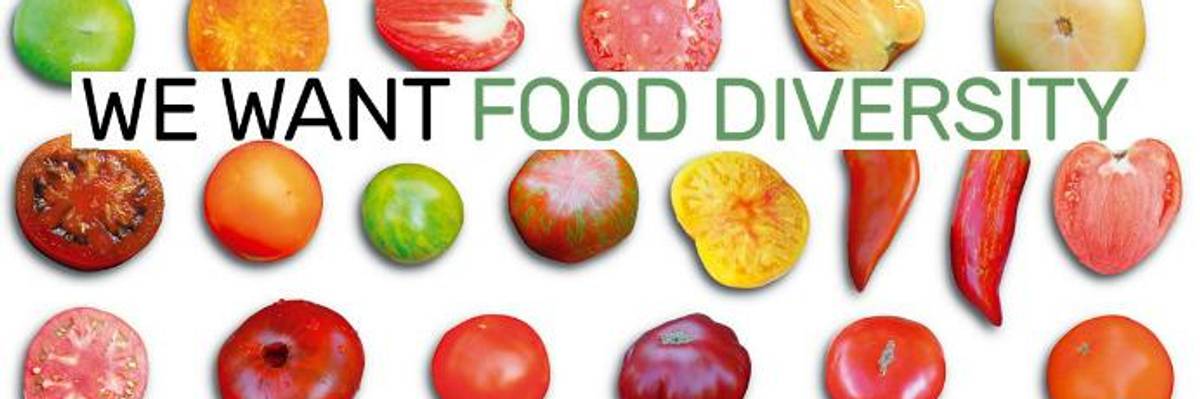
Farmers, environmentalists, and consumer advocates have rallied against Bayer and Monsanto's proposed "merger from Hell." (Photo: The Greens-EFA/Twitter)
After weeks of speculation, chemical giant Bayer and biotech behemoth Monsanto have cleared a significant regulatory hurdle in their bid to consolidate into one company through a multibillion-dollar deal that critics are calling the "merger from Hell."
"The coming together of these two is a marriage made in hell--bad for farmers, bad for consumers, and bad for our countryside."
--Adrian Bebb, Friends of the Earth Europe
Ahead of its April deadline, on Wednesday the European Commission--the European Union's executive arm--approved Bayer's proposed takeover of U.S.-based Monsanto, claiming that concessions made by the companies alleviated competition concerns that critics have raised with regulators in both Europe and the United States.
Although the Commission's decision is a major win for the companies, U.S. regulators have not yet weighed in. Still, Wednesday's announcement alarmed activists that have spent months protesting the deal.
"This merger will create the world's biggest and most powerful agribusiness corporation, which will try to force its genetically modified seeds and toxic pesticides into our food and countryside," warned Adrian Bebb, a food and farming campaigner at Friends of the Earth Europe.
"The Commission decision also allows them, together with BASF, to become data giants in agriculture--the 'Facebooks of farming'--with all the pitfalls that entails," Bebb added. "The coming together of these two is a marriage made in hell--bad for farmers, bad for consumers, and bad for our countryside."
BASF--a German company, like Bayer--has agreed to buy assets from Bayer, which has been key to winning over regulators.
"The Commission ignored a million people who called on them to block this deal, and caved in to lobbying to create a mega-corporation which will dominate our food supply."
--Nick Flynn, Avaaz
Farmers, environmentalists, and consumer advocates who oppose the merger have repeatedly pointed to polling that shows Europeans aren't in favor of it. As Common Dreams reported last month, "a YouGov poll that found a majority of respondents from Germany, France, Spain, Denmark, and the U.K. believe it is 'very' or 'fairly important' for the European Commission to block the merger."
"The Commission ignored a million people who called on them to block this deal, and caved in to lobbying to create a mega-corporation which will dominate our food supply," Nick Flynn, legal director of the online campaigns group Avaaz, told Reuters.
"The agriculture industry is already far too concentrated, giving a handful of massive firms a strangle hold on food production," noted Bart Staes, a food safety spokesman for The Greens-European Free Alliance. "Merging two of the biggest players only makes a bad situation worse."
Critics of the merger, including global advocacy group SumOfUs, vowed to continue the fight against it by increasing pressuring on U.S. regulators.
Dear Common Dreams reader, It’s been nearly 30 years since I co-founded Common Dreams with my late wife, Lina Newhouser. We had the radical notion that journalism should serve the public good, not corporate profits. It was clear to us from the outset what it would take to build such a project. No paid advertisements. No corporate sponsors. No millionaire publisher telling us what to think or do. Many people said we wouldn't last a year, but we proved those doubters wrong. Together with a tremendous team of journalists and dedicated staff, we built an independent media outlet free from the constraints of profits and corporate control. Our mission has always been simple: To inform. To inspire. To ignite change for the common good. Building Common Dreams was not easy. Our survival was never guaranteed. When you take on the most powerful forces—Wall Street greed, fossil fuel industry destruction, Big Tech lobbyists, and uber-rich oligarchs who have spent billions upon billions rigging the economy and democracy in their favor—the only bulwark you have is supporters who believe in your work. But here’s the urgent message from me today. It's never been this bad out there. And it's never been this hard to keep us going. At the very moment Common Dreams is most needed, the threats we face are intensifying. We need your support now more than ever. We don't accept corporate advertising and never will. We don't have a paywall because we don't think people should be blocked from critical news based on their ability to pay. Everything we do is funded by the donations of readers like you. When everyone does the little they can afford, we are strong. But if that support retreats or dries up, so do we. Will you donate now to make sure Common Dreams not only survives but thrives? —Craig Brown, Co-founder |
After weeks of speculation, chemical giant Bayer and biotech behemoth Monsanto have cleared a significant regulatory hurdle in their bid to consolidate into one company through a multibillion-dollar deal that critics are calling the "merger from Hell."
"The coming together of these two is a marriage made in hell--bad for farmers, bad for consumers, and bad for our countryside."
--Adrian Bebb, Friends of the Earth Europe
Ahead of its April deadline, on Wednesday the European Commission--the European Union's executive arm--approved Bayer's proposed takeover of U.S.-based Monsanto, claiming that concessions made by the companies alleviated competition concerns that critics have raised with regulators in both Europe and the United States.
Although the Commission's decision is a major win for the companies, U.S. regulators have not yet weighed in. Still, Wednesday's announcement alarmed activists that have spent months protesting the deal.
"This merger will create the world's biggest and most powerful agribusiness corporation, which will try to force its genetically modified seeds and toxic pesticides into our food and countryside," warned Adrian Bebb, a food and farming campaigner at Friends of the Earth Europe.
"The Commission decision also allows them, together with BASF, to become data giants in agriculture--the 'Facebooks of farming'--with all the pitfalls that entails," Bebb added. "The coming together of these two is a marriage made in hell--bad for farmers, bad for consumers, and bad for our countryside."
BASF--a German company, like Bayer--has agreed to buy assets from Bayer, which has been key to winning over regulators.
"The Commission ignored a million people who called on them to block this deal, and caved in to lobbying to create a mega-corporation which will dominate our food supply."
--Nick Flynn, Avaaz
Farmers, environmentalists, and consumer advocates who oppose the merger have repeatedly pointed to polling that shows Europeans aren't in favor of it. As Common Dreams reported last month, "a YouGov poll that found a majority of respondents from Germany, France, Spain, Denmark, and the U.K. believe it is 'very' or 'fairly important' for the European Commission to block the merger."
"The Commission ignored a million people who called on them to block this deal, and caved in to lobbying to create a mega-corporation which will dominate our food supply," Nick Flynn, legal director of the online campaigns group Avaaz, told Reuters.
"The agriculture industry is already far too concentrated, giving a handful of massive firms a strangle hold on food production," noted Bart Staes, a food safety spokesman for The Greens-European Free Alliance. "Merging two of the biggest players only makes a bad situation worse."
Critics of the merger, including global advocacy group SumOfUs, vowed to continue the fight against it by increasing pressuring on U.S. regulators.
After weeks of speculation, chemical giant Bayer and biotech behemoth Monsanto have cleared a significant regulatory hurdle in their bid to consolidate into one company through a multibillion-dollar deal that critics are calling the "merger from Hell."
"The coming together of these two is a marriage made in hell--bad for farmers, bad for consumers, and bad for our countryside."
--Adrian Bebb, Friends of the Earth Europe
Ahead of its April deadline, on Wednesday the European Commission--the European Union's executive arm--approved Bayer's proposed takeover of U.S.-based Monsanto, claiming that concessions made by the companies alleviated competition concerns that critics have raised with regulators in both Europe and the United States.
Although the Commission's decision is a major win for the companies, U.S. regulators have not yet weighed in. Still, Wednesday's announcement alarmed activists that have spent months protesting the deal.
"This merger will create the world's biggest and most powerful agribusiness corporation, which will try to force its genetically modified seeds and toxic pesticides into our food and countryside," warned Adrian Bebb, a food and farming campaigner at Friends of the Earth Europe.
"The Commission decision also allows them, together with BASF, to become data giants in agriculture--the 'Facebooks of farming'--with all the pitfalls that entails," Bebb added. "The coming together of these two is a marriage made in hell--bad for farmers, bad for consumers, and bad for our countryside."
BASF--a German company, like Bayer--has agreed to buy assets from Bayer, which has been key to winning over regulators.
"The Commission ignored a million people who called on them to block this deal, and caved in to lobbying to create a mega-corporation which will dominate our food supply."
--Nick Flynn, Avaaz
Farmers, environmentalists, and consumer advocates who oppose the merger have repeatedly pointed to polling that shows Europeans aren't in favor of it. As Common Dreams reported last month, "a YouGov poll that found a majority of respondents from Germany, France, Spain, Denmark, and the U.K. believe it is 'very' or 'fairly important' for the European Commission to block the merger."
"The Commission ignored a million people who called on them to block this deal, and caved in to lobbying to create a mega-corporation which will dominate our food supply," Nick Flynn, legal director of the online campaigns group Avaaz, told Reuters.
"The agriculture industry is already far too concentrated, giving a handful of massive firms a strangle hold on food production," noted Bart Staes, a food safety spokesman for The Greens-European Free Alliance. "Merging two of the biggest players only makes a bad situation worse."
Critics of the merger, including global advocacy group SumOfUs, vowed to continue the fight against it by increasing pressuring on U.S. regulators.

