SUBSCRIBE TO OUR FREE NEWSLETTER
Daily news & progressive opinion—funded by the people, not the corporations—delivered straight to your inbox.
5
#000000
#FFFFFF
To donate by check, phone, or other method, see our More Ways to Give page.


Daily news & progressive opinion—funded by the people, not the corporations—delivered straight to your inbox.
"It's time for YouTube to step up, detox its platform, and protect the integrity of the fight against the climate crisis," said Ekō's campaign director.
Google-owned YouTube is again facing allegations of profiting from not enforcing its own ban on the monetization of climate misinformation, this time in a report published Friday amid legislative battles in Brazil over policies on the Amazon rainforest, Indigenous rights, and social media.
Google announced in October 2021 that for advertisers and publishers along with creators on its video platform YouTube, the company would "prohibit ads for, and monetization of, content that contradicts well-established scientific consensus around the existence and causes of climate change."
For four weeks, researchers with Ekō—a group formerly known as SumOfUs that works to curb the power of big corporations—reviewed 60 YouTube videos in English and Portuguese that contained disinformation and conspiracy theories about Amazon deforestation, Indigenous rights, and the climate emergency.
Over two-thirds of the videos were monetized, and Ekō identified more than 150 brands in the ads. Using a common industry tool, researchers estimated that the channels—which collectively had over 40 million subscribers and more than 5 million views—earn $636,000 to $10.1 million a year through monetization.
"The proliferation of disinformation and conspiracy theories are helping to derail efforts by the Lula administration to advance policy agendas around Amazon protection, Indigenous land rights, and social media regulation."
"Well-known Brazilian and global brands like Lyft, Calvin Klein, Budweiser, Panasonic, and Samsung, as well as environmental and human rights groups like Friends of the Earth U.K., UNICEF, and the Peace Corps, are appearing next to extreme climate denial content and conspiracy theories," the report states, "effectively pouring money into the pockets of conspiracy theorists and climate deniers."
"Ekō researchers found top-name apparel, electronics, and drink brands appearing next to videos suggesting actor Leonardo DiCaprio funded nongovernmental organizations to commit arson in the Amazon," the publication continues. "Other false claims include that the rainforest is too humid to catch fire, and that manmade global warming is a lie."
"The proliferation of disinformation and conspiracy theories are helping to derail efforts by the Lula administration to advance policy agendas around Amazon protection, Indigenous land rights, and social media regulation," the document adds, pushing for policy "that prevents platforms from monetizing and profiting from disinformation and lies that are subverting the legislative process."
In a statement Friday, Ekō campaign director Vicky Wyatt also demanded action from the company.
"While global warming, deforestation, and wildfires reach their highest levels ever recorded, YouTube's shameless greenwashing is exposed—with the company giving profits to climate deniers to the tune of millions," said Wyatt. "This is a clear slap in the face to the brands whose advertisements unknowingly support climate disinformation. It's time for YouTube to step up, detox its platform, and protect the integrity of the fight against the climate crisis."
Ekō's analysis follows a May report from Climate Action Against Disinformation (CAAD) for which researchers found 200 YouTube videos containing climate mis- and disinformation. The videos had a total of 73.8 million views and all had featured ads.
YouTube spokesperson Michael Aciman told Engadget in response to those findings that the company is "constantly working" to remove content that violates its rules and welcomes third-party feedback to "help improve the accuracy of our enforcement over time."
"In 2021, we launched a new, industry-leading policy that explicitly prohibits ads from running on content promoting false claims about the existence and causes of climate change, which we designed in consultation with experts and authoritative sources on climate science," Aciman also said. "We do allow policy debate or discussions of climate-related initiatives, but when content crosses the line to climate change denial, we remove ads from serving on those videos.”
Meanwhile, Callum Hood, head of research at the Center for Countering Digital Hate, part of the CAAD coalition, said at the time that "despite Google's green grandstanding, its ads continue to fuel the climate denial industry."
"Whether it's taking cash to target users with climate disinformation, or running ads that make climate denial content profitable, the company is selling out," Hood added. "Tech companies make big promises on hate and misinformation because they know it's hard to see if they've kept them. We need to force Google to open up the black box of its advertising business."
As Brazilians prepare to vote in Sunday's decisive presidential runoff, a report published Saturday revealed that social media giants Meta--Facebook's parent company--and TikTok are driving traffic to content promoting a military coup to overthrow Brazil's democracy.
The report--entitled Stop the Steal 2.0: How Meta and TikTok Are Promoting a Coup--was published by the San Francisco-based activist group SumOfUs and asserts that "on the eve of the second vote in Brazil's most important election in decades, Meta and TikTok continue to put the integrity of the election on the line through their disastrous recommendation systems."
The publication comes ahead of Sunday's second-round contest between far-right incumbent Jair Bolsonaro--who has said he may not accept the outcome of the election if he loses-and former leftist President Luiz Inacio Lula da Silva. Aggregate polling showed the two candidates in a statistical dead heat on Friday.
According to the new report:
Meta claims that Brazil is a priority region and that the company is committed to enforcing policies and practices that uphold the integrity of the vote. But not only does SumOfUs' previous research show that the platforms are awash with conspiracy theories about the election, claims of electoral fraud, and calls for a military coup, this research report sets out how Facebook's recommender systems are actively pushing users towards this content.
Far-right extremists, who are openly agitating for a military coup, are operating freely on Meta's platforms, and Meta is not only allowing them to spread their message and recruit new members, but the platform's algorithms are prioritizing anti-democratic groups, accounts, and posts. The report also looked at the role TikTok is playing in tackling the growing problem of election disinformation on its platform, and found its moderation lacking...
The findings confirm civil society organizations' worst fears, that platforms like Facebook and Instagram are enabling bad actors to organize and recruit new members, just as it did in the U.S. 2020 elections, which ended in violent insurrectionists storming the U.S. Capitol on January 6th.
"At this point, it is safe to say that Meta has become Bolsonaro's official disinformation machine," SumOfUs campaign director Flora Rebello Arduini said in a statement. "This is not Meta's first time wreaking havoc on democracy and Brazilians deserve better from this multi-billion dollar company."
"As this report shows," she added, "TikTok needs to up its game and not follow Meta's lead in fueling the disinformation crisis in Brazil."
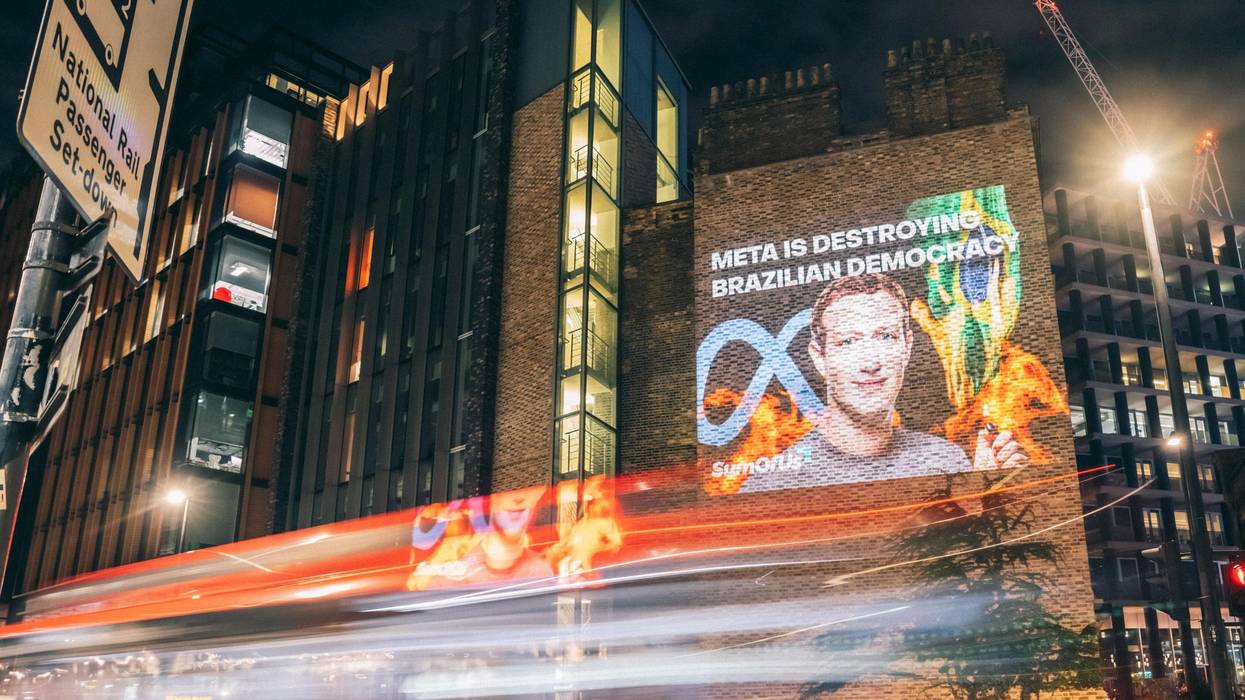
On Saturday evening, SumOfUs activists projected an image of Meta co-founder and CEO Mark Zuckerberg setting the Brazilian flag alight with the message "Meta is destroying Brazilian democracy" at Kings Cross tube station in London, just around the corner from Meta's U.K. headquarters.
The new report comes amid warnings and acts of right-wing political violence. While no motive has yet been announced, on Friday local Sao Paulo-area politician Reginaldo Camilo dos Santos, a prominent supporter of da Silva and the left-wing Workers' Party running for Congress, was assassinated in a drive-by shooting near his home in Jandira.
Agencia Publica, an independent Brazilian investigative journalism outlet, reported earlier this month that from August 16 and the end of the first round on October 2, there were at least 148 cases of electoral violence across the country.
A separate report published last week by the anti-corruption and human rights organization Global Witness revealed that YouTube approved 100% of Brazilian election misinformation ads submitted for approval, while Facebook accepted around half of such submissions.
With Brazil's Supreme Court under fire by backers of Brazilian President Jair Bolsonaro for upholding a judge's decision allowing the removal of false election claims from online platforms ahead of next week's presidential runoff, observers warned Tuesday that the country's voters are being bombarded with misinformation that some campaigners said resembles efforts by supporters of former U.S. President Donald Trump to subvert the 2020 election.
"Disinformation and hate speech online have taken over Brazilian politics, jeopardizing the integrity of the elections."
The Associated Press reported Tuesday that social media misinformation includes claims that leftist frontrunner Luiz Inacio Lula da Silva plans to shut down churches if elected and that he wants to allow men use public school restrooms next to young girls. Meanwhile, da Silva backers have falsely accused Bolsonaro of confessing to cannibalism and pedophilia.
The torrent of fake online election news spurred Brazil's Superior Electoral Court (TSE) to empower Alexandre de Moraes--a Brazilian Supreme Court justice who also serves as president of the TSE--with unilateral power to compel tech companies to remove false posts. On Tuesday, the Supreme Court upheld the move.
"What is happening in Brazil on Facebook, on YouTube, and other platforms looks awfully similar to what was happening in the U.S. around the 2020 election," Vicky Wyatt, a campaign director at the San Francisco-based activist group SumOfUs, told the Associated Press. "An individual post might not have that much reach, but cumulatively over time, having this constant drip-drip has negative consequences."
A report published last week by the anti-corruption and human rights organization Global Witness revealed that YouTube approved 100% of Brazilian election misinformation ads submitted for approval, while Facebook accepted around half of such submissions.
"It's frankly shocking that these massive firms, with the technological prowess they clearly have, are unable to weed out such blatant disinformation being pushed onto their users. In the case of Facebook, not once, not twice, but three times some of the same ads have been approved," Global Witness senior adviser Jon Lloyd said in a statement.
"This key vote in Brazil has been marred by a huge spike in political violence, killings, threats, and kidnappings," he added. "It's a sad reality that this tense environment has been fueled online. The issues raised here are not simply what could or might be happening--it is happening."
After an unexpectedly close first-round finish that sparked widespread criticism of Brazilian presidential pollsters, the latest aggregate polling for the October 30 runoff shows da Silva with a narrow 4-point lead over Bolsonaro.
Da Silva leads Bolsonaro 50% to 43% in an IPEC poll published Monday. As Reuters noted, "IPEC was one of several polling firms criticized for underestimating support for Bolsonaro in the first-round vote."
Bolsonaro, an open admirer of the former U.S.-backed 1964-85 military dictatorship in whose army he served as an officer, has warned he may not accept the results of the election in the likely event he loses.
On Monday, da Silva said during a press conference that if he wins the election, he hopes that Bolsonaro "will have a moment of sanity and phone me to accept the election result."
"If Bolsonaro loses and he wants to cry... I lost three elections," added the former two-term president. "Each time I lost, I went home. I didn't keep cursing, being agitated."
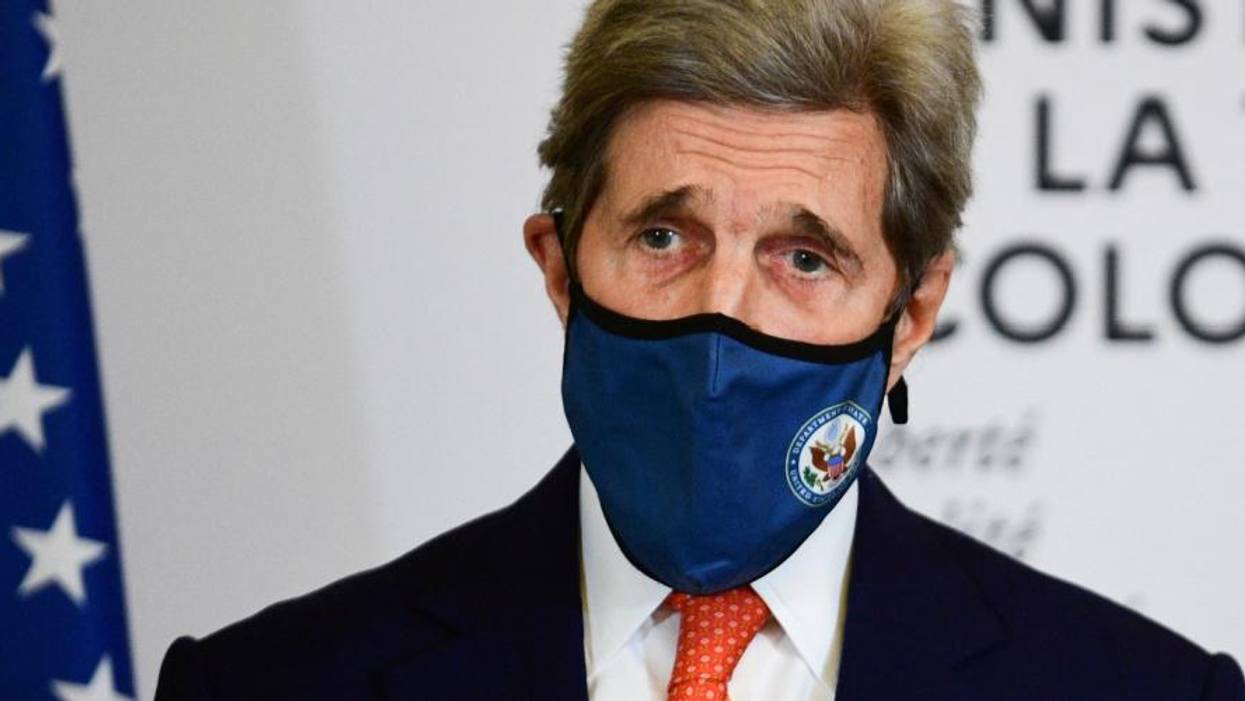
Just days after he suggested the private sector, not government, will lead the fight against the climate crisis, 145 organizations sent a letter Tuesday urging U.S. Special Presidential Envoy for Climate John Kerry to use his position to help end "the flow of private finance from Wall Street to the industries driving climate change around the world--fossil fuels and forest-risk commodities."
"It's time that the U.S. government take the reins back from Wall Street so we can assure the rapid, justice-centered decarbonization necessary for a livable planet."
--Moira Birss, Amazon Watch
President Joe Biden's selection of the former secretary of state as the first-ever White House climate envoy was met with mixed reactions from advocates, with critics such as Food & Water Action executive director Wenonah Hauter calling Kerry "a long-time apologist for fossil fuel fracking and a reliable promoter of false climate solutions like market-based carbon-trading schemes."
The sister organization Food & Water Watch signed on to the new letter. Other signatories included Amazon Watch, Center for Biological Diversity, Earthworks, Friends of the Earth U.S., Future Coalition, Greenpeace USA, Oil Change International, Public Citizen, Rainforest Action Network (RAN), SumOfUs, and several chapters of 350.org.
"Climate policy has so far been left to markets, and now we're in a climate crisis," said Moira Birss, climate and finance director at Amazon Watch and steering committee member of the Stop The Money Pipeline coalition. "It's time that the U.S. government take the reins back from Wall Street so we can assure the rapid, justice-centered decarbonization necessary for a livable planet."
The letter (pdf)--sent just before the release of new data on deforestation that one expert warned "represents a crisis for climate stability and biodiversity conservation, as well as a humanitarian disaster and lost economic opportunity"--argues that demonstrating climate leadership on a global scale requires ending "financing of fossil fuels and deforestation around the world by U.S. firms and entities."
"That is why we applauded President Biden's executive order directing you and Treasury Secretary [Janet] Yellen to develop a U.S. climate finance plan, and why [we] were encouraged when you said this plan will include 'ending international financing of fossil fuel projects with public money,'" the letter says. "However, in order to credibly take on this challenge, we must recognize that Wall Street is not yet an ally--as long as U.S. firms continue to pour more money into the drivers of climate change, they are actively undermining President Biden's climate goals."
The groups expressed disappointment that Mark Gallogly--a major Democratic donor who spent 16 years at Blackstone, the world's biggest private equity firm and a notable investor in fossil fuels--joined Kerry's international climate team, adding that "a climate action approach that seeks to partner with Wall Street without also holding it accountable is no longer credible in 2021."
The letter encourages the Biden administration to embrace four key commitments that would address Wall Street's financing of industries driving the climate emergency:
"Wall Street amassed its riches by pouring money into fossil fuels, and they don't want that gravy train to end," said Doug Norlen, director of the Economic Policy Program at Friends of the Earth U.S. "It's dangerous to suggest that the very institutions that financed and fueled the climate crisis should dictate our response to it. Climate Envoy Kerry must support the use of the levers of government to end U.S. and international institution support for fossil fuel and forest-destroying financing."
The letter says that "until we can hold Wall Street firms to account, no amount of new green finance commitments can credibly undo the damage that their fossil fuel financing is doing to the climate, to U.S. climate leadership, and to our chances of meeting the goals of the Paris agreement." The groups have requested a meeting with Kerry, who was involved with the crafting the 2015 climate deal.
David Arkush, director of Public Citizen's Climate Program, said that "Kerry's recent statement that the government can't do much more than help Wall Street fix the climate crisis is deeply troubling" because "Wall Street is almost completely on the wrong track, and we need financial regulators to help right the course."
Public Citizen and Americans for Financial Reform Education Fund on Wednesday released the Climate Roadmap for U.S. Financial Regulation (pdf), which includes recommendations for personnel, staffing, and agency organization; supervision and prudential regulation; and capital markets regulation.
"Wall Street is gambling against our future and putting the health of our communities and economy at grave risk. Given the urgency of the climate crisis, we can't afford continued inaction," said Arkush. "Financial regulators already have an obligation to protect us from Wall Street's risky bets and this roadmap is designed to help them act immediately, using all the tools currently at their disposal."
"Financial regulation is a key piece of the whole-of-government approach necessary to tackling the climate crisis and realizing the level of economic transformation needed to avert disaster for people and for the planet," said Alex Martin, senior policy analyst at Americans for Financial Reform Education Fund.
The new letter and roadmap follow a report released last week by RAN and other advocacy groups detailing how the world's 60 largest banks have dumped more than $3.8 trillion into the fossil fuel industry since the Paris agreement was adopted in 2015--despite recent "splashy" net-zero commitments from major U.S. institutions.
Last year, Sen. Jeff Merkley (D-Ore.) introduced a pioneering pair of bills that would prevent banks and global financial institutions from pouring money into fossil fuels. As he said in October: "It's time to prioritize the interests of the American people and the planet above the wishes of fossil fuel CEOs who want to hold our economy hostage."
With the CEOs of Twitter, Google, and Facebook set to testify Thursday on the role social media plays in promoting the kinds of misinformation and far-right extremism that sparked the deadly Capitol attack, anti-monopoly experts are urging members of Congress not to allow the executives to divert attention away from their fundamentally nefarious business model that thrives on the spread of dangerous lies.
"False or radicalizing content is not an unfortunate byproduct of the business model. It's core to these corporations' ad-based revenue models."
--Fight Corporate Monopolies
"The tech CEOs want to talk about their content policies and moderation efforts--because they know their core business models are indefensible and toxic," Morgan Harper, senior advisor at Fight Corporate Monopolies, said ahead of the House technology subcommittee hearing, which is scheduled to begin at 12:00 pm ET.
"If lawmakers are serious about fixing these problems," Harper added, "they must focus on structural power and resist the distractions. Anything less would be a massive failure."
Watch the hearing live:
Amid intensifying scrutiny from lawmakers and growing support for forceful antitrust and regulatory action, Facebook, Twitter, and Google in recent months have taken steps purportedly aimed at stemming the flow of misinformation about the coronavirus pandemic, Covid-19 vaccines, elections, and more.
In the aftermath of the January 6 insurrection--fueled by lies that circulated widely on social media--Facebook and Twitter banned former President Donald Trump for being the chief architect and amplifier of those lies.
But Fight Corporate Monopolies and other advocacy groups argue that such self-regulation--by design--does nothing to address the fact the Facebook, Google, and Twitter's profits depend to a significant degree on cultivating outrageous falsehoods and using invasive surveillance advertising to ensure they spread to receptive audiences.
"False or radicalizing content is not an unfortunate byproduct of the business model. It's core to these corporations' ad-based revenue models," said Fight Corporate Monopolies. "Facebook and Google's YouTube generate a substantial portion of their revenue by selling user data to advertisers--which means any social media obsession becomes a profit hub."
Tech CEOs, the group warned, "want to talk about modest regulatory reforms that would allow them to continue operating in largely the same ways they do today. We have seen this misdirection before, after YouTube and Facebook supercharged a conspiracy theory claiming George Floyd's death was faked to reach 1.3 million viewers."
Amnesty Tech's acting deputy director Joe Westby offered a similar critique, noting that "the business model of Big Tech firms like Google and Facebook depends on capturing people's attention to generate ad revenue--to that end, the algorithms that determine what we see on Facebook's newsfeed or Google's YouTube frequently amplify discrimination and inflammatory content."
"These companies appeal to our emotions of fear and anger to keep us staring at our screens," said Westby. "This can have a devastating effect at a population scale, fueling polarization, division, or serious human rights consequences."
Zephyr Teachout, a law professor at Fordham University, expressed hope that House panelists will ask Facebook CEO Mark Zuckerberg "how much money the company made off of QAnon," the far-right conspiracy theory whose adherents played a considerable role in the violent siege of the Capitol earlier this year.
Emma Ruby-Sachs, executive director of SumOfUs, said in a statement Thursday that Facebook, Google, and Twitter's "inability to deal with the violence, hate, and disinformation they promote on their platforms shows that these companies are failing to regulate themselves."
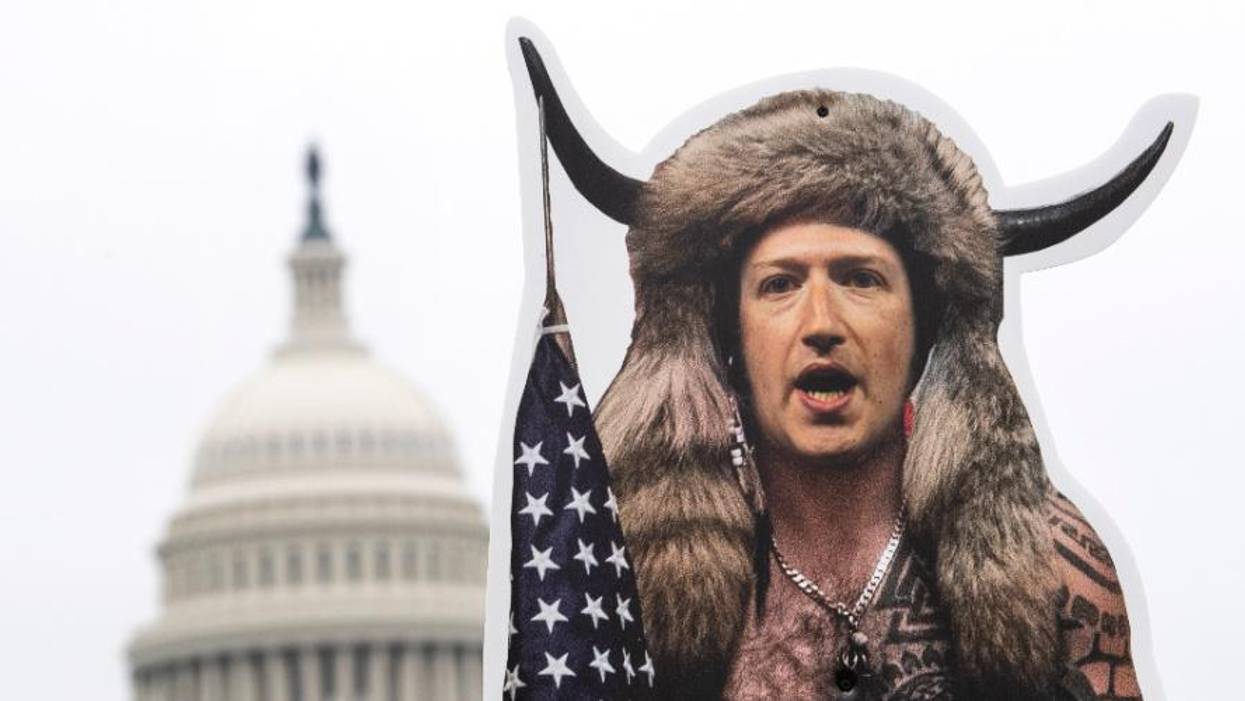
Ahead of the House subcommittee hearing, activists with SumOfUs gathered near the U.S. Capitol and displayed cutouts of tech executives dressed as insurrectionists to stress the role their platforms played in the violent January 6 attack.
"It's no shocker that Facebook failed to tell us about how its technology is being used to manipulate voters and spread harmful misinformation. How many times are we going to be fooled by these profit-hungry monopolies before Congress finally acts?" said Ruby-Sachs. "Letting Facebook decide how it should be regulated is like letting a criminal decide their own sentence."
Climate campaigners on Wednesday gathered at the headquarters of the European Union's central bank in Frankfurt, Germany to demand that it stop financing the fossil fuel industry, building on months of criticism targeting the bank for "playing both firefighter and arsonist" by purchasing bonds from polluters as part of its response to the coronavirus pandemic.
Activists with the climate justice group Koala Kollektiv set fire to a model planet Earth outside the European Central Bank (ECB) "to symbolize the destruction" caused by its support for fossil fuels. At the protest, which coincided with an "ECB Listens" event allowing for input from civil society groups, protesters held up a banner which said, "ECB, stop heating up the climate crisis!"
"Stopping climate change is the most urgent challenge of our time," a spokesperson for the Koala Kollektiv said in a statement. "If we fail to meet the Paris climate targets, humanitarian crises such as famine and wars over resources will become a constant reality in this century."
While some activists and scientists have criticized the 2015 Paris climate agreement for not going far enough, experts worldwide have also warned that the international community must pursue "rapid, far-reaching, and unprecedented" changes to meet its goals--and failing to do so over the next decade could result in "climate catastrophe."
"We demand that the ECB stops giving money to industries that threaten our future," added the Koala Kollectiv spokesperson. "That means: getting out of coal, oil, gas, and combustion engines. In particular, the billions spent to respond to the Corona crisis should not add fuel to the climate crisis. Instead, the ECB must promote a socio-ecological transformation of our economy."
For months, climate advocacy groups have pressured ECB President Christine Lagarde and the bank's Governing Council to align its Covid-19 economic stimulus package and other policies with the Paris goals. Over 165,000 Europeans have signed a petition from 350.org, Reclaim Finance, and SumOfUs urging the ECB to "put our planet before big polluters" and "stop financing climate chaos."
The petition calls for a green recovery that incorporates bold climate policies into the bank's pandemic relief and recovery efforts. SumOfUs senior campaigner Leyla Larbi explained that "Europeans do not want a return to 'normal,' where profit reigns supreme at the expense of our climate, our health, and a real social justice for all."
"And the European Central Bank has a chance to listen by ending their position of 'market neutrality' that does nothing more than prop up dirty fossil fuel companies like Total and Shell," Larbi said. "We know they are reviewing their position, we know they are aware of the massive outcry, but now it is time to act."
As Bloomberg reported last week:
The European Central Bank must question whether mirroring the composition of the bond market in its asset purchases is appropriate in light of climate risks, according to President Christine Lagarde.
Her argument centers on whether investors are correctly pricing bonds issued by polluting companies. With the European Union pushing an aggressive agenda to make the continent climate-neutral by the middle of the century, those assets might drop in value, posing a risk to the central-bank balance sheet.
The ECB is currently assessing how it conducts policy, looking at issues from inflation measurement to climate change.
"President of the ECB, Christine Lagarde has said the bank should 'explore every avenue' to tackle the climate crisis, but the bank is purchasing bonds from some of the world's worst climate criminals through its trillion-euro Covid recovery package," 350.org campaigner Nick Bryer said Wednesday. "The ECB is 'listening' to civil society today, but the truth is that they already know what they need to do--stop financing climate-wrecking companies like Total and Shell."
During the "ECB Listens" event, climate activists such as Greenpeace campaigner Adam Pawloff also "urged the central bank to abandon its principle of neutrality, whereby its bond purchases mirror the make-up of the market, helping to reduce financing costs for large polluters," according to Bloomberg.
On Tuesday, Greenpeace Central and Eastern Europe, the New Economics Foundation, SOAS University of London, the University of the West of England, and the University of Greenwich released a report--entitled Decarbonizing Is Easy: Beyond Market Neutrality in the ECB's Corporate QE (pdf)--revealing how the so-called neutrality policy "actually skews the bank's corporate bond purchases in favor of carbon-intensive industries."
The analysis found that as of the end of July, the ECB held bonds in major polluters including Eni, OMV, Shell, and Total. In fact, nearly 63% of the bonds held by the bank were tied to "carbon-intensive sectors" such as fossil fuels, energy-intensive manufacturing, non-renewable utilities, and carbon-intensive transport.
In a statement about the report, Greenpeace International executive director Jennifer Morgan asserted that the ECB Governing Council "must adapt its monetary policy, stop buying bonds from big polluters, and support the transition to a green and just world."
Reclaim Finance campaigner Paul Schreiber echoed that message Wednesday and declared that "the voices of climate activists in Frankfurt echo those of more than 160k Europeans that have petitioned the ECB, reminding it that we must act now to face the climate emergency."
After the European Union's central bank on Thursday approved what Reuters called "a bigger-than-expected" expansion of an economic stimulus package necessitated by the coronavirus pandemic, climate campaigners expressed concern that planet-destroying fossil fuel companies could get tens of billions of dollars in the Eurozone relief funding.
"This is increasingly looking like a recovery package for polluters, not people, despite the growing support for a truly green and just recovery."
--Nick Bryer, 350.org
The European Central Bank (ECB) Governing Council extended an emergency asset purchase program to June 2021 and expanded it by EUR600 billion to a total of EUR1.350 trillion. Reuters reported that the figure "was a compromise after policymakers discussed an expansion of between EUR500 billion and EUR750 billion."
Ahead of the council's Thursday meeting, 45 European groups endorsed an open letter encouraging ECB President Christine Lagarde to align the program with the goals of the 2015 Paris climate agreement and over 114,000 people signed a petition from SumOfUs, Reclaim Finance, and 350.org urging the bank to stop funding the climate crisis.
However, activists pointed out, the council declined to even address the climate crisis at the meeting, let alone block future fossil fuel funding. SumOfUs campaigner Leyla Larbi accused the ECB of "playing both firefighter and arsonist by strengthening multinational corporations pushing our climate to the brink with billions of euros."
In a joint statement, the groups behind the petition explained that the ECB's expansion of the asset purchase program "could finance polluters to up to EUR90 billion," meaning that the bank could ultimately "channel up to EUR220 billion to these companies while indiscriminately buying corporate assets to respond to the crisis."
The groups highlighted a Reclaim Finance analysis showing that 38 fossil fuel companies have received ECB support. "Most of these companies--like Shell or Total--plan on greatly increasing their fossil fuel production and one of them--Fortum--is even involved in the opening of a new German coal power plant," the statement said.
The groups also noted a Wednesday Greenpeace analysis which found that the ECB has already injected over EUR7.6 billion into fossil fuels since mid-March as part of its Covid-19 relief.
"The ECB and other central banks must change their ways," Greenpeace climate and energy campaigner Adam Pawloff said in a statement. "As the climate crisis continues to escalate, we can't afford any more public money going to fossil fuels."
Campaigners' condemnation of the ECB's moves at the Thursday meeting built on outrage and frustration sparked by Greenpeace's analysis.
"By recklessly buying billions in fossil fuel bonds the bank is propping up the single biggest obstacle to tackling the climate crisis--the fossil fuel industry," 350.org campaigner Nick Bryer declared Thursday. "This is increasingly looking like a recovery package for polluters, not people, despite the growing support for a truly green and just recovery."
Since the pandemic started, governments and international bodies worldwide have faced calls for Covid-19 recovery plans that provide direct relief to people not polluters, prioritize public health, and incorporate abmitious policies that tackle the human-caused climate crisis, including a just transition away from fossil fuels to clean energy.
In a Thursday blog post for 350.org--which has spearheaded the global push for a just recovery--campaigner Julia Krzyszkowska called out Lagarde and her fellow bank governors for ignoring climate science and "shirking their historic responsibility to lead Europe out of the post-pandemic economic crisis into a cleaner, fairer, safer future."
As Krzyszkowska wrote:
When she took office last year, President Lagarde worked hard to position herself as a leader worthy of the climate crisis era. She launched the ECB's strategic review and made it clear that the bank had a responsibility to support a green, sustainable transition of the European economy.
Where are those promises now, when the ECB is pumping incomprehensibly huge amounts of money into the economy, to help Europe reboot and recover from the crisis brought about by the Covid-19 pandemic?
Paul Schreiber, a campaigner at Reclaim Finance, also criticized Lagarde and the ECB governors for "simultaneously acknowledging climate urgency and refusing to act."
"This stance is unbearable," Schreiber said. "If the ECB's president claims that by buying a few green bonds the ECB contributes to the ecological transition, she cannot say that it does not contribute to climate chaos when it massively buys bonds linked to new fossil fuel projects."
Noting that "the devastating effects of the climate crisis are already here, and we can only expect the worst," Larbi from SumOfUS said, "Imagine the immediate and long-term damage these dirty multinationals will continue to cause with those extra no-green-strings-attached billions of euros."
"The European post-Covid economic recovery project is a historic opportunity to bring lasting and meaningful change for the planet and all its inhabitants," she added. "We cannot let the ECB ruin all these efforts."
Monsanto was ordered to pay restitution to a French farmer who developed a neurological disease after using its weedkiller--the latest victory for the chemical giant's former customers who want to hold the company accountable for selling poisonous pesticides.
A court in Lyon, France, ordered Monsanto Thursday to immediately pay Paul Francois EUR50,000 ($56,000) for the legal fees he incurred as he fought the company, and said the full amount it would be required to pay him would be announced in an upcoming ruling. Francois is seeking EUR1 million ($860,000).
Francois expressed relief at the news of his victory, which came 15 years after he first became ill and 12 years after he took action against Monsanto.
"It's a huge sigh of relief. It's been a 12-year battle," Francois told reporters. "Twelve years where my life had to be put on hold and my family had to suffer because they were subjected to this battle."
Francois began experiencing memory loss, headaches, and fainting in 2004 after accidentally inhaling the Monsanto-made weedkiller Lasso, which contained the chemical monochlorobenzene. Three years later, France made monochlorobenzene illegal and pulled Lasso from the market.
Monochlorobenzene had already been outlawed in Canada, Belgium, and the U.K. years earlier, and Francois argued in his lawsuit that Monsanto knew long before Lasso was pulled from the French market that it was dangerous.
The court ruled that Monsanto should have included a warning on Lasso's label.
"Mr. Francois justifiably concludes that the product, due to its inadequate labeling that did not respect applicable regulations, did not offer the level of safety he could legitimately expect," the court said.
On social media, public health advocates praised the decision.
Francois's victory comes after he won previous lawsuits against the company in 2012 and 2015, only to have those decisions appealed. The company said Thursday it expected to appeal the latest ruling.
Monsanto faces thousands of lawsuits from people all over the world who say its use of other dangerous chemicals, including the carcinogenic pesticide glyphosate, caused them to develop health problems.
"I don't see how [Monsanto] can win," one plaintiff told the Guardian this week in a report about the pending lawsuits. "The world is against them."
Last year, a court in San Francisco delivered the first legal victory against Monsanto regarding its use of dangerous chemicals. The court ordered the company to pay Dewayne Johnson, a groundskeeper, $80 million after he developed non-Hodgkins lymphoma after years of using the weedkiller Roundup, which contains glyphosate.
"Monsanto needs to realize that we are not going to be silent anymore," John Barton, a farmer who also developed non-Hodgkins lymphona and who is part of another lawsuit in California, told the Guardian. "We are not going to roll over and play dead... People should be warned that this stuff is everywhere and we should be careful of this product."
Amnesty International was among the groups accusing Airbnb of enabling human rights violations on Wednesday after the company reversed its decision to ban listings of illegal Israeli settlements in the occupied West Bank.
Back in November the San Francisco-based company announced that it would no longer offer some 200 listings of Jewish settlements in the West Bank, viewing settlements as "at the core of the dispute between Israelis and Palestinians."
The removal followed pressure from the Stolen Homes coalition to drop the listings and triggered lawsuits by some Jewish Americans and Israeli settlers.
Airbnb's u-turn was announced in statement Tuesday, which says that the company "has always opposed the BDS movement." The change of stance, the company said, was to bring an end to the lawsuits.
"Under the settlement terms, Airbnb will not move forward with implementing the removal of listings in the West Bank from the platform," the company said.
That decision, said Amnesty International's business and human rights researcher Mark Dummett, is "a reprehensible and cowardly move that will be another devastating blow for the human rights of Palestinians."
The company attempted to whitewash the move by saying that it would donate profits from the illegal settlement rentals to charities. But Dummett charged that doing so "fails to change the fact that by continuing to drive tourism to illegal settlements they are helping to boost the settlement economy." As a result, the company is "directly contributing to the maintenance and expansion of illegal settlements, a breach of the Geneva Conventions and a war crime under Rome Statute of the International Criminal Court."
"Airbnb had a clear opportunity to make the right decision to uphold human rights and use their influence to set a precedent in the tourism industry," he added. "Instead, they have chosen to bury their heads in the sand."
Jewish Voice for Peace greeted the company's announcement with similar outrage--and said Airbnb should expect a renewed wave of public pressure.
"The reneging on a commitment to delist from the settlements is a betrayal of all the human rights organizations and activists who cheered Airbnb's November 2018 decision," said Granate Kim, communications director at Jewish Voice for Peace. "If Airbnb wants to continue to allow rental suites on the ruins of Palestinian lives and land then they will continue to get pressured to do the right thing."
"There's no 'two sides' of a so-called conflict in the settlements," she said. "It's stolen land from Palestinians, plain and simple."
We wash our hair with it, brush our teeth with it, smother our skin in it and use it to powder our cheeks, plump our lashes and color our lips. We clean our houses with it, fuel our cars with it and eat it in chocolate, bread, ice cream, pizza, breakfast cereal and candy bars.
Palm oil: you may never have walked into a supermarket with it written on your shopping list but you've certainly walked out with bags full of it.
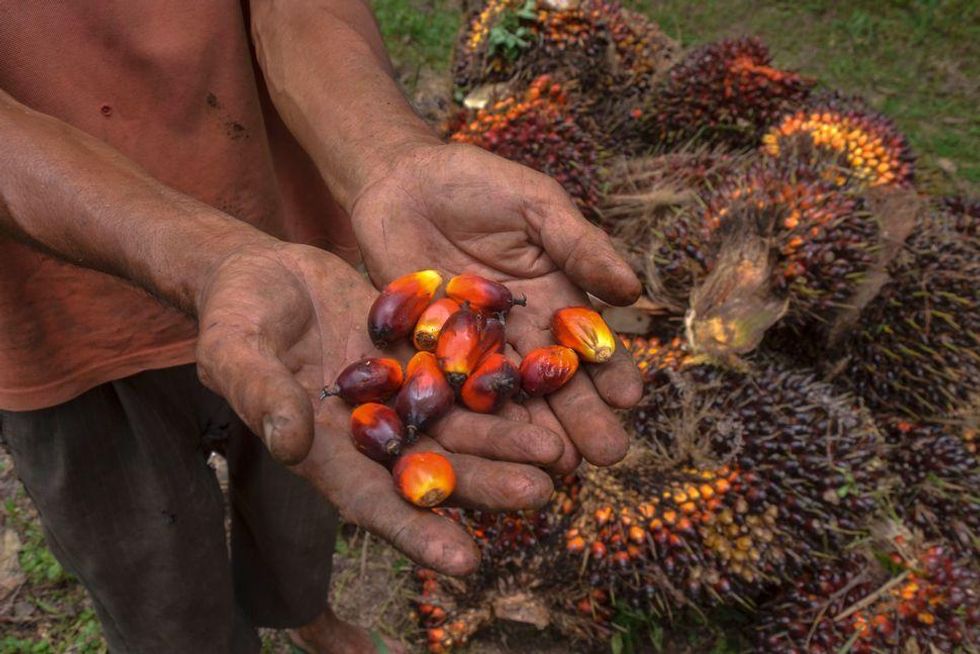
An extremely versatile ingredient that's cheaper and more efficient to produce than other vegetable oils, palm oil is found today in half of all consumer goods including soaps and toothpaste, cosmetics and laundry detergent and a whole array of processed food. Palm oil is also found in biodiesel used to power cars (more than 50 percent of the European Union's palm oil consumption in 2017 reportedly went to this purpose).
Our modern lives are inextricably intertwined with the commodity, which can appear on ingredient labels under a myriad of alternative names including sodium lauryl sulphate, stearic acid and palmitate. But activists warn that our insatiable demand for palm oil has fueled one of the most pressing environmental and humanitarian crises of our time.
The equivalent of 300 football fields of rainforest is destroyed every hour to make way for palm oil plantations, according to the Orangutan Project. This rampant deforestation -- which has occurred in some of the world's most biodiverse hot spots, mostly in Indonesia and Malaysia -- has decimated the habitat of endangered species like orangutans and Sumatran tigers, displaced indigenous communities, contributed to a regional smog problem linked to tens of thousands of premature deaths and is a significant driver of climate change.
Last month, palm oil and its impacts became the story of the hour when the U.K. banned a stirring ad about the commodity from TV broadcast. The ad, which featured an animated orphaned orangutan and was released by British grocery store Iceland, was deemed too political for television. The ban triggered a flurry of interest and outrage worldwide.
"There's been a huge spike in awareness about palm oil because of the Iceland ad," said conservationist and Mongabay.com founder Rhett Butler, who's been monitoring trends in the palm oil industry for years. "It was quite astonishing actually. It seems like global interest in this issue is at an all-time high."
But this spotlight on palm oil has revealed a troubling stagnation of the industry's progress in tackling the environmental and human rights issues that have dogged it for years.
On the surface, significant progress appears to have been made since the early 2010s: Public awareness of the palm oil crisis has significantly increased; some of the world's largest producers and buyers of palm oil have made very public and very lofty sustainability and human rights commitments; and governments -- notably Indonesia's -- have vowed to do more to protect the people, species and habitats exploited by the palm oil industry.
Yet, in spite of all this, "unfortunately from an environmental perspective, not a lot has changed," Butler said.
Deforestation is still occurring at an alarming rate in Indonesia and Malaysia, which supply about 85 percent of the world's palm oil. A September Greenpeace investigation found that more than 500 square miles of rainforest -- about the size of Los Angeles -- had been cleared in Indonesia, Malaysia and the neighboring nation of Papua New Guinea for palm oil production since the end of 2015.
According to the Greenpeace report, 12 of the world's largest brands including Nestle, General Mills, Kellogg's, Colgate-Palmolive, PepsiCo and Unilever continue to source palm oil from producers and growers that were found to be "actively clearing rainforests" -- despite the "zero-deforestation" commitments that these companies have made in recent years.
"We're consuming their products on a daily basis," said Annisa Rahmawati of Greenpeace Indonesia, according to Mongabay.com. "So we're ... indirectly [participating in these] deforestation and human rights violations."
Some companies including Unilever and Nestle responded to the Greenpeace report by reiterating their sustainability commitments. "Our ambition is that by the end of 2020 all of the palm oil that we use is responsibly sourced," Nestle said on its website.
"Greenpeace rightfully addresses serious and systematic issues that we know are fundamentally broken in the palm oil supply chain," Unilever noted in a statement, adding that the company is "actively driving change in both our own operations and across the industry."
This summer, Wilmar International, the world's largest palm oil trader, was embroiled in controversy after its billionaire co-founder Martua Sitoris was accused of running a "shadow company" with his brother that had cleared an area of rainforest twice the size of Paris since 2013 -- the same year that Wilmar had promised to work toward "no deforestation" and "no exploitation" in its supply chain.
Sitoris was forced to resign in the wake of the allegations, and Wilmar -- which controls almost half of the world's trade in palm oil -- vowed this month to strengthen its sustainability policy.
"Wilmar's [scandal] makes abundantly clear that these companies cannot be trusted to police themselves," said Tomasz Johnson, head of research at Earthsight and founder of The Gecko Project, speaking from London last week.
Emma Lierley, forest policy director at the Rainforest Action Network (RAN), echoed this sentiment. "The same problems are still happening in this industry," she said. "Deforestation is continuing, threatened species are still being put at risk, and there's evidence that labor abuse including child labor and forced labor are still commonplace across plantations in Malaysia and Indonesia -- and all of this is happening despite corporate policy changes."
"Corporate policy is all well and good but it has to be worth the paper it's written on," Lierley added. "We're just not seeing that real change taking place."
And the clock, she warned, is ominously ticking: The palm oil industry is causing potentially irreparable damage to the planet -- and its climate -- and if we don't take prompt and comprehensive action, the outcome could be catastrophic.
"What a lot of people don't realize is how much of an impact palm oil has on our future climate stability," Lierley said.
Palm oil cultivation is currently conducted disproportionately in high-carbon areas like tropical forests and carbon-rich peatlands. When these areas are deforested to make way for plantations, enormous volumes of climate-warming gases are released into the atmosphere.
It's estimated that tropical deforestation is responsible for between 15 and 20 percent of global warming emissions -- more than the emissions from cars and other forms of transportation.
Indonesia's peatlands alone now release more than 500 megatons of carbon dioxide every year -- an amount greater than California's entire annual emissions, The New York Times reported in November. And the deforestation of Borneo, an island shared by Indonesia, Malaysia and Brunei, has contributed to "the largest single-year global increase in carbon emissions in two millenniums," the paper said, citing NASA research.
Palm oil plantations are the main driver of deforestation on Borneo, which has lost more than 16,000 square miles of ancient rainforest -- and critical habitat for a wide variety of creatures -- because of the commodity. Almost 150,000 critically endangered Bornean orangutans were killed between 1999 and 2015, partly because of palm oil.
"Scientists have warned us that we have just 12 years to avert the worst effects of climate change," Lierley said, referring to a grim United Nations report released in October. "The stakes are incredibly high. A lot of people are trying to pass the buck in the palm oil industry, but we need to see really bold action from companies all along the supply chain, as well as government actors and other institutions."
This is particularly pressing given the expected ballooning of demand for palm oil in the coming years. The Center for International Forestry Research estimates that world consumption of palm oil will increase by 62 percent in a "medium growth scenario" and 94 percent in a "high demand scenario." Other countries, particularly in Africa, are expected to see a boom in palm oil production to meet this growing demand.
Johnson, who for years has been investigating corruption in the palm oil industry, warned that the same broken agri-industrial model of palm oil production in Indonesia and Malaysia is already being replicated in parts of Africa.
"The same palm oil companies that have been operating in Indonesia have announced plans in recent years to do the same" in countries like Liberia and Uganda, said Johnson. "And you could just see the disaster slowly unfolding."
Companies like Wilmar and the Malaysian conglomerate Sime Darby have been granted enormous concessions, or cultivation areas, for palm oil in these countries -- and reports have already emerged of deforestation and land-grab issues.
"Many of these countries are fragile, post-war states," said Johnson of the African nations where the palm oil industry has been steadily encroaching. "If these [companies] aren't even following the rules properly in Indonesia," where President Joko Widodo has taken steps to crack down on conflict palm oil, "what's the chance they'll do things better in these fragile states?"
The problems with palm oil may feel complex and entrenched, but activists insist that solutions are within reach.
Though reducing consumption of palm oil could be a positive step, boycotting the commodity entirely doesn't appear to be the answer. Producing alternative vegetable oils like soybean would have similar, or even worse, environmental impacts, Lierley noted.
"It's not palm oil itself that's the problem," she said. "It's the way it's produced."
And that, activists say, is what needs to change.
Consumers should push companies to be more transparent about where their palm oil is coming from, said Mongabay.com's Butler.
"Look at the ingredient lists on the things that you are buying and figure out what products actually contain palm oil," he said. "Then contact the company and ask them what their palm oil policy is. It doesn't actually require that much feedback from consumers to send a strong message to a company."
Companies, in turn, need to be more transparent about their practices, Johnson said.
"If they want to be trusted, they need to put everything on the table, they need to be as transparent as humanly possible and people need to be watching them closely. If not, we're just going to see more 'zero deforestation' companies buying from dodgy suppliers," he said.
Consumers can use their dollars to support companies that have made -- and fulfilled -- sustainability commitments. The "bare minimum," said Butler, is to choose companies and brands that are certified by the RSPO, or the Roundtable on Sustainable Palm Oil.
The RSPO, which is the world's leading certification body for sustainably sourced palm oil, has been widely criticized in the past for not setting high enough standards for its members and for inadequately enforcing its rules. Last month, however, the group significantly strengthened its criteria -- a move lauded by activists.
WWF, RAN and the Union of Concerned Scientists have palm oil scorecards that track how some of the world's biggest companies and brands are faring when it comes to sustainable palm oil.
"Companies often say it's a lack of resources or lack of information that make it difficult for them to fulfill their sustainability commitments. But if a small nonprofit like RAN can identify labor abuses, deforestation and land-grab issues, there's no reason why a huge multinational can't do it too," Lierley said.
"It's not an impossible problem," she continued. "It's a matter of willpower."