SUBSCRIBE TO OUR FREE NEWSLETTER
Daily news & progressive opinion—funded by the people, not the corporations—delivered straight to your inbox.
5
#000000
#FFFFFF
To donate by check, phone, or other method, see our More Ways to Give page.
Daily news & progressive opinion—funded by the people, not the corporations—delivered straight to your inbox.
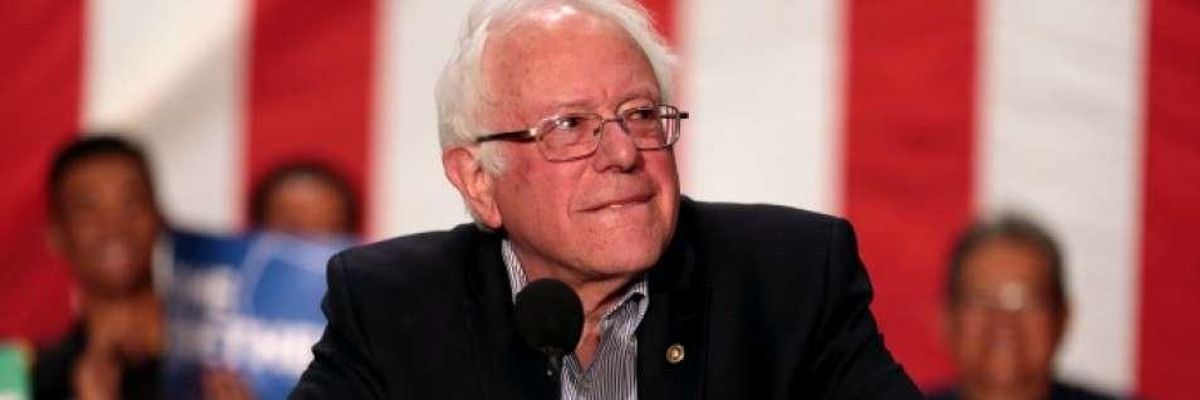
On Wednesday, Sen. Bernie Sanders (I-Vt.) plans to introduce a Medicare for All bill that has garnered support from a quarter of the Senate's Democratic Caucus. (Photo: Gage Skidmore/Flickr/cc)
A quarter of Democratic Caucus members in the U.S. Senate have now signed on as co-sponsors of Sen. Bernie Sanders' (I-Vt.) Medicare for All bill, which he plans to introduce Wednesday, signaling a shift among party lawmakers, who may be swayed by recent polling that has indicated a majority of Americans and more than two-thirds of Democrats favor a single-payer national healthcare system.
As of this writing on Tuesday afternoon, the 12 co-sponsors are:
Sens. Tammy Baldwin (D-Wis.)
Richard Blumenthal (D-Conn.)
Cory Booker (D-N.J.)
Kirsten Gillibrand (D-N.Y.)
Kamala Harris (D-Calif.)
Mazie Hirono (D-Hawaii)
Ed Markey (D-Mass.)
Jeff Merkley (D-Ore.)
Brian Schatz (D-Hawaii)
Elizabeth Warren (D-Mass.)
Sheldon Whitehouse (D-R.I.)
Tom Udall (D-N.M.)
Udall, the most recent addition, announced his co-sponsorship with a statement posted to Twitter:
Last weekend, Sen. Patrick Leahy said he is "likely to support" the bill, but he has not yet come out as a co-sponsor.
As senators lined up to pledge their support on Monday and Tuesday, it became clear that since Sanders made single payer central to his 2016 presidential campaign, the political needle has indeed shifted.
Sharing a Politico piece titled "Democratic foes of Trump flock to single-payer ahead of 2020"--which references predictions that any potential 2020 challenger to President Donald Trump will need to support single payer to win over voters--Students for National Health Program enthusiastically welcomed the surge of endorsements while journalist and activist Shaun King called the shift "a groundbreaking development."
In a Washington Post news analysis, entitled "The dam is breaking on Democrats' support for single player," Aaron Blake noted how during last year's Democratic primary season, "Hillary Clinton dismissed single-payer as 'a theoretical debate about some better idea that will never, ever come to pass.' Fast-forward a year, and it's leading Democratic presidential hopefuls like Clinton that are spearheading this."
Supporters of Sanders and a Medicare for All healthcare system have deemed the coming legislation a "litmus test" for Democrats. Though Sanders, in an August interview with the Post, disagreed that the bill would serve as litmus test, he was quick to point out the growing support for a single-payer system, and added: "as more and more Americans come on board, it will become politically possible."
The litmus test theory could be tested before 2020. Baldwin is up for re-election in Wisconsin in 2018, which makes her announcement that she's co-sponsoring the bill a "big deal," said MoveOn.org Washington Director Ben Wikler.
Even Sen. Joe Manchin (D-W.V.), whom Bloomberg calls "the Senate's most conservative Democrat," told the outlet on Tuesday that he is open to considering single payer. Manchin, like Baldwin, is up for re-election next year.
Despite the widespread support from the public, and now a substantial number of Sanders' fellow senators, some lawmakers have said they first want to see the bill, while others have overtly declined to support it. Based on what they've told Capitol Hill reporters this week, Sens. Chris Van Hollen (D-Md.), Ron Wyden (D-Ohio), Bob Casey Jr. (D-Penn.), and Chuck Schumer (D-N.Y.) remain undecided.
Sen. Tim Kaine (D-Va.) told Vox's Jeff Stein that he prefers a healthcare program that allows people to pick between a government-run program and private insurers, and Sen. Dianne Feinstein, claiming "the cost of single payer is enormous," said she too supports a public option instead of Medicare for All.
Sen. Sherrod Brown (D-Ohio)--typically known for his progressive stances--said he's focusing on his own healthcare bill and will not co-sponsor Sanders' bill. However, Brown also said in a statement to Politico that he's "always been supportive of Medicare for All," implying he may not oppose the legislation once it's introduced.
Sen. Debbie Stabenow (D-Mich.), who's sponsoring the "Medicare at 55 Act" with Brown, also said she wants to focus on their bill, while Sens. Claire McCaskill (D-Mo.) and Jon Tester (D-Mont.) both told The Hill's Peter Sullivan on Tuesday that they will not support Sanders' proposal.
Dear Common Dreams reader, It’s been nearly 30 years since I co-founded Common Dreams with my late wife, Lina Newhouser. We had the radical notion that journalism should serve the public good, not corporate profits. It was clear to us from the outset what it would take to build such a project. No paid advertisements. No corporate sponsors. No millionaire publisher telling us what to think or do. Many people said we wouldn't last a year, but we proved those doubters wrong. Together with a tremendous team of journalists and dedicated staff, we built an independent media outlet free from the constraints of profits and corporate control. Our mission has always been simple: To inform. To inspire. To ignite change for the common good. Building Common Dreams was not easy. Our survival was never guaranteed. When you take on the most powerful forces—Wall Street greed, fossil fuel industry destruction, Big Tech lobbyists, and uber-rich oligarchs who have spent billions upon billions rigging the economy and democracy in their favor—the only bulwark you have is supporters who believe in your work. But here’s the urgent message from me today. It's never been this bad out there. And it's never been this hard to keep us going. At the very moment Common Dreams is most needed, the threats we face are intensifying. We need your support now more than ever. We don't accept corporate advertising and never will. We don't have a paywall because we don't think people should be blocked from critical news based on their ability to pay. Everything we do is funded by the donations of readers like you. When everyone does the little they can afford, we are strong. But if that support retreats or dries up, so do we. Will you donate now to make sure Common Dreams not only survives but thrives? —Craig Brown, Co-founder |
A quarter of Democratic Caucus members in the U.S. Senate have now signed on as co-sponsors of Sen. Bernie Sanders' (I-Vt.) Medicare for All bill, which he plans to introduce Wednesday, signaling a shift among party lawmakers, who may be swayed by recent polling that has indicated a majority of Americans and more than two-thirds of Democrats favor a single-payer national healthcare system.
As of this writing on Tuesday afternoon, the 12 co-sponsors are:
Sens. Tammy Baldwin (D-Wis.)
Richard Blumenthal (D-Conn.)
Cory Booker (D-N.J.)
Kirsten Gillibrand (D-N.Y.)
Kamala Harris (D-Calif.)
Mazie Hirono (D-Hawaii)
Ed Markey (D-Mass.)
Jeff Merkley (D-Ore.)
Brian Schatz (D-Hawaii)
Elizabeth Warren (D-Mass.)
Sheldon Whitehouse (D-R.I.)
Tom Udall (D-N.M.)
Udall, the most recent addition, announced his co-sponsorship with a statement posted to Twitter:
Last weekend, Sen. Patrick Leahy said he is "likely to support" the bill, but he has not yet come out as a co-sponsor.
As senators lined up to pledge their support on Monday and Tuesday, it became clear that since Sanders made single payer central to his 2016 presidential campaign, the political needle has indeed shifted.
Sharing a Politico piece titled "Democratic foes of Trump flock to single-payer ahead of 2020"--which references predictions that any potential 2020 challenger to President Donald Trump will need to support single payer to win over voters--Students for National Health Program enthusiastically welcomed the surge of endorsements while journalist and activist Shaun King called the shift "a groundbreaking development."
In a Washington Post news analysis, entitled "The dam is breaking on Democrats' support for single player," Aaron Blake noted how during last year's Democratic primary season, "Hillary Clinton dismissed single-payer as 'a theoretical debate about some better idea that will never, ever come to pass.' Fast-forward a year, and it's leading Democratic presidential hopefuls like Clinton that are spearheading this."
Supporters of Sanders and a Medicare for All healthcare system have deemed the coming legislation a "litmus test" for Democrats. Though Sanders, in an August interview with the Post, disagreed that the bill would serve as litmus test, he was quick to point out the growing support for a single-payer system, and added: "as more and more Americans come on board, it will become politically possible."
The litmus test theory could be tested before 2020. Baldwin is up for re-election in Wisconsin in 2018, which makes her announcement that she's co-sponsoring the bill a "big deal," said MoveOn.org Washington Director Ben Wikler.
Even Sen. Joe Manchin (D-W.V.), whom Bloomberg calls "the Senate's most conservative Democrat," told the outlet on Tuesday that he is open to considering single payer. Manchin, like Baldwin, is up for re-election next year.
Despite the widespread support from the public, and now a substantial number of Sanders' fellow senators, some lawmakers have said they first want to see the bill, while others have overtly declined to support it. Based on what they've told Capitol Hill reporters this week, Sens. Chris Van Hollen (D-Md.), Ron Wyden (D-Ohio), Bob Casey Jr. (D-Penn.), and Chuck Schumer (D-N.Y.) remain undecided.
Sen. Tim Kaine (D-Va.) told Vox's Jeff Stein that he prefers a healthcare program that allows people to pick between a government-run program and private insurers, and Sen. Dianne Feinstein, claiming "the cost of single payer is enormous," said she too supports a public option instead of Medicare for All.
Sen. Sherrod Brown (D-Ohio)--typically known for his progressive stances--said he's focusing on his own healthcare bill and will not co-sponsor Sanders' bill. However, Brown also said in a statement to Politico that he's "always been supportive of Medicare for All," implying he may not oppose the legislation once it's introduced.
Sen. Debbie Stabenow (D-Mich.), who's sponsoring the "Medicare at 55 Act" with Brown, also said she wants to focus on their bill, while Sens. Claire McCaskill (D-Mo.) and Jon Tester (D-Mont.) both told The Hill's Peter Sullivan on Tuesday that they will not support Sanders' proposal.
A quarter of Democratic Caucus members in the U.S. Senate have now signed on as co-sponsors of Sen. Bernie Sanders' (I-Vt.) Medicare for All bill, which he plans to introduce Wednesday, signaling a shift among party lawmakers, who may be swayed by recent polling that has indicated a majority of Americans and more than two-thirds of Democrats favor a single-payer national healthcare system.
As of this writing on Tuesday afternoon, the 12 co-sponsors are:
Sens. Tammy Baldwin (D-Wis.)
Richard Blumenthal (D-Conn.)
Cory Booker (D-N.J.)
Kirsten Gillibrand (D-N.Y.)
Kamala Harris (D-Calif.)
Mazie Hirono (D-Hawaii)
Ed Markey (D-Mass.)
Jeff Merkley (D-Ore.)
Brian Schatz (D-Hawaii)
Elizabeth Warren (D-Mass.)
Sheldon Whitehouse (D-R.I.)
Tom Udall (D-N.M.)
Udall, the most recent addition, announced his co-sponsorship with a statement posted to Twitter:
Last weekend, Sen. Patrick Leahy said he is "likely to support" the bill, but he has not yet come out as a co-sponsor.
As senators lined up to pledge their support on Monday and Tuesday, it became clear that since Sanders made single payer central to his 2016 presidential campaign, the political needle has indeed shifted.
Sharing a Politico piece titled "Democratic foes of Trump flock to single-payer ahead of 2020"--which references predictions that any potential 2020 challenger to President Donald Trump will need to support single payer to win over voters--Students for National Health Program enthusiastically welcomed the surge of endorsements while journalist and activist Shaun King called the shift "a groundbreaking development."
In a Washington Post news analysis, entitled "The dam is breaking on Democrats' support for single player," Aaron Blake noted how during last year's Democratic primary season, "Hillary Clinton dismissed single-payer as 'a theoretical debate about some better idea that will never, ever come to pass.' Fast-forward a year, and it's leading Democratic presidential hopefuls like Clinton that are spearheading this."
Supporters of Sanders and a Medicare for All healthcare system have deemed the coming legislation a "litmus test" for Democrats. Though Sanders, in an August interview with the Post, disagreed that the bill would serve as litmus test, he was quick to point out the growing support for a single-payer system, and added: "as more and more Americans come on board, it will become politically possible."
The litmus test theory could be tested before 2020. Baldwin is up for re-election in Wisconsin in 2018, which makes her announcement that she's co-sponsoring the bill a "big deal," said MoveOn.org Washington Director Ben Wikler.
Even Sen. Joe Manchin (D-W.V.), whom Bloomberg calls "the Senate's most conservative Democrat," told the outlet on Tuesday that he is open to considering single payer. Manchin, like Baldwin, is up for re-election next year.
Despite the widespread support from the public, and now a substantial number of Sanders' fellow senators, some lawmakers have said they first want to see the bill, while others have overtly declined to support it. Based on what they've told Capitol Hill reporters this week, Sens. Chris Van Hollen (D-Md.), Ron Wyden (D-Ohio), Bob Casey Jr. (D-Penn.), and Chuck Schumer (D-N.Y.) remain undecided.
Sen. Tim Kaine (D-Va.) told Vox's Jeff Stein that he prefers a healthcare program that allows people to pick between a government-run program and private insurers, and Sen. Dianne Feinstein, claiming "the cost of single payer is enormous," said she too supports a public option instead of Medicare for All.
Sen. Sherrod Brown (D-Ohio)--typically known for his progressive stances--said he's focusing on his own healthcare bill and will not co-sponsor Sanders' bill. However, Brown also said in a statement to Politico that he's "always been supportive of Medicare for All," implying he may not oppose the legislation once it's introduced.
Sen. Debbie Stabenow (D-Mich.), who's sponsoring the "Medicare at 55 Act" with Brown, also said she wants to focus on their bill, while Sens. Claire McCaskill (D-Mo.) and Jon Tester (D-Mont.) both told The Hill's Peter Sullivan on Tuesday that they will not support Sanders' proposal.