SUBSCRIBE TO OUR FREE NEWSLETTER
Daily news & progressive opinion—funded by the people, not the corporations—delivered straight to your inbox.
5
#000000
#FFFFFF
To donate by check, phone, or other method, see our More Ways to Give page.
On Friday, Sen. Bernie Sanders (I-Vt.) said he would vote against President Barack Obama's nomination to head up the Food and Drug Administration (FDA), citing Dr. Robert M. Califf's ties to the pharmaceutical industry.
Califf, a cardiologist, and Duke University researcher became FDA deputy commissioner earlier this year, and Obama announced plans to nominate him as the agency's chief last month. But in light of several recent industry scandals that brought national attention to price gouging of life-saving medications, Sanders--who is running for president as a Democrat--said he would not support the status quo when the vote comes before the U.S. Senate health committee.
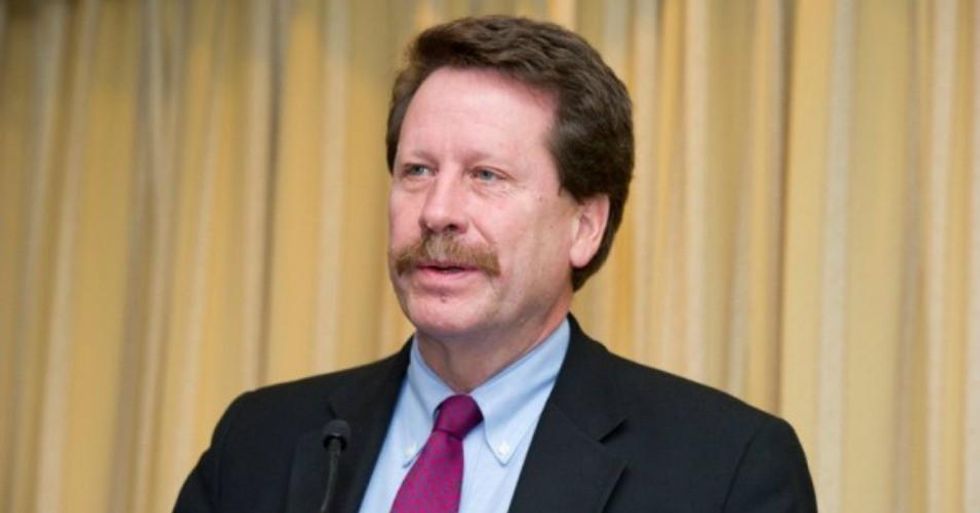
"At a time when millions of Americans cannot afford to purchase the prescription drugs they need, we need a new leader at the FDA who is prepared to stand up to the pharmaceutical companies and work to substantially lower drug prices. Unfortunately, I have concluded that Dr. Califf is not that person," Sanders said following a meeting with the nominee this week.
A recent expose by the New York Times revealed that Califf's multi-million dollar research center at Duke received more than 60 percent of its funding from the industry. At the same time, his 2014 financial disclosure documents showed drug companies like Eli Lilly, Merck, and Novartis paid him hefty fees for "consulting" and in salary support. And as the Boston Globe reported on Wednesday, Califf also took the "highly unusual" step of removing his name from a series of scientific papers criticizing the FDA's oversight of clinical trials--"a decision that could raise ethical concerns," explains the Globe's Sheila Kaplan.
"In a sense, he's the ultimate industry insider," Harvard political science professor Daniel Carpenter told the Times.
Sanders continued on Friday, "Instead of listening to the demands of the pharmaceutical industry and their 1,400 lobbyists, it is about time that the FDA and Congress started listening to the overwhelming majority of the American people who believe that medicine is too expensive."
"It is time for the United States to join the rest of the industrialized world by implementing prescription drug policies that work for everybody, not just the CEOs of the pharmaceutical industry," he said.
Given the recent price-gouging cases, both Sanders and Democratic frontrunner Hillary Clinton have made reform of the pharmaceutical industry central platforms of their campaigns. For his part, Sanders recently introduced a plan allowing Medicare to negotiate drug prices with manufacturers and lower barriers to importing cheap pharmaceuticals from other countries, such as Canada.
"The greed of the pharmaceutical industry is a public health hazard to the American people," Sanders said. "That has got to change."
On Friday, Sen. Bernie Sanders (I-Vt.) said he would vote against President Barack Obama's nomination to head up the Food and Drug Administration (FDA), citing Dr. Robert M. Califf's ties to the pharmaceutical industry.
Califf, a cardiologist, and Duke University researcher became FDA deputy commissioner earlier this year, and Obama announced plans to nominate him as the agency's chief last month. But in light of several recent industry scandals that brought national attention to price gouging of life-saving medications, Sanders--who is running for president as a Democrat--said he would not support the status quo when the vote comes before the U.S. Senate health committee.
"At a time when millions of Americans cannot afford to purchase the prescription drugs they need, we need a new leader at the FDA who is prepared to stand up to the pharmaceutical companies and work to substantially lower drug prices. Unfortunately, I have concluded that Dr. Califf is not that person," Sanders said following a meeting with the nominee this week.
A recent expose by the New York Times revealed that Califf's multi-million dollar research center at Duke received more than 60 percent of its funding from the industry. At the same time, his 2014 financial disclosure documents showed drug companies like Eli Lilly, Merck, and Novartis paid him hefty fees for "consulting" and in salary support. And as the Boston Globe reported on Wednesday, Califf also took the "highly unusual" step of removing his name from a series of scientific papers criticizing the FDA's oversight of clinical trials--"a decision that could raise ethical concerns," explains the Globe's Sheila Kaplan.
"In a sense, he's the ultimate industry insider," Harvard political science professor Daniel Carpenter told the Times.
Sanders continued on Friday, "Instead of listening to the demands of the pharmaceutical industry and their 1,400 lobbyists, it is about time that the FDA and Congress started listening to the overwhelming majority of the American people who believe that medicine is too expensive."
"It is time for the United States to join the rest of the industrialized world by implementing prescription drug policies that work for everybody, not just the CEOs of the pharmaceutical industry," he said.
Given the recent price-gouging cases, both Sanders and Democratic frontrunner Hillary Clinton have made reform of the pharmaceutical industry central platforms of their campaigns. For his part, Sanders recently introduced a plan allowing Medicare to negotiate drug prices with manufacturers and lower barriers to importing cheap pharmaceuticals from other countries, such as Canada.
"The greed of the pharmaceutical industry is a public health hazard to the American people," Sanders said. "That has got to change."
On Friday, Sen. Bernie Sanders (I-Vt.) said he would vote against President Barack Obama's nomination to head up the Food and Drug Administration (FDA), citing Dr. Robert M. Califf's ties to the pharmaceutical industry.
Califf, a cardiologist, and Duke University researcher became FDA deputy commissioner earlier this year, and Obama announced plans to nominate him as the agency's chief last month. But in light of several recent industry scandals that brought national attention to price gouging of life-saving medications, Sanders--who is running for president as a Democrat--said he would not support the status quo when the vote comes before the U.S. Senate health committee.
"At a time when millions of Americans cannot afford to purchase the prescription drugs they need, we need a new leader at the FDA who is prepared to stand up to the pharmaceutical companies and work to substantially lower drug prices. Unfortunately, I have concluded that Dr. Califf is not that person," Sanders said following a meeting with the nominee this week.
A recent expose by the New York Times revealed that Califf's multi-million dollar research center at Duke received more than 60 percent of its funding from the industry. At the same time, his 2014 financial disclosure documents showed drug companies like Eli Lilly, Merck, and Novartis paid him hefty fees for "consulting" and in salary support. And as the Boston Globe reported on Wednesday, Califf also took the "highly unusual" step of removing his name from a series of scientific papers criticizing the FDA's oversight of clinical trials--"a decision that could raise ethical concerns," explains the Globe's Sheila Kaplan.
"In a sense, he's the ultimate industry insider," Harvard political science professor Daniel Carpenter told the Times.
Sanders continued on Friday, "Instead of listening to the demands of the pharmaceutical industry and their 1,400 lobbyists, it is about time that the FDA and Congress started listening to the overwhelming majority of the American people who believe that medicine is too expensive."
"It is time for the United States to join the rest of the industrialized world by implementing prescription drug policies that work for everybody, not just the CEOs of the pharmaceutical industry," he said.
Given the recent price-gouging cases, both Sanders and Democratic frontrunner Hillary Clinton have made reform of the pharmaceutical industry central platforms of their campaigns. For his part, Sanders recently introduced a plan allowing Medicare to negotiate drug prices with manufacturers and lower barriers to importing cheap pharmaceuticals from other countries, such as Canada.
"The greed of the pharmaceutical industry is a public health hazard to the American people," Sanders said. "That has got to change."