SUBSCRIBE TO OUR FREE NEWSLETTER
Daily news & progressive opinion—funded by the people, not the corporations—delivered straight to your inbox.
5
#000000
#FFFFFF
To donate by check, phone, or other method, see our More Ways to Give page.
Daily news & progressive opinion—funded by the people, not the corporations—delivered straight to your inbox.
Based on reliable news sources, his biographer, and his own writings, the most powerful man of his era has been referred to as an "egomaniac" and "narcissist," possessing a "big mouth" with an "impulsive style," unable to differentiate between truth and falsehood, preferring emotion over facts, focused on national greatness and law & order, fearful of "foreignization," prone to coarseness and put-downs in speeches, and fond of "mantralike phrases" filled with "accusations, vows of revenge and promises for the future."
Depravity
Based on reliable news sources, his biographer, and his own writings, the most powerful man of his era has been referred to as an "egomaniac" and "narcissist," possessing a "big mouth" with an "impulsive style," unable to differentiate between truth and falsehood, preferring emotion over facts, focused on national greatness and law & order, fearful of "foreignization," prone to coarseness and put-downs in speeches, and fond of "mantralike phrases" filled with "accusations, vows of revenge and promises for the future."
Depravity
The man described above is Adolf Hitler. All of the descriptions were attributed to the Nazi leader: some of it by news media in the 1930s, some of it by modern historian and biographer Volker Ullrich, some of it by Hitler himself in "Mein Kampf." Eerily familiar to the present day.
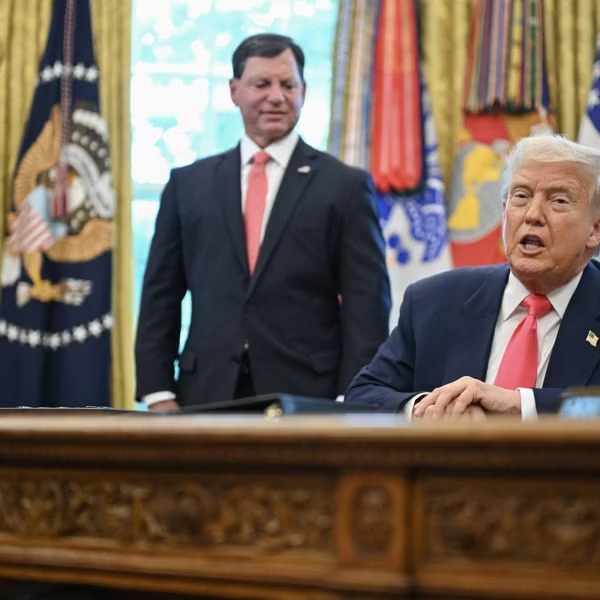
Donald Trump placed a painting of Andrew Jackson in the Oval Office, apparently feeling pleased that, in his own words, "a lot of people they compare the campaign of Trump with the campaign of [Jackson]."
Andrew Jackson may have been our most racist president. To him, Native Americans were only 'savages' standing in the way of progress. For ten years Jackson arranged 'treaties' with Indians in the American southeast, setting up his own friends as land agents, traders, and surveyors while encouraging white squatters to take over the land. Eventually recognizing Florida as vital to "national security," he initiated raids on Seminole villages, burning down homes and forcing out residents, all in the name of the "immutable laws of self-defense." The result was a Trail of Tears that led thousands of sick and starving Cherokees across the Mississippi in the middle of winter to unfamiliar and unproductive land far from their home.
Indian removal, according to Jackson, would help the Native Americans to "cast off their savage habits and become an interesting, civilized, and Christian community." He hypocritically added, "Say to the chiefs and warriors that I am their friend...[their land] they shall possess as long as grass grows or water runs."
Jackson didn't reserve his enmity for Native Americans alone. He was the only president to have driven a "coffle" of chained slaves to work in faraway locations. As a reward for returning one of his runaway slaves, he promised "ten dollars extra, for every hundred lashes any person will give him."
Simplemindedness
Ronald Reagan said, "Government is the problem." Donald Trump said, "Good people don't go into government."
There are other similarities, many of them reported by historian William E. Leuchtenburg, author of "The American President: From Teddy Roosevelt to Bill Clinton." Says Leuchtenburg, "No one had ever entered the White House so grossly ill informed." A Reagan presidential aide remarked, "He made decisions like an ancient king...passively letting his subjects serve him, selecting only those morsels of public policy that were especially tasty."
Reagan provided entertaining moments that Trump is beginning to emulate with newer technology. According to Indiana congressman Lee Hamilton, during a meeting on the MX missile "Reagan's only contribution throughout the entire hour and a half was to interrupt somewhere at midpoint to tell us he'd watched a movie the night before." On the day before a global summit meeting he was given a briefing book, which he never opened, and when asked about it by chief of staff James Baker, Reagan replied, "Well, Jim, The Sound of Music was on last night." Reagan had his movies, Trump his TV. He watches it for hours, apparently searching narcissistically for news about himself, and then at times turning it into official policy. According to Fortune, "At least five times since he took office on Jan. 20, Trump has tweeted about policy ideas and thoughts that seem directly related to news that was being shown on channels such as Fox News."
Through the 1980s, Reagan's staff "protected him by severely restricting situations where he might blurt out a fantasy" while "keeping the press at shouting distance or beyond." Yet he "alarmed members of his staff by flying into a rage if the press reported that he had changed his position on an issue, even when he undoubtedly had." More similarities to the present day.
Ecocide
Stalin destroyed not only people, but also the environment. In "An Environmental History of Russia," it is stated that "During the Stalin era, state-mandated programs...ensured that economic development was the sine qua non of decision making. Those who stood in the way of the programs...were often labeled 'wreckers.' The 'wreckers' included some of the nation's most able biologists, forestry and fisheries specialists, agronomists, and ecologists. Officials... came to consider nature itself an 'enemy of the people.'"
"We cannot expect charity from nature," said Stalin. "We must tear it from her."
Donald Trump has shown the same disdain for the earth with statements like "The concept of global warming was created by and for the Chinese in order to make U.S. manufacturing non-competitive." His new Secretary of State Rex Tillerson is an obfuscating climate change denier whose company, Exxon, has been linked to the great majority of other climate change deniers.
Historian Kevin Kruse might be providing some insight into Donald Trump's mind in his summation of Warren G. Harding, considered by many to be the worst president: "He felt woefully under-qualified for the job... so he surrounded himself with old friends... who themselves were unqualified for the jobs they held and many of them corrupt."
Historian Eric Foner goes on to discuss Harding's and Coolidge's corruption in office, and their penchant for "channeling money and favors to big business." The two presidents, says Foner, "slashed income and corporate taxes and supported employers' campaigns to eliminate unions."
"Never before," said the Wall Street Journal at the time, "has a government been so completely fused with business."
Until the dystopian Trump era.
Dear Common Dreams reader, It’s been nearly 30 years since I co-founded Common Dreams with my late wife, Lina Newhouser. We had the radical notion that journalism should serve the public good, not corporate profits. It was clear to us from the outset what it would take to build such a project. No paid advertisements. No corporate sponsors. No millionaire publisher telling us what to think or do. Many people said we wouldn't last a year, but we proved those doubters wrong. Together with a tremendous team of journalists and dedicated staff, we built an independent media outlet free from the constraints of profits and corporate control. Our mission has always been simple: To inform. To inspire. To ignite change for the common good. Building Common Dreams was not easy. Our survival was never guaranteed. When you take on the most powerful forces—Wall Street greed, fossil fuel industry destruction, Big Tech lobbyists, and uber-rich oligarchs who have spent billions upon billions rigging the economy and democracy in their favor—the only bulwark you have is supporters who believe in your work. But here’s the urgent message from me today. It's never been this bad out there. And it's never been this hard to keep us going. At the very moment Common Dreams is most needed, the threats we face are intensifying. We need your support now more than ever. We don't accept corporate advertising and never will. We don't have a paywall because we don't think people should be blocked from critical news based on their ability to pay. Everything we do is funded by the donations of readers like you. When everyone does the little they can afford, we are strong. But if that support retreats or dries up, so do we. Will you donate now to make sure Common Dreams not only survives but thrives? —Craig Brown, Co-founder |
Based on reliable news sources, his biographer, and his own writings, the most powerful man of his era has been referred to as an "egomaniac" and "narcissist," possessing a "big mouth" with an "impulsive style," unable to differentiate between truth and falsehood, preferring emotion over facts, focused on national greatness and law & order, fearful of "foreignization," prone to coarseness and put-downs in speeches, and fond of "mantralike phrases" filled with "accusations, vows of revenge and promises for the future."
Depravity
The man described above is Adolf Hitler. All of the descriptions were attributed to the Nazi leader: some of it by news media in the 1930s, some of it by modern historian and biographer Volker Ullrich, some of it by Hitler himself in "Mein Kampf." Eerily familiar to the present day.
Donald Trump placed a painting of Andrew Jackson in the Oval Office, apparently feeling pleased that, in his own words, "a lot of people they compare the campaign of Trump with the campaign of [Jackson]."
Andrew Jackson may have been our most racist president. To him, Native Americans were only 'savages' standing in the way of progress. For ten years Jackson arranged 'treaties' with Indians in the American southeast, setting up his own friends as land agents, traders, and surveyors while encouraging white squatters to take over the land. Eventually recognizing Florida as vital to "national security," he initiated raids on Seminole villages, burning down homes and forcing out residents, all in the name of the "immutable laws of self-defense." The result was a Trail of Tears that led thousands of sick and starving Cherokees across the Mississippi in the middle of winter to unfamiliar and unproductive land far from their home.
Indian removal, according to Jackson, would help the Native Americans to "cast off their savage habits and become an interesting, civilized, and Christian community." He hypocritically added, "Say to the chiefs and warriors that I am their friend...[their land] they shall possess as long as grass grows or water runs."
Jackson didn't reserve his enmity for Native Americans alone. He was the only president to have driven a "coffle" of chained slaves to work in faraway locations. As a reward for returning one of his runaway slaves, he promised "ten dollars extra, for every hundred lashes any person will give him."
Simplemindedness
Ronald Reagan said, "Government is the problem." Donald Trump said, "Good people don't go into government."
There are other similarities, many of them reported by historian William E. Leuchtenburg, author of "The American President: From Teddy Roosevelt to Bill Clinton." Says Leuchtenburg, "No one had ever entered the White House so grossly ill informed." A Reagan presidential aide remarked, "He made decisions like an ancient king...passively letting his subjects serve him, selecting only those morsels of public policy that were especially tasty."
Reagan provided entertaining moments that Trump is beginning to emulate with newer technology. According to Indiana congressman Lee Hamilton, during a meeting on the MX missile "Reagan's only contribution throughout the entire hour and a half was to interrupt somewhere at midpoint to tell us he'd watched a movie the night before." On the day before a global summit meeting he was given a briefing book, which he never opened, and when asked about it by chief of staff James Baker, Reagan replied, "Well, Jim, The Sound of Music was on last night." Reagan had his movies, Trump his TV. He watches it for hours, apparently searching narcissistically for news about himself, and then at times turning it into official policy. According to Fortune, "At least five times since he took office on Jan. 20, Trump has tweeted about policy ideas and thoughts that seem directly related to news that was being shown on channels such as Fox News."
Through the 1980s, Reagan's staff "protected him by severely restricting situations where he might blurt out a fantasy" while "keeping the press at shouting distance or beyond." Yet he "alarmed members of his staff by flying into a rage if the press reported that he had changed his position on an issue, even when he undoubtedly had." More similarities to the present day.
Ecocide
Stalin destroyed not only people, but also the environment. In "An Environmental History of Russia," it is stated that "During the Stalin era, state-mandated programs...ensured that economic development was the sine qua non of decision making. Those who stood in the way of the programs...were often labeled 'wreckers.' The 'wreckers' included some of the nation's most able biologists, forestry and fisheries specialists, agronomists, and ecologists. Officials... came to consider nature itself an 'enemy of the people.'"
"We cannot expect charity from nature," said Stalin. "We must tear it from her."
Donald Trump has shown the same disdain for the earth with statements like "The concept of global warming was created by and for the Chinese in order to make U.S. manufacturing non-competitive." His new Secretary of State Rex Tillerson is an obfuscating climate change denier whose company, Exxon, has been linked to the great majority of other climate change deniers.
Historian Kevin Kruse might be providing some insight into Donald Trump's mind in his summation of Warren G. Harding, considered by many to be the worst president: "He felt woefully under-qualified for the job... so he surrounded himself with old friends... who themselves were unqualified for the jobs they held and many of them corrupt."
Historian Eric Foner goes on to discuss Harding's and Coolidge's corruption in office, and their penchant for "channeling money and favors to big business." The two presidents, says Foner, "slashed income and corporate taxes and supported employers' campaigns to eliminate unions."
"Never before," said the Wall Street Journal at the time, "has a government been so completely fused with business."
Until the dystopian Trump era.
Based on reliable news sources, his biographer, and his own writings, the most powerful man of his era has been referred to as an "egomaniac" and "narcissist," possessing a "big mouth" with an "impulsive style," unable to differentiate between truth and falsehood, preferring emotion over facts, focused on national greatness and law & order, fearful of "foreignization," prone to coarseness and put-downs in speeches, and fond of "mantralike phrases" filled with "accusations, vows of revenge and promises for the future."
Depravity
The man described above is Adolf Hitler. All of the descriptions were attributed to the Nazi leader: some of it by news media in the 1930s, some of it by modern historian and biographer Volker Ullrich, some of it by Hitler himself in "Mein Kampf." Eerily familiar to the present day.
Donald Trump placed a painting of Andrew Jackson in the Oval Office, apparently feeling pleased that, in his own words, "a lot of people they compare the campaign of Trump with the campaign of [Jackson]."
Andrew Jackson may have been our most racist president. To him, Native Americans were only 'savages' standing in the way of progress. For ten years Jackson arranged 'treaties' with Indians in the American southeast, setting up his own friends as land agents, traders, and surveyors while encouraging white squatters to take over the land. Eventually recognizing Florida as vital to "national security," he initiated raids on Seminole villages, burning down homes and forcing out residents, all in the name of the "immutable laws of self-defense." The result was a Trail of Tears that led thousands of sick and starving Cherokees across the Mississippi in the middle of winter to unfamiliar and unproductive land far from their home.
Indian removal, according to Jackson, would help the Native Americans to "cast off their savage habits and become an interesting, civilized, and Christian community." He hypocritically added, "Say to the chiefs and warriors that I am their friend...[their land] they shall possess as long as grass grows or water runs."
Jackson didn't reserve his enmity for Native Americans alone. He was the only president to have driven a "coffle" of chained slaves to work in faraway locations. As a reward for returning one of his runaway slaves, he promised "ten dollars extra, for every hundred lashes any person will give him."
Simplemindedness
Ronald Reagan said, "Government is the problem." Donald Trump said, "Good people don't go into government."
There are other similarities, many of them reported by historian William E. Leuchtenburg, author of "The American President: From Teddy Roosevelt to Bill Clinton." Says Leuchtenburg, "No one had ever entered the White House so grossly ill informed." A Reagan presidential aide remarked, "He made decisions like an ancient king...passively letting his subjects serve him, selecting only those morsels of public policy that were especially tasty."
Reagan provided entertaining moments that Trump is beginning to emulate with newer technology. According to Indiana congressman Lee Hamilton, during a meeting on the MX missile "Reagan's only contribution throughout the entire hour and a half was to interrupt somewhere at midpoint to tell us he'd watched a movie the night before." On the day before a global summit meeting he was given a briefing book, which he never opened, and when asked about it by chief of staff James Baker, Reagan replied, "Well, Jim, The Sound of Music was on last night." Reagan had his movies, Trump his TV. He watches it for hours, apparently searching narcissistically for news about himself, and then at times turning it into official policy. According to Fortune, "At least five times since he took office on Jan. 20, Trump has tweeted about policy ideas and thoughts that seem directly related to news that was being shown on channels such as Fox News."
Through the 1980s, Reagan's staff "protected him by severely restricting situations where he might blurt out a fantasy" while "keeping the press at shouting distance or beyond." Yet he "alarmed members of his staff by flying into a rage if the press reported that he had changed his position on an issue, even when he undoubtedly had." More similarities to the present day.
Ecocide
Stalin destroyed not only people, but also the environment. In "An Environmental History of Russia," it is stated that "During the Stalin era, state-mandated programs...ensured that economic development was the sine qua non of decision making. Those who stood in the way of the programs...were often labeled 'wreckers.' The 'wreckers' included some of the nation's most able biologists, forestry and fisheries specialists, agronomists, and ecologists. Officials... came to consider nature itself an 'enemy of the people.'"
"We cannot expect charity from nature," said Stalin. "We must tear it from her."
Donald Trump has shown the same disdain for the earth with statements like "The concept of global warming was created by and for the Chinese in order to make U.S. manufacturing non-competitive." His new Secretary of State Rex Tillerson is an obfuscating climate change denier whose company, Exxon, has been linked to the great majority of other climate change deniers.
Historian Kevin Kruse might be providing some insight into Donald Trump's mind in his summation of Warren G. Harding, considered by many to be the worst president: "He felt woefully under-qualified for the job... so he surrounded himself with old friends... who themselves were unqualified for the jobs they held and many of them corrupt."
Historian Eric Foner goes on to discuss Harding's and Coolidge's corruption in office, and their penchant for "channeling money and favors to big business." The two presidents, says Foner, "slashed income and corporate taxes and supported employers' campaigns to eliminate unions."
"Never before," said the Wall Street Journal at the time, "has a government been so completely fused with business."
Until the dystopian Trump era.