SUBSCRIBE TO OUR FREE NEWSLETTER
Daily news & progressive opinion—funded by the people, not the corporations—delivered straight to your inbox.
5
#000000
#FFFFFF
To donate by check, phone, or other method, see our More Ways to Give page.
Daily news & progressive opinion—funded by the people, not the corporations—delivered straight to your inbox.
This week, two
respected human rights organisations - one Palestinian, one Israeli -
each came out with very full reports into the extent of the damage
caused by the assault Israel waged against Gaza last winter.
According to the
Palestinian Centre for Human Rights (PCHR), which is based in Gaza,
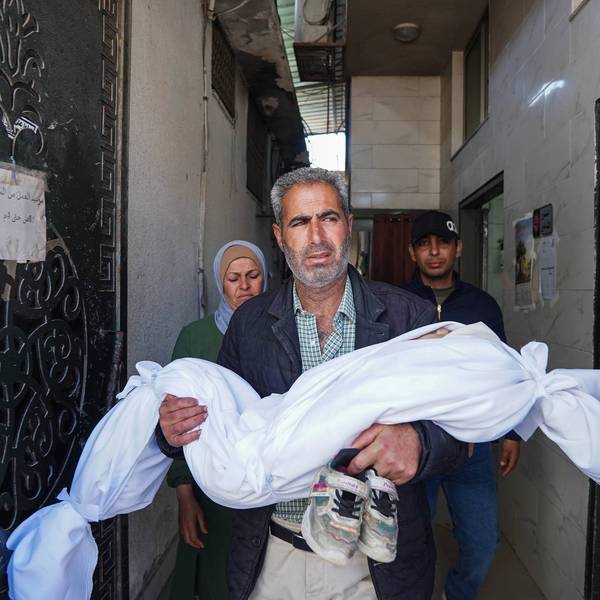
1,419 Palestinians were killed during the fighting, of whom 252 were
combatants and the rest noncombatants, including members of the
civilian police. Three hundred and eighteen of those killed were, it
said, children.
The
Israeli group B'Tselem ("In the Image") tallied 1,387 Gazans killed by
the Israelis, including 320 minors. It assessed that 330 of those
killed had taken part in the hostilities. B'Tselem also noted that
three Israeli civilians and nine soldiers were killed during the
fighting.
The Israeli government earlier claimed that 1,166
Palestinians were killed in the fighting, of whom only 89 were minors
under the age of 16, while 60 percent were "members of Hamas and other
armed groups".
PCHR and B'Tselem published their latest reports
in the lead-up to next week's widely awaited presentation to the U.N.'s
Human Rights Council of the final report on Gaza war casualties
prepared by the investigative commission headed by South African judge
Richard Goldstone.
PCHR and B'Tselem based their tallies on
painstaking field research. (There are some small discrepancies between
them. But most can be explained by differences in the definitions
used.)
The Israeli government, by contrast, has not revealed
the methodology by which - without having any access at all to
surviving family members or local officials on the ground - it felt
able to compile its much lower tally.
Meanwhile, in the
lead-up to the publication of Goldstone's report, the Israeli
government has launched a very tough offensive against all the Israeli
and international rights organisations that have been documenting the
damage in Gaza.
At the international level, that includes both
the Goldstone Commission itself and international citizen groups like
Amnesty International and Human Rights Watch (HRW).
Judge
Goldstone is a practiced investigator of war crimes and other
atrocities. He first made his name in the late 1980s by heading a
judicial investigation that South Africa's apartheid government was
obliged to establish, to look into allegations of abuses by the South
African Defence Force.
He resisted significant pressures to
produce a whitewash on that occasion; and the subsequent publication of
his findings revealed a lot about the dark underside of the security
forces' behaviour that was not previously known.
In 1993, he
became the first prosecutor at the war crimes court the U.N.
established for the former Yugoslavia, establishing its entire
international investigative operation.
On his latest mission,
the Israeli government refused to allow Goldstone to travel to Gaza
from Israel. But he and members of his team traveled there via Egypt.
They held hearings in Gaza and in Geneva on alleged violations of
international humanitarian law during the war committed by both Israel
and Hamas and other Palestinian organisations in Gaza.
The
publication of their findings next week will be an important event, and
is being eagerly awaited by human rights activists and by officials at
the many rights organisations that have also worked on this case.
These
organisations have all come under particularly sharp attack from the
government of Benjamin Netanyahu and its supporters since last July,
when Netanyahu openly accused them of pursuing an anti-Israel agenda.
Netanyahu's
attack gave great encouragement to a hitherto small Israeli body,
itself a non-governmental organisation, or NGO, which is called "NGO
Monitor".
Members of the Netanyahu government and NGO Monitor
have launched blistering attacks against Israeli groups like "Breaking
the Silence", which did breakthrough work in publicising accusations
made by Israeli soldiers who served in Gaza regarding the laws-of-war
violations they saw while there.
NGO Monitor and prominent
rightwing Israeli politicians have proposed banning the provision by
foreign governments of funding to groups like Breaking the Silence.
At
the international level, one of NGO Monitor's main targets has been
HRW. HRW has long been the most influential rights group inside the
United States and gained even more influence inside the administration
after Barack Obama became president.
On Tuesday, NGO Monitor
published an extensively documented, 99-page attack on both the
neutrality of HRW's leadership and staff members and the quality of its
work. (Full disclosure: this writer is a member of HRW's Middle East
advisory committee and was also targeted in passing in this report.)
On Wednesday, NGO monitor published a shorter, but equally hard-hitting, attack against the Goldstone Commission.
Meantime,
HRW's standing was dented when, apparently independently from NGO
Monitor's effort, some pro-Israeli bloggers in the U.S. revealed on
Tuesday that Marc Garlasco, a key HRW staff member responsible for much
of its work on Gaza, had an intense out-of-hours involvement in the
hobby of collecting Nazi-era military memorabilia.
HRW's leaders
have tried to keep their attention focused on the broader campaign to
reveal the true extent of the laws-of-war violations committed by both
sides in Gaza and to try to hold the perpetrators accountable for their
acts.
Other organisations worldwide are meanwhile placing more
of their focus on the violations of the Geneva Conventions that Israel
continues to perpetrate with respect to Gaza - in particular, its
continued refusal to allow the passage into the Strip of any goods
except those needed for minimal physical survival Israel is
still, eight months after last winter's fighting ended, blocking the
shipment into Gaza even of basic construction materials, needed to
repair the extensive damage the Israeli forces caused to homes,
schools, and infrastructure throughout the Strip.
When, or soon
after, the U.N. General Assembly convenes in New York later this month,
Pres. Obama is expected to launch another round of peace diplomacy
between Israelis and Palestinians. But meanwhile, the people of Gaza
still suffer.
Judge Goldstone's revelations about the
violations of last winter will not end their suffering. But it may help
many people understand their fate better, and thus build the
constituency for the speedy securing of a final peace agreement.
Dear Common Dreams reader, It’s been nearly 30 years since I co-founded Common Dreams with my late wife, Lina Newhouser. We had the radical notion that journalism should serve the public good, not corporate profits. It was clear to us from the outset what it would take to build such a project. No paid advertisements. No corporate sponsors. No millionaire publisher telling us what to think or do. Many people said we wouldn't last a year, but we proved those doubters wrong. Together with a tremendous team of journalists and dedicated staff, we built an independent media outlet free from the constraints of profits and corporate control. Our mission has always been simple: To inform. To inspire. To ignite change for the common good. Building Common Dreams was not easy. Our survival was never guaranteed. When you take on the most powerful forces—Wall Street greed, fossil fuel industry destruction, Big Tech lobbyists, and uber-rich oligarchs who have spent billions upon billions rigging the economy and democracy in their favor—the only bulwark you have is supporters who believe in your work. But here’s the urgent message from me today. It's never been this bad out there. And it's never been this hard to keep us going. At the very moment Common Dreams is most needed, the threats we face are intensifying. We need your support now more than ever. We don't accept corporate advertising and never will. We don't have a paywall because we don't think people should be blocked from critical news based on their ability to pay. Everything we do is funded by the donations of readers like you. When everyone does the little they can afford, we are strong. But if that support retreats or dries up, so do we. Will you donate now to make sure Common Dreams not only survives but thrives? —Craig Brown, Co-founder |
This week, two
respected human rights organisations - one Palestinian, one Israeli -
each came out with very full reports into the extent of the damage
caused by the assault Israel waged against Gaza last winter.
According to the
Palestinian Centre for Human Rights (PCHR), which is based in Gaza,
1,419 Palestinians were killed during the fighting, of whom 252 were
combatants and the rest noncombatants, including members of the
civilian police. Three hundred and eighteen of those killed were, it
said, children.
The
Israeli group B'Tselem ("In the Image") tallied 1,387 Gazans killed by
the Israelis, including 320 minors. It assessed that 330 of those
killed had taken part in the hostilities. B'Tselem also noted that
three Israeli civilians and nine soldiers were killed during the
fighting.
The Israeli government earlier claimed that 1,166
Palestinians were killed in the fighting, of whom only 89 were minors
under the age of 16, while 60 percent were "members of Hamas and other
armed groups".
PCHR and B'Tselem published their latest reports
in the lead-up to next week's widely awaited presentation to the U.N.'s
Human Rights Council of the final report on Gaza war casualties
prepared by the investigative commission headed by South African judge
Richard Goldstone.
PCHR and B'Tselem based their tallies on
painstaking field research. (There are some small discrepancies between
them. But most can be explained by differences in the definitions
used.)
The Israeli government, by contrast, has not revealed
the methodology by which - without having any access at all to
surviving family members or local officials on the ground - it felt
able to compile its much lower tally.
Meanwhile, in the
lead-up to the publication of Goldstone's report, the Israeli
government has launched a very tough offensive against all the Israeli
and international rights organisations that have been documenting the
damage in Gaza.
At the international level, that includes both
the Goldstone Commission itself and international citizen groups like
Amnesty International and Human Rights Watch (HRW).
Judge
Goldstone is a practiced investigator of war crimes and other
atrocities. He first made his name in the late 1980s by heading a
judicial investigation that South Africa's apartheid government was
obliged to establish, to look into allegations of abuses by the South
African Defence Force.
He resisted significant pressures to
produce a whitewash on that occasion; and the subsequent publication of
his findings revealed a lot about the dark underside of the security
forces' behaviour that was not previously known.
In 1993, he
became the first prosecutor at the war crimes court the U.N.
established for the former Yugoslavia, establishing its entire
international investigative operation.
On his latest mission,
the Israeli government refused to allow Goldstone to travel to Gaza
from Israel. But he and members of his team traveled there via Egypt.
They held hearings in Gaza and in Geneva on alleged violations of
international humanitarian law during the war committed by both Israel
and Hamas and other Palestinian organisations in Gaza.
The
publication of their findings next week will be an important event, and
is being eagerly awaited by human rights activists and by officials at
the many rights organisations that have also worked on this case.
These
organisations have all come under particularly sharp attack from the
government of Benjamin Netanyahu and its supporters since last July,
when Netanyahu openly accused them of pursuing an anti-Israel agenda.
Netanyahu's
attack gave great encouragement to a hitherto small Israeli body,
itself a non-governmental organisation, or NGO, which is called "NGO
Monitor".
Members of the Netanyahu government and NGO Monitor
have launched blistering attacks against Israeli groups like "Breaking
the Silence", which did breakthrough work in publicising accusations
made by Israeli soldiers who served in Gaza regarding the laws-of-war
violations they saw while there.
NGO Monitor and prominent
rightwing Israeli politicians have proposed banning the provision by
foreign governments of funding to groups like Breaking the Silence.
At
the international level, one of NGO Monitor's main targets has been
HRW. HRW has long been the most influential rights group inside the
United States and gained even more influence inside the administration
after Barack Obama became president.
On Tuesday, NGO Monitor
published an extensively documented, 99-page attack on both the
neutrality of HRW's leadership and staff members and the quality of its
work. (Full disclosure: this writer is a member of HRW's Middle East
advisory committee and was also targeted in passing in this report.)
On Wednesday, NGO monitor published a shorter, but equally hard-hitting, attack against the Goldstone Commission.
Meantime,
HRW's standing was dented when, apparently independently from NGO
Monitor's effort, some pro-Israeli bloggers in the U.S. revealed on
Tuesday that Marc Garlasco, a key HRW staff member responsible for much
of its work on Gaza, had an intense out-of-hours involvement in the
hobby of collecting Nazi-era military memorabilia.
HRW's leaders
have tried to keep their attention focused on the broader campaign to
reveal the true extent of the laws-of-war violations committed by both
sides in Gaza and to try to hold the perpetrators accountable for their
acts.
Other organisations worldwide are meanwhile placing more
of their focus on the violations of the Geneva Conventions that Israel
continues to perpetrate with respect to Gaza - in particular, its
continued refusal to allow the passage into the Strip of any goods
except those needed for minimal physical survival Israel is
still, eight months after last winter's fighting ended, blocking the
shipment into Gaza even of basic construction materials, needed to
repair the extensive damage the Israeli forces caused to homes,
schools, and infrastructure throughout the Strip.
When, or soon
after, the U.N. General Assembly convenes in New York later this month,
Pres. Obama is expected to launch another round of peace diplomacy
between Israelis and Palestinians. But meanwhile, the people of Gaza
still suffer.
Judge Goldstone's revelations about the
violations of last winter will not end their suffering. But it may help
many people understand their fate better, and thus build the
constituency for the speedy securing of a final peace agreement.
This week, two
respected human rights organisations - one Palestinian, one Israeli -
each came out with very full reports into the extent of the damage
caused by the assault Israel waged against Gaza last winter.
According to the
Palestinian Centre for Human Rights (PCHR), which is based in Gaza,
1,419 Palestinians were killed during the fighting, of whom 252 were
combatants and the rest noncombatants, including members of the
civilian police. Three hundred and eighteen of those killed were, it
said, children.
The
Israeli group B'Tselem ("In the Image") tallied 1,387 Gazans killed by
the Israelis, including 320 minors. It assessed that 330 of those
killed had taken part in the hostilities. B'Tselem also noted that
three Israeli civilians and nine soldiers were killed during the
fighting.
The Israeli government earlier claimed that 1,166
Palestinians were killed in the fighting, of whom only 89 were minors
under the age of 16, while 60 percent were "members of Hamas and other
armed groups".
PCHR and B'Tselem published their latest reports
in the lead-up to next week's widely awaited presentation to the U.N.'s
Human Rights Council of the final report on Gaza war casualties
prepared by the investigative commission headed by South African judge
Richard Goldstone.
PCHR and B'Tselem based their tallies on
painstaking field research. (There are some small discrepancies between
them. But most can be explained by differences in the definitions
used.)
The Israeli government, by contrast, has not revealed
the methodology by which - without having any access at all to
surviving family members or local officials on the ground - it felt
able to compile its much lower tally.
Meanwhile, in the
lead-up to the publication of Goldstone's report, the Israeli
government has launched a very tough offensive against all the Israeli
and international rights organisations that have been documenting the
damage in Gaza.
At the international level, that includes both
the Goldstone Commission itself and international citizen groups like
Amnesty International and Human Rights Watch (HRW).
Judge
Goldstone is a practiced investigator of war crimes and other
atrocities. He first made his name in the late 1980s by heading a
judicial investigation that South Africa's apartheid government was
obliged to establish, to look into allegations of abuses by the South
African Defence Force.
He resisted significant pressures to
produce a whitewash on that occasion; and the subsequent publication of
his findings revealed a lot about the dark underside of the security
forces' behaviour that was not previously known.
In 1993, he
became the first prosecutor at the war crimes court the U.N.
established for the former Yugoslavia, establishing its entire
international investigative operation.
On his latest mission,
the Israeli government refused to allow Goldstone to travel to Gaza
from Israel. But he and members of his team traveled there via Egypt.
They held hearings in Gaza and in Geneva on alleged violations of
international humanitarian law during the war committed by both Israel
and Hamas and other Palestinian organisations in Gaza.
The
publication of their findings next week will be an important event, and
is being eagerly awaited by human rights activists and by officials at
the many rights organisations that have also worked on this case.
These
organisations have all come under particularly sharp attack from the
government of Benjamin Netanyahu and its supporters since last July,
when Netanyahu openly accused them of pursuing an anti-Israel agenda.
Netanyahu's
attack gave great encouragement to a hitherto small Israeli body,
itself a non-governmental organisation, or NGO, which is called "NGO
Monitor".
Members of the Netanyahu government and NGO Monitor
have launched blistering attacks against Israeli groups like "Breaking
the Silence", which did breakthrough work in publicising accusations
made by Israeli soldiers who served in Gaza regarding the laws-of-war
violations they saw while there.
NGO Monitor and prominent
rightwing Israeli politicians have proposed banning the provision by
foreign governments of funding to groups like Breaking the Silence.
At
the international level, one of NGO Monitor's main targets has been
HRW. HRW has long been the most influential rights group inside the
United States and gained even more influence inside the administration
after Barack Obama became president.
On Tuesday, NGO Monitor
published an extensively documented, 99-page attack on both the
neutrality of HRW's leadership and staff members and the quality of its
work. (Full disclosure: this writer is a member of HRW's Middle East
advisory committee and was also targeted in passing in this report.)
On Wednesday, NGO monitor published a shorter, but equally hard-hitting, attack against the Goldstone Commission.
Meantime,
HRW's standing was dented when, apparently independently from NGO
Monitor's effort, some pro-Israeli bloggers in the U.S. revealed on
Tuesday that Marc Garlasco, a key HRW staff member responsible for much
of its work on Gaza, had an intense out-of-hours involvement in the
hobby of collecting Nazi-era military memorabilia.
HRW's leaders
have tried to keep their attention focused on the broader campaign to
reveal the true extent of the laws-of-war violations committed by both
sides in Gaza and to try to hold the perpetrators accountable for their
acts.
Other organisations worldwide are meanwhile placing more
of their focus on the violations of the Geneva Conventions that Israel
continues to perpetrate with respect to Gaza - in particular, its
continued refusal to allow the passage into the Strip of any goods
except those needed for minimal physical survival Israel is
still, eight months after last winter's fighting ended, blocking the
shipment into Gaza even of basic construction materials, needed to
repair the extensive damage the Israeli forces caused to homes,
schools, and infrastructure throughout the Strip.
When, or soon
after, the U.N. General Assembly convenes in New York later this month,
Pres. Obama is expected to launch another round of peace diplomacy
between Israelis and Palestinians. But meanwhile, the people of Gaza
still suffer.
Judge Goldstone's revelations about the
violations of last winter will not end their suffering. But it may help
many people understand their fate better, and thus build the
constituency for the speedy securing of a final peace agreement.