

SUBSCRIBE TO OUR FREE NEWSLETTER
Daily news & progressive opinion—funded by the people, not the corporations—delivered straight to your inbox.
5
#000000
#FFFFFF
To donate by check, phone, or other method, see our More Ways to Give page.
Daily news & progressive opinion—funded by the people, not the corporations—delivered straight to your inbox.
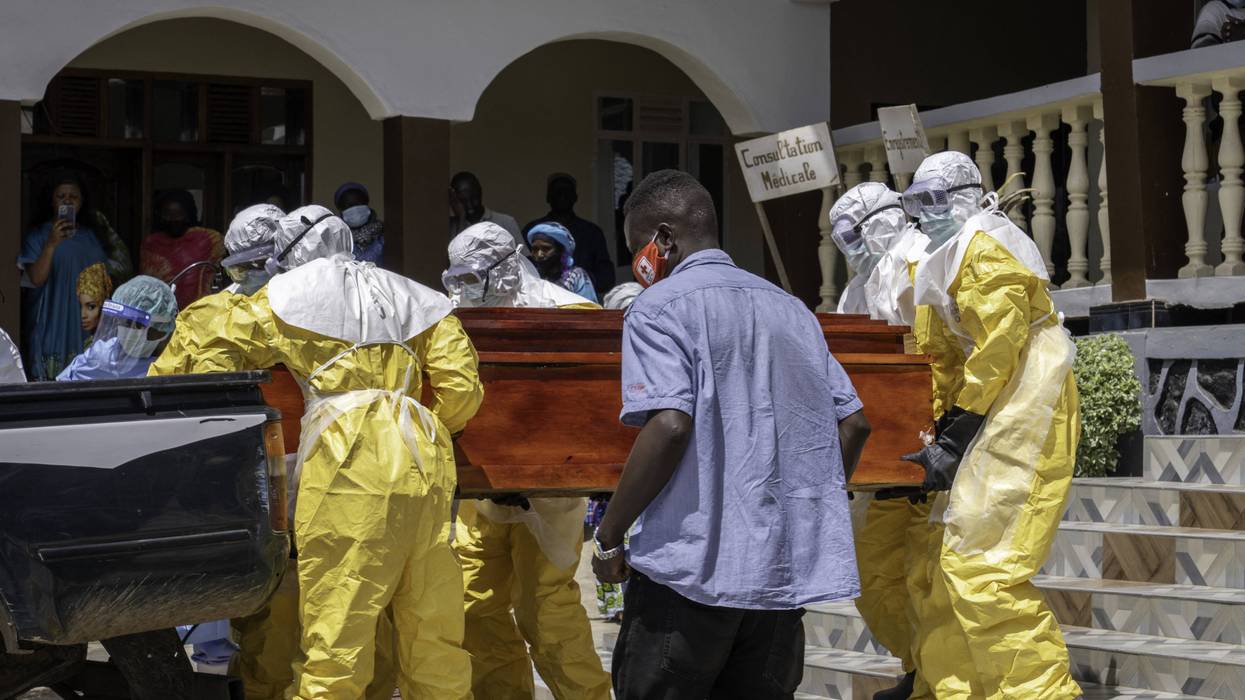
"The delay in detecting the outbreak means that we are now playing catch-up with a very fast-moving epidemic."
World Health Organization Director-General Tedros Adhanom Ghebreyesus warned Monday that the swiftly spreading Ebola outbreak in the Democratic Republic of Congo and Uganda "will get worse before it gets better," as a deadly delay in detecting infections has responders to the epidemic "playing catch-up."
"The outbreak is spreading rapidly," Tedros said during a virtual ministerial meeting on the matter. "So far, 101 cases have been confirmed in DRC, with 10 confirmed deaths. But we know the epidemic in DRC is much larger. There are now more than 900 suspected cases and 220 suspected deaths."
"Countries bordering DRC are at especially high risk and should take immediate action," he asserted. "In Uganda, there are five confirmed cases and one death."
Tedros pointed out that "there are several aspects of this outbreak that make it especially challenging."
"First, the delay in detecting the outbreak means that we are now playing catch-up with a very fast-moving epidemic," he said. "We are urgently scaling up operations, but at the moment, the epidemic is outpacing us."
"Second, as you know, the provinces of Ituri and North Kivu are highly insecure, with intensified fighting in recent months, causing more than 100,000 people to be newly displaced," the WHO chief continued. "There is also significant distrust of outside authorities among the local population. In the past week, there have been two security incidents at health facilities."
"WHO is fully committed to working under the leadership of the governments of DRC and Uganda, side by side with Africa [Centers for Disease Control and Prevention] and all other partners," Tedros added. "We will not rest until we bring this outbreak under control."
Ebola—which typically kills between 25% and 90% of infected people, depending upon the strain of the virus and quality of available medical care—causes widespread and often catastrophic damage to the body’s blood vessels, immune system, and organs.
Critics say US President Donald Trump's ideologically driven decision to withdraw the US from the WHO, his administration's dismantling of the US Agency for International Development (USAID), and reduced funding for the US Centers for Disease Control and Prevention's global public health efforts have adversely affected the response to the current Ebola epidemic, compared with 2014 and 2019 outbreaks.
After US Secretary of State Marco Rubio said last week that the WHO was "a little late" in identifying new Ebola infections, Tedros retorted that "we don’t replace the country’s work, we only support them," and suggested that Rubio's comments could be rooted in "a lack of understanding" of the agency and countries' responsibilities.
While Rubio said that “our number-one objective on Ebola, before anything else... has to be, we can’t have it affect the United States,” public health experts warn that Trump administration actions could make it more likely that the virus will make its way to the country.
There is currently no confirmed CDC director, Food and Drug Administration commissioner, or surgeon general.
Taking aim at Trump's evisceration of key public health agencies and programs, Congresswoman Rosa DeLauro (D-Conn.) said last week: “Ebola does not wait for bureaucratic reorganizations. It spreads when surveillance systems are weakened, health workers are laid off, clinics lack protective equipment, and communities lose the trusted partners who help detect and contain outbreaks before they become public health emergencies."
"This is the perfect storm President Trump created," she continued. "He recklessly dismantled USAID, withheld and slashed other United States assistance to the region, fired critical staff, and created global health chaos. This is not efficiency. It is dangerous neglect."
"The United States spent years building the relationships, supply chains, laboratories, and community health networks that help stop deadly diseases at their source," DeLauro added. "The Trump administration tore into that capacity and now wants to pretend the consequences were unforeseeable.”

"Israel’s wanton killing of rescue workers and targeting of medical infrastructure in Lebanon has been one of this war’s most brazen features," Drop Site News noted.
Israeli attacks killed at least seven rescue workers in southern Lebanon on Thursday and Friday in violation of a US-brokered ceasefire, part of what critics say is a pattern of deliberate targeted murders of first responders that mirror the genocidal massacres committed in Gaza.
On Friday, paramedics from the al-Risala Association rushed to the site of an Israeli strike in Deir Qanun al-Nah, Tyre district, that reportedly killed a young girl and the village barber, identified by L'Orient Today as Ali Allameh. As they arrived on the scene, the paramedics were hit by a so-called "double-tap" strike—a follow-up bombing meant to eliminate survivors and first responders—that killed would-be rescuers Ali Abboud, Hussein Kassir, and Ahmad Hariri.
Hariri was also a well-known photojournalist who earlier this week documented an Israeli massacre of 14 people—including four children and 11 members of one family—in Deir Qanun al-Nah.
L'Orient Today reported that Israeli forces bombed two Islamic Health Committee centers in Hanouiyeh overnight Thursday, killing four rescue workers and wounding two others. Earlier on Thursday, an Israeli airstrike near the Tebnine Hospital reportedly killed two people and injured another while damaging all three floors of the facility.
Lebanon's Ministry of Public Health said more than 3,100 people have been killed by Israeli attacks since March 2, in addition to the more than 4,000 people, including nearly 800 women and over 300 children, slain in Israel’s 2023-25 attacks on its northern neighbor, where the militant resistance group Hezbollah is based. The dead from the current round of Israeli attacks include nearly 300 women, more than 210 children, and 123 medical and healthcare workers.
The Committee to Protect Journalists says 15 media professionals have also been killed in Lebanon since October 2023. One of them, Al-Akhbar correspondent Amal Khalil, was wounded last month by an Israeli strike while reporting on a previous bombing. Khalil was trapped under rubble, and as Red Cross workers attempted to extricate her, Israeli forces dropped a stun grenade on them as a warning to disperse. They were unable to rescue Khalil, who later died.
As in Gaza—where Israeli forces have killed or wounded more than 250,000 Palestinians since the Hamas-led attack of October 7, 2023—attacks by Israel have devastated Lebanon's healthcare infrastructure.
Israel's continued slaughter of Lebanese first responders comes as World Health Organization (WHO) member states gathered this week in Geneva, where they overwhelmingly backed a declaration of alarm over “the impact of the ongoing war on the Lebanese health systems, including attacks on health facilities and health workers, and the closure of dozens of primary healthcare centers and hospitals."
The measure, which also called on the WHO to "scale up" support for Lebanon's health system, passed by a vote of 95-2—with Israel and Honduras against—and 18 abstentions.
"Israeli military action has had unacceptable impacts on civilians and medical care," the United Kingdom said in an explanation of its vote in favor of the declaration. "The conflict has led to the displacement of over 1 million people and the closure of several hospitals and health facilities. The WHO has reported over 150 verified attacks against healthcare, with over 100 healthcare workers killed."
As Drop Site News reported Friday:
Israel’s wanton killing of rescue workers and targeting of medical infrastructure in Lebanon has been one of this war’s most brazen features. For the past five weeks, the relentless Israeli aerial and ground assault has continued despite a nominal ceasefire being announced by President Donald Trump on April 16. Last week, Israel and Lebanon agreed to a 45-day extension of the “ceasefire” after holding their third round of direct talks in Washington, of which Hezbollah is not a part. The declaration of a ceasefire has not stopped the Israeli military from continuing its bombardment of Lebanon, mostly in the south and the eastern Bekka Valley.
Rescue teams describe a pattern of repeated Israeli attacks directly targeting their members, often in double—or triple-tap strikes—where after a site is struck, it is struck a second or even third time as emergency crews arrive on the scene.
“We try to be careful and take safety precautions before interventions, like waiting 10 minutes to avoid the double taps,” Abdullah Halal, who leads a Civil Defense rescue team in Nabatiyeh, told Drop Site News.
"But," the outlet noted, "even those precautions have not always been enough. Last week, Halal lost two of his two colleagues in a double-tap strike."
Ali Saad, who is with the Lebanese Red Cross, told UN News on Wednesday that his colleagues share coordinates with Israeli forces and other belligerents, but rescue workers are still being targeted.
“This is why the Red Cross volunteers hug each other and say goodbye before every mission,” he said.
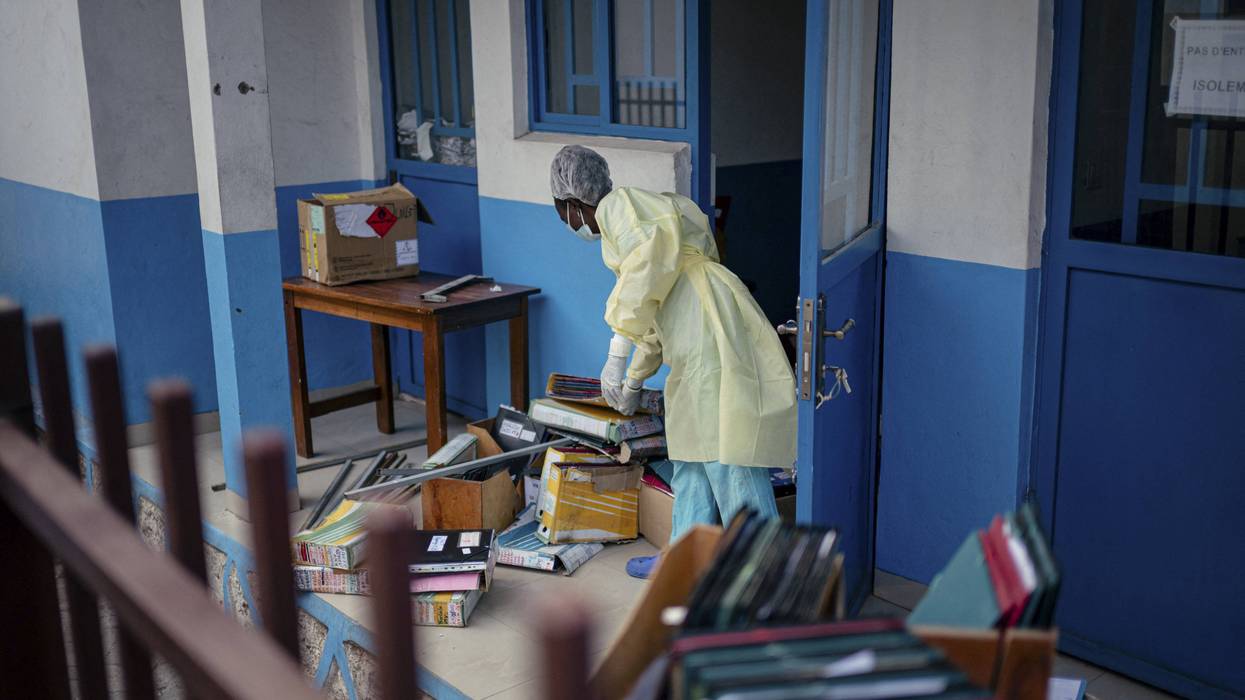
"Before the second Trump administration, USAID would have been on the ground," said one public health expert.
The World Health Organization's official designation of an Ebola virus outbreak in the Democratic Republic of Congo and Uganda as a public health emergency of international concern on Sunday came just a day after the world learned that the disease was spreading at all—a highly unusual chain of events, public health experts said, and one that suggested the virus has been circulating for weeks without the outbreak being detected.
WHO Director-General Tedros Adhanom Ghebreyesus said Sunday that eight laboratory-confirmed cases, 246 suspected cases, and 80 suspected deaths had been reported in at least three health zones across Ituri Province in the DRC. In Kampala, the densely populated capital of neighboring Uganda, two lab-confirmed cases and one death were reported within 24 hours of each other.
The victims in Kampala had no apparent link to one another; both had recently traveled from Congo.
The confirmed cases in Congo include some that have been reported in Kinshasa, the capital. The fact that the disease has been able to spread to two large cities with international airports, and the "clusters of deaths across the province of Ituri" point to "a potentially much larger outbreak than what is currently being detected and reported, with significant local and regional risk of spread," said WHO.
"At least four deaths among healthcare workers in a clinical context suggestive of viral haemorrhagic fever have been reported from the affected area, raising concerns regarding healthcare-associated transmission, gaps in infection prevention and control measures, and the potential for amplification within health facilities," the agency said.
Dr. Ashish Jha, who served as the White House Covid-19 response coordinator, said the numbers being reported could make the outbreak "one of the 10 biggest Ebola outbreaks in history."
"We're just hearing about this now? That makes no sense. Those numbers take weeks to accumulate," said Jha, adding that the fact that suspected cases have been detected in capital cities as well as Bunia, the provincial capital of Ituri, "matters enormously for spread."
Tedros emphasized that the outbreak is considered "extraordinary" because there is no approved vaccine or therapeutics for Ebola caused by the Bundibugyo virus, as this strain is. WHO sent a team to investigate in Ituri after first being notified of suspected Ebola cases on May 5, but initial samples tested negative, as available field equipment was only able to detect the Zaire strain of the disease.
The US Centers for Disease Control and Prevention (CDC) and global partners "need to surge resources in," Jha said. "A slow response creates unnecessary risks to people everywhere."
WHO, which President Donald Trump withdrew the US from last year, said the public health emergency designation was made to ramp up surveillance and infection prevention in the countries where the outbreak is occurring, enhance preparedness in bordering countries, and spread awareness in the international community.
The Ebola outbreak is the second to hit Uganda since Trump slashed foreign assistance funding, including by dismantling the US Agency for International Development. Earlier this month, CNN reported that the administration plans to divert $2 billion in global health program funding to cover the cost of closing USAID.
US foreign spending dropped by 56.9% after Trump shut down the agency as well as smaller aid programs and pushed Congress to rescind previously approved foreign assistance. USAID played a critical role in responding to the 2014 Ebola outbreak in West Africa.
In March 2025, when an Ebola outbreak was reported in Uganda, US officials warned that Trump's actions on foreign assistance at that point, including the termination of USAID grants, was impeding the Ugandan government's ability to procure lab supplies, diagnostic equipment, and protective gear for medical workers.
Dr. Herbert Luswata, president of the Uganda Medical Association, told The New York Times at the time that the country's ability to respond to Ebola was notably different than it had been during a previous outbreak in 2022, when dozens of medical workers volunteered to help treat patients.
The lack of funds and protective equipment had "left many afraid to help this time," the Times reported.
“With no USAID money and CDC expertise, it was like Uganda was left to die," Luswata told the Times.
Dr. Craig Spencer, an emergency medicine physician who survived Ebola in 2014, told CBS Saturday that "before the second Trump administration, USAID would have been on the ground" to respond to the current outbreak.
"The CDC would have been on the ground at a moment's notice, maybe even before a moment's notice, of a new outbreak of Ebola because we were in a bunch of countries," said Spencer. "We created relationships beforehand."
Last year, Trump megadonor Elon Musk, who was then leading efforts to slash government spending at the Department of Government Efficiency, said DOGE had "accidentally" canceled US support for Ebola prevention but claimed the funding had been "restored...and there was no interruption.”
But a number of Ebola-related contracts were in fact cut, accounting for $1.6 million out of $2.2 million that had previously gone toward the prevention efforts.
In recent weeks, public health experts have also warned that Trump's cuts to the CDC and other public health programs have left the US ill-prepared to respond to the hantavirus outbreak that originated on a cruise ship.
Jeremy Konyndyk, president of Refugees International and former leader on USAID's Covid-19 and disaster relief response work, said the current Ebola outbreak is "very worrying" and appeared to be the result of a "massive surveillance failure."
"It is really unusual for an Ebola outbreak to get to this scale before being detected; particularly in DRC, which has a lot of Ebola experience," said Konyndyk.
"I can't help but wonder," said Konyndyk, "if the drawdown of USAID and CDC health interventions by DOGE undermined some of the surveillance and detection initiatives that might have helped to catch this earlier."
WHO emphasized that the current crisis in DRC and Uganda requires "international coordination and cooperation to understand the extent of the outbreak, to coordinate surveillance, prevention, and response efforts, to scale up and strengthen operations and ensure ability to implement control measures."