

SUBSCRIBE TO OUR FREE NEWSLETTER
Daily news & progressive opinion—funded by the people, not the corporations—delivered straight to your inbox.
5
#000000
#FFFFFF
To donate by check, phone, or other method, see our More Ways to Give page.
Daily news & progressive opinion—funded by the people, not the corporations—delivered straight to your inbox.
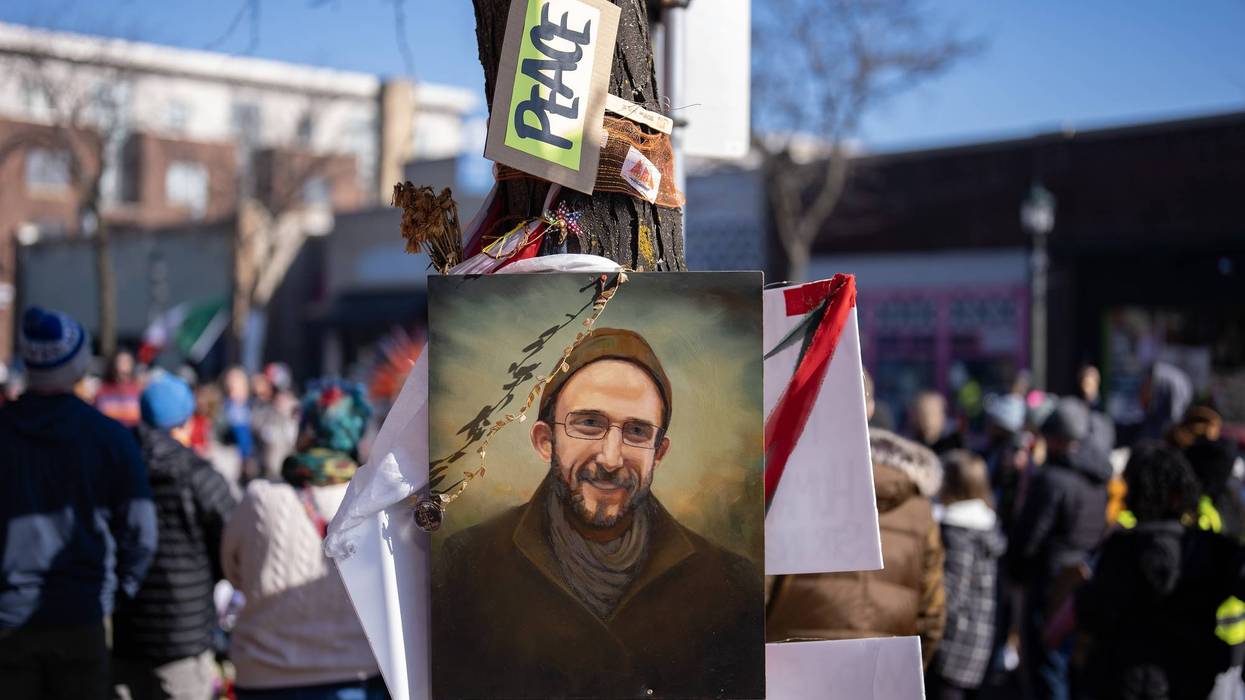
"I expect an apology. Why shouldn't we get one?"
The family of slain Minneapolis intensive care nurse Alex Pretti spoke out on Tuesday, seven months since his killing at the hands of US Customs and Immigration Enforcement agents in January.
In an interview with ABC News, Pretti's family—father Michael Pretti, mother Susan Pretti, and sister Micayla Pretti—expressed revulsion when asked about Trump administration officials falsely describing the late 37-year-old as an "assassin" or "domestic terrorist" after he was gunned down in the streets by ICE agents.
"Disgusting is what that was," said Michael Pretti.
"We still hear those words about our child," added Susan Pretti. "A kid who is out observing something that should not be happening in this world today, in the United States. Why? What did he do to deserve to be murdered?"
"What did he do to deserve to be murdered, to be left cold, on the ground, dead, my child? What did he do? ... they don't care ... I expect an apology. Why shouldn't we get one?" -- Alex Pretti's mom pic.twitter.com/TxFXMF6MDK
— Aaron Rupar (@atrupar) August 25, 2026
ABC News' George Stephanopoulos then asked the family members what they made of President Donald Trump labeling Pretti an "agitator" and a "possible insurrectionist."
"It's so unpresidential," replied Michael Pretti. "I mean, it's ridiculous that the 'leader of the free world' speaks that way about an American citizen."
While the Trump administration tried to claim Pretti was behaving threatening toward ICE agents, video footage of the shooting showed a chaotic scene where ICE agents had shoved a woman to the ground on the side of a street.
As Pretti tried to help the woman to her feet, he was subsequently swarmed by agents who pinned him to the ground and fatally shot him.
“I was not shocked that he helped somebody,” Susan Pretti said of her late son. “My shock is that he was murdered, and no one has given us the complete truth, or anyone has been held accountable. And it’s been seven months."
"I was not shocked that he helped somebody. My shock is that he was murdered. And no one has given us the complete truth or anyone has been held accountable. And it's been 7 months! ... there was more effort in vilifying him than pursuing justice" -- Alex Pretti's parents pic.twitter.com/0JyOc4f8Cb
— Aaron Rupar (@atrupar) August 25, 2026
Stephanopoulos asked if the family would like to see Trump administration officials apologize for smearing Pretti.
"I expect an apology," said Susan Pretti. "Why shouldn't we get one?"
Days after Pretti was killed, Vice President JD Vance scoffed at the notion that he should apologize to the family for amplifying White House adviser Stephen Miller's claim that Pretti was a "would-be assassin." His refusal to apologize led one commentator to call Vance—widely seen as the presumptive successor to Trump—the "most repulsive person in politics."
In the seven months since Pretti's killing, no criminal charges against the agents who fatally shot him have been filed.
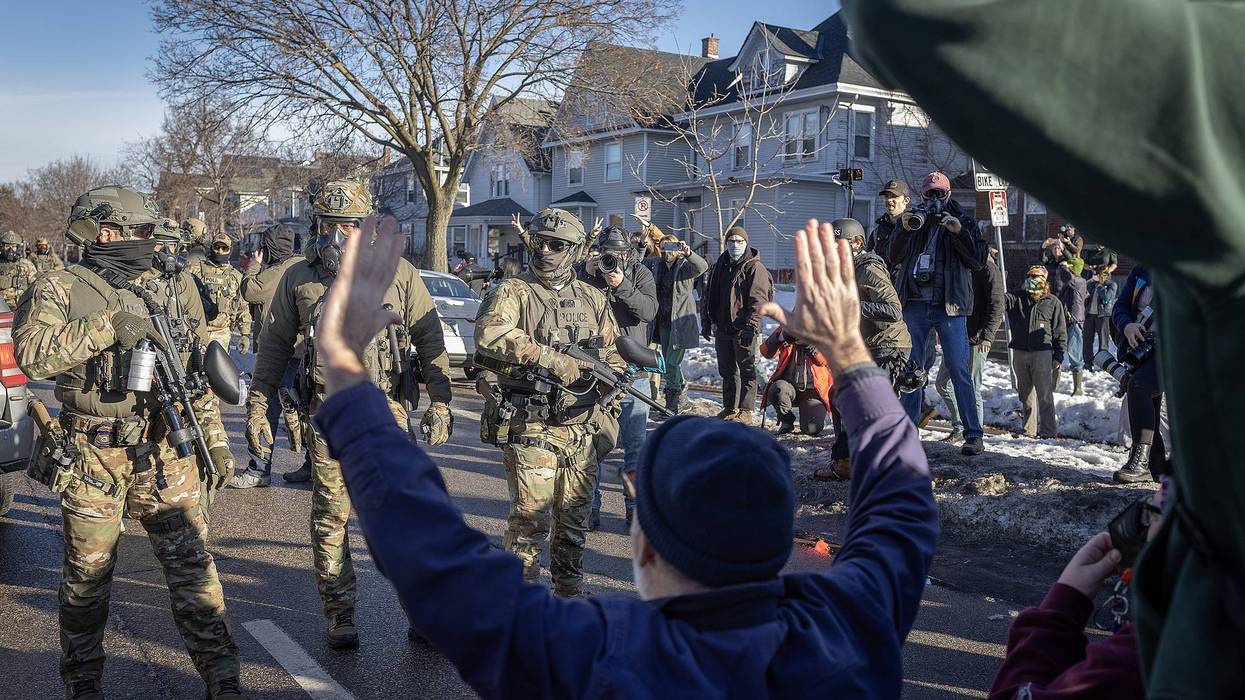
“The federal government sent hordes of masked, armed agents to grab people off the street, whisk them away in shackles, and abuse those who sought to bear witness,” Human Rights Watch said of the deadly blitz.
Human Rights Watch on Thursday published a scathing report detailing how President Donald Trump "caused a human rights crisis" in Minnesota by ordering the deadly federal invasion of the Twin Cities in service of the administration's mass deportation agenda.
HRW called Operation Metro Surge, launched by Trump last December, "an unprecedented deployment of thousands of federal immigration agents and officers to the state of Minnesota," including members of Immigration and Customs Enforcement (ICE) and Customs and Border Protection (CBP).
"The Trump administration claimed that Operation Metro Surge was designed to keep Americans safe and often stated that it was targeting noncitizens with violent criminal histories," the report states. "But the operation itself caused significant harm, and nearly two out of three immigrants arrested by ICE during Operation Metro Surge had no prior US criminal history whatsoever."
At least three people have been killed in connection with the operation. ICE agent Jonathan Ross fatally shot Renée Good, a 37-year-old US citizen, in Minneapolis on January 7. A week later, 36-year-old Nicaraguan detainee Victor Manuel Díaz, who was arrested during the operation, became the third person to die at the notorious East Montana concentration camp in Texas. On January 24, CBP officer Raymundo Gutierrez and Border Patrol agent Jesus Ochoa shot and killed nurse Alex Pretti, 37, also in Minneapolis.
"Federal agents shot a third Minneapolis resident and pulled guns on dozens more," the report continues. "Agents also violently smashed car windows without justification, physically threw people to the ground who were not resisting arrest, and deployed chemical irritants and flash-bang grenades on dozens of occasions, sometimes at close range and without warning, resulting in injuries, including to journalists."
Furthermore, federal agents "unlawfully arrested and detained hundreds; engaged in racial profiling, harassment, and surveillance; and terrorized Minnesotans, chilling their rights to freedom of expression and assembly, and impacting their rights to education and health, among others," HRW said, adding that "residents faced further abuses when they collectively acted to protest, prevent, and stop these violations of their rights."
The HRW report calls for an immediate end to abusive federal enforcement operations in Minnesota; independent investigations into alleged unlawful killings, racial profiling, arbitrary arrests, excessive force, and other rights violations; and full accountability for officials responsible.
“The federal government sent hordes of masked, armed agents to grab people off the street, whisk them away in shackles, and abuse those who sought to bear witness,” Reagan Williams, HRW's crisis and conflict researcher, said in a statement. “Minnesotans mobilized to protest, to document abuse, and to provide critical aid to one another. National-level action is needed to ensure accountability, end ongoing abuses, remedy the harm, and prevent another crisis of this scale.”
“Operation Metro Surge put the violent and abusive practices of these agencies on full display,” Williams added. “We have clear proof of how they operate when impunity prevails, and we need to urgently chart a new way forward through accountability and structural reforms that put an end to these abuses.”
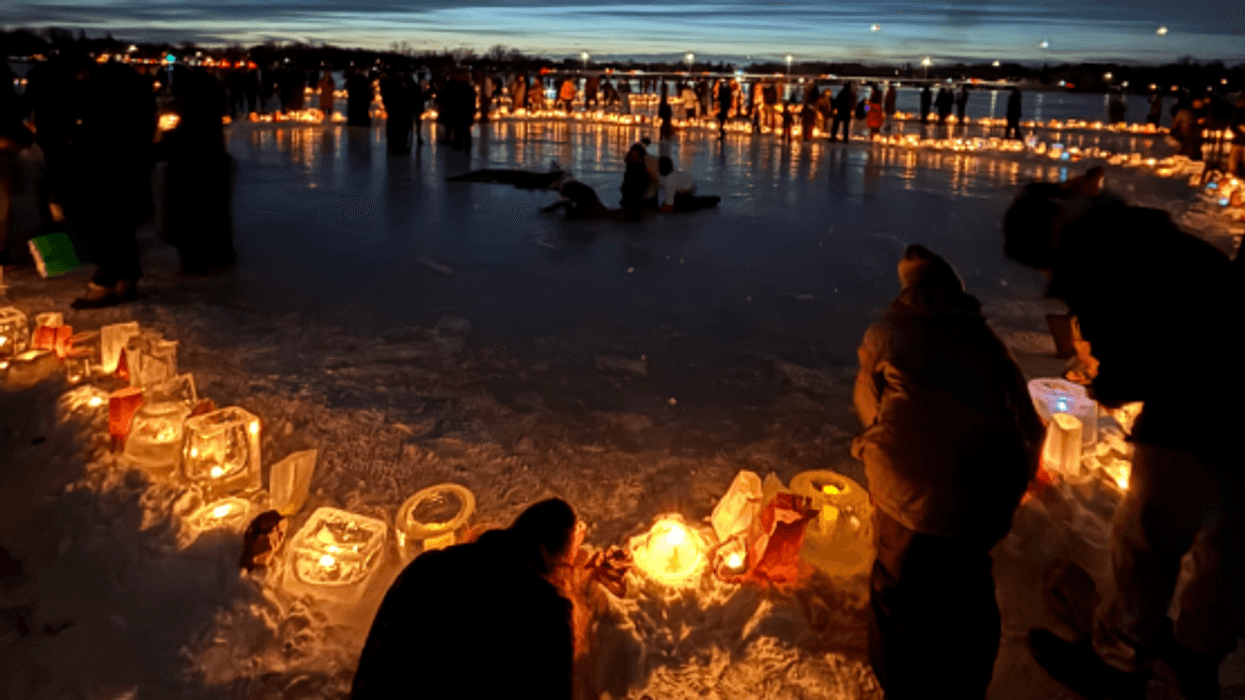
Minnesota's artists aren't that different from artists anywhere, but there are some unique parts of Minnesota's ecosystem that explain the breadth and depth of the creative response to the federal immigration enforcement surge.
Two thousand of us were standing on a frozen lake in the dark.
My mittened hand was gripping the mittened hand of a stranger; tears were freezing on my cheeks. It was not a particularly Minnesotan thing to hold hands with a stranger, especially while expressing emotion so openly. But we were not in normal times.
We were there to light ice lanterns, to spell out "ICE OUT" on the lake in the hopes that the planes flying above would see our message. After long days of school patrols, protests, grocery deliveries, and trying to figure out how to raise more money to help neighbors pay rent, we needed to be together in person. We needed to sing, we needed to move, we needed to feel. And so we did, led in a call-and-response by Brass Solidarity, a community brass band: "Hold on, change is coming!" It was powerful and beautiful and deeply connected to our culture, holding this community together. This is what a creative response looks like when artists are already woven into the fabric of a community before the crisis arrives.
This Sunday, May 31, the people of the Twin Cities will accept the John F. Kennedy Profile in Courage Award in Boston, an honor previously awarded to former Vice President Mike Pence and the September 11 first responders. The Kennedy Foundation cited the neighbors who risked their safety to protect their community from an unprecedented federal law enforcement operation: the 30,000 who trained as observers and rapid responders; the schools that organized patrols; the parent group chats, book clubs, and faith groups that became webs of mutual aid, delivering groceries, raising rent and legal funds for neighbors trapped in their homes.
It is not just what Minnesotans did in this crisis. It is what they had already built: a state that had spent decades recognizing artists not as a luxury or an afterthought, but as neighbors with something essential to contribute.
Journalists and historians have spent months trying to explain why Minnesota responded as it did. Was it the history of the cooperative movement that helped build a state where people looked out for one another? Or the recovery community and the Minnesota Model's belief that people heal together? Almost no one has asked why the artists were ready. That's what I want to share.
Minnesota's artists aren't that different from artists anywhere. But there are some unique parts of Minnesota's ecosystem that explain the breadth and depth of the creative response here.
Minnesota spends more on the arts per capita than any other state, $9.67 per person, backed by the Legacy Amendment, a 25-year constitutional commitment to the state's arts and cultural heritage, alongside other quality of life investments like clean water, parks, and trails. That's not a program. That's a value system encoded into law. A blend of public support and private philanthropy has built statewide artist fellowship programs, regional arts councils serving every county, and local governments that regularly hire artists to address community challenges. The nation's longest-running Guaranteed Income Pilot for Artists, launched in Minnesota with private funds, gives artists a monthly stipend with no strings attached. Participants have reported volunteering more, deepening their roots in their communities, and taking on creative work they never could have afforded before.
But money alone doesn't explain what happened here. Minnesota’s arts support is rooted within an ecosystem of support for organizers, activists, and community leaders, creating an arts community with a deep understanding of the skills, values, and ethics of effective community work. Artists in Minnesota view their artistry as integral to, not separate from, their identity as a neighbor and community member.
In 2013, when St. Paul installed a new light rail line, hundreds of artists were engaged alongside businesses and community groups on the construction corridor, turning disruption into connection. Those artists didn't just make murals. They staged performances, built installations, and animated storefronts. They learned who worked at City Hall. They built relationships with power structures. Because artists in Minnesota have had numerous opportunities like this to bring their creativity to critical community issues, and had spent years doing that work, they weren't strangers to this movement. They were already inside it.
Drive down any street in the Twin Cities today, and you will see house after house with signs: "ICE Out." "We Keep Us Safe." "We Love Our Immigrant Neighbors." Nearly all are artist designed, many of them handmade prints. This doesn’t only represent the beauty and creativity that artists bring to a movement, but also symbolizes a movement that has turned away from mass production and corporate extraction, and toward the handmade and the local. As Immigration and Customs Enforcement (ICE) agents photograph us and catalog our faces in AI databases built for harassment and intimidation, artists like Sean Lim, Marlena Myles, and D Guzman have worked through the night to generate human-made expressions of resistance.
This is what Minnesota's artists have been doing for months: showing up, leading, organizing, making the movement visible and felt. Thousands gathered in the cold with Singing Resistance to send a message to ICE agents that they could change their minds and join a loving community. Their tactics were rooted in Otpor, the student movement that brought down Slobodan Milosevic's authoritarian regime in 1990s Serbia by spreading one simple message: "You might not join us today, but you can join us tomorrow." Singing Resistance is now sharing training tool kits with communities across the country.
Brass Solidarity, formed at George Floyd Square in 2020, has played at hundreds of gatherings, connecting this moment to the movement for Black lives and bringing joy and resolve to these spaces. Mixed Blood Theater has trained neighbors to speak clearly and confidently about their constitutional rights. Drummers have organized mass protests. Poets have told our story, including Renee Good, who was herself a poet. Art spaces and creative businesses have become food pantries, coat donation sites, and whistle distribution points. I've lost track of the sold-out cabarets, concerts, and pottery sales to benefit the immigrant legal aid and rental assistance, often appearing in hours, without marketing campaigns. Neighbors talk to neighbors.
The art being made for our community is happening outside the competition of grants, outside formal arts institutions, outside the commodification of collectors, outside the pressure for clicks. It is urgent and rooted in our community's needs. It feels sacred.
Many of Minnesota's artists put their lives on hold for months at great cost to their economic stability and at great risk to their safety. The thing I have said most when people outside Minnesota ask how I am: It is so much more terrifying than the media can show you. Every noise sounds like a whistle. Every unknown car could be bringing horror to our doorstep. The damage to our community's sense of safety will take years to repair.
But it is so much more beautiful than the media can show you, too.
There is a reason the Kennedy Foundation recognized the people of the Twin Cities with one of the most storied honors in American civic life. It is not just what Minnesotans did in this crisis. It is what they had already built: a state that had spent decades recognizing artists not as a luxury or an afterthought, but as neighbors with something essential to contribute, as vital to a community's health as any doctor, organizer, or teacher.
When the moment came, Minnesota's artists were ready, gathering us on frozen lakes, calling on us to hold hands with strangers, and spelling out in light for all the world to see what it means to take care of one another.
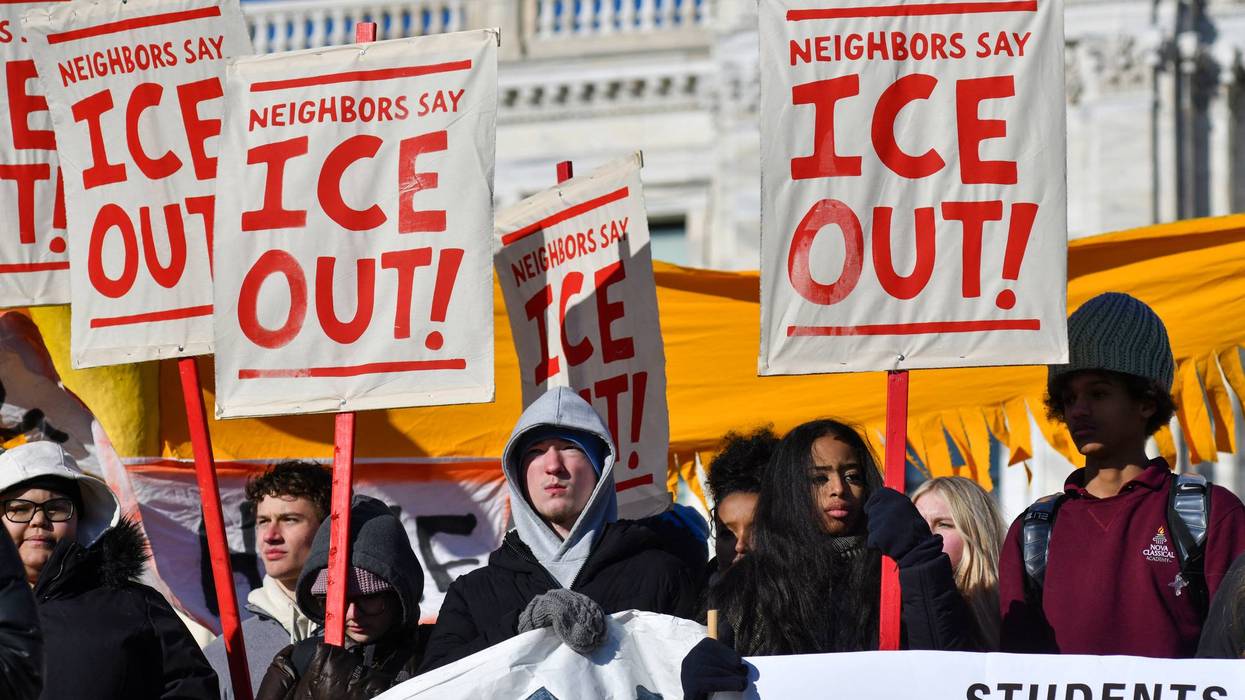
"Today's charges reflect an important milestone in our efforts to seek accountability for the harms inflicted on our community," said Hennepin County Attorney Mary Moriarty.
Prosecutors in Minnesota charged a federal immigration enforcement agent with assault on Thursday for pulling a gun on two local residents during a February traffic dispute.
The Hennepin County prosecutor's office charged US Immigration and Customs Enforcement officer Gregory Donnell Morgan Jr., a resident of Maryland, with two counts of felony assault for the incident that took place along Highway 62 on February 5.
During a press conference, Hennepin County Attorney Mary Moriarty alleged that Morgan was driving a rented, unmarked Ford Expedition illegally along the shoulder of Highway 62.
The alleged victims, objecting to Morgan illegally driving on the highway shoulder, swerved in front of him briefly to block him, then pulled back into the regular lane.
Morgan then allegedly sped up his vehicle, pulled up alongside the victims' car, and drew his gun on them.
Moriarty said that Morgan's alleged actions were unjustified and outside the course of his duties, which would be enough for the state to avoid violating the US Constitution's Supremacy Clause that prevents state governments from infringing upon the federal government's sovereignty.
"Our opinion is that illegally driving on a shoulder, pulling up to a car and pointing a gun at the heads of two community members who are not doing anything at the time, is well beyond the scope of their authority as federal agents," said Moriarty. "So they may say that, but we will litigate that in court. And there is no such thing as absolute immunity for federal agents who violate the law in the State of Minnesota or any other state."
Moriarty also brushed off concerns about the federal government retaliating against Minnesota for criminally charging ICE agents.
"Not a concern of ours," she said. "Our role, by the way, is to hold people accountable if they violate the laws of the state of Minnesota. And in this particular case, we feel strongly that this agent committed second-degree assault against both of these victims. We have charged the case and our intent is to hold them accountable."
Hennepin County Attorney Mary Moriarty: "Are we concerned as to whether there would be federal blowback? Not a concern of ours. Our role is to hold people accountable if they violate the laws of Minnesota. We feel strongly that this ICE agent committed 2nd degree assault." pic.twitter.com/G6aPyewU3q
— Aaron Rupar (@atrupar) April 16, 2026
The case against Morgan is the first state prosecution related to Operation Metro Surge, the federal immigration enforcement operation that targeted the Twin Cities earlier this year and generated unprecedented mass protests that included a one-day general strike.
Morgan's prosecution may also be a preview of future cases, as there have been calls for months to prosecute the federal immigration officers who fatally shot Minneapolis residents Renee Good and Alex Pretti.
While speaking with reporters, Moriarty emphasized that "today's charges reflect an important milestone in our efforts to seek accountability for the harms inflicted on our community during Operation Metro Surge," vowing "we will not rest until we get the answers we seek about federal agent conduct across Hennepin County, and accountability is delivered wherever appropriate."
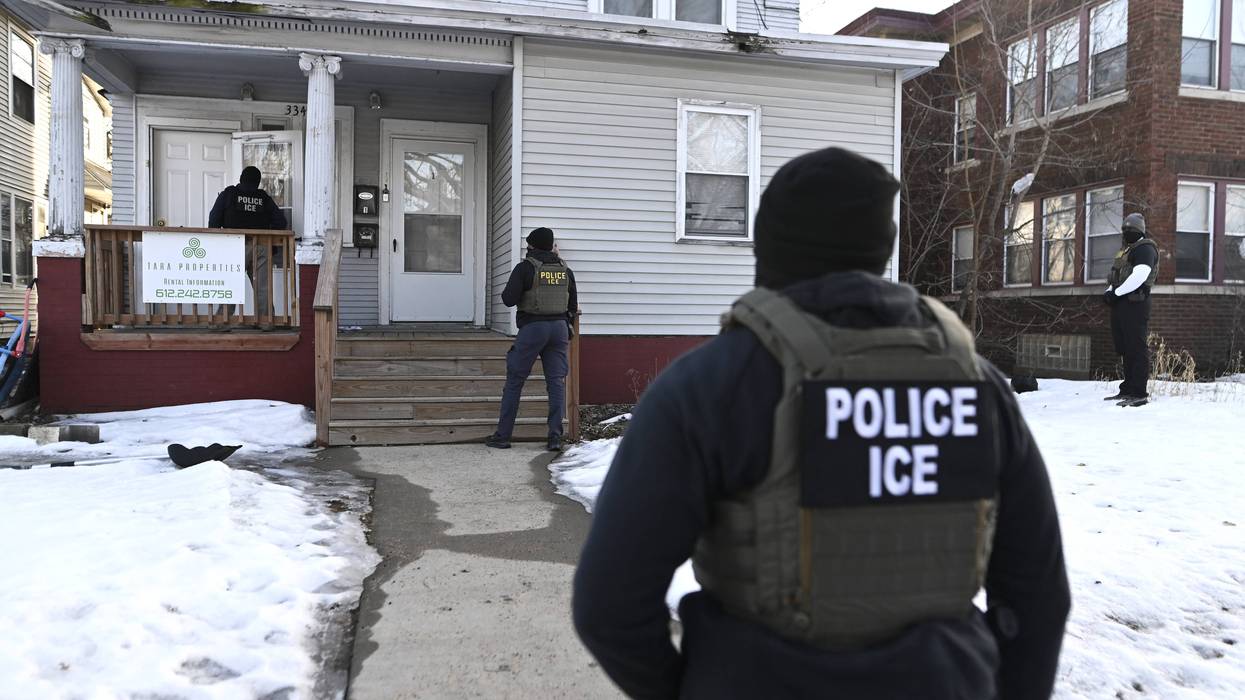
Officials, said one observer, "are finally starting to call the terror ICE is inflicting on communities what it actually is: kidnapping."
Prosecutors in Minnesota are investigating whether some of the most infamous images of the Trump administration's immigration crackdown in the Twin Cities earlier this year actually captured a kidnapping, when US citizen ChongLy "Scott" Thao was filmed being taken from his home by federal agents in freezing temperatures, wearing only his underwear with a blanket wrapped around him.
Ramsey Country Attorney John Choi, whose jurisdiction covers Saint Paul, where Thao was arrested in January, said at a press conference Monday that he has requested information from the Department of Homeland Security about the man's arrest.
"There are many facts we don't know yet, but there's one that we do know. And that is that Mr. Thao is and has been an American citizen. There's not a dispute over that," Sheriff Bob Fletcher said at the press conference.
The officials said they are investigating whether the agents could face criminal charges for kidnapping, burglary, and false imprisonment.
US Immigration and Customs Enforcement agents arrived without a warrant at the home Thao shares with his son, daughter-in-law, and four-year-old grandson on January 18 and forced their way in, brandishing their guns at the family as they handcuffed Thao.
They did not allow Thao's daughter-in-law to get proof of his citizenship. The 56-year-old has been a US citizen for decades after his mother fled Laos in the 1970s.
“We believe there was no legitimate legal reason for the federal agents to enter that home, it was not supported by probable cause,” said Choi.
Without giving him a chance to get dressed, the agents then hauled Thao out of his home into the 14°F temperatures as his neighbors yelled and blew whistles at the officers, demanding his release.
ICE arrest of US CITIZEN probed as kidnapping
ChongLy ‘Scott’ Thao seized Jan 18 — agents smash down door, drag him out at gunpoint in underwear
'Potential case of kidnapping, burglary and false imprisonment' — officials pic.twitter.com/alsaq46bAz
— RT (@RT_com) April 14, 2026
They drove him around for nearly an hour before arriving at a remote area and demanding that he get out of the car and show his ID—which he hadn't been allowed to bring. They determined he was a US citizen with no criminal record and drove him back home.
Fletcher said federal agents switched the license plates of the vehicle used during the arrest, violating Minnesota law and leaving authorities with no knowledge of the identities of the officers who arrested Thao.
"There's no dispute that he was taken out of his house, forcibly taken out of his home, and driven around," said Fletcher at the press conference. "Is that good law enforcement, to take an American citizen out of their home and drive them around aimlessly, trying to determine what they can tell them?'"
One observer said the officials "are finally starting to call the terror ICE is inflicting on communities what it actually is: kidnapping."
"If regular people did this, they’d be in prison," they said. "So why aren’t the agents?"
In keeping with the Trump administration's response to widespread condemnation of its immigration crackdown and the conduct of its federal agents, DHS told The New York Times that Choi's investigation into the arrest was “a political stunt to demonize ICE law enforcement.”
The agency has claimed the officers were looking for two convicted sex offenders, one of whom has reportedly been in state prison since 2024.
Choi said Monday that there is no evidence the federal agents had a judicial warrant to enter Thao's home. The arrest took place days before a whistleblower group reported on an ICE memo which claimed that according to the DHS Office of the General Counsel, "the US Constitution, the Immigration and Nationality Act, and the immigration regulations do not prohibit relying on administrative warrants" in order to enter a home to make an arrest.
Legal experts have said the memo directly contradicts the Fourth Amendment, which prohibits unreasonable searches and seizures.
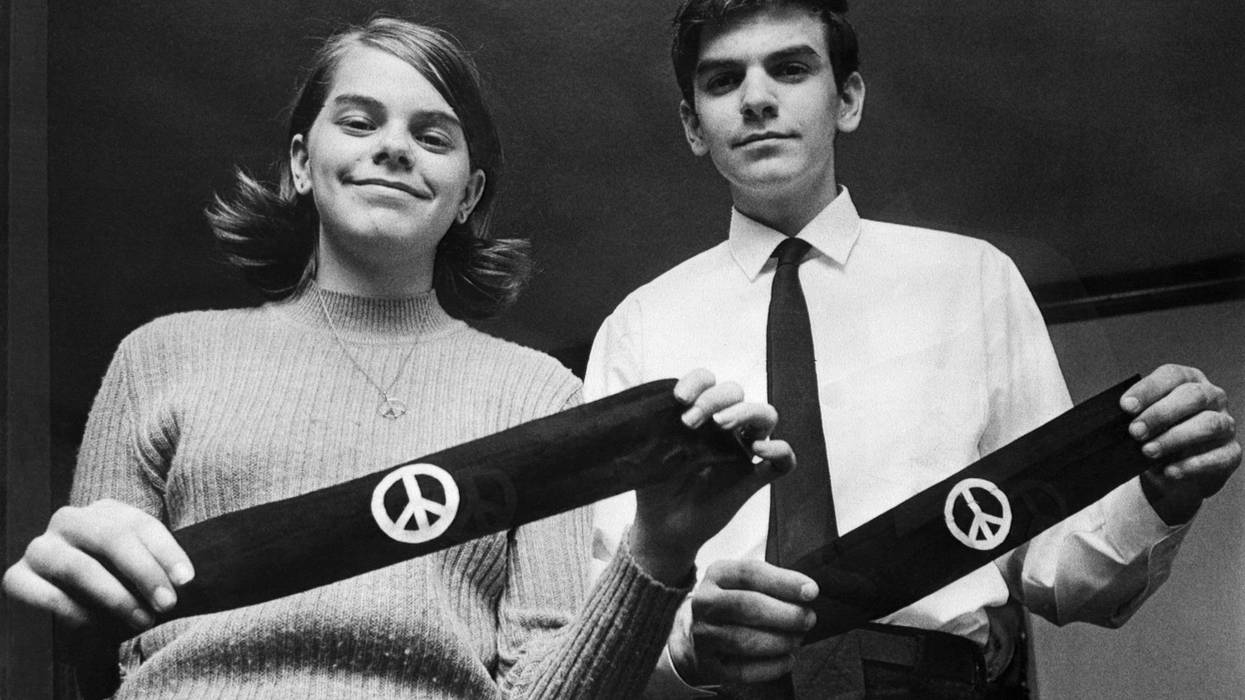
If the goal of the movement is to engage people as broadly as possible, as well as to demonstrate power, then the armbands can offer additional options and bring the day of protests into more places.
Major unions like the National Education Association and American Federation of Teachers, and citizen groups like Indivisible and Public Citizen, are calling for a national May Day strike. It’s a powerful idea, building off of a Minnesota day this past January where people didn’t go to work or school, didn’t shop, and didn’t otherwise participate in ordinary activities. The Minnesota day was spearheaded by major unions, 700 local businesses closed in solidarity, and 75,000-100,000 people marched in the streets.
For the national day, I’d suggest adding one more element: incorporating armbands, like black armbands, so people who are participating can make clear their sympathies. And those who can’t take off from work or school, or who are retired, so have no jobs to leave, can show support as well.
The armband idea comes from the October 15, 1969 Vietnam Moratorium. They didn’t call it a strike, but it was a similar day of marches, walkouts, teach-ins, and other activities that gave as many ways as possible to participate. Two million participated in the day’s marches, but far more in other activities. New York City’s Council endorsed it. Milwaukee held a funeral procession. Small towns rang church bells to commemorate the dead. The Moratorium took place while President Richard Nixon was threatening North Vietnam with nuclear weapons, and although Nixon said at the time the protests made no difference to him, he later revealed that the breadth of support led him to back off from the threat.
I was in high school in Los Angeles. I wore my black armband to school and my after-school job at a drugstore. My manager told me to take it off. I resisted as politely as I could. As I recall, he finally backed down. Another friend wore his armband at his high school in a mill town north of Seattle. In both cases, the armbands got people talking and thinking. They gave an additional way to participate for those who couldn’t join the walkouts. They reinforced anti-war solidarity. US soldiers in Vietnam even wore armbands as a way of joining the protests, following a full-page New York Times ad signed by 1,366 active service members.
So why not include a call for armbands as part of the May Day strike? It’s true that some people might use them as a substitute for visibly leaving jobs or schools. But if the goal of the movement is to engage people as broadly as possible, as well as to demonstrate power, then the armbands can offer additional options and bring the day of protests into more places. They’re an alternative for retired people who don’t have jobs to walk out of. They’re one more antidote to powerlessness, allowing people to participate step by step. It seems important to add them as part of the day’s organizing.
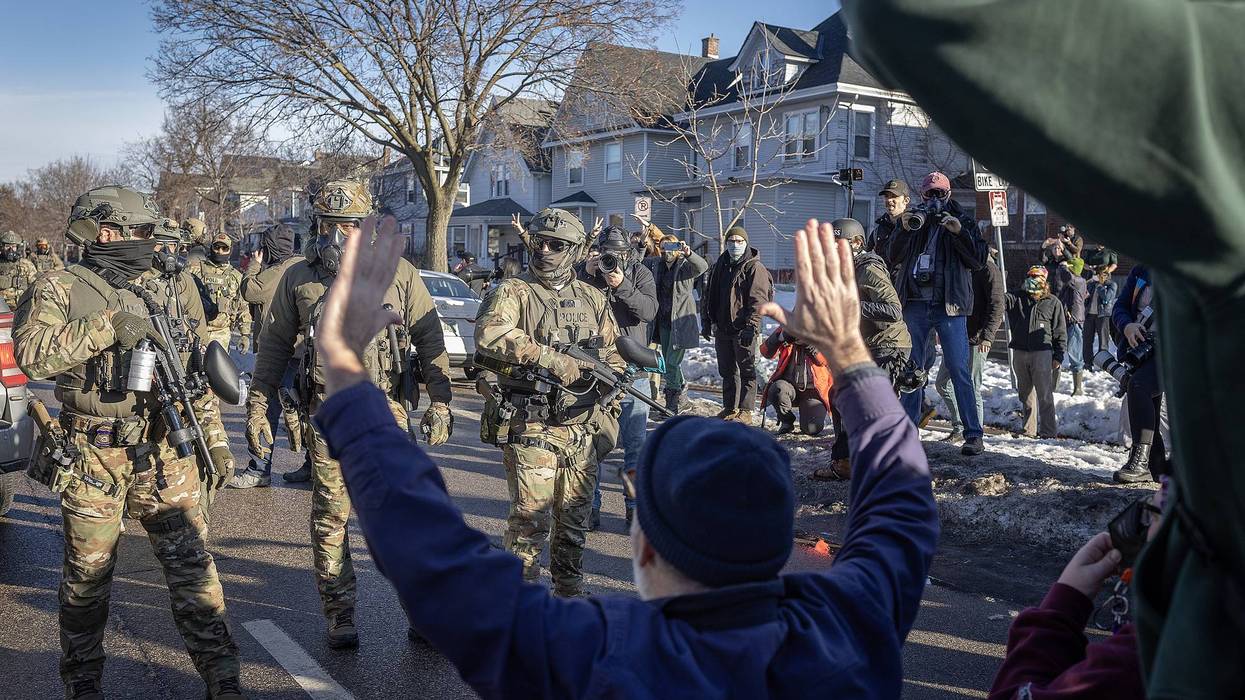
Minneapolis Mayor Jacob Frey said "bare due diligence" would have exposed ICE officers' falsehoods.
Video footage obtained by The New York Times has exposed lies told by two federal immigration enforcement agents about the circumstances leading up to a non-fatal shooting in Minneapolis that occurred on January 14.
According to a Monday report from the Times, the video directly contradicts claims made by US Immigration and Customs Enforcement (ICE) officials that they were attacked by assailants armed with a shovel and a broom for around three minutes before the agents opened fire and wounded one of the attackers.
"Instead, the confrontation depicted in the video lasts about 12 seconds and shows two men struggling with the agent," reported the Times. "It shows no sustained attack with a shovel."
Federal prosecutors had initially pursued assault charges against Venezuelan national Julio Cesar Sosa-Celis, who was shot in the leg by the ICE officers during the January confrontation, and fellow Venezuelan national Alfredo Aljorna.
However, the government abruptly dropped charges against the two men in February, and ICE Acting Director Todd Lyons acknowledged that two federal officers appear “to have made untruthful statements” about the incident.
The Times noted that the government had access to the video of the shooting hours after it took place.
However, one source told the paper that prosecutors didn't watch the video until three weeks after they filed charges against Sosa-Celis and Aljorna, and instead relied on "the ICE agent’s statement and an FBI agent’s affidavit describing the footage."
This revelation prompted a rebuke from Minneapolis Mayor Jacob Frey, who told the Times that "bare due diligence would have shown that the agents were lying."
Trump administration officials have come under fire in recent weeks for lying about shootings involving federal immigration officials, such as when former US Homeland Security Secretary Kristi Noem falsely claimed that slain Minneapolis intensive care nurse Alex Pretti was aiming “to inflict maximum damage on individuals and to kill law enforcement."
In reality, video footage showed Pretti never drew his handgun during his confrontation with federal immigration officers, while also clearly showing that officers disarmed him before they opened fire.
Noem also falsely claimed that slain ICE observer Renee Good had attempted "an act of domestic terrorism" by trying to run over a federal immigration officer with her car, even though footage clearly showed Good turning her vehicle away from the officer in an attempt to get away from the scene.
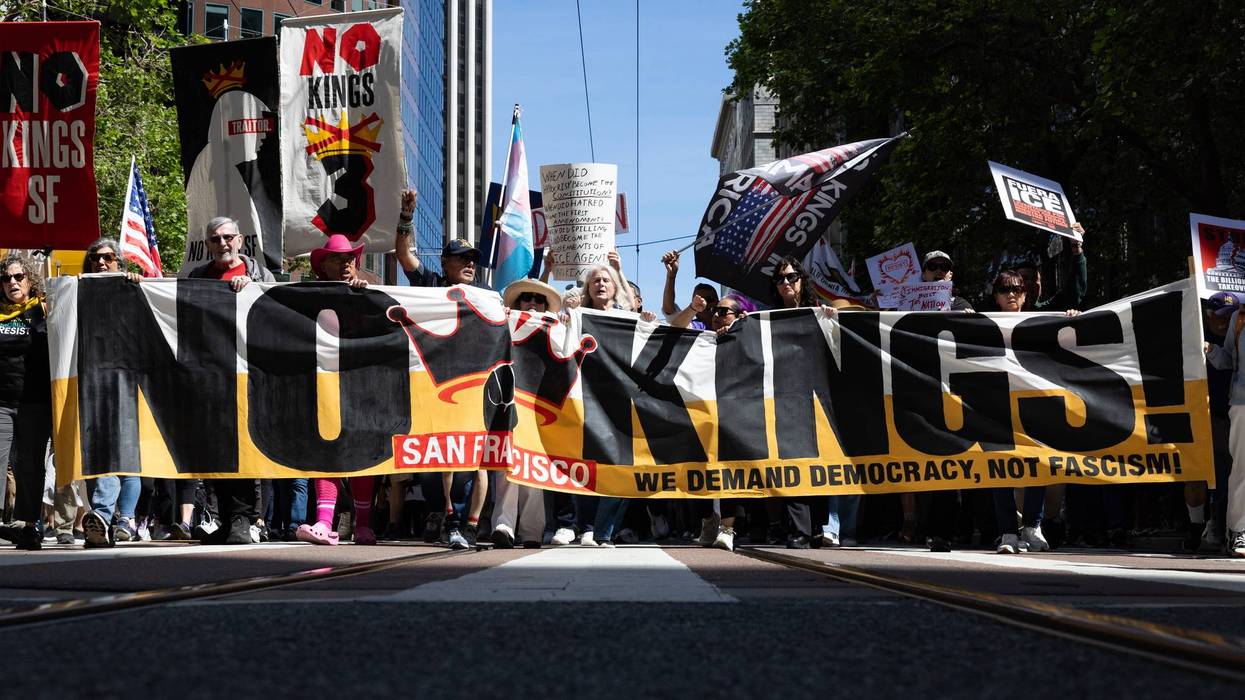
In San Francisco, thousands of anti-Trump activists gathered on a local beach to form a human sign that read, "Trump must go now! No ICE, no wars, no lies, no kings."
Millions of American across all 50 states on Saturday rallied against President Donald Trump and his authoritarian agenda during nationwide No Kings protests.
The flagship No Kings rally in Saint Paul, which organizers Indivisible estimated drew over 200,000 demonstrators, featured speeches from Minnesota Gov. Tim Walz and US Sen. Bernie Sanders (I-Vt.), Rep. Ilhan Omar (D-Minn.), and actress Jane Fonda, as well as a special performance from rock icon Bruce Springsteen, who performed "Streets of Minneapolis," a song he wrote in tribute of slain protesters Renee Good and Alex Pretti.
Organizers called it "the largest single-day nationwide demonstrations in US history," with an estimate 8 million people coming out for events in communities and cities nationwide.
From major cities to rural towns that have never seen mobilizations like this before, protesters made clear that in America, we don’t do kings," the No Kings coalition said in a statement.
"This is what it looks like when a movement grows—not just in size, but in reach, in courage, and in more people who see themselves as part of this movement," the organizers said. "The American people are fed up with this administration’s power grabs, an illegal war that Congress and the public haven’t approved, and the continued attempts to stifle our freedoms. We’re not waiting for change; we’re making it."
The rally in Minneapolis was one of more than 3,300 No Kings events across the US and internationally, and aerial video footage showed massive crowds gathered for demonstrations in cities including Washington, DC, New York City, Boston, Philadelphia, Chicago, and San Diego.
Congratulations to all Americans who dared to take to the streets today and publicly expressed their stance and disagreement with the actions and policies of their president. #WeSayNoKings 👍👍👍 pic.twitter.com/f3UDpmsj3m
— Dominik Hasek (@hasek_dominik) March 28, 2026
In San Francisco, thousands of anti-Trump activists gathered on a local beach to form a human sign that read, "Trump must go now! No ICE, no wars, no lies, no kings."
WOW! Protesters in San Francisco, CA formed a MASSIVE human sign on Ocean Beach reading “Trump Must Go Now!” for No Kings Day (Video: Ryan Curry / S.F. Chronicle) pic.twitter.com/ItF7c7gvke
— Marco Foster (@MarcoFoster_) March 28, 2026
However, No Kings rallies weren't just held in major US cities. In a series of social media posts, Indivisible co-founder Leah Greenberg collected photos and videos of No Kings events in communities including Arvada, Colorado, Madison, New Jersey, and St. Augustine, Florida, as well as international No Kings events held in London and Madrid.
Attendance estimates for Saturday's No Kings protests were not available as of this writing. Polling analyst G. Elliott Morris estimated that the previous No Kings event, held in October, drew at least 5 million people nationwide, making it likely “the largest single-day political protest ever.”
This article has been updated to reflect that the flagship rally was held in Saint Paul, Minnesota.
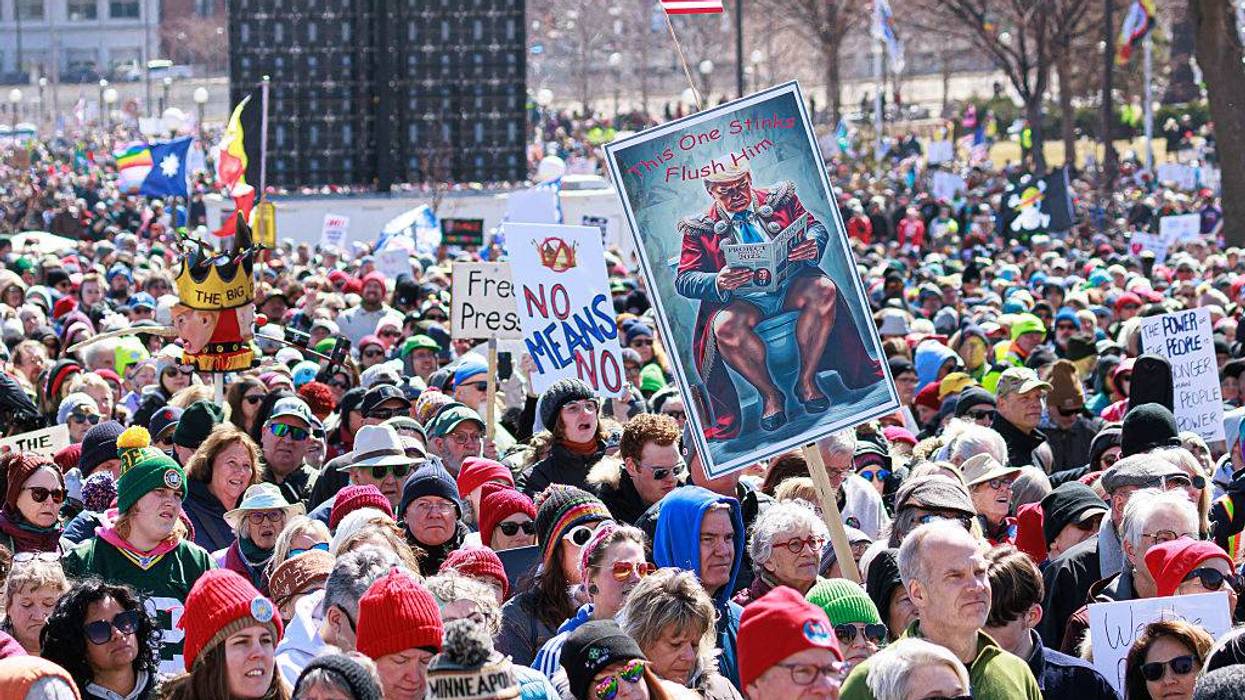
"No work, no school, no shopping. We're going to show up and say we're putting workers over billionaires and kings."
Ezra Levin, co-founder of Indivisible, said on Saturday that a nationwide general strike is being planned for May 1 that will be modeled on the day of action residents of Minnesota organized in January against the brutality carried out by federal immigration enforcement officials.
Appearing at the flagship No Kings rally in Saint Paul, Levin praised the strength shown by the Minnesota protesters in the face of the US Immigration and Customs Enforcement (ICE) siege of their city this year, and said his organization wanted to replicate it across the country.
"The next major national action of this movement is not just going to be another protest," Levin said. "It is a tactical escalation... It is an economic show of force, inspired by Minnesota's own day of truth and action."
Levin then outlined what the event would entail.
"On May 1, on May Day, we are saying, 'No business as usual,'" he said. "No work, no school, no shopping. We're going to show up and say we're putting workers over billionaires and kings."
Levin: This is the largest protest in Minnesota history… The next major national action of this movement is not just gonna be another protest. On May 1st, across the country, we are saying no business as usual. No work, no school, no shopping. We're gonna show up and say we're… pic.twitter.com/bRPR7K5DuP
— Acyn (@Acyn) March 28, 2026
Levin added that "we are going to build on that courage, that sacrifice" that Minnesota residents showed during their day of action in January, and vowed "to demonstrate that regular people are the greatest threat to fascism in this country."
In an interview with Payday Report published Saturday, Indivisible co-founder Leah Greenberg said that the goal of the nationwide strike action would be to send "a clear message: we demand a government that invests in our communities, not one that enriches billionaires, fuels endless war, or deploys masked agents to intimidate our neighbors.”
The No Kings protests against President Donald Trump's authoritarian government, which Indivisible has been central in organizing, have brought millions of Americans into the streets.
Polling analyst G. Elliott Morris estimated that the previous No Kings event, held in October, drew at least 5 million people nationwide, making it likely "the largest single-day political protest ever."
This article has been updated to reflect that the flagship rally was held in Saint Paul, Minnesota.
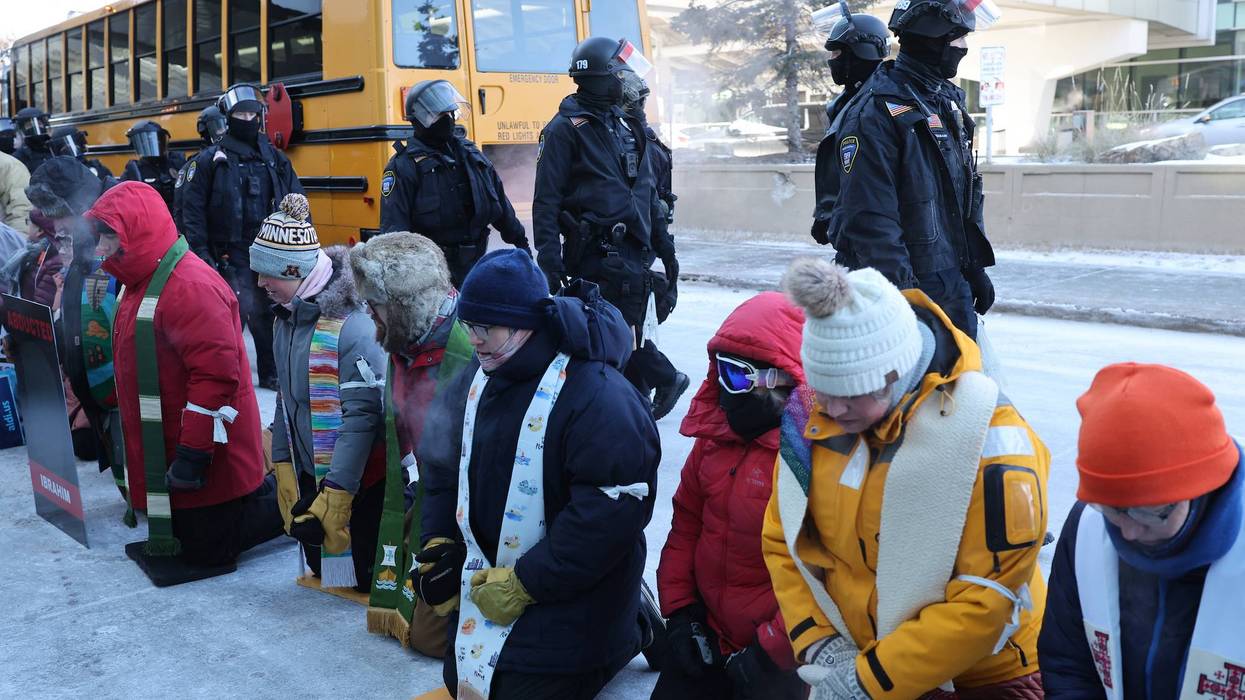
The Trump administration carries out policy violence that directly contradicts everything that Jesus taught. It’s time to make some noise.
On Palm Sunday, March 29, thousands of Christians across denomination, geography, culture, and race will be out in the streets. We will sing. We will pray. We will march. We will magnify our God in Jesus Christ who came among us to love, liberate, teach, heal, and give us abundant life. We will renounce the death-dealing cruelty, lies, and greed of our federal administration and demand a society that is rooted in love of neighbor—in feeding the hungry, caring for the sick, and welcoming the stranger.
We believe that the time is now to publicly reclaim the heart of our faith with spiritual and moral clarity and with committed, disciplined action. Over these last months, I and my neighbors witnessed firsthand the terror of Operation Metro Surge. We saw constitutional observers harassed, followed, detained, and—in the case of Renee Good and Alex Pretti—killed by Immigration and Customs Enforcement officers. We saw neighbors—children, elders, mothers, fathers—abducted from bus stops, childcare centers, homes, and workplaces. We then heard government officials lie about what we witnessed with our own eyes.
Operation Metro Surge has ended in Minnesota, but our free fall into authoritarianism has not. When our government funds detention centers and war and gives tax breaks to the richest Americans, all the while making devastating cuts to healthcare, food assistance, and other programs that better peoples’ lives, we cannot stay silent. This is policy violence that directly contradicts everything that Jesus taught. It’s time to make some noise.
Our Palm Sunday Faith Actions are inspired by the story of Jesus’ entry into Jerusalem on a donkey, surrounded by crowds who hailed Jesus as Lord and shouted “Hosanna!” meaning, “Save us!” The subversive nature of Jesus’ action here cannot be overstated. In a city under the grip of Roman rule, calling anyone "savior" or "lord" besides Caesar Augustus was dangerous. The imperial cult was the "religion" of the land, requiring submission to Caesar above all. And yet, as Jesus enters Jerusalem, the crowds make a bold public counterclaim with their shouts of “Hosanna.” Jesus is cast as a fulfillment of words spoken by the prophet Zechariah about a humble king of peace:
He will cut off the… war horse from Jerusalem;
and the battle bow shall be cut off,
and he shall command peace to the nations.
(Zechariah 9:10)
Jesus’ entry, then, was no mere parade—it was risky, disruptive, and tension raising. We read in Luke’s account that the Pharisees try to get Jesus to tone it down: “Teacher, order your disciples to stop!” These well-meaning words remind me of the white clergy in Alabama who told Rev. Dr. Martin Luther King that his direct action campaign to desegregate Birmingham was “unwise and untimely.” But like Dr. King in Birmingham, Jesus stays the course with prophetic clarity.
Matthew dramatizes the tension even more: “When he entered Jerusalem, the whole city was in turmoil” (Matthew 21:10). The Greek word here translated as “turmoil” is related to the word seismos, meaning earthquake. This connection helps us see a deeper meaning: Jesus came to bring about a seismic shift in the way we live, love, and perceive God’s work in the world. Jesus came to shake up the very foundations of human society. His way of humble service and self-giving love make the tectonic plates of empire rumble and crack.
If we keep reading in Matthew’s gospel, we find another seismic event—this time, on that early morning when the women come to the tomb that holds Jesus’ crucified body. An earthquake erupts as an angel arrives and rolls the stone away that had sealed the tomb up tight. In this resurrection dawn, we see that what seems solid and fixed in the eyes of empire can be changed, moved, and shattered in the light of God’s love.
This Palm Sunday, we will be part of the turmoil and part of the quaking. We will be part of the crowd, praising Jesus as the one who saves us and seeking to live out his command to love God and neighbor. Together, we will be a surge of love and nonviolence, care and compassion. We hope you will join us in the streets.