

SUBSCRIBE TO OUR FREE NEWSLETTER
Daily news & progressive opinion—funded by the people, not the corporations—delivered straight to your inbox.
5
#000000
#FFFFFF
To donate by check, phone, or other method, see our More Ways to Give page.
Daily news & progressive opinion—funded by the people, not the corporations—delivered straight to your inbox.
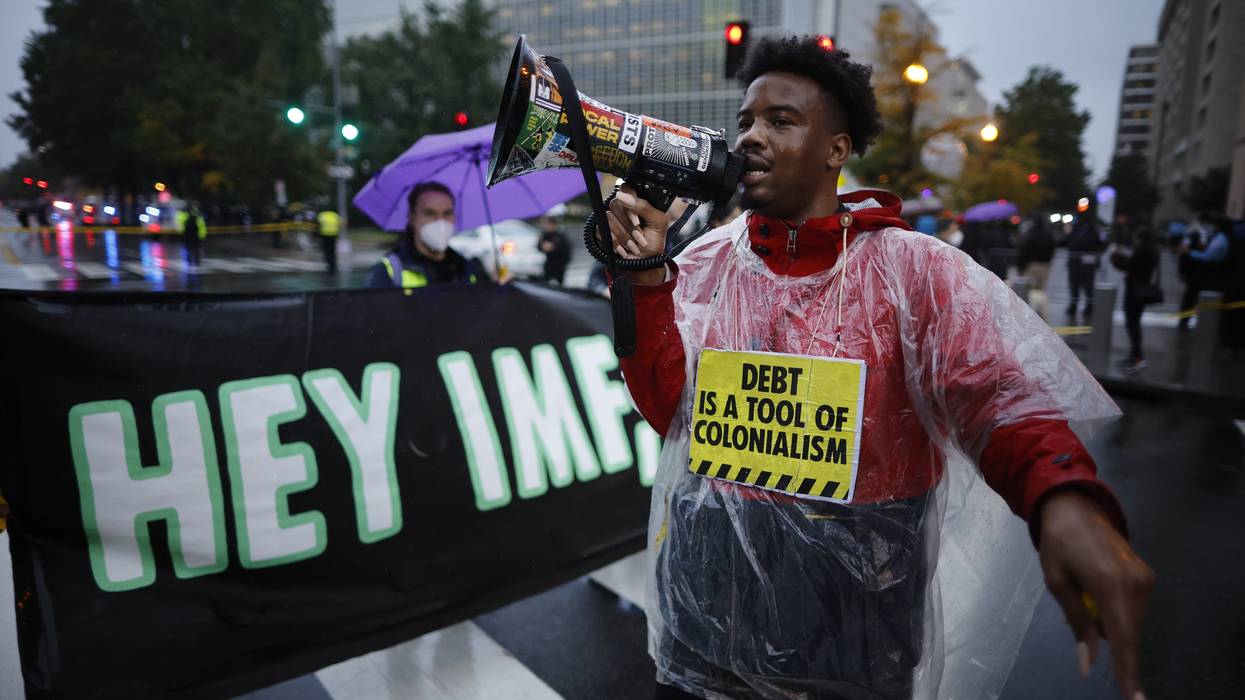
One ActionAid campaigner said rich nations should "cancel unjust and unsustainable debt, stop making countries borrow to survive climate impacts, and deliver climate finance as grants rather than loans."
The world's most climate-vulnerable nations are spending nearly 25 times more on servicing their debts than on addressing the climate emergency, an ActionAid International report released Wednesday revealed, underscoring what the advocacy group called a "vicious cycle" of debt, disasters, and underinvestment.
The report, "Debt Fuels the Climate Crisis: How the Finance Flows," examines government revenues, debt payments, national budgets, and climate plans in the 65 countries considered most vulnerable to climate change. The authors found that debt servicing consumes 65% of these nations' combined government revenue, while 93.5% of the countries are either in debt distress or facing a significant risk of it.
"Climate-vulnerable countries are being forced to spend nearly 25 times as much on repaying debt as on climate action," the report states. "Indeed, in 2026 total debt servicing on external and domestic debt in these countries is nearly four times that of spending on education, nearly seven times that of health, and nearly six times that of social protection."
🚨 New ActionAid analysis: countries facing the worst climate disasters are spending nearly 25 times more on debt than on climate action. That is not an accident. It is how the global debt system is built right now. Full findings 👉 https://bit.ly/4Acxh0c#ClimateJustice #FundOurFuture #DebtJustice
[image or embed]
— ActionAid USA (@aausa.bsky.social) September 16, 2026 at 6:31 AM
The disparity is even greater when comparing debt payments with climate grants. ActionAid estimated that countries in the Global South will make approximately $8.8 trillion in debt repayments in 2026, compared with just $39 billion in grant-based climate finance received in 2024—a ratio of roughly 225 to 1.
"For too long, the debt and climate crises have been treated separately," ActionAid International secretary-general Arthur Larok said in a statement. "This research exposes how tightly they are connected and quantifies the devastating cost involved. Yet this is a crisis we can fix."
The report—whose release coincides with the Global Week of Climate Action—highlights how climate disasters frequently force already indebted nations to borrow even more money for recovery and reconstruction. Subsequent debt payments and austerity measures forced upon them by global financial institutions like the International Monetary Fund (IMF) and World Bank then restrict their spending on climate resilience, public services, and clean energy transitions.
As the report notes:
Even though the IMF recognizes that there is a "development crisis," the IMF refuses to even talk about a systemic debt crisis—because for them and their shareholders, there is no systemic crisis so long as there is no significant default and creditors are being paid. Moreover, the IMF thrives on countries needing to come to them for bailout loans, as this expands their own power and influence. The IMF is both a creditor and a debt collector, serving its own interests and those of its main shareholders in the Global North—making it both judge and jury when it comes to debt renegotiation processes.
The report also details how Global South governments under pressure to generate foreign currency can expand fossil fuel extraction and industrial agriculture, potentially worsening the climate pressures that contributed to their debt in the first place.
“Debt is a triple whammy for the climate: It drives fossil fuel and industrial agriculture expansion, blocks vital climate action, and leaves communities dangerously exposed when disasters strike," ActionAid International global climate justice lead Teresa Anderson said Wednesday.
"This is a toxic relationship," she added. "Countries borrow to rebuild, austerity weakens their resilience, and repayment pressures push more extraction, fueling the next disaster. We need a breakup: Cancel unjust and unsustainable debt, stop making countries borrow to survive climate impacts, and deliver climate finance as grants rather than loans. This vicious cycle can and must be broken.”
“Debt is a triple whammy for the climate."
In Senegal, the imbalance is particularly stark. ActionAid said the government is spending $605 on debt servicing for every $1 budgeted for climate action, while debt payments consume more than 96% of government revenue.
"Behind these figures are impossible choices between servicing debt and investing in agroecology, public services, and climate resilience," ActionAid Senegal director Khaita Sylla said Wednesday. "Women and girls who bear the brunt of climate impacts are then disproportionately affected by cuts in public services even as they lead solutions for a more resilient future.”
ActionAid is calling on governments and international institutions to take steps including:
“Rich countries like the US have outsized global financial power," ActionAid USA executive director Niranjali Amerasinghe said on Wednesday. "Their lack of willingness to provide climate finance at scale and relieve the debt burden of climate-vulnerable countries is unconscionable."
"There are trillions for defense budgets," Amerasinghe added, "but peanuts for the biggest existential crisis of a generation.”
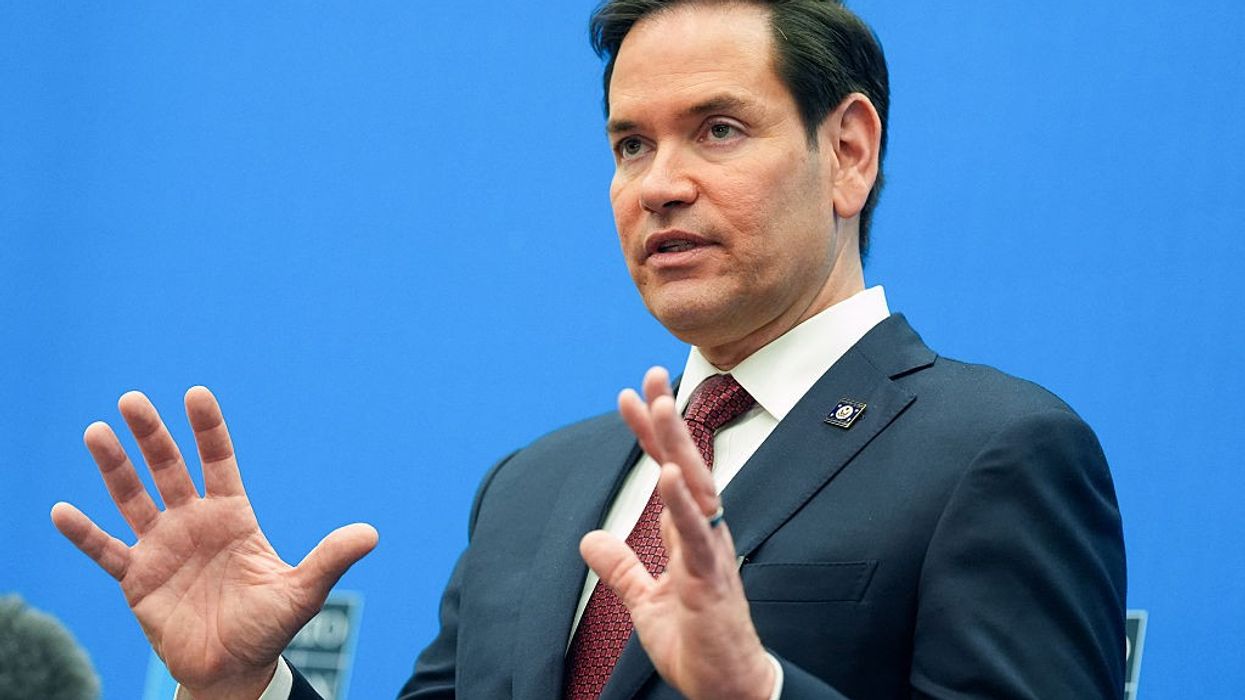
One observer called the proposal "nothing less than an assault on American diplomacy."
Secretary of State Marco Rubio's plan to streamline what he called the "bloated" State Department by slashing staff and closing or consolidating bureaus was widely criticized Tuesday as a dangerous retreat from diplomacy and soft power that would weaken U.S. standing abroad and boost adversaries.
"In its current form, the department is bloated, bureaucratic, and unable to perform its essential diplomatic mission in this new era of great power competition," Rubio said in a statement. "Over the past 15 years, the department's footprint has had unprecedented growth and costs have soared."
"But far from seeing a return on investment, taxpayers have seen less effective and efficient diplomacy," he added. "The sprawling bureaucracy created a system more beholden to radical political ideology than advancing America's core national interests. That is why today I am announcing a comprehensive reorganization plan that will bring the department into the 21st century."
Marco Rubio says the State Department has been “beholden to radical political ideology.” Also known as democracy.
[image or embed]
— Mark Jacob ( @markjacob.bsky.social) April 22, 2025 at 9:45 AM
Rubio's proposal includes a 15% department-wide staff reduction, the elimination of 132 of the agency's 734 bureaus and offices, and the consolidation of many others, according to reports. Bureaus and programs expected to be eliminated or merged include the Office of Global Women's Issues; the war crimes and civilian protection divisions; and the agency's diversity, equity, and inclusion efforts, which have been banned throughout the executive branch. The position of special climate envoy will also be eliminated.
The Office of Civilian Security, Democracy, and Human Rights is slated to be replaced by a new division for the coordination for foreign assistance and humanitarian affairs that will assume responsibilities once shouldered by the embattled U.S. Agency for International Development. Already under siege by Elon Musk's Department of Government Efficiency, USAID is reeling from Rubio's announcement last month that the vast majority of its programs would be canceled.
Christopher Le Mon, a former senior department official during the Biden administration, told The New York Times Tuesday that the plan's human rights scaleback "sends a clear signal that the Trump administration cares less about fundamental freedoms than it does about cutting deals with autocrats and tyrants."
In a Substack post published Tuesday, Rubio accused the Bureau of Democracy, Human Rights, and Labor of becoming "a platform for left-wing activists to wage vendettas against 'anti-woke' leaders" and the Bureau of Population, Refugees, and Migration of funneling "millions of taxpayer dollars to international organizations and NGOs that facilitated mass migration around the world, including the invasion on our southern border."
Responding to this, Brandon Wu, director of policy and campaigns at ActionAid USA, said that "Secretary Rubio's rant against the Bureau of Democracy, Human Rights, and Labor as the carrier of a leftist agenda lays the administration's intentions bare: Their decimation of the State Department is part of an unhinged crusade against perceived 'woke' policies and practices, not a coherent plan for reform."
"The idea that any part of the State Department was supporting an 'invasion' of the U.S. southern border is similarly ludicrous," Wu added. "The proposed staff reductions at the State Department, when taken in conjunction with the dismantling of USAID, will hamper the diplomatic engagement with the rest of the world. This is a deeply unserious proposal that will not make the U.S. safer or stronger."
"Trump has said he wants to be a president who ends wars, but moves like this will make that much more difficult."
Dylan Williams, vice president for government affairs at the Center for International Policy, a Washington, D.C.-based think tank, called Rubio's plan "nothing less than an assault on American diplomacy" that will "further decimate U.S. influence and standing in the world, undermining our fundamental security and other critical interests."
"Coupled with the administration's intention to dramatically increase military spending, this decimation of the State Department also serves as a clear indication that it is prioritizing militarism over diplomacy," Williams said. "Donald Trump has said he wants to be a president who ends wars, but moves like this will make that much more difficult."
Democratic lawmakers also condemned Rubio's proposal, with Sen. Jeanne Shaheen (D-N.H.), the ranking member of the Senate Foreign Relations Committee, asserting that "any changes to the State Department and USAID must be carefully weighed with the real costs to American security and leadership."
"As I and many of my Democratic colleagues have made clear, we welcome reforms where needed—but they must be done with care," she continued. "Elon Musk and his team have engaged in a slash-and-burn campaign targeting federal employees, terminating critical programs at State and USAID, undermining our allies, and diminishing American leadership in the world."
"A strong and mission-ready State Department advances American national security interests, opens up new markets for American workers and companies, and promotes global peace and stability," Shaheen added. "It remains to be seen how the administration's latest proposals will achieve that goal."
Rep. Gregory Meeks (D-N.Y.), the ranking member of the House Foreign Affairs Committee, warned that Rubio's proposed reorganization "would leave the State Department ill-equipped to advance U.S. national security interests."
"The vital work left on Secretary Rubio's cutting-room floor represents significant pillars of our foreign policy long supported by Democrats and Republicans alike, including former Sen. Rubio—not 'radical ideologies' as he now claims," Meeks added. "Retreating from this work will further erode our national security and undermine our influence on the world stage."
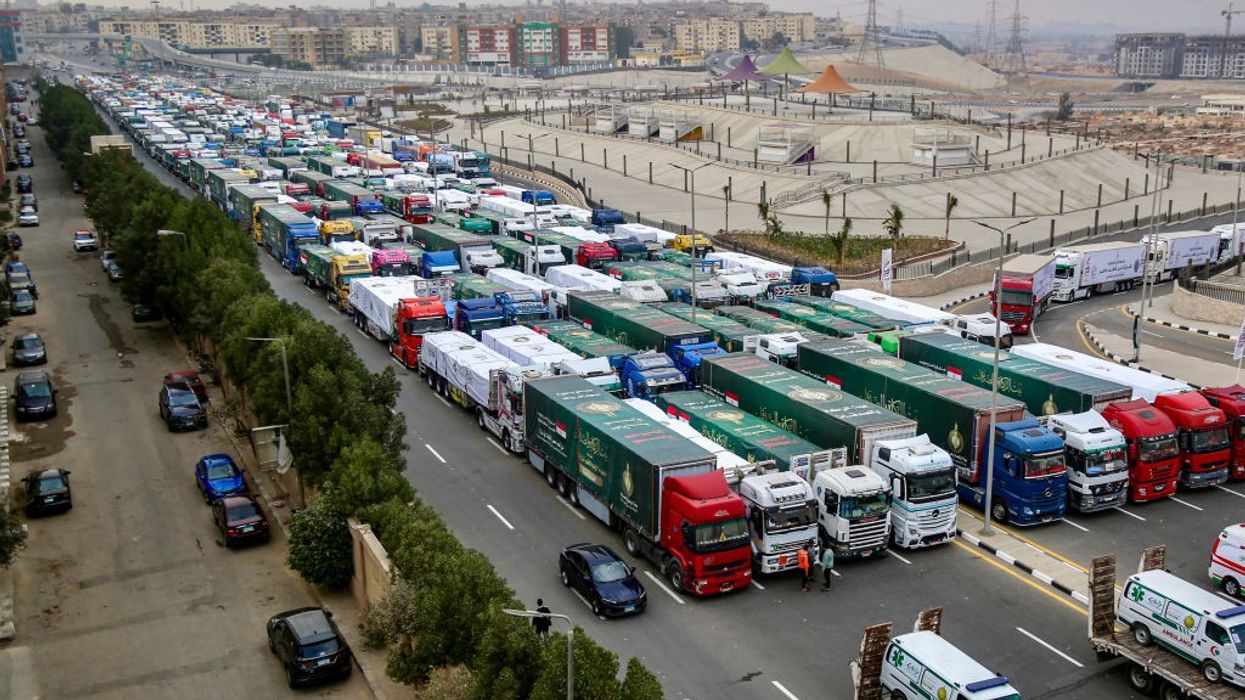
"Without accountability and a commitment to protecting humanitarian operations, we risk repeating the same cycles of impunity and neglect," said one campaigner.
A survey published Tuesday of 35 organizations working in Gaza found that Israel has failed to improve access to lifesaving humanitarian aid in the embattled Palestinian enclave—despite three separate orders from the International Court of Justice to do so over the past year.
The first of those ICJ directives, issued on January 26, 2024, ordered Israel to prevent genocidal acts in Gaza and provide basic services and humanitarian assistance to its approximately 2.3 million people. The overwhelming majority of Gazans have been forcibly displaced—often multiple times—sickened, or starved, their suffering exacerbated by Israel's "complete siege." According to Gaza officials, Israel's 15-month assault has left around 170,000 Palestinians dead, maimed, or missing.
"As the survey shows, Israel completely failed to improve humanitarian conditions."
Groups participating in the survey—including Oxfam, Islamic Relief, Médecins du Monde, ActionAid, American Friends Service Committee (AFSC), and the Norwegian Refugee Council—found that Israel has "systematically denied and restricted aid, supplies, and services both into and within Gaza" since the ICJ's January 2024 order. This tracks with previous reporting from human rights groups warning that Israel has flouted all three ICJ directives, which were also issued in March and May.
Among the survey's findings:
The survey results came a week into a fragile cease-fire between Hamas and Israel—which has already been accused of breaking the truce, including by killing civilians, a 5-year-old girl among them, and firing on medical workers.
"Given the volume of aid now entering Gaza, it is clear how much Israel has been obstructing the humanitarian response for the last 15 months," Oxfam policy lead Bushra Khalidi said in a statement. "As the survey shows, Israel completely failed to improve humanitarian conditions, in disregard of international law, while systematically preventing lifesaving aid from getting in."
"It is vital to assess past failures, even amid a cease-fire," Khalidi added. "Without accountability and a commitment to protecting humanitarian operations, we risk repeating the same cycles of impunity and neglect, leaving millions without hope of a better future."
The survey also coincides with hundreds of thousands of Gazans trying to return to their obliterated neighborhoods. Returning refugees report being blocked by both rubble and Israeli troops, who are sometimes using deadly force. More—but nowhere near enough—aid is finally reaching Gazans following the cease-fire.
"Now that aid is getting into Gaza, the next weeks will be critical but challenging, given the level of destruction Israel has rained down upon Gaza and its near-total decimation of the humanitarian infrastructure and operational capacity," Médecins du Monde president Dr. Jean-François Corty said on Tuesday.
The agencies that produced the survey are calling for continued and unimpeded access to humanitarian aid in Gaza, as well as for Israel to be held accountable for alleged war crimes, and crimes against humanity. The ICJ is currently weighing a South Africa-led genocide case against Israel. Last November, the International Criminal Court issued arrest warrants for Israeli Prime Minister Benjamin Netanyahu, former Israeli Defense Minister Yoav Gallant, and Hamas leader Mohammed Diab Ibrahim Al-Masri.
"The international community must abide by its obligations under international law and ensure that the cease-fire becomes permanent, so Palestinians in Gaza have access to everything they need to survive without conditions and rebuild their lives equally as every human being deserves," AFSC Palestine/Israel country representative Hanady Muhiar stressed.
"Without meaningful accountability, the suffering will only deepen, and the path to justice and peace will remain blocked."
The communication and advocacy coordinator at ActionAid, Occupied Palestinian Territories, Riham Jafari, asserted that "it is essential that humanitarian access is not only immediate but sustained and unimpeded."
"The rights of Palestinians in Gaza must be protected from acts of genocide, and Israel must be held to account for its continued violations of international law," Jafari added. "Without meaningful accountability, the suffering will only deepen, and the path to justice and peace will remain blocked."
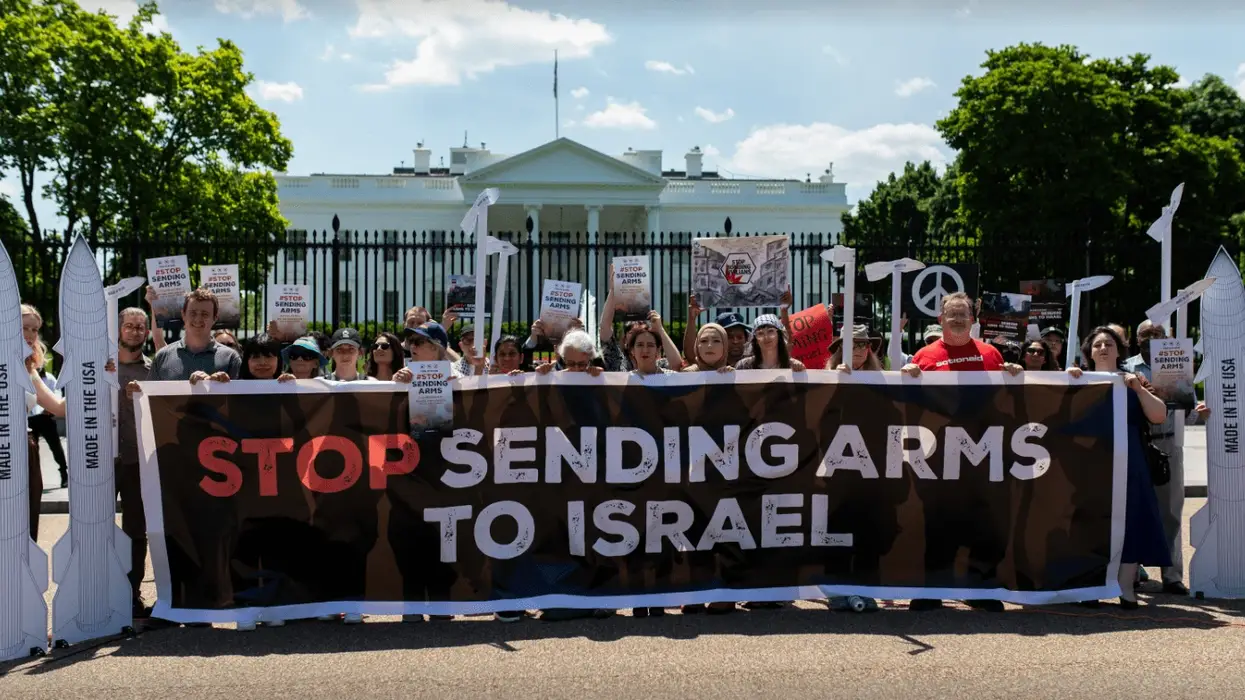
"U.S. arms transfers to Israel have fueled unimaginable suffering in Gaza, including staggering levels of civilian harm," said one embargo advocate.
As the Palestinian death toll from Israel's 314-day assault on Gaza passed 40,000—a figure Palestinian and United Ntions officials say is made up of mostly women and children and is likely a vast undercount—human rights groups this week decried the Biden administration's approval of $20 billion worth of new weapons for Israel and renewed pleas for Congress to block further arms transfers to the nation's far-right government.
On Tuesday—just days after Israeli forces used at least one U.S.-supplied bomb in an airstrike on a Gaza City school that killed scores of forcibly displaced Palestinian civilians sheltering there—the Biden administration notified Congress of the pending sale of a new weapons package that includes dozens of F-15 fighter jets, tens of thousands of 120mm mortar shells, over 32,700 tank shells, and 30 Advanced Medium Range Air-to-Air Missiles.
Since October, Congress and the Biden administration have approved more than $14 billion in unconditional military aid to Israel. President Joe Biden has signed off on more than 100 arms transfers to Israel during that period. This, atop the $3.8 billion in annual armed aid the U.S. already gives to the key Middle Eastern ally.
"Israel used U.S.-made weapons in May when it slaughtered Palestinian families sheltering in tent camps in Rafah," Jewish Voice for Peace (JVP) said Wednesday. "Israel used U.S.-made weapons when it bombed the al-Mutanabbi school in Khan Younis in early July, killing over two dozen displaced Palestinians seeking refuge there. And it used U.S.-made weapons on Saturday to murder over 100 Palestinians while they prayed."
"Biden continues to send weapons to Israel, and both political parties—Republicans and Democrats—have cheered on the Israeli government's slaughter and genocide of Palestinians in Gaza," JVP continued. "This is a U.S.-perpetrated genocide as much as it is an Israeli one."
"But the Democratic voting base is calling for something different, and we have seen the progressive and increasingly mainstream wing of the party begin to echo this need," the group said. "We are playing a critical role in driving the Democratic Party to finally catch up to the demands of its own base."
"Right now, we have an opportunity to re-center Gaza in the national conversation and continue building pressure on the Biden administration, on [Vice President] Kamala Harris, and on Democratic members of Congress to support an immediate arms embargo," JVP added.
While Harris has expressed sympathy for Palestinians suffering what she called a "humanitarian catastrophe" in Gaza, the vice president and Democratic presidential nominee, like Biden, has proclaimed her "unwavering" support for Israel. One aide said last week that Harris does not support an arms embargo.
"The decision to approve yet another massive sale of arms to Israel is appalling and a blatant violation of U.S. and international law and policy," Annie Shiel, the U.S. advocacy director at the Center for Civilians in Conflict, said on Thursday.
"U.S. arms transfers to Israel have fueled unimaginable suffering in Gaza, including staggering levels of civilian harm, the destruction of civilian infrastructure, and an ever-growing humanitarian catastrophe," Shiel continued. "The U.S. is complicit in this devastation."
"Congress must block these sales, including through the introduction of joint resolutions of disapproval," she added, "and the Biden-Harris administration must finally end U.S. arms transfers and use its leverage to bring about an immediate cease-fire."
The international anti-poverty NGO ActionAid said Thursday: "We are outraged and heartbroken by the staggering loss of 40,000 lives in Gaza. It is a number that is incomprehensible—every life lost is an individual tragedy."
"But this is not an inevitable one, it is an ongoing atrocity, and it could have been prevented," the group continued. "Most governments across the world have refused to do the bare minimum to protect civilian life and it is to our collective shame. We are losing confidence each day in the concept of justice."
"We reiterate our calls for an immediate cessation of hostilities and urge all governments to meet their obligations under international law and use all available means to take immediate and decisive action to ensure the safety and security of all civilians," ActionAid said.
"We call for the imposition of sanctions, including travel bans and asset freezes, on Israeli officials linked to alleged violations of international humanitarian law," the NGO added. "Every day that you choose to avoid this as a reality, this death toll will keep rising until there is nobody left in Gaza alive."
In addition to the South Africa-led genocide case against Israel at the International Court of Justice, International Criminal Court (ICC) Prosecutor Karim Khan has applied for warrants to arrest Israeli Prime Minister Benjamin Netanyahu and Defense Minister Yoav Gallant, and for three Hamas leaders, at least one of whom has been assassinated by Israeli forces.
The Biden administration and numerous members of Congress have condemned the courts' pursuit of justice for Israel and its leaders. In June, 42 Democrats joined nearly every Republican in the House of Representatives in passing a bill that would sanction ICC officials over Khan's application for arrest warrants for Netanyahu and Gallant.
In addition to rights groups, a coalition of journalists, news outlets, and press freedom organizations on Thursday implored the Biden administration to immediately halt arms transfers to Israel.
As the tight 2024 presidential race between Harris and former President Donald Trump, the Republican nominee, heads toward the home stretch, a survey commissioned by the Institute for Middle Eastern Understanding Policy Project and conducted by YouGov revealed this week that Democratic and Independent voters in the key swing states of Arizona, Georgia, and Pennsylvania would be more willing to vote for Harris if she backed an arms embargo on Israel.

"It's truly admirable that despite these dreadful circumstances people are still wanting to help one another and support hospital staff by donating blood—even if, devastatingly, they are far too sick themselves to be able to do so."
As Palestinians and humanitarians around the world marked 300 days of horror in Gaza, an aid organization highlighted a pernicious consequence of Israel's nearly 10-month assault: A hospital in the northern part of the enclave was forced to turn away many who arrived to give blood to help those wounded by bombs and bullets because the potential donors themselves were too malnourished and sick.
Gazans turned out in significant numbers in recent weeks to give blood at Al-Awda Hospital, an already underresourced facility that faced an influx of wounded patients following the Israeli military's latest attacks on Gaza City.
ActionAid International, a global humanitarian group, said Friday that "despite facing appalling personal circumstances, many people selflessly responded to Al-Awda Hospital's call-out for blood donations, but with the whole of Gaza at high risk of famine, many were deemed too unwell to undergo the process."
Dr. Mohammed Salha, the acting director of Al-Awda, said a "large percentage" of potential blood donors were turned away because they were "suffering from malnutrition." An estimated 96% of Gaza's population is facing crisis-level hunger.
"Malnutrition is widespread, specifically in the northern Gaza Strip," said Salha. "For over five months, no vegetables, fruit, or meat have been brought into the northern Gaza Strip."
Al-Awda is one of the few hospitals in Gaza that is still partially functioning amid Israel's devastating military assault, which has killed nearly 40,000 Palestinians since October and sparked an unprecedented humanitarian emergency.
No one has been spared: Entire families, journalists, aid workers, nurses and doctors, and U.N. staff have been killed by the U.S.-armed Israeli military, and those who have survived have been repeatedly displaced and forced to live amid rotting trash, sewage, and the ruins of homes and buildings with little to no access to clean water, reliable food sources, bathrooms, and other necessities.
The fetid conditions have become what the World Health Organization described as a "perfect breeding ground for disease." Earlier this week, Gaza's Health Ministry declared the enclave a "polio epidemic zone" and warned the consequences could spill over into neighboring countries.
Lice, scabies, and rashes are also rampant in the enclave given overcrowded conditions. Israel's forced evacuations of large swaths of Gaza have meant that more than two million people have sought refuge in just 14% of the territory.
"In addition to the spread of many skin diseases... there are thousands of [people who] have come to the hospital here and the hospitals operating in the northern Gaza Strip [who are] suffering from viral hepatitis," said Salha.
"The world must not normalize the horrors we are witnessing in Gaza."
Riham Jafari, advocacy and communications coordinator at ActionAid Palestine, said Friday that "it's no surprise at all that diseases and infections are running rampant in Gaza when people have been forced to live in such appalling and dehumanizing conditions, and have barely anything to eat."
"It's truly admirable that despite these dreadful circumstances people are still wanting to help one another and support hospital staff by donating blood—even if, devastatingly, they are far too sick themselves to be able to do so," Jafari added.
As conditions on the ground in Gaza worsen by the hour, the prospects of a cease-fire agreement appear increasingly remote amid Israel's fresh assassination campaign, which analysts argue is a clear attempt by Israeli Prime Minister Benjamin Netanyahu to sabotage truce negotiations.
U.S. President Joe Biden, who has approved more than 100 arms sales to Israel since the October 7 Hamas-led attack, said Thursday after speaking with Netanyahu that "we have the basis for a cease-fire."
Netanyahu, the president added, "should move on it." But Biden gave no indication that he intends to pressure Israel by cutting off the weapons supply to its forces, who have used American arms to commit horrific war crimes.
Rohan Talbot, director of advocacy and campaigns with the U.K.-based group Medical Aid for Palestinians, said Thursday that "the world must not normalize the horrors we are witnessing in Gaza."
"Governments, including the U.K. government, must immediately cease arms transfers to Israel and redouble efforts to secure a permanent cease-fire," Talbot added. "Any delay will be measured not in days, but in Palestinian lives."

"In Gaza, we are not witnessing a 'shrinking' humanitarian space; there is barely any space left to operate at all," the report authors said.
Israeli attacks on relief workers and designated "humanitarian zones" in Gaza, as well its tight control over borders and repeated evacuation orders, have devastated the ability to deliver much-needed aid to residents of the beleaguered strip, 20 non-governmental organizations warned in a report released Tuesday.
Israel has now issued "evacuation orders" that cover 86% of the Gaza Strip's land area, according to the United Nations Relief and Works Agency for Palestine Refugees in the Near East (UNRWA). This means that Gaza's 2.1 million people are now expected to squeeze into only 14% of Gaza's 141 square miles.
"We are doing everything we can to save children's lives in Gaza, but our job becomes more and more challenging by the day," said Jeremy Stoner, the Middle East regional director of Save the Children, one of the organizations behind the report. "Forcibly displacing civilians into areas that cannot accommodate them is causing a humanitarian catastrophe on an entirely new level."
"What is the international community doing about this humanitarian crisis?"
Between July 22 and 27 alone, Israeli "evacuation orders" forced around 200,000 people from central and eastern Khan Younis, and 12,600 from camps in Deir al Balah.
"There is no space left," Stoner continued, "and barely enough life-saving supplies to keep children alive. Without access to critical assistance, lives will continue to be lost."
Palestinians in Gaza face severe shortages of basic necessities, with half a million subjected to "catastrophic levels" of food insecurity, the report authors said. The amount of water available to Gaza's residents has shrunk by 94% since before Israel's onslaught began in October, and on July 26, Israel bombed the "Tal Sultan Water Reservoir," the leading source of drinking water in Rafah.
"We are talking about at least 34 children who have starved to death," Oxfam policy lead Bushra Khalidi said in the report. "If this estimate doesn't move the world, consider that most U.N. and other reports state that Gaza is on the verge of famine. What is the international community doing about this humanitarian crisis?"
Ola, a 42-year-old from northern Gaza who has been displaced more than fives times since the war began, told aid workers that "things are starting to take a toll and our bodies feel weak and flimsy."
"We can't really walk anymore but have to walk long distances to get water or buy anything," Ola said. "So at the moment, we stopped leaving the place we're in (...) and yesterday we picked and cooked mulberry leaves to block the children's hunger."
"It pains me as an aid worker that I can't do much for others."
At the same time, strict rules and violence at the border—both from direct Israeli attacks and the breakdown of law and order in their wake—make it increasingly difficult to get aid into Gaza, with deliveries dropping by 56% since April, according to U.N. figures. Save the Children reported that it had to wait almost a month at the Kerem Shalom border crossing to get four trucks filled with much-needed medical supplies to the other side. At the same time, Gaza's health facilities, which report authors say have "already collapsed," continue to attempt and treat people with a dwindling supply of U.N. medicines.
Another obstacle to delivering medicine is that Israel's Coordinator of Government Activities in the Territories will only permit flatbed trucks to enter Gaza, yet temperature-controlled medications can only be transported in closed trucks. Because of this rule, 17 pallets of Save the Children's temperature-controlled medication are currently stranded in Al-Areesh, Egypt.
Oxfam said it had deliveries of water tanks, desalination units, tap stands, generators, and latrines stalled on the other side of the border, while the Norwegian Refugee Council (NRC) had 864 tents it has so far been unable to bring through.
"This is the first time I find myself unable to offer help to others. It pains me as an aid worker that I can't do much for others. In all past escalations, I would still go out and serve those who needed help," Salma Altaweel, an NRC support manager in Gaza City, said in the report.
When aid workers in Gaza attempt to deliver supplies, they put themselves at risk. On July 13, a drone strike killed two members of a War Child partner organization, while an Israeli airstrike killed four of a War Child and Action Aid partner worker's children and critically injured his wife when it struck his shelter in Nuseirat. Israel fired on a clearly marked U.N. convoy on July 21, and two well-labeled UNICEF convoys were fired upon just two days later. Since October, around 278 aid workers have been killed in Gaza.
Stoner of Save the Children said: "Aid workers are not spared from the violence. One of our staff members was killed alongside his wife and four children by an Israeli airstrike back in December, since then aid workers have continued to be targeted. Humanitarian staff should never be a target and humanitarian operations, including convoys and warehouses, must be protected. We've said it again and again: an immediate and definitive cease-fire is the only way to save lives in Gaza."
The report authors issued a reminder that Israel, as an occupying power in Gaza, is obligated under the Geneva Convention to safeguard the humanitarian needs of Gaza's people by allowing aid to enter and be administered safely.
"Our continued presence should not be mistaken for an indication of unimpeded access," the aid groups wrote. "We operate at great risk, despite significant impediments to our access. The risks our colleagues are exposed to each moment are unacceptable and contrary to their protections under international law. In Gaza, we are not witnessing a 'shrinking' humanitarian space; there is barely any space left to operate at all."
They concluded, "We, the undersigned NGOs, continue to call for an immediate and lasting cease-fire and maintain it is the only way to provide humanitarian assistance and protect and save lives in Gaza."

ActionAid found that since the Paris agreement, banks have funded the largest Big Ag companies doing business in the Global South to the tune of $370 billion and the fossil fuel sector to the tune of $3.2 trillion.
Since the international community promised to limit global heating to 1.5°C above preindustrial levels, the world's major banks have funneled 20 times more money to climate-polluting industries in the Global South than Global North governments have given those same countries to address the climate emergency.
That's just one of the findings of How the Finance Flows: The Banks Fueling the Climate Crisis, an ActionAid report released Monday.
"This report names the biggest offenders in the banking world and calls on them to see that they are destroying the planet, while harming the present and future for their children," Ugandan climate activist Vanessa Nakate wrote in the foreword. "It's time to hold financial institutions to account, and demand that they end their funding of destructive activity."
The report focuses on the financing of two major climate-heating industries in the 134 nations of the Global South: fossil fuels and industrial agriculture.
"People generally know that fossil fuels are the number one cause of greenhouse gas emissions. But what is less understood is that industrial agriculture is actually the second biggest cause of climate emissions," Teresa Anderson, the global lead on climate justice at ActionAid International, said during a press briefing ahead of the report's release.
This is because of the sector's link to deforestation, as well as the emissions required to produce industrial fertilizers, she added.
In total, since the 2015 Paris agreement, banks have funded the largest Big Ag companies doing business in the Global South to the tune of $370 billion and the oil, gas, and coal sectors to the tune of $3.2 trillion.
"Global banks often make public declarations that they are addressing climate change, but the scale of their continued support of fossil fuels and industrial agriculture is simply staggering."
The top three banks that invested the most in these sectors were the Industrial and Commercial Bank of China at $154.3 billion, China CITIC Bank at $134.7 billion, and the Bank of China at $125.9 billion. Citigroup came in fourth at $104.5 billion, followed by HSBC at $80.8 billion.
While China features prominently in the report as the world's largest economy, Anderson noted that much of what it produces ends up purchased by consumers in the Global North.
The top three banks in the Americas funding big agriculture and fossil fuels were Citigroup, JPMorgan Chase, and Bank of America. While Citigroup was the leading regional funder of fossil fuels, JP Morgan Chase gave the most to industrial agriculture.
In Europe, the top funders after HSBC were BNP Paribas, Société Générale, and Barclays, while Mitsubishi UFJ Financial rounded out the top Asian funders.
Where is all that money going? When it comes to agriculture, the leading recipient was Bayer, which bought out Monsanto in 2018. Banks have given it $20.6 billion to do business in the Global South since 2016.
Much of the fossil fuel money went to China's State Power Investment Corporation and other Chinese companies; commodities trader Trafigura; and the usual fossil fuel suspects like ExxonMobil, BP, Shell, Saudi Aramco, and Petrobras.
"This is absurd," Anderson said of the findings. "Global banks often make public declarations that they are addressing climate change, but the scale of their continued support of fossil fuels and industrial agriculture is simply staggering."
ActionAid called the report the "flagship" document of its Fund Our Future campaign to redirect global money from climate crisis causes to climate solutions. The report calls on banks to make good on their climate promises and stop funding fossil fuels and deforestation, as well as to put additional safeguards in place to protect the rights of local communities, raise the ambition of their goals to reach "real zero" emissions, and improve transparency and other measures to make sure the projects they fund are behaving ethically.
"This can be stopped," Farah Kabir, the country director of ActionAid Bangladesh, said during the press briefing. "The banks cannot continue to fund fossil fuel industries and industrial agriculture."
In addition, the report offers recommendations to Global North governments to ensure a just transition to a sustainable future for everyone. These included setting stricter regulations for the banking, fossil fuel, and agricultural industries as well as ending public subsidies for these sectors and channeling the money to positive solutions like renewable energy and agroecology.
However, the form that funds take when sent to the Global South makes a big difference, said ActionAid USA executive director Niranjali Amerasinghe. Instead of coming in the form of private loans, it needs to be in the form of public money.
"Providing more loans to countries that are already in significant debt distress is not going to support their transition to a climate-compatible future," she said.
One reason that loans are counterproductive is that nations that accept them are forced to provide a return on investment, and currently the main industries that offer this are in fact fossil fuels and industrial agriculture.
In addition to public funds, debt forgiveness or restructuring and new taxes could also help these countries with their green transition. If companies like Exxon or Bayer doing business in the Global South "were taxed in an equitable way, that would allow those governments to raise public revenue that can then be used to support climate action," Amerasinghe said.
In particular, the report emphasizes agroecology as a climate solution that should be funded in Global South countries.
"Climate change is real in Zambia."
Mary Sakala, a frontline smallholder farmer from Zambia, spoke at the press briefing about how the climate crisis and current agricultural policy put a strain on her community.
"Climate change is real in Zambia," she said, adding that it had brought flooding, droughts, pests, and diseases that meant that "families currently, as I'm speaking right now, sleep on an empty stomach."
Sakala saw hope in agroecology, which would help with food security and resilience, and make farmers less dependent on the government and large companies.
"We need policies to allow [us] to conserve our environment in a cultural way, to help us eat our food," Sakala said. "We want… every seed to be utilized and saved and shared in solidarity."
And she said that the companies and governments of the Global North have a duty to help them get there.
"Those people who are continuing to pollute and let the climate change increase, those people need to pay us, because we are suffering from the things that others are doing," she said.
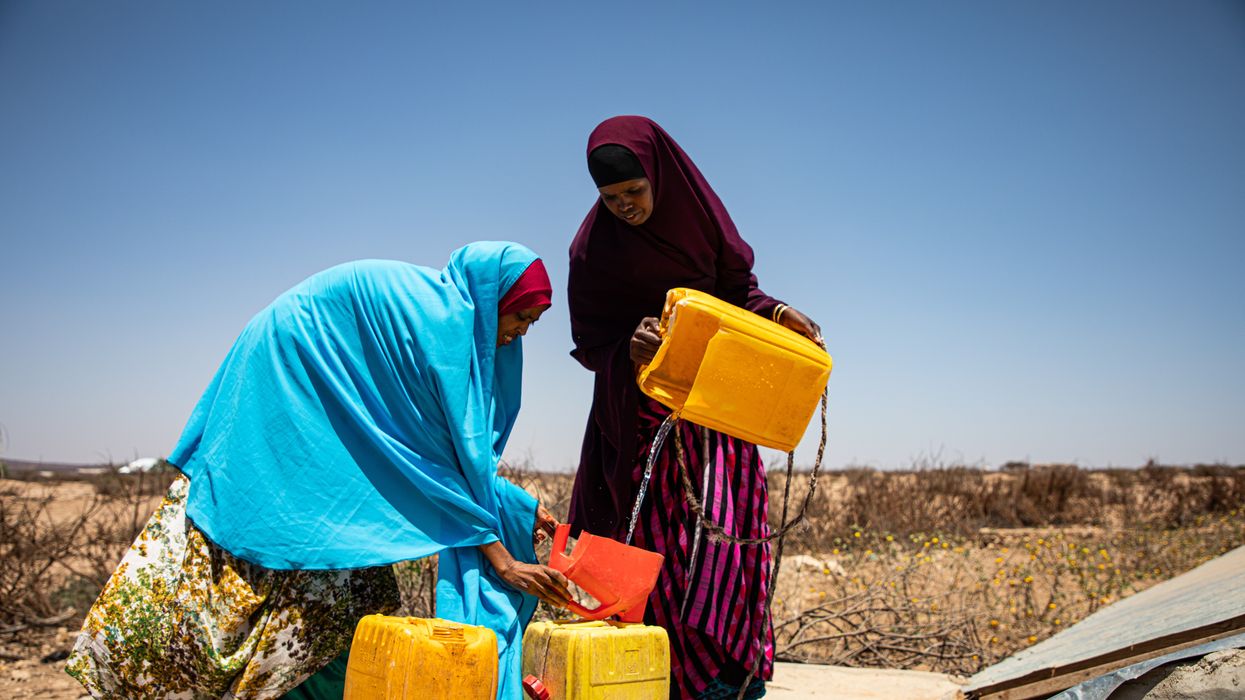
Urgent action is needed now more than ever to help countries rebuild their capacity to produce the food they require to break their dependence on the global market.
Russia announced on Monday that it was suspending a crucial deal that allows grain to be exported from Ukraine to countries in Africa and the Middle East.
The grain agreement, which was brokered in July 2022 by the United Nations and Turkey to allow grain that had been blocked by the conflict to be exported through the Black Sea, was aimed at alleviating the global food crisis, which had been worsened by the war in Ukraine.
And it was effective too. Prices of global foods have been declining in recent months thanks in large part to this initiative. The U.N. FAO Food Price Index shows that prices are now 13% lower than they were in February 2022, when Russia invaded Ukraine.
Local communities in the Global South are on average now spending twice as much on a loaf of bread, fertilizer, and petrol as before the war.
But not everywhere experienced this relief. In 14 countries surveyed as part of ActionAid’s recent research into the human impacts of the cost-of-living crisis across Africa, Asia, and the Caribbean, the cost of essential items has been continuing to escalate to crisis levels over the past 18 months. Local communities in the Global South are on average now spending twice as much on a loaf of bread, fertilizer, and petrol as before the war.
It’s a far worse picture than the last time we looked. Research released in May 2022 indicated that at worst, some local communities were paying up to quadruple the food, fuel, and fertilizer prices from before the war began. Now, in Zimbabwe, where an estimated 2.8 million people are unemployed, families are spending up to 10 times more. In some districts, petrol prices reportedly rose by more than 900%, pasta by up to 750%, fertilizer costs by more than 700%, and period pads by an extra 600%.
So what will happen now that the grain deal is dead? While the U.N. is hard at work to find a solution to this problem and ensure that Ukrainian and Russian grain and fertilizer can still make it out on the global market, I simply can’t agree with those who suggest that the move will have little immediate impact due to the current harvest season in the Northern Hemisphere. While the E.U.’s “Solidarity Lanes” should be applauded for enabling the export of about 25 million tonnes of Ukrainian grain, oilseeds, and related products to world markets between May and October last year, communities in the Global South are still suffering. We can’t take the chance that prices will increase even more, further exacerbating the harsh situations faced by many vulnerable countries already facing acute hunger.
If the situation worsens, women and girls will be the hardest hit. They already are: Community leaders in 10 out of 11 of the countries ActionAid surveyed said that rates of child marriage were increasing in their local areas, while almost half of survey respondents said mothers in their communities were reducing their food intake so their children could eat. More than half of those we spoke to said the price hikes made them feel sad or hopeless.
East Africa has faced four years of failed harvests, unpredictable rainfall, and rocketing global food prices. In Somaliland, people have been pushed to the brink since war broke out more than 3,000 miles away and are facing an extreme drought which scientists say would not have happened without climate change. Hibo Aden, women’s rights officer at ActionAid Somaliland, says that the situation has become so desperate for some families in a country where in one district, the price of cooking oil has risen by 224%, that girls are being forced to marry in exchange for food and water.
Russia pulling out of the Black Sea grain initiative could plunge food consumers in countries dependent on Ukrainian and Russian food supplies, like Somaliland, into food shortage, and re-ignite food price rises and volatility. If prices go up again, with the current dollar depreciation, the food import bills for countries already suffering will become even more unaffordable, leading to millions experiencing famine.
Our food system is to blame: 75% of the world’s nutrition comes from
12 crops and five animal species, while an even smaller group of just three crops—maize, wheat, and rice—constitute nearly 60% of humans’ caloric needs. Production of these three grains, plus soybeans, is concentrated in a few key regions, and is dominated by less than 15 companies. These factors combined make it easy for any industry to maintain high prices and reduce the number of farmers, making food production highly susceptible to shocks.
Ever-rising prices are likely to continue to push communities to their limits, and the devastating impacts we are seeing—both in Ukraine and across the Global South—will only intensify. Urgent action is needed now more than ever to help countries rebuild their capacity to produce the food they require to break their dependence on the global market. The World Bank, International Monetary Fund, and private banks have a role to play here. By cancelling the debts of countries like Malawi, where in one district the price of bread has risen by up to 233%, they would enable them to invest in greater domestic food security, shifting their focus towards climate-resilient agroecological farming, strengthening local food systems to help stabilize food supplies and prices.
Don’t take it from me—Meem, a student from the remote village of Kolpara in southern Bangladesh puts it best: “The rich may get away with price hikes, but the poor will struggle. Something has to be done, or society will suffer a lot.”
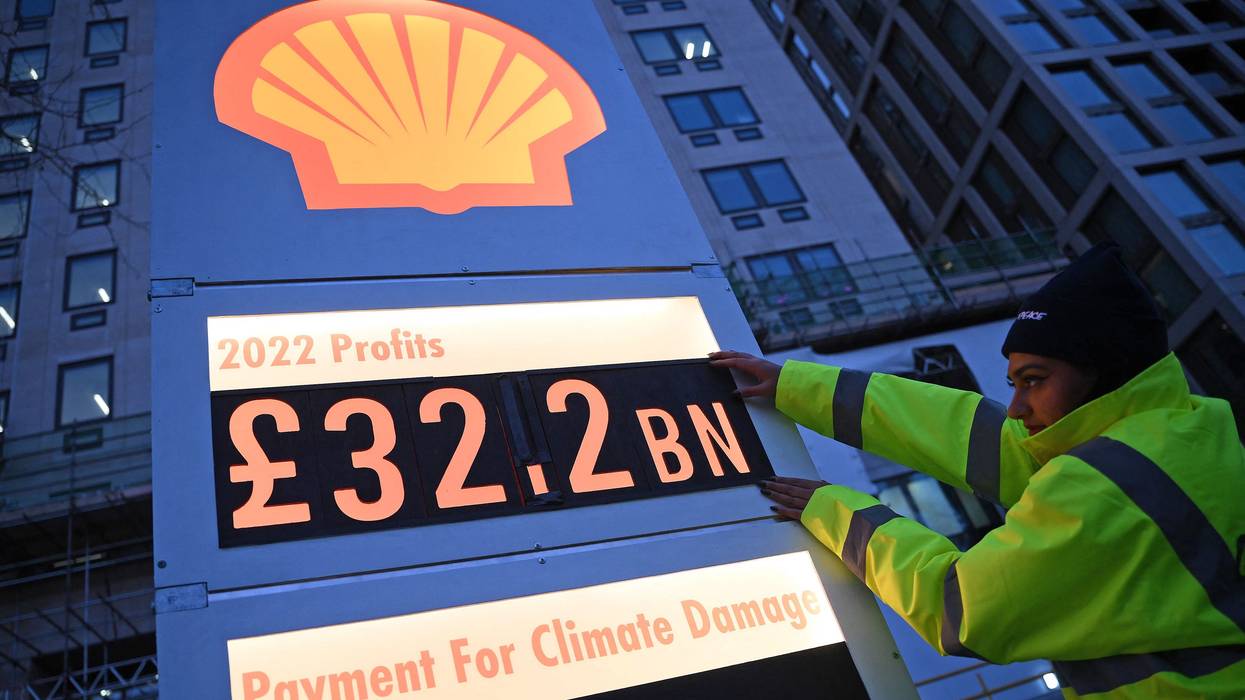
"Big business is gaslighting us all—they're hiking prices to make monster profits, plundering people under the cover of a polycrisis."
An analysis released Thursday shows that 722 of the world's top corporations made combined windfall profits of $1 trillion per year in 2021 and 2022 as people across the planet struggled to meet basic needs due to the price hikes that businesses have used to pad their bottom lines.
The humanitarian groups Oxfam and ActionAid found that the companies raked in $1.09 trillion in windfall profits—defined as profits significantly above a given corporation's average—in 2021 and $1.1 trillion last year.
That's an 89% increase in total profits compared to the average between 2017 and 2020, according to Oxfam and ActionAid's analysis of Forbes' "Global 2000" ranking of the world's largest companies—a major windfall during a period in which extreme poverty and global hunger surged.
The two groups found that "45 energy corporations made on average $237 billion a year in windfall profits in 2021 and 2022" while "food and beverage corporations, banks, Big Pharma, and major retailers also cashed in on the cost-of-living crisis that has seen more than a quarter of a billion people in 58 countries hit by acute food insecurity in 2022."
The windfall profits of leading food and beverage companies in 2021 and 2022 would be "enough to cover the $6.4 billion funding gap needed to deliver life-saving food assistance in East Africa more than twice over," Oxfam and ActionAid noted.
"People are sick and tired of corporate greed," Amitabh Behar, Oxfam's interim executive director, said in a statement. "It's obscene that corporations have raked in billions of dollars in extraordinary windfall profits while people everywhere are struggling to afford enough food or basics like medicine and heating."
"Big business is gaslighting us all—they're hiking prices to make monster profits, plundering people under the cover of a polycrisis," Behar added.
"Government policy should not allow mega-corporations and billionaires to profiteer from people's pain."
Even the International Monetary Fund (IMF) recently conceded that corporate profiteering has been a major contributor to price increases that have fueled cost-of-living crises worldwide. Last month, IMF economists estimated that "rising corporate profits account for almost half the increase in Europe's inflation over the past two years as companies increased prices by more than spiking costs of imported energy."
Oxfam and ActionAid argued that governments should "claw back gains driven by profiteering" by imposing a 50-90% windfall tax on the profits of major corporations.
The groups said such a tax would generate hundreds of billions of dollars a year in revenue that could be used to lift people out of poverty, reduce hunger, slash energy bills, and support Global South nations on the frontlines of the climate crisis.
"Enough is enough," said Arthur Larok, secretary-general of ActionAid. "Government policy should not allow mega-corporations and billionaires to profiteer from people's pain. Governments must tax windfall profits of corporations across all sectors—and invest that money back in helping people and deterring future profiteering. They must put the interests of their great majorities ahead of the greed of a privileged few."
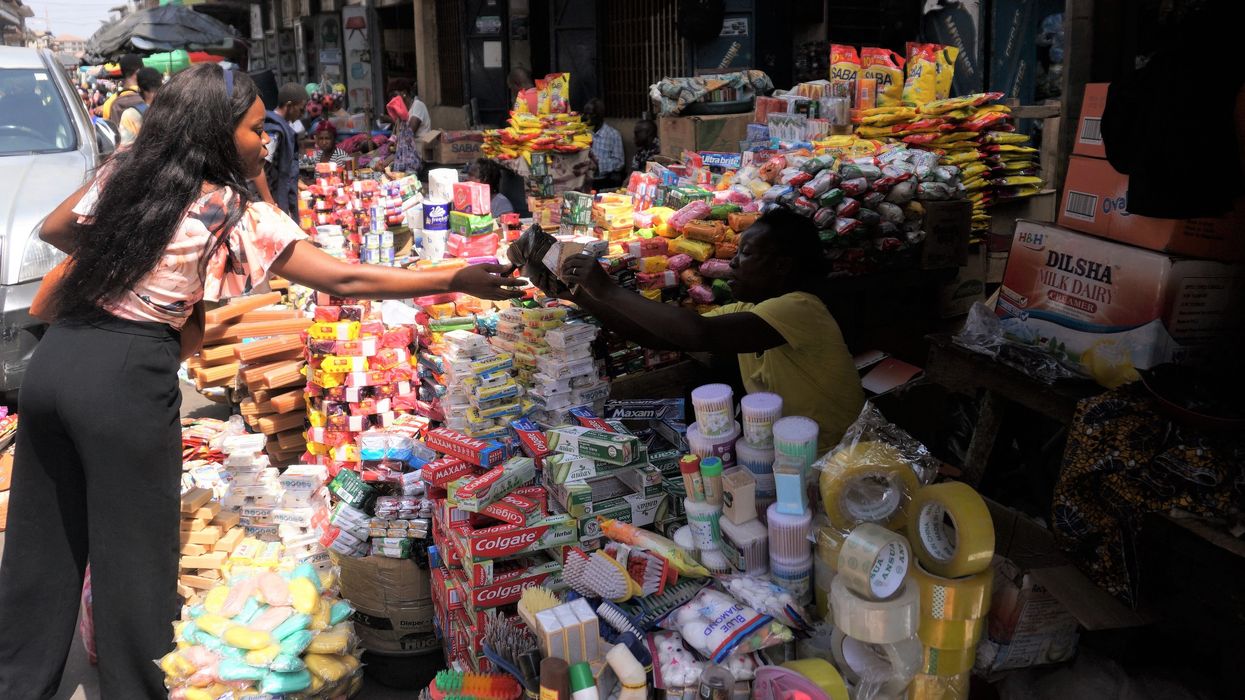
"The most vulnerable people around the world are bearing the brunt of skyrocketing food, fuel, and fertilizer prices, with women and girls the hardest hit."
A report published Monday by the international anti-poverty group ActionAid revealed that the cost of food, fuel, and fertilizer continues to increase in some of the world's most vulnerable communities due to Russia's ongoing 16-month invasion of Ukraine.
The survey of more than 1,000 community leaders and members from 14 countries in Africa and Asia plus Haiti conducted by the Johannesburg-based NGO found that some families are spending up to 10 times what they paid for necessities nearly 16 months ago.
This, despite the latest United Nations Food and Agriculture Organization Food Price Index—which tracks monthly changes in the price of a basket of food items in various countries—indicating a nearly 12% decline in global prices since February 2022, the month Russian forces invaded neighboring Ukraine.
Community leaders in almost all of the surveyed countries also reported an increase in child marriages, a sign of growing desperation among the world's poor.
"This pioneering research shows that since the onset of the war in Ukraine, the most vulnerable people around the world are bearing the brunt of skyrocketing food, fuel, and fertilizer prices, with women and girls the hardest hit," ActionAid global policy analyst Alberta Guerra said in a statement. "They are disproportionally affected by multiple crises that impact their food intake, education, their right to live free from child marriage, and their mental health and well-being."
Joy Mabenge, ActionAid's country director for Zimbabwe—a particularly hard-hit country where reported gasoline prices skyrocketed by more than 900%, the cost of pasta soared by as much as 750%, fertilizer was 700% dearer, and feminine hygiene pads increased sixfold in price—said that "food and fuel prices in Zimbabwe have been increasing on a near-daily basis, hitting the country's many families who live below the poverty line the hardest."
"They are literally living one day at a time, not knowing where their next meal will come from."
"In certain areas, some households cannot even afford one meal a day because the food prices have spun completely out of control, leaving many battling to keep their heads above water," Mabenge added. "They are literally living one day at a time, not knowing where their next meal will come from."
Some of the survey's findings include:
"Almost a year-and-a-half since the outbreak of the war in Ukraine in February 2022, the impact of the conflict is continuing to intensify in the world's most vulnerable hunger hot spots," ActionAid stated. "The price hikes are particularly alarming over a period when incomes have fallen nearly a quarter across the communities surveyed, or by 133% in one area of Ethiopia."
"Almost a year-and-a-half since the outbreak of the war in Ukraine in February 2022, the impact of the conflict is continuing to intensify in the world's most vulnerable hunger hotspots."
"Children's education prospects are also being threatened," the group added. "Community leaders... surveyed said that the increased cost of living had led to higher school dropout rates for boys as parents struggle to afford school fees or are forced to rely on child labor to support their livelihoods, while leaders in eight... countries said the same had happened for girls."
Roster Nkhonjera, a 40-year-old mother of five from Rumphi district in Malawi, said she had to take her children out of school due to untenable living costs.
"I have failed to pay school fees for my two children due to price hikes," she told ActionAid. "What I earn from my small business barely covers one meal a day for my children."
ActionAid said the news isn't all doom and gloom.
"The survey also revealed that many communities have shown resilience in tackling the impacts of the crisis, identifying and practicing sustainable coping mechanisms," the group said. "Community members in 12 of the 14 countries surveyed said that using agroecology was helping them to make savings on crop production. Agroecology means adopting farming practices that work with nature, such as using local manure to build soil fertility and reduce reliance on chemical fertilizers."
Guerra asserted that "social protection measures need to be urgently introduced, including free education services and free school meals, to assist the families who are most at risk."
"In the longer term, governments dependent on food imports must also invest in national and regional food reserves to act as buffers and reduce countries' vulnerability to food shortages and price rises," she continued.
"The catastrophic impacts we are seeing make it clear why a just transition to renewable energy and agroecological farming practices is needed now more than ever, both to protect communities from shocks but also to offer resilience against the climate crisis," added Guerra. "There is no time to waste."