

SUBSCRIBE TO OUR FREE NEWSLETTER
Daily news & progressive opinion—funded by the people, not the corporations—delivered straight to your inbox.
5
#000000
#FFFFFF
To donate by check, phone, or other method, see our More Ways to Give page.
Daily news & progressive opinion—funded by the people, not the corporations—delivered straight to your inbox.

The American Civil Liberties Union today released documents related to a secret subpoena and gag order sent to one of the country's main providers of encryption technology and communications services. The company, Open Whisper Systems, complied with the subpoena, turning over the limited customer information it had -- but the gag order was lifted after the ACLU formally protested it as a violation of the company's free speech rights.
Open Whisper makes the encrypted-communications app Signal, which allows users to have secure phone calls and text message conversations. The company is also behind the Signal Protocol, which powers the encryption built into Facebook Messenger, Google's Allo, and WhatsApp.
The new documents show that earlier this year, as part of a federal grand jury proceeding in Virginia, the Justice Department sent a subpoena to Open Whisper demanding a wide array of Signal account information associated with two phone numbers. It also sent a yearlong gag order -- signed by a federal magistrate judge -- preventing the company from revealing anything about the subpoena to anyone, on the grounds that such information could interfere with the case. The gag order meant not only that Open Whisper was prohibited from notifying individual account holders, but that it was forbidden from telling the public that any of Signal's millions of users had ever been the subject of a government request for data.
Open Whisper contacted the ACLU, which sent a letter to the government arguing that the blanket gag order was excessive and unnecessary. The government later agreed to have the gag order lifted, allowing today's document release.
"This case shows that the government is hiding its requests for Americans' records using extreme secrecy even where it is plainly unwarranted," said Brett Max Kaufman, a staff attorney with the ACLU. "The First Amendment protects companies like Signal who want to communicate basic information about government requests for customer data. The government should not be seeking all-encompassing gag orders by default, as it appears to be doing."
The account information sought by the government in the subpoena included the name, email, any associated accounts acquired through "cookie data," and IP addresses, which can show geographic location. The subpoena requested information for any accounts associated with two phone numbers, but one of the numbers was not associated with a Signal account. In the interests of its users' privacy, Open Whisper retains very little customer information. The company gave the government the data that it did have on the single account, which was the dates and times for when the account was created and when it last connected to Signal's servers.
Open Whisper said that this was the first time that it has received such a subpoena.
The documents released today are here:
https://www.aclu.org/open-whisper-systems-subpoena-documents
A blog post with more analysis by ACLU attorney Brett Max Kaufman is here:
https://www.aclu.org/blog/free-future/new-documents-reveal-government-effort-impose-secrecy-encryption-company
The American Civil Liberties Union was founded in 1920 and is our nation's guardian of liberty. The ACLU works in the courts, legislatures and communities to defend and preserve the individual rights and liberties guaranteed to all people in this country by the Constitution and laws of the United States.
(212) 549-2666
The commission called for the immediate release of Dr. Hussam Abu Safiya and all other arbitrarily detained Palestinians.
Just over 1,000 days into Israeli forces' genocidal violence against Palestinians in the Gaza Strip, a United Nations commission on Wednesday forcefully denounced Israel's treatment of health workers from the besieged territory and specifically demanded "the immediate, unconditional, and safe release" of Dr. Hussam Abu Safiya.
Israel has detained Abu Safiya without charge since capturing him at Gaza's Kamal Adwan Hospital, where he was the director, in December 2024. Renewed calls for Abu Safiya's release have mounted in recent days following his transfer to the underground Rakefet interrogation facility at Nitzan Prison, where his lawyer, Nasser Odeh, said that his life is at risk.
"I have visited Dr. Abu Safiya several times since his detention, but the individual I encountered during this latest visit was not the same person I had previously met," Odeh said after visiting the prison last week. "His physical and psychological state, the severe injuries visible on his body, and his personal testimony leave no room for doubt: his life is in immediate danger."
The UN Independent International Commission of Inquiry on the Occupied Palestinian Territory, including East Jerusalem, and Israel—established in 2021 by the UN Human Rights Council—on Wednesday urged Israeli authorities to immediately free the doctor and provide him with independent medical care.
Abu Safiya "has been subjected to continued and severe abuse" throughout his detention, and his current grave condition "is the direct result" of reported actions by Israel Prison Service guards, the panel said. It "reflects a broader pattern of violations previously identified in the commission's reports."
The UN experts pointed to their 2025 conclusion that Israel is carrying out a genocide in Gaza and a 2024 publication that found "Israeli security forces deliberately killed, wounded, detained, and severely mistreated medical personnel, constituting the war crimes of wilful killing and torture and the crime against humanity of extermination."
They further demanded freedom for all arbitrarily detained Palestinian medical personnel, declaring that their continued detention "and the severe mistreatment they are subjected to are deplorable and flagrant violations of international law."
In addition to Abu Safiya, Israel is holding at least 13 other senior doctors without charge—and they are among around 9,300 Palestinians "currently in Israeli custody, including thousands held arbitrarily without charge or trial," according to the UN Human Rights Office in the territory. At least 91 Palestinians have died in Israeli detention since October 7, 2023.
The local UN Human Rights Office on Wednesday urged Israel to either free Abu Safiya, or "promptly charge him with a recognizable criminal offense and grant him a fair trial," and either way, ensure he is transferred to a civilian hospital to receive necessary medical care.
"Israel must ensure that its laws governing the detention of Palestinians living under occupation comply with international legal norms and standards, including the prohibition of arbitrary detention and fair trial guarantees, and that its detention officials abide by those standards," the office also said. "All arbitrarily detained Palestinians must be released with immediate effect."
Efforts to secure their freedom through Israeli courts have been unsuccessful. Physicians for Human Rights Israel (PHRI) said Wednesday that "in its response to the High Court petition on the 14 detained Gaza doctors, the state says that Dr. Abu Safiya has been examined by medical personnel several times since being transferred," but "does not explain why those examinations were necessary, what their findings were, or how they are consistent with its claim that his life is not in danger."
"The response also does not address the serious allegations detailed in the sworn affidavit of Dr. Abu Safiya's lawyer, including severe injuries, repeated loss of consciousness, and a serious concern for his life," the group detailed. "At the same time, the state asks the court to dismiss, without a hearing, the petition by Physicians for Human Rights Israel petition seeking the release of 14 doctors from Gaza who are being held in Israel without charge."
PHRI said that the group "rejects the state's position, arguing that its response fails to address the central issue raised by the petition: The continued detention of 14 doctors without charge or trial despite the catastrophic shortage of medical personnel in Gaza and the ongoing collapse of its healthcare system."
Israel faces a South Africa-led genocide case at the International Court of Justice—the UN's top tribunal—over its mass slaughter in Gaza. Additionally, the International Criminal Court has issued warrants for Israeli Prime Minister Benjamin Netanyahu and former Defense Minister Yoav Gallant for crimes against humanity and war crimes in the territory.
The UN commission nodded to those cases in its Wednesday statement, stressing that "Israel must adhere strictly to international humanitarian law and international human rights law," and reiterating panel's "intent on ensuring legal accountability, including individual criminal and command responsibility."
"To that end, the commission is committed to investigating alleged violations of international law and identifying those responsible," it said, "and will continue sharing information collected with relevant judicial authorities."
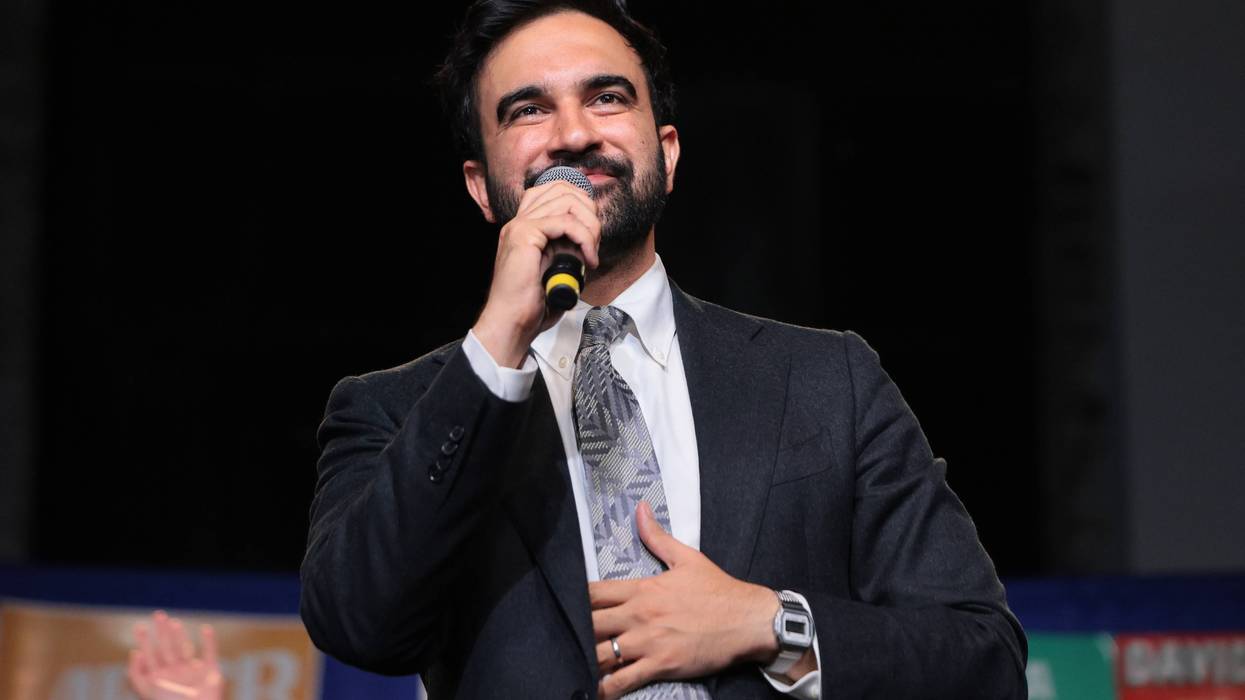
"Above all, it means time returned to New Yorkers who don't have nearly enough of it."
New York City Mayor Zohran Mamdani touted progress on fulfilling one of his top campaign promises on Wednesday by highlighting a new plan to speed up the city's bus service.
During a press event, Mamdani talked about the improvements that commuters are projected to see from the new "Faster Buses, Better Service" plan, a joint initiative created by the mayor and New York Gov. Kathy Hochul.
The plan's goal is to speed up buses by an average of six minutes per ride on priority routes, which Mamdani said would make a major long-term difference in New Yorkers' lives.
"Now if you take the bus to work, that adds up fast," he said. "But in six months, you will have spent 24 fewer hours on the bus. By the time a year rolls around, you will have saved more than two days of commuting time."
Mamdani: By the time a year rolls around, you will have saved more than two days of commuting time. That means breakfast with your family. That means getting home in time for bedtime. It means agreeing with your friends that Egypt was robbed yesterday. pic.twitter.com/DQtn5PqNwx
— Acyn (@Acyn) July 8, 2026
The mayor put this into perspective by listing other activities that New Yorkers can do when they don't have to spend as much time on the bus.
"That means breakfast with your family," he said. "It means having the time to argue balls and strikes at your kids' little league game. It means getting home for bedtime... Above all, it means time returned to New Yorkers who don't have nearly enough of it."
The 51-page Mamdani-Hochul plan envisions a number of changes to the bus system to speed up service.
Among other things, the plan includes building five "rapid bus corridors" in Brooklyn and Queens by 2030; adding 28 more priority bus lanes throughout the city by the end of the year; allowing "all-door boarding" on all buses to ease passenger bottlenecks by the end of 2027; and establishing dozens of "queue jump" traffic signals that give buses a head start over other vehicles.
"New York City sets a global standard for culture, innovation, and excellence," Mamdani said in a statement accompanying the plan. "Let us set the same standard for bus service—and prove that government can deliver real results for the people who call this city home."
The bus plan earned a thumbs up from Tahra Hoops, director of economic analysis at Chamber of Progress, who wrote in a Wednesday social media post that it could have a real positive impact on city life.
"A focus on faster, more reliable service is of more use to New Yorkers," Hoops wrote. "Nothing is more frustrating than after a long day at work to wait 30 minutes plus for the Q55 to come and then all of a sudden four show up at once."
In addition to speeding up buses, Mamdani vowed during his mayoral campaign to make them free to ride, which could be more difficult to deliver. The Metropolitan Transit Authority has estimated that delivering free bus service in the city would cost roughly $1 billion per year.
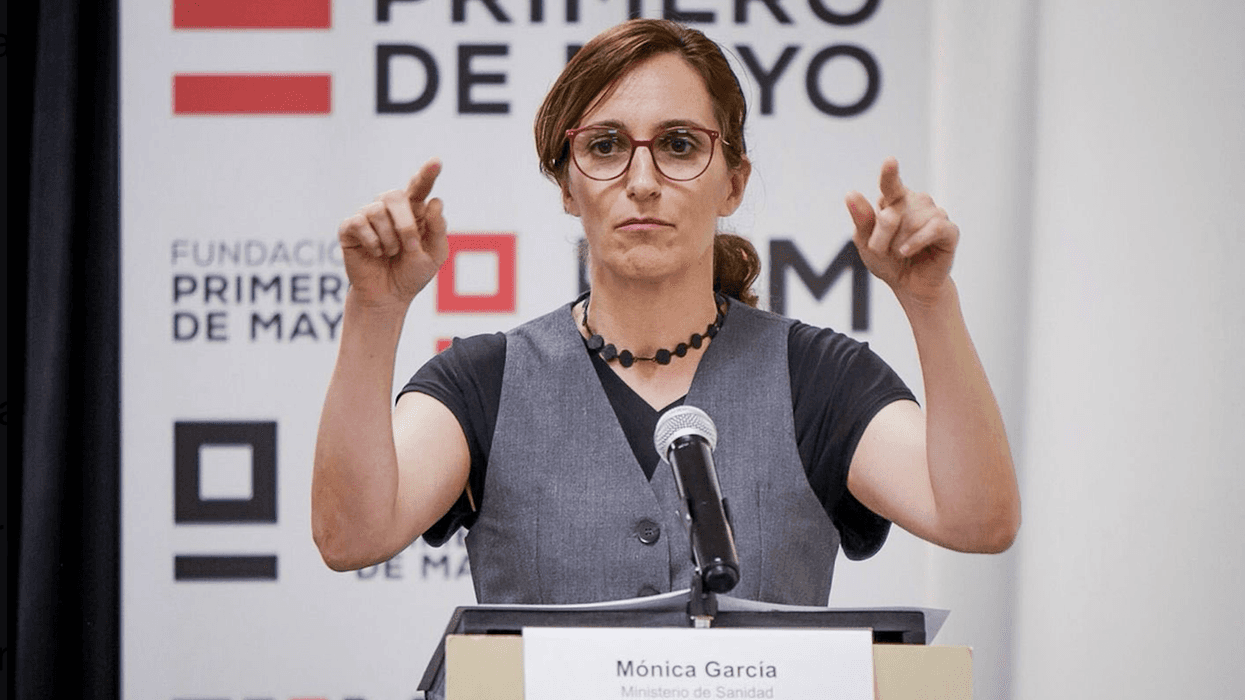
"Trump calls Spain a 'terrible partner' because it accepts neither blackmail nor threats. Because we are a sovereign, democratic country that defends multilateralism and peace."
US President Donald Trump's call on Wednesday to "cut off all trade with Spain" over what he said is the NATO ally's failure to pull its own weight in the alliance was shrugged off by Spanish Prime Minister Pedro Sánchez as "business as usual," but a member of the leftist leader's Cabinet responded to the largely infeasible threat by declaring that her government will not succumb to bullying.
Sitting alongside NATO Secretary-General Mark Rutte at the alliance's summit in the Turkish capital Ankara, Trump told reporters that “Spain is a wasted cause."
"We don’t want to do any trade business with Spain anymore, by the way,” the Republican president continued. “Spain is a terrible partner in NATO. They don’t participate. They don’t pay. I don’t want anything to do with Spain. Cut off all trade with Spain, please, including visits. Watch them come running back. Oh, they’ll come running back."
President Trump says he is "not happy" with NATO and demands to cut trade ties with Spain: "I don't want anything to do with Spain... cut off all trade with Spain please, including visits... watch them come running back." pic.twitter.com/3WCTAZU5mA
— CSPAN (@cspan) July 8, 2026
According to NATO's official estimates for 2025, Spain spends 2% of its gross domestic product (GDP) on defense, equivalent to about $35.7 billion, the seventh-highest amount in the alliance. Five other NATO members—Belgium, Czechia, Luxembourg, North Macedonia, and Portugal—also spend 2% of their GDP on their militaries, the lowest percentage in the alliance. NATO members have agreed to meet a defense spending goal of 3.5% of GDP by 2035, while Trump has repeatedly urged alliance nations to budget 5%.
Sánchez brushed off Trump's tirade as "business as usual" while touting Spain's "excellent" trade relations with the United States and vowing to respond "with calm and patience" to the president's threat.
"When you step back a bit from these kinds of actions, what you see is that relations between the United States and Spain are very, very positive socially, culturally, economically, and politically," he said.
"Spain is a country that strives to maintain the best possible relations with all countries, especially allied countries, with whom we have very consolidated ties that have transcended the ideological orientation of the administrations that have governed Spain or the United States over the decades," Sánchez added.
Spanish Health Minister Mónica García was more blunt in her response to Trump's remarks.
"Trump calls Spain a 'terrible partner' because it accepts neither blackmail nor threats," she said on social media. "Because we are a sovereign, democratic country that defends multilateralism and peace. What's terrible is confusing diplomacy with bullying."
Experts say that while the International Emergency Economic Powers Act grants US presidents broad authority to block or limit trade with countries, they must prove that targeted nations pose an "unusual or extraordinary threat" to national or economic security, which Spain clearly does not. Furthermore, as a European Union member, any trade negotiations must be conducted via Brussels, not Madrid.
This isn't the first time that Trump has floated cutting off commercial relations with Spain. Earlier this year, he threatened a full trade embargo on Spain over its refusal to allow use of its military bases to wage the illegal US-Israeli war on Iran. Spain's rejection of Trump's call for NATO members to spend 5% of their GDPs on defense, its formal support for South Africa's Gaza genocide case against Israel at the International Court of Justice, and its broader pro-Palestine stance have also angered the US leader.
Responding to Trump's renewed airstrikes on Iran and apparent abandonment of a frayed three-month ceasefire, Sánchez said Wednesday that "what we want is to avoid war."
"Wars are always bad news," the prime minister added, "especially for civilians, particularly children and women."