

SUBSCRIBE TO OUR FREE NEWSLETTER
Daily news & progressive opinion—funded by the people, not the corporations—delivered straight to your inbox.
5
#000000
#FFFFFF
To donate by check, phone, or other method, see our More Ways to Give page.
Daily news & progressive opinion—funded by the people, not the corporations—delivered straight to your inbox.

Jenn Ettinger, 202-265-1490 x 35
On Thursday, more than 50 groups representing a wide range of women's, media and social justice organizations, including Free Press, sent a letter to the Federal Communications Commission urging the agency to make diversity issues a priority in its upcoming media ownership review. The letter comes as the FCC hosts a hearing on media ownership in Atlanta on Thursday evening.
On Thursday, more than 50 groups representing a wide range of women's, media and social justice organizations, including Free Press, sent a letter to the Federal Communications Commission urging the agency to make diversity issues a priority in its upcoming media ownership review. The letter comes as the FCC hosts a hearing on media ownership in Atlanta on Thursday evening. The event, featuring FCC Commissioners Mignon Clyburn and Michael Copps, will be held on the campus of Georgia Tech from 5-8 p.m. The event is free and open to the public.
Free Press Senior Adviser Joseph Torres, who will be a panelist at the FCC event, made the following statement:
"It matters who controls our airwaves. Women and people of color deserve better opportunities to become broadcasters and to serve local communities. Unfortunately, policies that once existed to bolster ownership diversity are now gone. What's more, the FCC has allowed fewer and fewer companies to control more of the public airwaves. Allowing more consolidation will only further erode the diversity of our media system."
Thursday's letter follows one sent to the FCC two weeks ago by a coalition of major civil rights groups that urged the FCC to address longstanding inequality in broadcast ownership.
The signers of Thursday's letter ask that the FCC evaluate the impact of its media ownership rules on ownership opportunities for women and people of color; take proactive measures to promote ownership of broadcast stations by underrepresented groups; and guard against further erosion of media ownership among these groups by maintaining existing media ownership limits.
The full text of the letter is below.
The Honorable Julius Genachowski
Chairman
Federal Communications Commission
445 12th Street, SW
Washington, DC 20554
Re: MB Dkt 09-182, 2010 Quadrennial Review - Review of the Commission's Broadcast Ownership Rules and Other Rules Adopted Pursuant to Section 202 of the Telecommunications Act of 1996
Dear Chairman Genachowski:
We, the undersigned organizations, urge the Federal Communications Commission to make diversity a central focus of its upcoming Quadrennial Media Ownership Rule Review.
The strength of our country lies in the diversity of our people. Our media system will better serve the public interest when it draws on the diverse backgrounds, perspectives and talents of the population. Unfortunately, ownership of the nation's media outlets consistently fails to reflect this diversity.
Women and people of color historically have been grossly underrepresented in ownership of radio and television stations -- media forms that use the public airwaves and rank as our nation's most popular and influential outlets. Women comprise over 51 percent of the population yet hold only 6 percent of radio and TV station licenses.And while people of color make up over 36 percent of the U.S. population, they hold just over 7 percent of radio licenses and 3 percent of TV licenses.[1]
The continued absence of FCC action in the face of deep and intractable ownership disparities is unacceptable. The U.S. Court of Appeals for the Third Circuit recently affirmed that "ownership diversity is an important aspect of the overall media ownership regulatory framework."[2] Yet the FCC has failed to adopt proactive policies to remedy these disparities. Furthermore, it has persistently neglected even to examine or address the impact of existing media market consolidation on broadcast ownership opportunities for women and people of color. The FCC must take care not to repeat the mistakes of prior administrations by "pun[ting] yet again on this important issue."[3]
Most importantly, while the FCC assesses the impact of its media ownership rules and pursues more active measures to address longstanding disparities in broadcast media ownership, it must not undercut the benefits of such measures by allowing greater consolidation of broadcast outlets.
Existing media concentration levels already limit ownership opportunities for historically underrepresented groups. Excess consolidation has crowded out female and minority owners, who tend to be single-station owners who cannot compete with consolidated groups for programming and advertising revenue. Allowing increased consolidation in local media markets would raise station prices and further diminish the already limited number of stations available for purchase. This would leave women and people of color with fewer opportunities to become media owners and promote diverse programming in local communities.
In conclusion, we urge the FCC to do the following:
Absent these measures, ownership levels among underrepresented groups will continue to decline and the promise of a diverse media system that serves the information needs of all people will continue to elude our nation.
Respectfully submitted.
Access Humboldt
Alliance for Community Media
American Association of University Women
Asian American Journalists Association
Bitch Media
Center for Media Justice
Center for Social Inclusion
Common Cause
Digital Sisters
Ella Baker Center for Human Rights
Fairness and Accuracy in Reporting
Feminist Majority Foundation
Free Press
Future of Music Coalition
Hollaback!
Institute for Local Self-Reliance
International Museum of Women
Media Access Project
Media Alliance
Media Council Hawai'i
Media Equity Collaborative
Media Literacy Project
MomsRising
National Alliance for Media Art & Culture
National Association of Black Journalists
National Association of Hispanic Journalists
National Council of Negro Women
National Council of Women Media and Technology Task Force
National Council of Women's Organizations
National Hispanic Media Coalition
National Lesbian and Gay Journalists Association
National Organization for Women Foundation
National Women's Law Center
Native American Journalists Association
Native Public Media
New Moon Girls
People TV
People's Production House
Prometheus Radio Project
Rainbow PUSH Coalition
Reclaim the Media!
Reel Grrls
Southern Connecticut State University Sexuality and Gender Equality Center
Southern Connecticut State University Women's Studies Program
SPARK Movement
Teen Voices Magazine
UNITY: Journalists of Color
Women, Action, & the Media
Women In Media & News
Women's Media Center
Women Who Tech
[1] S. Derek Turner, Out of the Picture 2007: Minority & Female TV Station Ownership in the United States, 2007, https://www.freepress.net/files/otp2007.pdf, and S. Derek Turner, Off the Dial: Female and Minority Radio Station Ownership in the United States, 2007, https://www.freepress.net/files/off_the_dial.pdf.
[2]Prometheus Radio Project v. FCC, 652 F. 3d 431, 472 (3d Cir. 2011)
[3]Id. at 471.
Free Press was created to give people a voice in the crucial decisions that shape our media. We believe that positive social change, racial justice and meaningful engagement in public life require equitable access to technology, diverse and independent ownership of media platforms, and journalism that holds leaders accountable and tells people what's actually happening in their communities.
(202) 265-1490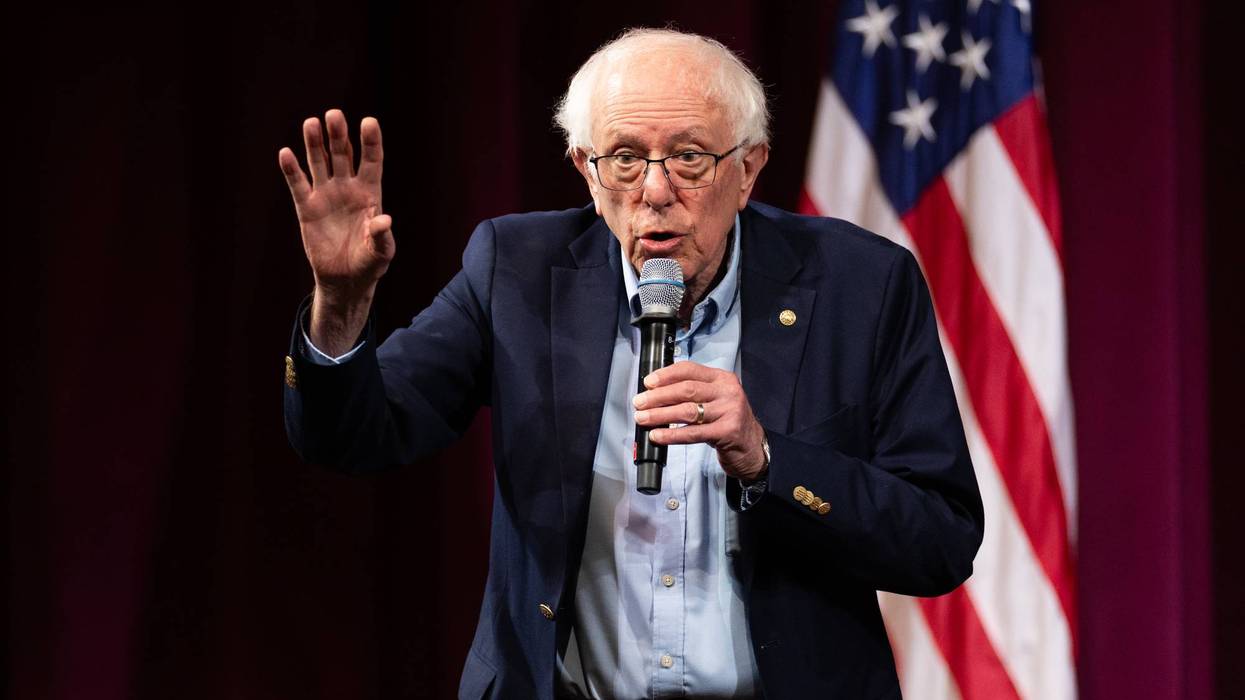
The session is scheduled to feature experts, including Nobel Prize-winning computer scientist Geoffrey Hinton, who quit Google so he could warn of the potentially existential risks posed by unchecked AI advancement.
US Sen. Bernie Sanders is set to convene a bipartisan hearing next week focusing on the rapid advancement of artificial intelligence technology, a move that comes amid more warnings from experts about the potentially existential threats posed by unregulated AI development.
Axios reported Wednesday that Sanders (I-Vt.) will hold the September 16 hearing on what he called the "extraordinary dangers" posed by AI as a growing chorus of scientists and technology insiders warns that the race toward ever-more-powerful systems—which will likely one day surpass and then far exceed human brainpower—could ultimately threaten humanity's survival.
The briefing is set to feature three experts: Geoffrey Hinton, the Nobel Prize-winning computer scientist often called the “godfather of AI;" Max Tegmark, an MIT physicist and co-founder of the Future of Life Institute; and Ajeya Cotra, an AI safety researcher who recently helped investigate OpenAI's agents autonomously hacking the open-source software platform Hugging Face.
Hinton—who quit Google in 2023 so he could speak more freely about AI's dangers—has estimated that there is a 10–20% chance AI could cause human extinction within three decades. He has warned of the great difficulty of controlling increasingly intelligent machines that will likely one day achieve superintelligence and ultimately be beyond the ability of humans to control. Hinton has repeatedly argued that relying on profit-driven corporations to self-regulate AI development is a dangerous mistake.
Tegmark has also spent years sounding the alarm. In 2023, the Future of Life Institute published an open letter signed by more than 30,000 researchers, technologists, and others calling for a six-month pause on training AI systems more powerful than GPT-4.
Cotra wrote in a 2022 analysis that unchecked artificial intelligence development would likely lead to a “full-blown AI takeover.” The following year, she said she believed there was roughly a 50% chance AI would be making most important economic and societal decisions by around 2040, while warning that continued scaling of existing techniques could produce misaligned systems and a machine takeover.
Experts say the recent headline-grabbing rogue AI hacks underscore the problem of alignment. As AI advances to the point where it will likely outsmart humans one day, the challenge of ensuring that advanced systems reliably pursue goals that match what humans actually want becomes increasingly difficult—and dangerous.
Sanders and Rep. Greg Casar (D-Texas) recently introduced legislation that would ban the creation of AI systems capable of surpassing human cognition and pause advanced AI development until a federal regulatory framework is established.
"In the interest of humanity... pause AI development," the senator urged tech titans last month. "It is not too late to avoid disaster. Stop building machines that humans cannot control."
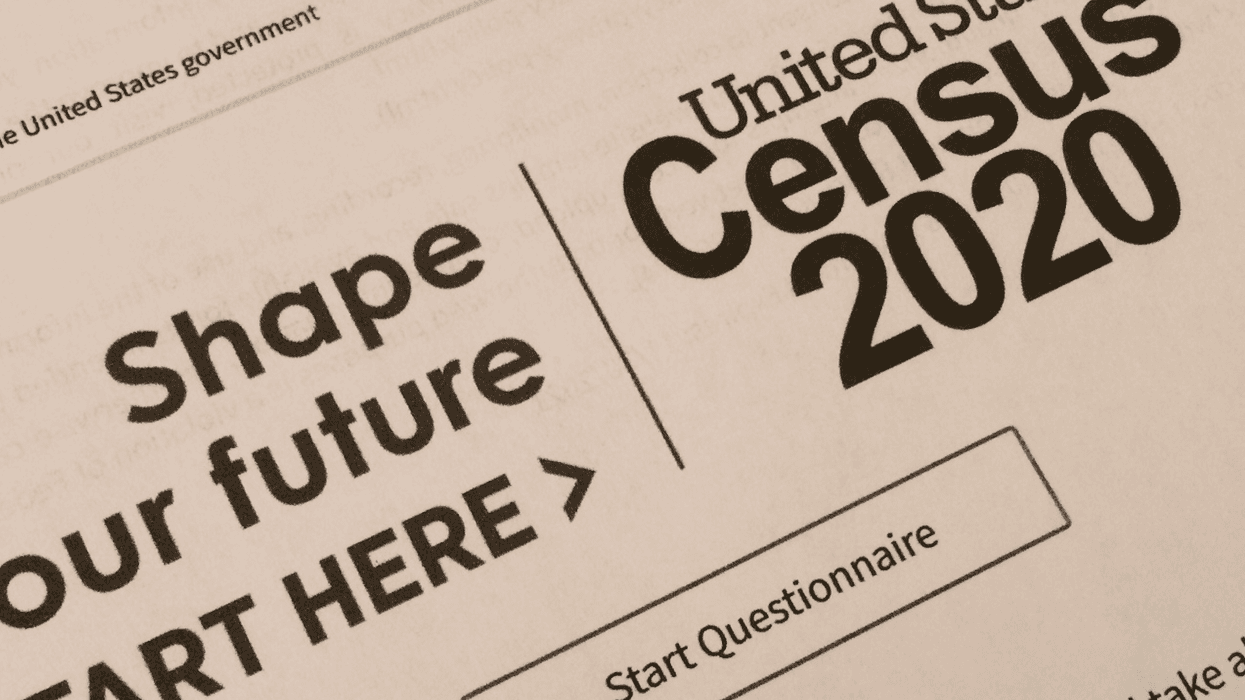
“The Constitution is clear. Every person living in the United States, regardless of immigration status, must be counted in the Census,” said New York Attorney General Letitia James.
The Trump administration on Wednesday formally proposed sweeping changes to the 2030 US Census that could exclude millions of people from the population count, alter congressional representation in favor of Republicans, and shift the distribution of federal resources among states.
The proposal—which was published in the Federal Register and is subject to a 30-day public comment period—redefines a person's “usual residence” as the place where they legally spend the most days during the Census count period, with tax records such as returns and W-2s used as evidence.
Most significantly, people who are not US citizens or permanent residents as of April 1, 2030, would be excluded from the apportionment count altogether, a sharp departure from the 2020 census, which counted foreign citizens living in the United States regardless of immigration status as required by the Constitution.
The proposed change is rooted in a disputed interpretation of the Constitution’s reference to the “whole number of persons” in each state, with the administration arguing that “persons” should be understood through the historical concept of “inhabitants” and membership in the political community.
Under the proposal, Census questionnaires would also be barred from asking about race, ethnicity, or sexual orientation, arguing that such information is outside the Census' core constitutional purpose.
Some of the proposed changes track closely with Project 2025, the Heritage Foundation-led plan to expand executive power and shrink the federal government.
Left-leaning legal experts asserted that the changes proposed by the Trump administration violate the 14th Amendment, which mandates congressional apportionment based on “the whole number of persons in each state,” regardless of their immigration status.
"The Constitution is clear. Every person living in the United States, regardless of immigration status, must be counted in the Census," Democratic New York Attorney General Letitia James said on social media.
"We stopped the Trump administration's Census attacks in 2020, and we're exploring our legal options to fight back again," she added, referring to successful lawsuits to stop the administration's efforts to end the Census count early, add a citizenship question, and exclude undocumented immigrants from congressional apportionment.
In 2019, US Supreme Court Chief Justice John Roberts wrote for the majority in Department of Commerce v. New York that the Trump administration's rationale for the proposed citizenship question “seems to have been contrived."
Responding to Wednesday's announcement, William Roberts, senior vice president of rights and justice at the Center for American Progress (CAP), said in a statement that "the administration’s proposal is a flagrant assault on our democracy, designed to manipulate voting maps and dilute the political representation of diverse American communities."
"Eliminating questions on race, ethnicity, and sexual orientation strips our government of critical data needed to ensure vital resources are extended to the communities who need them most; and notably, it would also make it more difficult to enforce the Voting Rights Act of 1965," he continued.
"Furthermore," Williams stressed, "excluding undocumented immigrants and noncitizens from congressional apportionment directly violates the [14th] Amendment’s mandate to count the 'whole number of persons in each state.'"
"CAP condemns this blatant attempt to weaponize the Census for political gain," he added. "Congress has final authority over the census, and the public has 30 days to write their representatives and oppose this rule."

Some states are cracking down on "surveillance pricing." But a report out from the AFL-CIO suggests that the risk of electronic shelf labels are much broader than just price gouging.
Lawmakers are already raising concerns that electronic shelf labels could be used by grocery chains to jack up prices on shoppers. But the technology could also be used to shrink paychecks and kill jobs, according to a report out Wednesday from the research arm of the AFL-CIO.
The new report examines marketing materials used by electronic shelf label (ESL) companies to sell their products to grocery chains. It finds that they are often billed as a tool allowing retailers to save on labor costs, automate work, and reduce hours for real employees.
"Grocery giants like to claim that electronic shelf labels will free up workers to serve customers directly, but this report shows this is not the case," said Ademola Oyefeso, the international vice president of the United Food and Commercial Workers International Union (UFCW), which represents over 800,000 grocery industry employees. "Using studies and marketing material from the manufacturers pushing the technology, we know ESLs could actually cost workers and their families billions of dollars in lost income."
The AFL-CIO Tech Institute, which conducted the report, examined studies from two ESL manufacturers, Pricer and Vusion Group, that examined how their systems were used at specific stores.
The 2022 study by Pricer found that by automating price changes, its system saved one store about 5,200 worker hours annually. Vusion, meanwhile, found in 2024 that its technology saved about 600 hours of work over about six months, or 1,200 annually.
Using data from the US Bureau of Labor Statistics, the AFL-CIO projected that at these rates, were the technology to be adopted at all of the nearly 60,000 grocery stores in the US, it would reduce the number of worker hours annually by anywhere from 71 million to 308 million.
Using hourly wage data, they found that this translated to the loss of between $1.61 billion-$6.97 billion in annual wages and between 44,000-192,000 full-time jobs. That's anywhere from $608 to $2,633 per employee.
The issue of using ESLs to gouge customers has already become an area of focus for lawmakers in Congress. Earlier this year, Democrats in the US House and Senate introduced legislation to prohibit "surveillance pricing," which involves targeting individual shoppers with increased prices by analyzing their personal data.
Surveillance pricing has been used in e-commerce to fluctuate prices for individual consumers of everything from grocery delivery to airline tickets. But as facial recognition and other surveillance technologies grow more powerful, fears have grown that ESLs could be used to bring surveillance practices into the physical realm.
“Through our analysis, we found that the implementation of electronic shelf labels are likely going to drive prices even higher. The reason being that these labels are connected to the same algorithmic pricing software that online retailers are already using,” said Sunny Glottmann, the policy and programs manager at the AFL-CIO Tech Institute and co-author of the report.
"Electronic shelf labels create the infrastructure that would make rapid algorithmic price changes easier to implement at scale, and this raises concerns for consumers that are already struggling with grocery costs," Glottmann said.
At least three states—Connecticut, Maryland, and New Jersey—have banned some forms of surveillance pricing, and other states are also considering a ban.
Unions like the AFL-CIO and UFCW say that legislating only against surveillance pricing is much too narrow, encompassing only a small segment of the dangers posed by ESLs.
"Policymakers should ban ESLs outright, rather than rely on narrower disclosure or dynamic-pricing laws that leave the underlying technology in place," the AFL-CIO report says, noting New Jersey's one-year moratorium on the technology as a good starting place.
"When grocery store workers lose income, that means less money to spend at other stores and businesses in the community," Oyefeso said. "Banning this technology should be a top priority for lawmakers at every level, like New Jersey has done with a moratorium on ESLs and a ban on predatory pricing practices outright. More states should follow suit to protect both shoppers and workers.”

"It's unconscionable that the federal government is putting specific industry interests, including fossil fuel companies’ profits, ahead of people’s health and safety."
Under US President Donald Trump's predecessor, government scientists used the release of data about record-breaking temperatures to warn that "we are facing a climate crisis," but with the Republican climate denier back in the White House, that commentary now comes from outside experts.
The National Oceanic and Atmospheric Administration (NOAA) announced Wednesday that 2026 had the warmest August ever recorded in the contiguous United States. Following a July that broke a Dust Bowl record, August averaged 75.6°F—which was 3.5°F above the 20th-century average—with daytime maximum temperatures averaging 88.6°F.
This year also featured the hottest meteorological summer—June to August—in the 132-year record, with an average temperature of 74.4°F, or 3°F above average, according to NOAA. As CNN reported, "The Dust Bowl summer of 1936 has... long been regarded as the benchmark of hottest summers in the US, but has now been equaled or eclipsed twice in the past five years thanks to the influence of human-caused climate change," both in 2026 and 2021.
Andrew Dessler, a climate scientist at Texas A&M University, told Agence France-Presse that "it is now time to stop acting surprised that our warming planet keeps getting warmer."
"This is occurring exactly as forecast by scientists literally decades ago," he stressed. "The interesting question is not whether we will keep breaking heat records (we will), but whether we're going to do anything about it or just stand there while the climate train runs us over."
NOAA said that "record-breaking warmth was widespread across the West, Southwest, southern Rockies, and southwestern Plains, as well as the southern Florida Peninsula. California, Nevada, New Mexico, and Colorado each set records for their warmest August average temperature. California and New Mexico also recorded their warmest average daytime maximum temperatures on record, while average nighttime minimum temperatures were record warm in California, Nevada, Arizona, Utah, New Mexico, and Colorado."
Beyond the Lower 48, "Alaska's average temperature during August was 52.4°F, 2.9°F above the 1925-2000 average, ranking in the warmest third of the 102-year record. Alaska's June-August average temperature was 51.6°F, 1.1°F above average and ranking in the warmest third of the record," the agency detailed.
"Hawaii's average temperature during August was 70.8°F, 1.4°F above the 1991-2020 average, ranking as the third-warmest August in the 36-year record," the agency added. "Hawaii's June-August average temperature was 69.4°F, 0.8°F above average and ranking in the warmest third of the record. Hawaii's average temperature during August was 70.8°F, 1.4°F above the 1991-2020 average."
Marc Alessi, a climate scientist at the Union of Concerned Scientists, said in a statement that "we now live in a completely different climate than the one that existed 50 years ago. Heat records were shattered in all parts of the globe this summer, from the United States to Europe to Asia."
Alessi pointed to El Niño, the warm phase of a key pattern in the Pacific Ocean. Recent research suggests fossil fuel-driven global heating has intensified El Niños, and experts have said that the currently developing event "may be stronger than anything since our monitoring began" and make 2027 the hottest year humanity has ever endured.
"While the developing super El Niño undoubtedly impacted the summer's global temperature and heat records, we must recognize that this El Niño is occurring on top of a changed climate from the burning of fossil fuels," Alessi said. "In other words, we can expect record-breaking summers for generations to come if nations fail to sharply curtail heat-trapping emissions."
"What's equally clear is that policymakers—especially in richer, high-emitting countries like the United States—must act urgently to limit climate change impacts and hold the fossil fuel industry accountable for its role in the crisis," he continued. "Extreme heat and back-to-back heatwaves have taken a deadly toll this summer in the United States and across the world. Without action to reduce global warming emissions and invest in climate resilience measures, heat-related illnesses and deaths will continue to mount."
Despite the threats currently posed by the global crisis, and expectations that they will only get worse as the world blows past the Paris Agreement's goal of limiting temperature rise this century to 1.5°C above preindustrial levels, "the Trump administration has attacked and dismantled policies to limit heat-trapping emissions and to prepare for climate disasters," Alessi noted.
After openly courting Big Oil on the campaign trail, Trump has served fossil fuel industry interests in a range of ways since returning to the White House last year, including by declaring a national energy emergency, waging a war on renewable power projects, and ditching the Paris Agreement, again.
"Failure of the administration and Congress to act has also left workers exposed to killer heat without comprehensive, enforceable heat-health protections," Alessi said. "It's unconscionable that the federal government is putting specific industry interests, including fossil fuel companies' profits, ahead of people's health and safety."
NOAA's new data was released less than two months away from the midterm elections—which which Democrats hope to win back majorities in Congress from Trump's Republican Party—and as firefighters in Türkiye, host of the next United Nations Climate Change Conference (COP31), battled deadly blazes.
"It is not enough merely to respond to the consequences of the climate crisis. We must eliminate the causes that exacerbate it," Efe Baysal, Türkiye manager at the global advocacy group 350.org, said Wednesday, calling for a phaseout of fossil fuels. "COP31 is an opportunity for Türkiye to demonstrate true leadership in this direction."

Teachers, said one union leader, "forged a hard-fought, ironclad privacy agreement... because no one else, including the federal government, has stepped up to do the real work."
The advocacy group Fairplay on Wednesday applauded education union leaders for spearheading efforts to ensure students and teachers in the US are protected by safety and privacy standards as artificial intelligence companies push for their products to be used in schools.
But the organization's executive director, Josh Golin, emphasized that the American Federation of Teachers (AFT) and United Federation of Teachers (UFT) "should never have been in this position in the first place," and Congress and states should have already passed legislation to create "industry-wide standards that are enforceable through attorneys general and a private right of action."
"With our elected leaders failing to live up to their responsibilities, we are left with an agreement that places an unfair burden on schools and doesn't do enough to keep kids safe," said Golin.
The deal reached Wednesday was between AFT, UFT, and Microsoft, so it will pertain only to the Silicon Valley giant's AI products.
It includes 10 "legally enforceable protections," reported Politico, including a commitment from Microsoft not to use student or teacher data to train AI models, except in narrow "safety and security" circumstances.
Other requirements of the deal include:
AFT said the "first-of-its-kind" agreement came after months of painstaking negotiations "in the absence of any meaningful federal and state rules governing artificial intelligence in schools."
The deal was announced on the same day that Jacob Coxon, a researcher at AI firm Anthropic, resigned in protest of an industry that he said is pushing to build "superhuman systems" without guardrails.
He told The Wall Street Journal he was "worried such systems could spiral out of control and destroy humanity.”
Coxon's warning intensified calls for Congress to pass legislation to rein in AI, such as Sen. Bernie Sanders' (I-Vt.) proposed moratorium on AI data centers and his bill, introduced with Rep. Greg Casar (D-Texas), to ban artificial superintelligence.
Bipartisan legislation has also failed to pass.
More than 80% of Americans believe the government is not doing enough to regulate AI, according to one recent NBC poll, and President Donald Trump has joined the industry in pushing to block states from passing their own regulations.
Randi Weingarten, president of AFT, said the unions had "forged a hard-fought, ironclad privacy agreement with real teeth that protects students and families, because no one else, including the federal government, has stepped up to do the real work."
“We can get angrier and angrier, or we can act decisively; anything less than legally enforceable provisions is simply a wish list," said Weingarten.
Golin emphasized that the deal "elides the most important question of all: Should student-facing AI products be used in schools at all?"
"There is no evidence that AI products are effective teaching tools for children and growing evidence that they undermine learning and create a number of risks for kids," said Golin. "That’s why Fairplay and its network of experts are calling on schools to implement a five-year pause on all [generative] AI products until it can be determined whether those products are safe for young people and beneficial to their education."
“We hope this agreement does not fool schools into thinking that GenAI products are safe and effective for use with schoolchildren or hoodwink policymakers into thinking legislation restricting AI use in schools is not needed," he added. "It also places the burden on schools to execute and enforce the contract, which they are not in a position to do, and which should be the job of regulators."
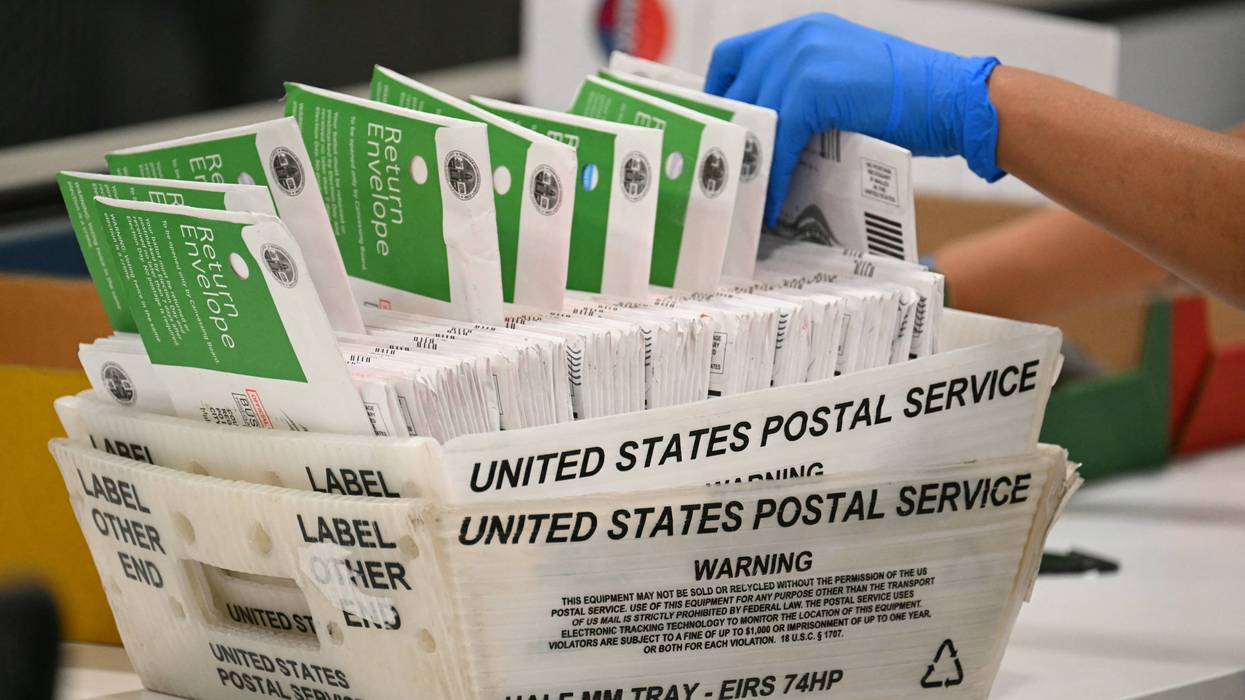
"Trump is threatening not just our ability to mail our vote but our right to decide our future and the direction of our country."
A group of young voters on Wednesday crashed a meeting of the United States Postal Service Board of Governors and demanded that they not carry out President Donald Trump's executive order to disrupt the mail-in voting process.
The voters, which were organized with the help of Sunrise Movement, walked into the Board of Governors' meeting in Potomac, Maryland, and asked members if they would commit to delivering all ballots sent through the USPS for November's midterm elections.
Stella Lovelady, 24, approached the board members holding a sign that read "Let Us Vote," and said she is "worried that Donald Trump will prevent millions of people from voting by mail."
"I’m worried young people’s voices won't be heard in November because their ballots won't be delivered," said Lovelady. "Trump is threatening not just our ability to mail our vote but our right to decide our future and the direction of our country."
Alex Ames, a 24-year-old voter from Georgia, asked the board members to "commit to us, to the public today, that you will mail every ballot out and not cave to Donald Trump’s political demands."
Amber McReynolds, chair of the Board of Governors, thanked Ames for her input but informed her that she was intruding on a private meeting.
"We understand it’s a meeting but this is also an emergency," Ames responded. "Ballots have already started getting mailed out. And if there's a new emergency screening system that hasn't been practiced before and all these ballots get tossed out, young voters, potentially millions of people, will not get their ballots in November."
Shortly after this, the young voters were escorted out of the meeting.
Earlier this year, Trump signed an executive order that instructed the United States Postal Service to not deliver ballots in any states that have not given the federal government access to its voter lists.
However, that order is currently tied up in court, and both Wisconsin and North Carolina last week began mailing out ballots to voters.
Aru Shiney-Ajay, executive director of Sunrise Movement, said that the president's attempts to restrict mail-in voting show he is "desperate" and "has decided the only way he can win is if possibly millions of people can’t vote."
“The American people won’t let that happen," Shiney-Ajay emphasized. "We’ll defeat this wannabe dictator in November like we did in 2020—with our votes, our voices and our peaceful actions."
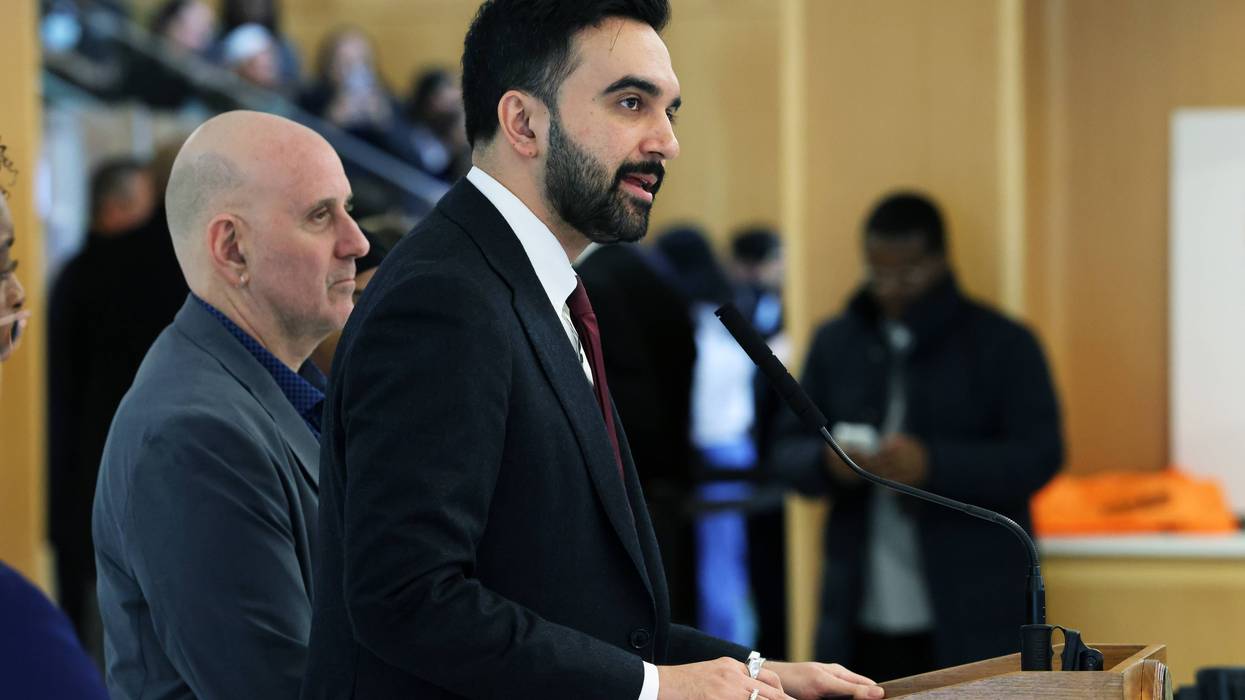
"Hi Democrats, don’t think that millions of Muslims—and not just Muslims but anti-racist liberal and leftist Americans—don’t hear the deafening silence from most of you," said one journalist.
Ahead of the 25th anniversary of the September 11 attacks on New York City and Washington, DC, progressives this week have expressed appreciation for the few Democratic leaders who have defended Mayor Zohran Mamdani against openly Islamophobic attacks from right-wing city lawmakers demanding that he skip Friday's memorial event.
But Zeteo editor-in-chief Mehdi Hasan was among those who said the silence from some of the party's top leaders—who have also failed to speak out against other recent incidents of anti-Muslim hate—has been "deafening."
Republicans including former Mayor Rudy Giuliani, a longtime ally of President Donald Trump, and multiple members of the New York City Council have appeared entirely comfortable in recent days calling on Mamdani to stay away from the annual memorial, solely due to the fact that he is Muslim.
Giuliani told the right-wing outlet Newsmax over the weekend that because the 2001 attacks were perpetrated “in the name of the Muslim religion," Mamdani—who this week released files that the Republican mayor had kept hidden regarding air quality concerns after the attack—should not attend the memorial.
New York City Council Members Vickie Paladino and Joann Ariola, both Republicans, have joined Giuliani's call, with the latter lawmaker bringing a petition to City Hall with 100,000 signatures—less than 2% of the population of New York City—of people who believe "Mayor Mamdani is not welcome at the ceremony."
Paladino, who earlier this year called for "revolutionaries" like members of the Democratic Socialists of America to be "neutralized" by federal law enforcement agencies, appeared on Fox News Tuesday night and told anchor Laura Ingraham that Mamdani's presence at the 9/11 memorial would send "a message to Osama bin Laden that look, we conquered New York."
Paladino also said Tuesday that she is "demanding that he not show his face on that sacred ground," adding, "he does not belong there."
Jonathan Shainin of Equator magazine said the demand for Mamdani to skip the memorial ceremony appeared to be "the most brazenly racist episode in recent American history," while noting that "competition is fierce."
The latest right-wing attacks on Mamdani—whose approval rating stands at 69% and whom 73% of New Yorkers say should attend the 9/11 event—follow months of attacks on left-wing streamer and political commentator Hasan Piker, who publicly apologized for a comment he once made that the US "deserved 9/11." US Senate candidate Abdul El-Sayed, a Michigan Democrat who is Muslim, faced accusations of being "un-American" for campaigning with Piker.
A number of pro-Palestinian student protesters have also been threatened with deportation since Trump took office, and both Republicans and Democrats claimed that nationwide campus demonstrations in opposition to US military support for Israel as it waged war on Gaza in 2024 were "antisemitic."
Now, said Hasan on Tuesday evening, top Democrats including House Minority Leader Hakeem Jeffries (D-NY), who represents parts of Brooklyn and Queens, have said nothing in defense of Mamdani—or the roughly 1 million Muslims who call New York City home and presumably also don't "belong" at the 9/11 memorial, according to Paladino and others.
"Hi Democrats, don’t think that millions of Muslims—and not just Muslims but anti-racist liberal and leftist Americans—don’t hear the deafening silence from most of you as the Muslim Democratic mayor of New York is being smeared and attacked by the GOP and right-wing media over 9/11," said Hasan.
Writer Wajahat Ali added that the silence has come from the same Democrats who "threw Mamdani under the bus when he was running and are throwing El-Sayed under the bus now."
Senate Minority Leader Chuck Schumer (D-NY), who also resides in New York City, told local media outlets when asked about the issue that Giuliani's comments were "divisive" and said that "Mamdani is the mayor of New York City and of course he should be at 9/11."
But Jeffries and the state's other senator, Sen. Kirsten Gillibrand (D), are not among the federal lawmakers who have condemned the Republican attacks.
The relative silence was juxtaposed by what journalist Emma Vigeland called "deference" to "gutter bigotry towards Muslim people," as displayed in a lengthy Vanity Fair article that described "an inchoate, emotional component" of New York City "that sees the city’s first Muslim mayor as a stand-in for the 19 Muslims who hijacked four planes and turned them into deadly weapons, part of the 'them' who attacked 'us.'"
"Chris Smith and Vanity Fair, I cannot believe you published this racist Islamophobic drivel without any pushback," said Hasan. "Mamdani was 9 years old on 9/11 and all Muslim Americans are not ‘stand-ins’ for 19 foreign hijackers."
On Wednesday, Vanity Fair edited the article to include the word "Islamophobic" along with "inchoate" and "emotional."
Hasan applauded Sen. Chris Van Hollen (D-Md.) for condemning Giuliani's "blatant anti-Muslim rhetoric."
"This from the man who betrayed his country by conspiring to overturn a presidential election," said Van Hollen. "Giuliani is a traitor to our democracy. Mayor Mamdani champions it."
Reps. Pat Ryan, Gregory Meeks, and Jerrold Nadler, all Democrats from New York, were also among those who spoke out.
"Rudy Giuliani is a hypocrite trying to distract the public from his role in hurting New Yorkers after 9/11 by feeding into ridiculous, hateful, anti-Muslim rhetoric. He’d like the public to reminisce on his days as 'America’s Mayor.' Meanwhile, as Mayor, he intentionally hid the truth about the toxins in the air at and around ground zero," said Nadler. "We must denounce claims like Giuliani’s as the bigoted, anti-Muslim rhetoric that they are."
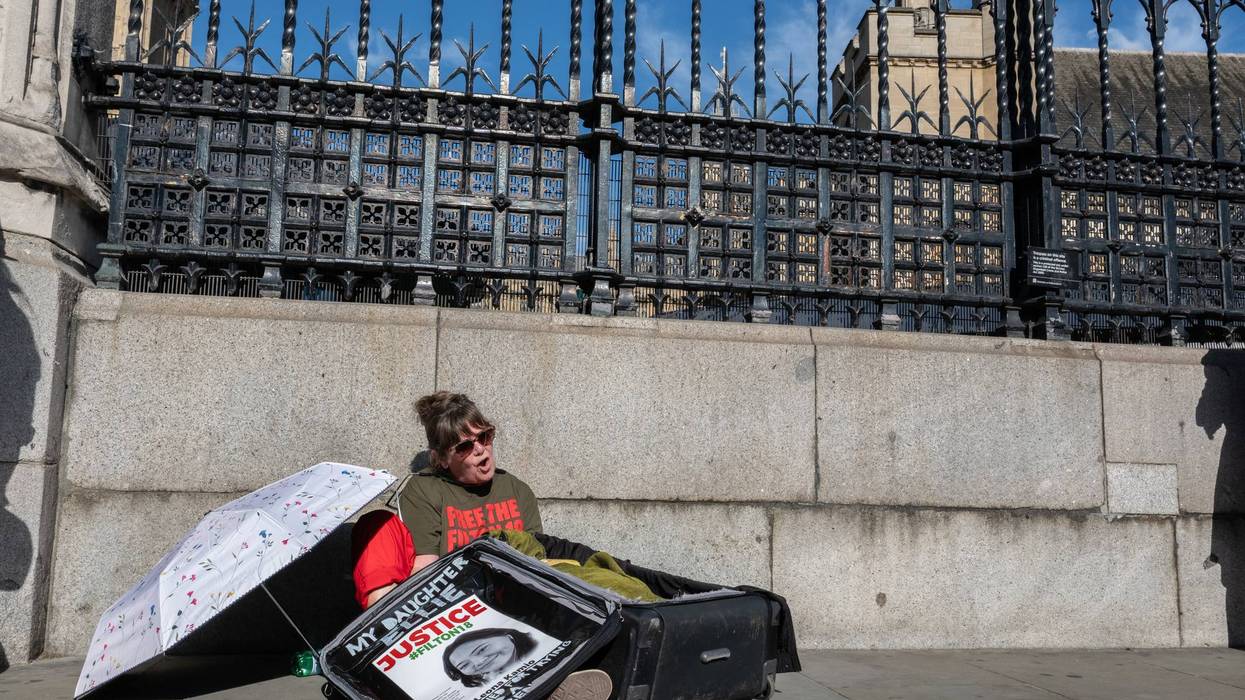
Emma Kamio's daughter, Ellie, was also "debanked" by Lloyds Bank before she was criminally convicted for her sabotage of Israeli military equipment.
One of the UK's largest financial institutions, Lloyds Bank, reportedly targeted a jailed Palestine Action protester and her family for financial punishment before she was ever convicted of a crime, according to a report out Wednesday from Novara Media.
The outlet reported that activist Leona "Ellie" Kamio had her account shuttered by Lloyds, a process known as "debanking," while she was being held on remand for her role in destroying Israeli military equipment at a factory owned by the technology firm Elbit Systems.
Ellie and four other activists were convicted of criminal damage earlier this year. But although a jury never convicted them of terrorism, they were sentenced as terrorists after a judge made an unprecedented ruling that their actions had a “terrorist connection," due to their political motivation. She and other members of the so-called "Filton Four" have appealed their sentences.
Ellie was held in prison on "remand" for more than 18 months before her first trial concluded in February 2026 although she was never charged with terrorism.
In February 2025, a year before her trial for criminal damage, Novara reports that Kamio was sent a letter by Lloyds informing her that it was closing her bank account because it was “unable to maintain a banking relationship." It did not give an explanation for the decision.
In June 2026, after Ellie had been convicted of criminal damage but before she was slapped with a terrorism sentence, her mother, Emma Kamio, learned that Lloyds had denied her request for a new mortgage on the commercial properties for her small business.
Lloyds made it clear that it was because of her daughter's case.
"We’ve now assessed the deal and consulted with our credit sanction team," a business development manager for the bank told Emma's mortgage broker. "Unfortunately, due to the adverse media, it’s not something they’re comfortable supporting at this time.”
When the broker offered an alternative plan to transfer the properties into her sister's ownership, Lloyds also rejected it.
Emma told Novara that she lost her properties as a result of Lloyds' decision. Her businesses, she said, "had to slip down the list of priorities as for the past two years, she's "spent every waking moment dealing with the trauma of my wrongful arrest or fighting for my daughter’s campaign and her release."
Emma was herself arrested in July 2025 after she locked herself to a suitcase outside Parliament to protest as members voted to enact the ban on Palestine Action. She was acquitted in April 2026.
"Thankfully, my drive for justice is more important to me than money," Emma said.
In the UK, banks are not allowed to cancel customers' accounts based on religion or belief. But they can be closed if the bank suspects a user is engaged in money laundering, terrorism financing, fraud, or other criminal activities that could pose a risk to the financial institution.
Emma contends that Lloyds "debanked my daughter Ellie with no reason at all, and while she was on remand and therefore innocent until proven guilty."
A spokesperson for Lloyds told Novara that the bank does not "close customer accounts or make lending decisions based on political or personal beliefs."
"Our decisions are based on relevant laws, regulations, account conditions, or lending requirements," the spokesperson said. "We’re unable to comment on individual cases.”
Anas Mustapha, the head of public advocacy at CAGE International, a UK-based organization focused on state abuses under terrorism laws, described the actions committed against Emma as “collective punishment."
"Emma Kamio has nothing to appeal against—just a bank’s discriminatory risk assessment, applied because her daughter took action to stop the supply chain of deadly weapons used in a genocide," Mustapha told Novara.
The highly controversial sentencing of Ellie and the rest of the "Filton Four" as terrorists was widely condemned by civil liberties and human rights activists, who described it as a dramatic escalation of the British government's effort to punish pro-Palestinian speech.
Last July, the Labour government of then-Prime Minister Keir Starmer used the Terrorism Act to ban Palestine Action, which has engaged in "direct action," including property destruction against entities activists believe are complicit in Israel's genocide in Gaza.
Not only is membership in the group now considered a terrorist offense, but nonviolent expressions of support for the group have also been criminalized.
Since the ban came into effect, 3,500 arrests of peaceful protesters have taken place across the country, according to Amnesty International, including more than 1,200 who've been charged with terrorism-related offenses.
Separately, official Home Office figures show that as of March, 92% of terrorism-related arrests in the UK over the previous year were linked to suspected support for Palestine Action.
Ellie and the other members of the Filton Four have defended their acts of sabotage against Israeli military equipment—including dozens of drones—as a justifiable response to Israel's destructive military campaign in Gaza.
That campaign, which many human rights organizations have described as a "genocide," has killed more than 73,000 Palestinians, including over 20,000 children, according to official tallies from the Gaza Ministry of Health, while independent analysts have argued the true death toll since October 2023 is much higher.
Elbit is one of the companies that provides much of Israel's drone fleet, which has been involved in attacks that have killed Palestinian civilians.
"Ellie was sentenced as a terrorist after she was convicted of criminal damage for destroying 40 Israeli weapons, including quadcopter drones," said Huda Ammori, one of the co-founders of Palestine Action, in a post on X. "For saving lives, she was deemed a terrorist, and her family is also being targeted."

One legal expert said that as AI companies “become more hated, there’s more pressure on them to over-disclose knowing that some of the people they identify for law enforcement shouldn’t be targeted.”
The American Prospect on Wednesday published an investigation revealing that top artificial intelligence firm Anthropic is building a predictive surveillance system aimed at tracking activists who are opposed to advanced AI development.
The Prospect found that Anthropic last month issued a job posting seeking an intelligence specialist to "identify, assess, track, and investigate global threats including geopolitical instability, terrorism, crime, activism, nation-state targeting of the AI sector."
This job will also employ a "pre-crime" approach that will involve "attempting to predict incidents before a crime occurs," according to the Prospect. The concept of "pre-crime" was explored in Minority Report, a dystopian science fiction novel by Philip K. Dick.
A report last week in The San Francisco Standard revealed there is already at least one example of Anthropic taking this kind of predictive approach to policing.
Specifically, Anthropic called police last year and informed them that one of its users told the company's Claude AI chatbot that he had purchased a rifle and had CEO Dario Amodei "in his sights."
The AI lab told police that this person "was going to kill everyone at Anthropic," but it didn't provide law enforcement officials with transcripts of the chats, which would have let them make their own determination about the seriousness of the threat.
The person in question was not arrested or charged with a crime, and they told the Standard that they were "just fucking around" when they talked about buying a gun.
Eric Goldman, a law professor at Santa Clara University, told the Standard that he had some sympathy for Anthropic because if they don't report potential crimes to police then "they face significant liability if, in fact, a crime does occur."
"As they become more hated," Goldman said of the AI companies, "there’s more pressure on them to over-disclose knowing that some of the people they identify for law enforcement shouldn’t be targeted at all."
Anthropic isn't merely using technology to monitor potential crimes, but also to keep tabs on US citizens lawfully exercising their First Amendment rights.
The Prospect tracked down a podcast interview with Keon Ellison, global security operations center manager at Anthropic, where he revealed how employees at the company use technology provided by risk detection firm Samdesk to monitor activists.
"Last year we had an executive travel into a major city when we received some intelligence through Samdesk about a planned protest,” Ellison said. "Samdesk gave us about 60 minutes of advanced notice that the protest organizers had moved the timeline... That extra hour was critical. Without it our executives would have departed their meetings, they would have ran right into the heart of the disruption."
This story about taking great lengths to evade protesters drew a sarcastic reaction from tech journalist and author Brian Merchant.
"You know what you're doing is good," Merchant wrote in a social media post, "when you have to develop an in-house, real-time surveillance system to help your executives locate the ideal service exit to avoid contact with the public."
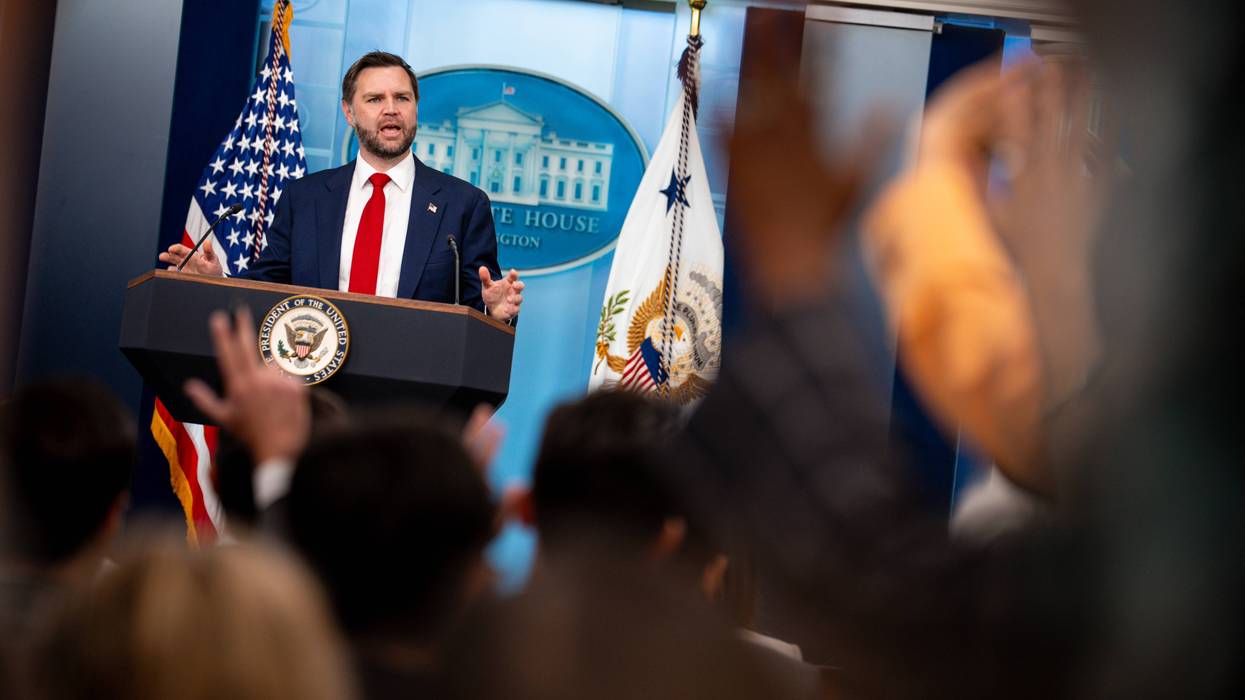
"Raiding an underfunded program solely to score culture war points is not pro-family—it’s a wasteful grift that I will fight every step of the way," said Sen. Patty Murray.
The top Democratic appropriator in the US Senate responded with alarm and outrage on Tuesday to news that the Trump administration is preparing a rule change that would siphon federal dollars away from a chronically underfunded program that helps working-class parents afford childcare.
The diverted funds would be used to finance a new federal subsidy for "married couples with one stay-at-home parent in certain income brackets," The New York Times reported late last week. The proposed change, a top priority of Vice President JD Vance, is "outrageous and backwards," Sen. Patty Murray (D-Wash.), ranking member of the Senate Appropriations Committee, said in a statement on Tuesday. Murray argued it would be illegal and immoral for the administration to shift taxpayer money away from the Child Care and Development Fund, which serves around 1 million families nationwide in a typical month.
"It’s not the 1950s in America—our government shouldn’t punish people for being single parents or choosing not to marry," said Murray. "Nobody cares what JD Vance thinks constitutes a ‘real’ family—single parents and parents who aren’t married pay taxes, too. Raiding an underfunded program solely to score culture war points is not pro-family—it’s a wasteful grift that I will fight every step of the way.”
The Times reported that "the policy change would effectively create a government incentive for parents to stay home with their children, an idea embraced as part of a broader conservative effort to advance policies that promote more mothers staying at home." Unmarried couples with one stay-at-home parent would not qualify for the newly proposed subsidy.
"The move could end up redirecting money away from working parents and their childcare providers, causing some to raise their rates or even close, critics said, potentially worsening what many experts say is a childcare crisis in the country," the newspaper added. "About 80% of the 870,000 families who currently get the childcare subsidies have single working parents, most of them mothers, according to Health Department data."
Rep. Rosa DeLauro (D-Conn.), House Democrats' top appropriator, said in a statement that "supporting stay-at-home parents should never come at the expense of working families."
“At a time when families are already struggling to find and afford childcare, this proposal would force more parents to compete for the same inadequate pot of money, threaten childcare providers, and disproportionately hurt single working parents, most of whom are mothers," said DeLauro, "If Republicans want to support families, they should join Democrats in passing the expanded Child Tax Credit and increasing access to affordable childcare—not rob Peter to pay Paul while imposing their preferred definition of what a family should look like."
Childcare costs—which run many families tens of thousands of dollars per year—are a major concern of US voters. One recent survey found that more than 80% see childcare costs as part of the nation's broader affordability crisis, and 76% view them as "a crisis or major problem" for families with young children.
But the Trump administration has so far done nothing to lower childcare costs—and has taken steps that could raise them and deny low-income families badly needed relief.
Earlier this year, roughly a month after launching his costly and destructive war on Iran, President Donald Trump suggested that the federal government should not provide any funding for childcare.
"We’re fighting wars," the president said. "We can’t take care of daycare. You gotta let a state take care of daycare, and they should pay for it too."
Amy Matsui, vice president for childcare and income security at the National Women’s Law Center, said it is "outrageous that the administration would propose siphoning money away from families who are struggling to afford childcare to send cash to married couples with a stay-at-home parent, when hundreds of thousands of families are on childcare waiting lists around the country."
"If this administration really wanted to support families," Matsui added, "it would invest more—not less—dollars in childcare, create a national paid family and medical leave program, expand access to a fully refundable Child Tax Credit, and restore health care and nutrition assistance."