September, 29 2009, 09:04am EDT
Guinea: Stop Violent Attacks on Demonstrators
Security Forces Unlawfully Kill Dozens of Protesters
NEW YORK
Guinean security forces should immediately cease violent attacks on
demonstrators protesting against the military government, Human Rights
Watch said today.
Human Rights Watch called upon the government to hold accountable
security forces responsible for firing upon and killing dozens of
generally peaceful demonstrators in the Guinean capital, Conakry, on
September 28, 2009. They were among tens of thousands of people
protesting the rule of Capt. Moussa Dadis Camara, who had seized power
in a bloodless coup in December.
"The killing of dozens of unarmed protesters is shocking even by the
abusive standards of Guinea's coup government," said Corinne Dufka,
senior West Africa researcher at Human Rights Watch. "Guinea's leaders
should order an immediate end to attacks on demonstrators and bring to
justice those responsible for the bloodshed."
The protesters, demonstrating against Camara's presumed candidacy in
Guinea's January 2010 presidential elections, took to the streets of
Conakry on September 28 and marched to a 25,000-seat stadium to attend
a political rally. Backed by security forces, the minister responsible
for combating drug trafficking and serious crime, Capt. Moussa Tiegboro
Camara (no relation to the president), told the protesters not to enter
the stadium. However, his troops were unable to stop the demonstrators
from forcing open the doors and flooding inside.
Police allegedly responded first by firing into the air, and then into the crowd. One witness told Human Rights Watch:
"At around noon, our [opposition] political leaders
came to address the rally. Shortly after they arrived, the military
started shooting. Our leaders didn't even have a chance to speak. I saw
the armed men shooting directly into the crowds and shooting in the air
- there was tear gas and gunshots and total panic; we ran for our
lives."
Eyewitnesses and medical personnel told Human Rights Watch that many of
the bodies of protesters were riddled with bullet holes. Others had
stab wounds from knives and bayonets. A number of women taking part in
the demonstration were stripped naked and sexually assaulted by
security forces, victims and witnesses said.
A second witness to the violence said:
"I saw the Red Berets [an elite unit within the
military] catch some of the women who were trying to flee, rip off
their clothes, and stick their hands in their private parts. Others
beat the women, including on their genitals. It was pathetic - the
women were crying out."
Another eyewitness said: "I saw several women stripped and then put
inside the military trucks and taken away. I don't know what happened
to them."
Victims of the violence reported that there were so many people in
the local hospital that they waited for hours without being treated.
One young man who had been shot in the leg described the scene in the
hospital: "I waited for treatment from just after 11 a.m. until 4 p.m.,
but there were so many other wounded, they didn't even have time to
treat me. I saw people dying in front of me."
Witnesses also spoke of widespread looting by members of the
security forces; a few described how vehicles were stolen and
possessions looted, including from the homes of opposition leaders.
The government on September 27 prohibited protests until after national
independence celebrations planned for October 2, but a coalition of
opposition activists decided to proceed with the demonstration they had
planned for the following day. Some of the protesters reportedly
engaged in violence against the police.
Security forces in Guinea have a history of using excessive and often unnecessary deadly force against demonstrators.
Guinea, resource-rich and desperately poor, has been plagued since
independence in 1958 by authoritarian, brutal, and corrupt regimes. In
December 2008, a group of Guinean military officers calling themselves
the National Council for Democracy and Development (CNDD) seized power
hours after the death of Lansana Conte, Guinea's president for 24
years. The coup government's nine months in power have been
characterized by arbitrary arrests and detentions, restrictions on
peaceful political activity, unpunished criminal acts by the military,
and calls for vigilante justice.
Shortly after taking power, Camara pledged to hold elections in 2009
and promised that neither he nor anyone in the CNDD would run for
president. After months of delay in organizing elections, and under
mounting pressure from key foreign governments, Camara on August 17 set
January 31, 2010 as the presidential election date. Shortly thereafter,
he reversed his pledge not to run for office, a decision that added to
his declining popularity.
"The coup government pledged to break with Guinea's abusive past,
but these deadly acts of repression and excessive use of force show how
empty those promises were," Dufka said.
Human Rights Watch is one of the world's leading independent organizations dedicated to defending and protecting human rights. By focusing international attention where human rights are violated, we give voice to the oppressed and hold oppressors accountable for their crimes. Our rigorous, objective investigations and strategic, targeted advocacy build intense pressure for action and raise the cost of human rights abuse. For 30 years, Human Rights Watch has worked tenaciously to lay the legal and moral groundwork for deep-rooted change and has fought to bring greater justice and security to people around the world.
LATEST NEWS
Starmer Expected to Resign as PM, But UK Left Warns of 'More of the Same' From His Replacement
Jeremy Corbyn said Andy Burnham would be "accepting too much of the austerity that we've had imposed upon us" and "doesn't appear to be doing anything different internationally."
Jun 20, 2026
UK Prime Minister Keir Starmer is expected to announce as soon as Monday that he will resign, according to new reports, as Labour supporters abandon the party.
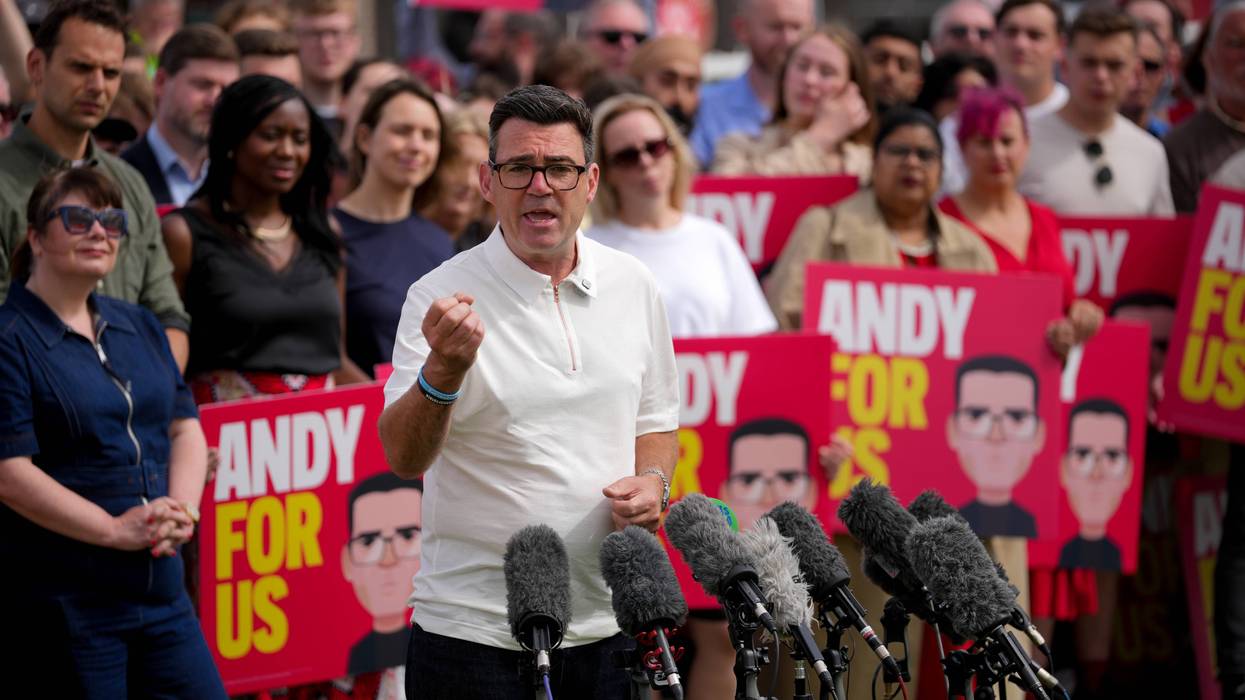
But many on the left remain skeptical that his likely replacement, Andy Burnham, will truly bring the "change" he promises.
Britain's Observer newspaper reported on Saturday that the prime minister appeared "resigned" to stepping down, well aware that "support isn't there" for his continued leadership amid the party's dismal unpopularity.
Though Starmer swept away nearly a decade and a half of Conservative rule in 2024, his honeymoon has been short-lived. His embrace of austerity in the face of a cost-of-living crisis and his government's ferocious crackdowns on pro-Palestinian speech have left progressive supporters seeking alternatives like the ascendant Green Party.
Meanwhile, his hard-right pivot on immigration has done little to siphon votes from Brexiteer Nigel Farage's far-right Reform UK party, which currently leads in national polls.
The immediate trigger for Starmer's reported resignation was Burnham's victory in Thursday's Makerfield by-election, which marked the former mayor of Greater Manchester's return to Westminster. Burnham comfortably defeated a Reform UK candidate, and The Guardian reported that he was expected to have support from about 200 Labour MPs in a leadership challenge against Starmer.
Burnham emphasized during a victory rally that it was "a last chance to change" Labour as it heads for electoral oblivion.
Responding to what he said were requests from constituents to "do something to make life more affordable," Burnham called for an end to "trickle down economics," with government interventions to bring down utility bills and rail fares, public procurement of businesses, pushes for reindustrialization, and job guarantees for people ages 16 to 18.
But some leaders on the British left have warned that Burnham will do little to deviate from Starmer's failures.
While he has pledged to reverse Starmer's welfare cuts and privatizations of public services, Burnham has also committed to maintaining the party's spending limits, which may make significant changes impossible.
Islington North MP Jeremy Corbyn, who led the Labour Party from 2015-20, said that while he personally likes Burnham, "his basic economic strategy and views... seem to me to be accepting too much of the austerity that we've had imposed upon us."
The ex-leader also said Burnham "doesn't appear to be doing anything different internationally," noting that he has not given a straight answer on whether Britain should conduct an inquiry into the UK government's policy on Gaza and its supply of weapons to Israel.
Burnham has also drawn criticism for saying he would maintain Home Secretary Shabana Mahmood, who has spearheaded hard-line changes to UK asylum policies and has enforced the repressive ban on Palestine Action, which has led to the arrest of thousands of nonviolent protesters, many of whom have been charged with terrorism.
"The architect of Labour’s cruel plans on settled status and persecution of free speech and protest stays in place," said Green Party leader Zack Polanski, who said it was a sign of "more of the same."
Remarking on Burnham's team of economic advisers, who include former chief economists for the Bank of England and Goldman Sachs, Polanski said it "isn’t a team of advisers which looks like challenging wealth and power."
Keep ReadingShow Less
Petro Demands Release of Colombian Activist Held as 'Political Prisoner' by ICE
Marco Rubio's State Department is trying to deport activist Beto Coral over his public opposition to a far-right presidential candidate supported by Trump in Colombia's upcoming election.
Jun 20, 2026
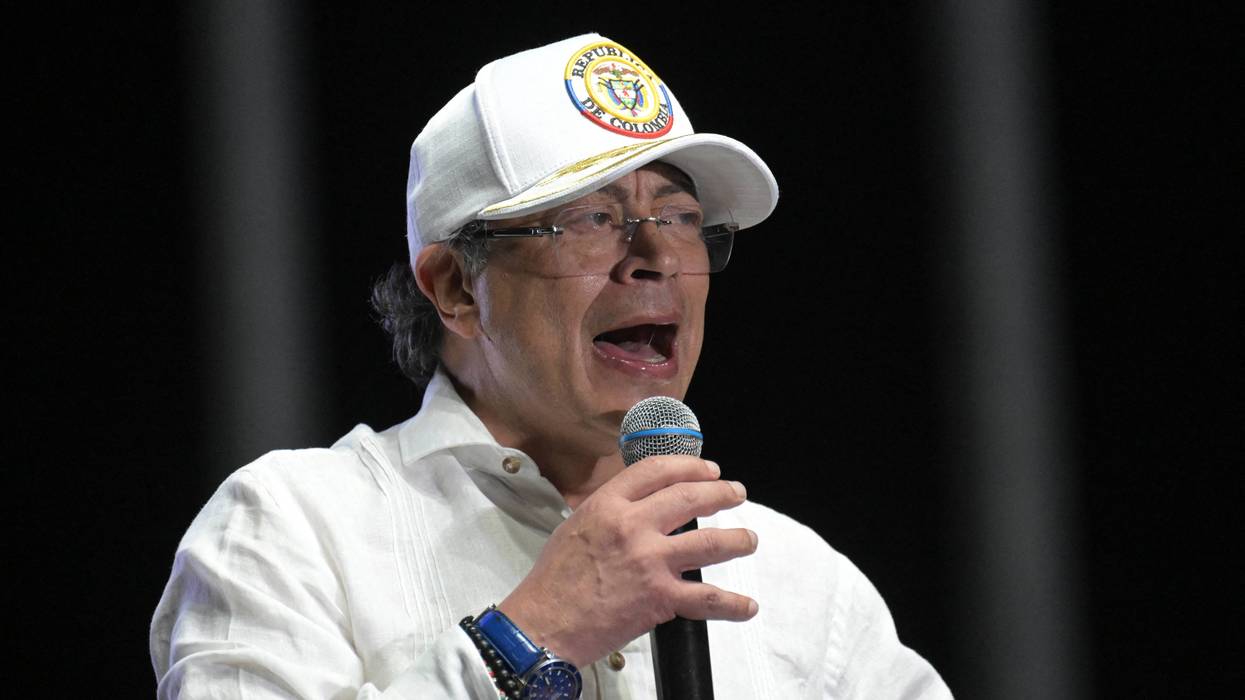
Colombian President Gustavo Petro on Saturday demanded that US President Donald Trump “tell the people of Colombia” where activist Beto Coral is after he was detained by immigration agents this week following his criticism of Trump’s preferred candidate in Colombia’s presidential election.
Coral, a progressive activist and Petro supporter, was arrested by US Immigration and Customs Enforcement (ICE) agents at his Phoenix home on Tuesday, immediately after US Secretary of State Marco Rubio issued a memo claiming that Coral “has used his presence in the United States to conduct political activity in support of the Petro government.”
His family says they now have no idea where he is.
Atención: El activista colombiano @Betocoralg me llamó hace unos minutos para decirme que agentes de inmigración de @ICE lo están arrestando en este momento en Arizona, aparentemente con la intención de deportarlo. Está con su hijo que es menor de edad pic.twitter.com/sjlaGQdc4Y
— Daniel Coronell (@DCoronell) June 17, 2026
Coral is the son of Humberto Coral Caballero, a police captain who was involved in the 1993 operation that located and killed the notorious drug lord Pablo Escobar. His father was murdered just four months later, in a case that remains unsolved.
The younger Coral immigrated to the US in 2015 on a six-month tourist visa. He later applied for asylum in the US, saying he faced danger from drug cartels in Colombia.
Although the US Department of Homeland Security has also accused him of overstaying his visa for 10 years, the State Department memo pointed to his political activity.
“Allowing [Coral] to remain in the United States,” Rubio's memo said, “undermines US foreign policy interests in Colombia’s democratic processes and signals that foreign nationals may use US platforms to conduct politically motivated disinformation campaigns and litigation targeting foreign democratic actors without consequence.”
The memo reflects the State Department policy of seeking to deport foreign nationals explicitly over their expression of political viewpoints at odds with the Trump administration, particularly pro-Palestinian student activists such as Mahmoud Khalil of Columbia University and Rümeysa Öztürk of Tufts University.
Rubio’s memo also noted that Coral had opposed the right-wing presidential candidate Abelardo de la Espriella, a former criminal defense lawyer supported by Trump, who has pledged to “disembowel the left” if he takes power in Colombia’s presidential runoff on Sunday.
Petro has accused De la Espriella of being a “defender of narcoparamilitaries,” citing his legal defense of armed right-wing groups tied to massacres, assassinations, forced displacement, and drug trafficking.
In a message from detention, Coral said that his arrest "is a sign of what can happen" if De la Espriella, whom he described as a "defender of mobsters and criminals," becomes president of Colombia.
According to The New York Times, Coral’s arrest is the first known instance in which Rubio has targeted an immigrant in the US over their advocacy in a foreign election.
Aaron Reichlin-Melnick, a senior fellow at the American Immigration Council, called it an example of "free speech under attack" by the Trump administration.
"Marco Rubio just had a man arrested and jailed, and is seeking to deport him, because he publicly criticized a presidential candidate in Colombia that Donald Trump would prefer to be elected," he said, adding that Coral "committed no crimes and had an asylum application pending."
Beto Coral fue nuevamente trasladado este día por las autoridades migratorias estadounidenses. Su familia asegura que desconoce su ubicación actual y advierte que su nombre ya no aparece en el sistema oficial ICE Locator, situación que ha incrementado la preocupación y la… pic.twitter.com/cNh4qYy0fI
— Beto Coral (@Betocoralg) June 19, 2026
The 40-year-old Coral was arrested after returning to his Phoenix home with his 12-year-old son. Coral had recently been in Miami, where he said he'd filed a lawsuit against De la Espriella, whom he'd previously accused of illegally recording phone calls between the two.
Coral's former partner, Tatiana Camacho, told the Times that De la Espriella had contacted Coral multiple times "so he would retract his statements.”
US Rep. Jim McGovern (D-Mass.) said Tuesday that Coral’s detention pointed to “coordination between American officials and Colombian political actors in this arrest—that would amount to our government aiding and abetting transnational repression.”
McGovern noted that he had helped lead legislation cosponsored by Rubio in 2023 to counter transnational political repression while Rubio was still a senator.
"Now he’s abetting it himself," McGovern said, "by weaponizing the law to punish free speech and help Trump’s right-wing buddies."
A Friday post from Coral’s X account stated that he had recently been transferred between facilities by immigration authorities, that his family does not know his current whereabouts, as his name no longer appears in the official ICE locator system.
Alberto Coral hijo del oficial de policía, capitán Humberto Coral Caballero, que fué asesinado en el operativo policial contra Pablo Escobar, es ahora, un preso político en EEUU.
Solo por el apoyo político que el secretario de estado de los EEUU Marcos Rubio dió al defensor de…
— Gustavo Petro (@petrogustavo) June 20, 2026
On Saturday, Petro said he “demands” that Trump “tell the people of Colombia where [Beto] Coral is,” referring to him in another post as a “political prisoner.”
“Solely because of the political support that US Secretary of State Marco Rubio gave to Abelardo de la Espriella, a defender of the genocidal narcoparamilitary forces against the Colombian people, who suggested his capture, he has been detained and beaten by the US government, separating him from his family,” Petro said. “[Beto] Coral sought asylum in the US because drug trafficking mafias could have murdered him 10 years ago, and the anti-migrant attitude toward South Americans has not even allowed for his authorization.”
“What will the members of Colombia’s Public Force—which carries out the world’s largest cocaine seizures—think if the states that benefit from them reject and torture even the sons of those fallen in combat against drug trafficking?” Petro asked.
He continued: “I request the solidarity of the governments of the world and the world’s human rights organizations to free the prisoner of conscience [Beto] Coral.”
Keep ReadingShow Less
Israel's 'Sabotage' of Peace Agreement Working Again as Iran Closes Strait of Hormuz in Response to Lebanon Assault
"When will Trump impose consequences for this obstructionism?"
Jun 20, 2026
Israel’s attempts to sabotage the peace agreement between the United States and Iran appear to be working again, with its relentless attacks on Lebanon reportedly prompting Iran to once again close the Strait of Hormuz on Saturday, mere days after it reopened.
"In light of the United States' clear bad faith and breach of its commitment to implement the first clause of the memorandum of understanding (MOU) for ending the war, and in response to the continuous and ongoing violations of the ceasefire by the Zionist regime in southern Lebanon, it is hereby announced that the Strait of Hormuz will be closed to maritime traffic," said the Khatam al-Anbiya central headquarters of the Iranian armed forces on Saturday.
US Central Command claimed that traffic through the strait had continued, with 55 commercial ships traveling through it, though it was unclear when those crossings took place.
The announcement that the strait had once again closed came after days of escalating attacks by Israel despite the memorandum of understanding signed this week, which included terms for a ceasefire “on all fronts, including in Lebanon.”
🇮🇷 Iranian Foreign Ministry spokesperson Esmaeil Baghaei said Israel’s continued violations of the Lebanon ceasefire have placed the entire U.S.-Iran memorandum of understanding in jeopardy, with Washington failing to uphold its commitment to restrain Israel.
Baghaei said the… pic.twitter.com/kDDXLg2wZK
— Drop Site (@DropSiteNews) June 20, 2026
A ceasefire mediated by the US and Qatar between Israel and Hezbollah went into effect on Friday afternoon despite continuing bombardments by Israel earlier in the day that killed 47 people and wounded 97 after Hezbollah killed four Israeli soldiers occupying Lebanese territory.
Within an hour of the agreement taking effect, Israel began carrying out additional attacks across southern Lebanon and the Bekaa Valley that continued through the night and into Saturday. One strike, on a three-story apartment building in the town of Barish in the Tyre district, reportedly killed a mother, father, and their two children, while wounding 12 others and leaving seven trapped beneath rubble.
Israel said its continued attacks were in response to Hezbollah’s firing of projectiles at Israeli forces in southern Lebanon, which Hezbollah said it launched as Israel attempted to further expand its occupation toward the strategically important Ali al-Taher hills “under the cover of the ceasefire.”
JD Vance on Fox & Friends this morning: "One of the things the president has set us out to do as a high priority is to open the straits. That's now happened." (The strait has since been closed lol) pic.twitter.com/iulcWtvUdR
— Aaron Rupar (@atrupar) June 20, 2026
Israel’s leaders have explicitly stated in recent days that they have no intention of abiding by any ceasefire reached between the US and Iran, leading President Donald Trump and Vice President JD Vance to issue uncommonly blunt criticism of Israel’s tactics.
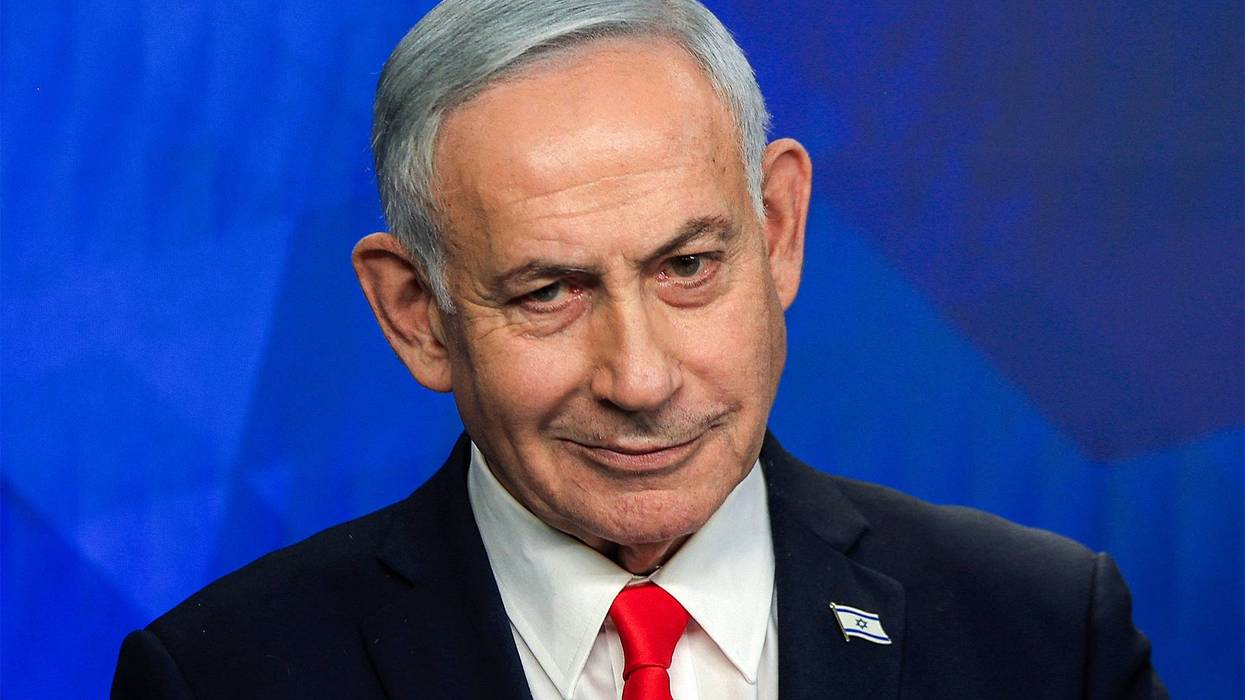
Quoting a senior Trump adviser on Friday, Zeteo reported that behind the scenes, the president is "madder at the Israelis than the Iranians," believing that Prime Minister Benjamin Netanyahu is trying to drag him back into a war that has brought his popularity to new lows and sparked a global economic crisis.
Just as it has for months, Israel’s tried-and-true tactic of raining hell upon Lebanon every time a US-Iran ceasefire appears close seems to be working once again. The wave of attacks earlier this week led peace talks in Switzerland planned for Friday to be postponed.
As Iranian negotiators departed for Switzerland on Saturday, Esmaeil Baghaei, a spokesperson for the Iranian Foreign Ministry, said little was likely to happen there unless there was evidence that the US would “fulfill its obligations.”
Those obligations include stopping Israel’s occupation and ethnic cleansing campaign in southern Lebanon, which has now killed more than 4,000 people, wounded nearly 12,000, and led to the forced expulsion of more than 1.2 million Lebanese civilians by Israeli forces.
"Israel is still trying to sabotage the ceasefire with Iran by continuing to launch attacks in Lebanon," said Kenneth Roth, the former executive director of Human Rights Watch. "When will Trump impose consequences for this obstructionism?"
Iran’s military says it has closed the Strait of Hormuz over Israel’s attacks on southern Lebanon that have killed at least 32 people since dawn.
Al Jazeera's Mohamed Vall joins live from Tehran. pic.twitter.com/bwyOo65QBX
— Al Jazeera English (@AJEnglish) June 20, 2026
The renewed closure of the Strait of Hormuz raises the stakes considerably for the Trump administration, which has described opening it and restoring economic normalcy as a core objective, with Trump warning of “bedlam” in a matter of weeks if the deal fails and the critical oil shipping route remains closed.
James Bays, the diplomatic editor for Al Jazeera, explained that as Iranian diplomats prepare to negotiate with the US, they feel that "now is a time of maximum leverage" and that they are "using that weapon now" to try to force the US to restrain Israel.
While Trump has had no shortage of angry words and is reportedly “swearing a lot” about Netanyahu behind closed doors, Joe Kent, Trump’s former counterterrorism chief—who resigned earlier this year because of his vocal opposition to the Iran war—argued that unless the US exerts material pressure on Israel, the prime minister has no incentive to stop attacking Lebanon.
"For the MOU to hold and result in a lasting peace, we must restrict aid to Israel immediately and make it clear that we will not defend them should Iran opt to strike in response to Israel’s attacks in Lebanon," he said. "Israel has not responded to our verbal and written demands—that is not going to change, unless we change it by taking action."
Keep ReadingShow Less
Most Popular