SUBSCRIBE TO OUR FREE NEWSLETTER
Daily news & progressive opinion—funded by the people, not the corporations—delivered straight to your inbox.
5
#000000
#FFFFFF
To donate by check, phone, or other method, see our More Ways to Give page.
Daily news & progressive opinion—funded by the people, not the corporations—delivered straight to your inbox.
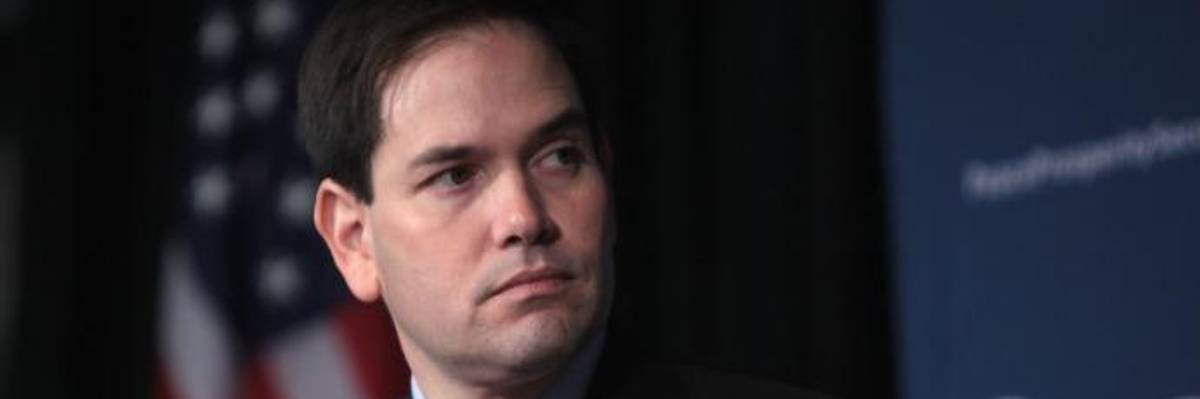
Sen. Marco Rubio (R-Fla.) is threatening to vote against the GOP tax plan unless it expands the child tax credit. (Photo: Gage Skidmore/Flickr/cc)
Following the GOP's triumphant announcement that their conference committee had reached a tentative deal for the party's tax plan, a threat by Sen. Marco Rubio (R-Fla.) on Thursday to vote "no" unless the bill expands the child tax credit sparked hopes that the Republicans' tax overhaul remains vulnerable to defeat.
Speaking with reporters on Capitol Hill Thursday about his demands for expanding the child tax credit, Rubio said: "Right now it's only $1,100. It needs to be higher than that."
"I understand that this is process of give and take, especially when there's only a couple of us fighting for it, the leverage is lessened," he continued. "But given all the other changes they've made in the tax code leading into it, I can't in good conscience support it unless we are able to increase [the child tax credit], and there's ways to do it and we'll be very reasonable about it."
A spokesperson for Sen. Mike Lee (R-Utah)--who has partnered with Rubio to call for expanding the child tax credit--told the Washington Post and The Hill that Lee is currently undecided on whether he will support his party's tax bill. Although Rubio and Lee's amendment to expand the tax credit in the Senate's version of the bill was voted down earlier this month, both lawmakers ultimately voted to pass the Senate bill that was sent to the reconciliation panel.
Sen. Bob Corker (R-Tenn.) voted against the Senate's version of the bill and is expected to vote against the final version; however, Corker told The Hill he also hasn't made his final decision. While Senate Republicans could still pass their tax bill without support from Corker and Rubio, any additional "no" votes could stall the measure. The party controls 52 Senate seats and--with a tie-breaking vote from Vice President Mike Pence--the bill needs 50 votes to pass. It could be voted on as early as next week.
No Democrats are expected to vote in favor of the GOP tax plan, which has provoked months of nationwide protests. Considering its massive tax cuts for corporations and the wealthiest Americans, critics charge "this tax bill was written for Republicans' wealthy campaign contributors," and international economists warn it will "turbocharge inequality in America."
Michael Linden, a fellow at the Roosevelt Institute, outlined some of the current partisan threats to the Republican tax plan:
Despite Thursday's threat, there was plenty of doubt that Rubio would ultimately vote against his party and the interests of his wealthy and corporate donors:
New uncertainty over the legislation's support from Republican senators comes at a time when party leaders are also concerned about the health of two GOP lawmakers--Sens. Thad Cochran (R-Miss.) and John McCain (R-Ariz.). Both senators have missed votes this week for medical reasons. McCain--who was diagnosed with brain cancer earlier this year--is in the hospital as part of his treatment plan.
Although a spokesperson for Cochran told CNN the senator plans to return next week for the tax vote, Cochran experienced health problems throughout the fall and is currently recovering from an outpatient surgery he had on Monday.
While Republicans worry about losing votes over the child tax credit debate and senators' health problems, progressives are demanding that Senate Majority Leader Mitch McConnell (R-Ky.) "immediately" seat Sen. Doug Jones (D-Ala.)--who was elected Tuesday--before holding a final vote on tax bill, as Common Dreams reported this week.
McConnell, however, is unlikely to delay the vote until Jones joins the Senate; in fact, "now that a Democrat is set to fill a Senate seat Republicans once viewed as securely theirs, the GOP is likely to move even more aggressively to get their tax bill to Trump's desk as soon as possible."
Dear Common Dreams reader, It’s been nearly 30 years since I co-founded Common Dreams with my late wife, Lina Newhouser. We had the radical notion that journalism should serve the public good, not corporate profits. It was clear to us from the outset what it would take to build such a project. No paid advertisements. No corporate sponsors. No millionaire publisher telling us what to think or do. Many people said we wouldn't last a year, but we proved those doubters wrong. Together with a tremendous team of journalists and dedicated staff, we built an independent media outlet free from the constraints of profits and corporate control. Our mission has always been simple: To inform. To inspire. To ignite change for the common good. Building Common Dreams was not easy. Our survival was never guaranteed. When you take on the most powerful forces—Wall Street greed, fossil fuel industry destruction, Big Tech lobbyists, and uber-rich oligarchs who have spent billions upon billions rigging the economy and democracy in their favor—the only bulwark you have is supporters who believe in your work. But here’s the urgent message from me today. It's never been this bad out there. And it's never been this hard to keep us going. At the very moment Common Dreams is most needed, the threats we face are intensifying. We need your support now more than ever. We don't accept corporate advertising and never will. We don't have a paywall because we don't think people should be blocked from critical news based on their ability to pay. Everything we do is funded by the donations of readers like you. When everyone does the little they can afford, we are strong. But if that support retreats or dries up, so do we. Will you donate now to make sure Common Dreams not only survives but thrives? —Craig Brown, Co-founder |
Following the GOP's triumphant announcement that their conference committee had reached a tentative deal for the party's tax plan, a threat by Sen. Marco Rubio (R-Fla.) on Thursday to vote "no" unless the bill expands the child tax credit sparked hopes that the Republicans' tax overhaul remains vulnerable to defeat.
Speaking with reporters on Capitol Hill Thursday about his demands for expanding the child tax credit, Rubio said: "Right now it's only $1,100. It needs to be higher than that."
"I understand that this is process of give and take, especially when there's only a couple of us fighting for it, the leverage is lessened," he continued. "But given all the other changes they've made in the tax code leading into it, I can't in good conscience support it unless we are able to increase [the child tax credit], and there's ways to do it and we'll be very reasonable about it."
A spokesperson for Sen. Mike Lee (R-Utah)--who has partnered with Rubio to call for expanding the child tax credit--told the Washington Post and The Hill that Lee is currently undecided on whether he will support his party's tax bill. Although Rubio and Lee's amendment to expand the tax credit in the Senate's version of the bill was voted down earlier this month, both lawmakers ultimately voted to pass the Senate bill that was sent to the reconciliation panel.
Sen. Bob Corker (R-Tenn.) voted against the Senate's version of the bill and is expected to vote against the final version; however, Corker told The Hill he also hasn't made his final decision. While Senate Republicans could still pass their tax bill without support from Corker and Rubio, any additional "no" votes could stall the measure. The party controls 52 Senate seats and--with a tie-breaking vote from Vice President Mike Pence--the bill needs 50 votes to pass. It could be voted on as early as next week.
No Democrats are expected to vote in favor of the GOP tax plan, which has provoked months of nationwide protests. Considering its massive tax cuts for corporations and the wealthiest Americans, critics charge "this tax bill was written for Republicans' wealthy campaign contributors," and international economists warn it will "turbocharge inequality in America."
Michael Linden, a fellow at the Roosevelt Institute, outlined some of the current partisan threats to the Republican tax plan:
Despite Thursday's threat, there was plenty of doubt that Rubio would ultimately vote against his party and the interests of his wealthy and corporate donors:
New uncertainty over the legislation's support from Republican senators comes at a time when party leaders are also concerned about the health of two GOP lawmakers--Sens. Thad Cochran (R-Miss.) and John McCain (R-Ariz.). Both senators have missed votes this week for medical reasons. McCain--who was diagnosed with brain cancer earlier this year--is in the hospital as part of his treatment plan.
Although a spokesperson for Cochran told CNN the senator plans to return next week for the tax vote, Cochran experienced health problems throughout the fall and is currently recovering from an outpatient surgery he had on Monday.
While Republicans worry about losing votes over the child tax credit debate and senators' health problems, progressives are demanding that Senate Majority Leader Mitch McConnell (R-Ky.) "immediately" seat Sen. Doug Jones (D-Ala.)--who was elected Tuesday--before holding a final vote on tax bill, as Common Dreams reported this week.
McConnell, however, is unlikely to delay the vote until Jones joins the Senate; in fact, "now that a Democrat is set to fill a Senate seat Republicans once viewed as securely theirs, the GOP is likely to move even more aggressively to get their tax bill to Trump's desk as soon as possible."
Following the GOP's triumphant announcement that their conference committee had reached a tentative deal for the party's tax plan, a threat by Sen. Marco Rubio (R-Fla.) on Thursday to vote "no" unless the bill expands the child tax credit sparked hopes that the Republicans' tax overhaul remains vulnerable to defeat.
Speaking with reporters on Capitol Hill Thursday about his demands for expanding the child tax credit, Rubio said: "Right now it's only $1,100. It needs to be higher than that."
"I understand that this is process of give and take, especially when there's only a couple of us fighting for it, the leverage is lessened," he continued. "But given all the other changes they've made in the tax code leading into it, I can't in good conscience support it unless we are able to increase [the child tax credit], and there's ways to do it and we'll be very reasonable about it."
A spokesperson for Sen. Mike Lee (R-Utah)--who has partnered with Rubio to call for expanding the child tax credit--told the Washington Post and The Hill that Lee is currently undecided on whether he will support his party's tax bill. Although Rubio and Lee's amendment to expand the tax credit in the Senate's version of the bill was voted down earlier this month, both lawmakers ultimately voted to pass the Senate bill that was sent to the reconciliation panel.
Sen. Bob Corker (R-Tenn.) voted against the Senate's version of the bill and is expected to vote against the final version; however, Corker told The Hill he also hasn't made his final decision. While Senate Republicans could still pass their tax bill without support from Corker and Rubio, any additional "no" votes could stall the measure. The party controls 52 Senate seats and--with a tie-breaking vote from Vice President Mike Pence--the bill needs 50 votes to pass. It could be voted on as early as next week.
No Democrats are expected to vote in favor of the GOP tax plan, which has provoked months of nationwide protests. Considering its massive tax cuts for corporations and the wealthiest Americans, critics charge "this tax bill was written for Republicans' wealthy campaign contributors," and international economists warn it will "turbocharge inequality in America."
Michael Linden, a fellow at the Roosevelt Institute, outlined some of the current partisan threats to the Republican tax plan:
Despite Thursday's threat, there was plenty of doubt that Rubio would ultimately vote against his party and the interests of his wealthy and corporate donors:
New uncertainty over the legislation's support from Republican senators comes at a time when party leaders are also concerned about the health of two GOP lawmakers--Sens. Thad Cochran (R-Miss.) and John McCain (R-Ariz.). Both senators have missed votes this week for medical reasons. McCain--who was diagnosed with brain cancer earlier this year--is in the hospital as part of his treatment plan.
Although a spokesperson for Cochran told CNN the senator plans to return next week for the tax vote, Cochran experienced health problems throughout the fall and is currently recovering from an outpatient surgery he had on Monday.
While Republicans worry about losing votes over the child tax credit debate and senators' health problems, progressives are demanding that Senate Majority Leader Mitch McConnell (R-Ky.) "immediately" seat Sen. Doug Jones (D-Ala.)--who was elected Tuesday--before holding a final vote on tax bill, as Common Dreams reported this week.
McConnell, however, is unlikely to delay the vote until Jones joins the Senate; in fact, "now that a Democrat is set to fill a Senate seat Republicans once viewed as securely theirs, the GOP is likely to move even more aggressively to get their tax bill to Trump's desk as soon as possible."