SUBSCRIBE TO OUR FREE NEWSLETTER
Daily news & progressive opinion—funded by the people, not the corporations—delivered straight to your inbox.
5
#000000
#FFFFFF
To donate by check, phone, or other method, see our More Ways to Give page.
Daily news & progressive opinion—funded by the people, not the corporations—delivered straight to your inbox.
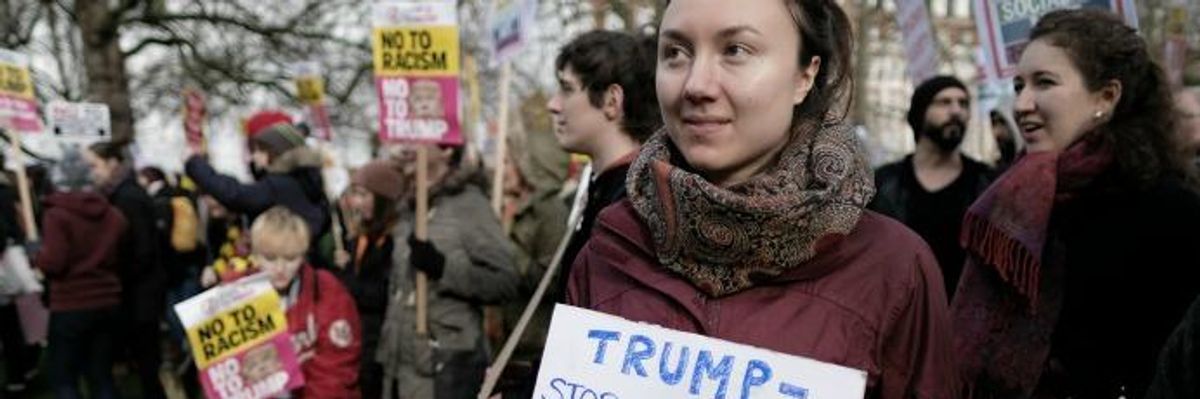
Within and beyond the United States, many have called on U.S. President Donald Trump to end the 16-year-old War on Terror. (Photo: Alisdare Hickson/Flickr/cc)
"The War on Terror was supposed to be about making our country safer. But as a Muslim American, I don't feel any safer," writes Maha Hilal, a professor and organizer, for Foreign Policy In Focus. Each year on September 11, in addition to mourning those killed in the 2001 attacks, she writes, "I also mourn the often forgotten victims of the never-ending wars and draconian counter-terrorism policies of the post-9/11 world: the Muslim community."
Hilal, a Muslim American who has lived in the United States for most of her life, describes what she learned in the wake of September 11, 2001:
Hilal also notes that although Muslims in the United States and abroad have much to fear from U.S. President Donald Trump's racist rhetoric and policies--such as the various iterations of the Muslim ban--the current president's words and actions have followed a path paved by his predecessors.
"While it's gotten worse under Trump, it's not something that started under him," she writes. "The Bush administration built the violent infrastructure of the war on terror, Obama expanded it, and Trump is simply building on it still."
Amid Trump's expansion of the war in Afghanistan, an increase in airstrikes by the U.S.-led coalition in Iraq and Syria--with estimates that the civilian death toll from bombings will double under Trump--and the administration's ongoing efforts to prevent Muslim refugees from entering the United States, the anniversary of the deadliest terror attack on American soil in U.S. history has motivated many to call for an abrupt end to the 16-year-old war.
"Any pretense that the U.S. intended to seek justice or increase world stability via its so-called War on Terror has been dramatically overshadowed by increased global resentment toward the U.S., which has in fact generated more terror attacks around the world," Dahr Jamail wrote for Truthout Monday.
"It is precisely this legacy that continues today: ongoing U.S. military violence abroad, increased domestic surveillance and repression at home, and a world more violent and less safe for all," Jamail added.
"We can still escape the endless and self-destructive War on Terror," Paul Rosenberg wrote for Salon on Sunday. "The key lies in resistance here at home."
On Monday, students at Amherst College hung a banner to express solidarity with Muslims impacted by policies that followed 9/11 and denounce the war.
Many turned to Twitter to express frustration with how Muslims are impacted by U.S. domestic and foreign policy, and to condemn the lengthy war.
Dear Common Dreams reader, It’s been nearly 30 years since I co-founded Common Dreams with my late wife, Lina Newhouser. We had the radical notion that journalism should serve the public good, not corporate profits. It was clear to us from the outset what it would take to build such a project. No paid advertisements. No corporate sponsors. No millionaire publisher telling us what to think or do. Many people said we wouldn't last a year, but we proved those doubters wrong. Together with a tremendous team of journalists and dedicated staff, we built an independent media outlet free from the constraints of profits and corporate control. Our mission has always been simple: To inform. To inspire. To ignite change for the common good. Building Common Dreams was not easy. Our survival was never guaranteed. When you take on the most powerful forces—Wall Street greed, fossil fuel industry destruction, Big Tech lobbyists, and uber-rich oligarchs who have spent billions upon billions rigging the economy and democracy in their favor—the only bulwark you have is supporters who believe in your work. But here’s the urgent message from me today. It's never been this bad out there. And it's never been this hard to keep us going. At the very moment Common Dreams is most needed, the threats we face are intensifying. We need your support now more than ever. We don't accept corporate advertising and never will. We don't have a paywall because we don't think people should be blocked from critical news based on their ability to pay. Everything we do is funded by the donations of readers like you. When everyone does the little they can afford, we are strong. But if that support retreats or dries up, so do we. Will you donate now to make sure Common Dreams not only survives but thrives? —Craig Brown, Co-founder |
"The War on Terror was supposed to be about making our country safer. But as a Muslim American, I don't feel any safer," writes Maha Hilal, a professor and organizer, for Foreign Policy In Focus. Each year on September 11, in addition to mourning those killed in the 2001 attacks, she writes, "I also mourn the often forgotten victims of the never-ending wars and draconian counter-terrorism policies of the post-9/11 world: the Muslim community."
Hilal, a Muslim American who has lived in the United States for most of her life, describes what she learned in the wake of September 11, 2001:
Hilal also notes that although Muslims in the United States and abroad have much to fear from U.S. President Donald Trump's racist rhetoric and policies--such as the various iterations of the Muslim ban--the current president's words and actions have followed a path paved by his predecessors.
"While it's gotten worse under Trump, it's not something that started under him," she writes. "The Bush administration built the violent infrastructure of the war on terror, Obama expanded it, and Trump is simply building on it still."
Amid Trump's expansion of the war in Afghanistan, an increase in airstrikes by the U.S.-led coalition in Iraq and Syria--with estimates that the civilian death toll from bombings will double under Trump--and the administration's ongoing efforts to prevent Muslim refugees from entering the United States, the anniversary of the deadliest terror attack on American soil in U.S. history has motivated many to call for an abrupt end to the 16-year-old war.
"Any pretense that the U.S. intended to seek justice or increase world stability via its so-called War on Terror has been dramatically overshadowed by increased global resentment toward the U.S., which has in fact generated more terror attacks around the world," Dahr Jamail wrote for Truthout Monday.
"It is precisely this legacy that continues today: ongoing U.S. military violence abroad, increased domestic surveillance and repression at home, and a world more violent and less safe for all," Jamail added.
"We can still escape the endless and self-destructive War on Terror," Paul Rosenberg wrote for Salon on Sunday. "The key lies in resistance here at home."
On Monday, students at Amherst College hung a banner to express solidarity with Muslims impacted by policies that followed 9/11 and denounce the war.
Many turned to Twitter to express frustration with how Muslims are impacted by U.S. domestic and foreign policy, and to condemn the lengthy war.
"The War on Terror was supposed to be about making our country safer. But as a Muslim American, I don't feel any safer," writes Maha Hilal, a professor and organizer, for Foreign Policy In Focus. Each year on September 11, in addition to mourning those killed in the 2001 attacks, she writes, "I also mourn the often forgotten victims of the never-ending wars and draconian counter-terrorism policies of the post-9/11 world: the Muslim community."
Hilal, a Muslim American who has lived in the United States for most of her life, describes what she learned in the wake of September 11, 2001:
Hilal also notes that although Muslims in the United States and abroad have much to fear from U.S. President Donald Trump's racist rhetoric and policies--such as the various iterations of the Muslim ban--the current president's words and actions have followed a path paved by his predecessors.
"While it's gotten worse under Trump, it's not something that started under him," she writes. "The Bush administration built the violent infrastructure of the war on terror, Obama expanded it, and Trump is simply building on it still."
Amid Trump's expansion of the war in Afghanistan, an increase in airstrikes by the U.S.-led coalition in Iraq and Syria--with estimates that the civilian death toll from bombings will double under Trump--and the administration's ongoing efforts to prevent Muslim refugees from entering the United States, the anniversary of the deadliest terror attack on American soil in U.S. history has motivated many to call for an abrupt end to the 16-year-old war.
"Any pretense that the U.S. intended to seek justice or increase world stability via its so-called War on Terror has been dramatically overshadowed by increased global resentment toward the U.S., which has in fact generated more terror attacks around the world," Dahr Jamail wrote for Truthout Monday.
"It is precisely this legacy that continues today: ongoing U.S. military violence abroad, increased domestic surveillance and repression at home, and a world more violent and less safe for all," Jamail added.
"We can still escape the endless and self-destructive War on Terror," Paul Rosenberg wrote for Salon on Sunday. "The key lies in resistance here at home."
On Monday, students at Amherst College hung a banner to express solidarity with Muslims impacted by policies that followed 9/11 and denounce the war.
Many turned to Twitter to express frustration with how Muslims are impacted by U.S. domestic and foreign policy, and to condemn the lengthy war.