Trump Administration Considering 'Back-Door Way' to Cut Social Security
'If Trump proposes this Trojan horse, it would be the newest shot in the ongoing Republican war against Social Security'
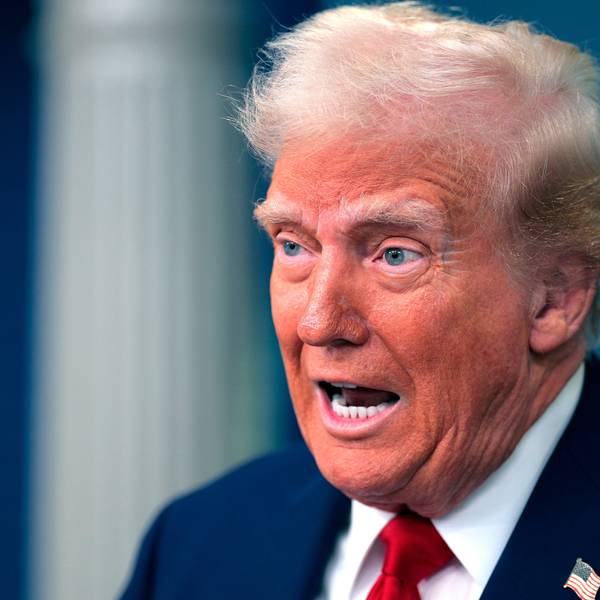
President Donald Trump, who campaigned on a promise not to cut Social Security, is reportedly considering a plan to eliminate much of the payroll tax that funds the critical safety net program.
According to the Associated Press on Monday, the proposal is being floated as the Trump administration goes "back to the drawing board in a search for Republican consensus behind legislation to overhaul the U.S. tax system."
The AP reported that one option "circulating this past week would change the House Republican plan to eliminate much of the payroll tax and cut corporate tax rates. This would require a new dedicated funding source for Social Security."
And that, Zaid Jilani wrote at The Intercept, "would require counting on Trump's economic team to shepherd a solution through Congress--and for Congress to treat Social Security unlike other 'discretionary' general-fund programs whose budgets rise and fall with political currents."
The AP continued:
The change, proposed by a GOP lobbyist with close ties to the Trump administration, would transform [Texas Republican Rep. Kevin] Brady's plan on imports into something closer to a value-added tax by also eliminating the deduction of labor expenses. This would bring it in line with WTO rules and generate an additional $12 trillion over 10 years, according to budget estimates. Those additional revenues could then enable the end of the 12.4 percent payroll tax, split evenly between employers and employees, that funds Social Security, while keeping the health insurance payroll tax in place.
This approach would give a worker earning $60,000 a year an additional $3,720 in take-home pay, a possible win that lawmakers could highlight back in their districts even though it would involve changing the funding mechanism for Social Security, according to the lobbyist, who asked for anonymity to discuss the proposal without disrupting early negotiations.
Although some billed this as a bipartisan solution, and President Barack Obama did temporarily cut the payroll tax after the Great Recession, others note it probably would run into firm opposition from Democrats who are loathe to be seen as undermining Social Security.
"Furthermore," Jilani noted, "the rumored mechanism for making up the lost funding...would hit workers the hardest."
A value-added tax "would increase the cost of goods and services," Jilani explained, citing Paul N. Van de Water, a senior fellow at the left-leaning Center for Budget and Policy Priorities, "arguably canceling out the value of the reduced payroll tax for most lower- and middle-class workers."
In a column on Monday, Michael Hiltzik of the Los Angeles Times described the plan as "an absolutely terrible idea, partially because it smells like a back-door way of cutting Social Security benefits. It needs to be nipped in the bud."
Indeed, Nancy Altman, president of the advocacy group Social Security Works, called the scheme "a Trojan horse: It appears to be a gift, in the form of middle class tax relief, but would, if enacted, lead to the destruction of working Americans' fundamental economic security."
She wrote on Tuesday:
If Trump proposes this Trojan horse, it would be the newest shot in the ongoing Republican war against Social Security. That war has failed so far. The American people overwhelmingly support Social Security because they appreciate that it provides working families with basic economic security when wages are lost as the result of death, disability, or old age. And it does so extremely efficiently, securely, fairly, and universally.
Having suffered defeat on their frontal attacks against Social Security, Trump and his Republican allies in Congress appear to be contemplating a stealth attack, instead. In the 1980s, Republicans, who had long tried but failed to cut government programs directly, discovered a new tactic. They realized that they could undermine government and eventually force cuts to spending by cutting taxes and, in their words, starve the beast. Now, Trump is making plans to use that same tactic against Social Security.
Of course, it's probably not Trump himself that's behind the proposal, but members of his cabinet who have been targeting safety net programs for years.
"Does Trump understand that Social Security is funded through payroll taxes?" wondered Daily Kos senior political writer Joan McCarter. "Does he even care? Nah. That's the detail stuff that he has people to understand. Those people, however, are undermining his promises. And if they actually try to go through with this? He might become the first president in history to have single-digit approval ratings."
Meanwhile, a proposal to expand and fortify Social Security was re-introduced in the U.S. House last week--with more co-sponsors than any such legislation has had before.
Urgent. It's never been this bad.
Dear Common Dreams reader, It’s been nearly 30 years since I co-founded Common Dreams with my late wife, Lina Newhouser. We had the radical notion that journalism should serve the public good, not corporate profits. It was clear to us from the outset what it would take to build such a project. No paid advertisements. No corporate sponsors. No millionaire publisher telling us what to think or do. Many people said we wouldn't last a year, but we proved those doubters wrong. Together with a tremendous team of journalists and dedicated staff, we built an independent media outlet free from the constraints of profits and corporate control. Our mission from the outset was simple. To inform. To inspire. To ignite change for the common good. Building Common Dreams was not easy. Our survival was never guaranteed. When you take on the most powerful forces—Wall Street greed, fossil fuel industry destruction, Big Tech lobbyists, and uber-rich oligarchs who have spent billions upon billions rigging the economy and democracy in their favor—the only bulwark you have is supporters who believe in your work. But here’s the urgent message from me today. It’s never been this bad out there. And it’s never been this hard to keep us going. At the very moment Common Dreams is most needed and doing some of its best and most important work, the threats we face are intensifying. Right now, with just three days to go in our Spring Campaign, we're falling short of our make-or-break goal. When everyone does the little they can afford, we are strong. But if that support retreats or dries up, so do we. Can you make a gift right now to make sure Common Dreams not only survives but thrives? There is no backup plan or rainy day fund. There is only you. —Craig Brown, Co-founder |
President Donald Trump, who campaigned on a promise not to cut Social Security, is reportedly considering a plan to eliminate much of the payroll tax that funds the critical safety net program.
According to the Associated Press on Monday, the proposal is being floated as the Trump administration goes "back to the drawing board in a search for Republican consensus behind legislation to overhaul the U.S. tax system."
The AP reported that one option "circulating this past week would change the House Republican plan to eliminate much of the payroll tax and cut corporate tax rates. This would require a new dedicated funding source for Social Security."
And that, Zaid Jilani wrote at The Intercept, "would require counting on Trump's economic team to shepherd a solution through Congress--and for Congress to treat Social Security unlike other 'discretionary' general-fund programs whose budgets rise and fall with political currents."
The AP continued:
The change, proposed by a GOP lobbyist with close ties to the Trump administration, would transform [Texas Republican Rep. Kevin] Brady's plan on imports into something closer to a value-added tax by also eliminating the deduction of labor expenses. This would bring it in line with WTO rules and generate an additional $12 trillion over 10 years, according to budget estimates. Those additional revenues could then enable the end of the 12.4 percent payroll tax, split evenly between employers and employees, that funds Social Security, while keeping the health insurance payroll tax in place.
This approach would give a worker earning $60,000 a year an additional $3,720 in take-home pay, a possible win that lawmakers could highlight back in their districts even though it would involve changing the funding mechanism for Social Security, according to the lobbyist, who asked for anonymity to discuss the proposal without disrupting early negotiations.
Although some billed this as a bipartisan solution, and President Barack Obama did temporarily cut the payroll tax after the Great Recession, others note it probably would run into firm opposition from Democrats who are loathe to be seen as undermining Social Security.
"Furthermore," Jilani noted, "the rumored mechanism for making up the lost funding...would hit workers the hardest."
A value-added tax "would increase the cost of goods and services," Jilani explained, citing Paul N. Van de Water, a senior fellow at the left-leaning Center for Budget and Policy Priorities, "arguably canceling out the value of the reduced payroll tax for most lower- and middle-class workers."
In a column on Monday, Michael Hiltzik of the Los Angeles Times described the plan as "an absolutely terrible idea, partially because it smells like a back-door way of cutting Social Security benefits. It needs to be nipped in the bud."
Indeed, Nancy Altman, president of the advocacy group Social Security Works, called the scheme "a Trojan horse: It appears to be a gift, in the form of middle class tax relief, but would, if enacted, lead to the destruction of working Americans' fundamental economic security."
She wrote on Tuesday:
If Trump proposes this Trojan horse, it would be the newest shot in the ongoing Republican war against Social Security. That war has failed so far. The American people overwhelmingly support Social Security because they appreciate that it provides working families with basic economic security when wages are lost as the result of death, disability, or old age. And it does so extremely efficiently, securely, fairly, and universally.
Having suffered defeat on their frontal attacks against Social Security, Trump and his Republican allies in Congress appear to be contemplating a stealth attack, instead. In the 1980s, Republicans, who had long tried but failed to cut government programs directly, discovered a new tactic. They realized that they could undermine government and eventually force cuts to spending by cutting taxes and, in their words, starve the beast. Now, Trump is making plans to use that same tactic against Social Security.
Of course, it's probably not Trump himself that's behind the proposal, but members of his cabinet who have been targeting safety net programs for years.
"Does Trump understand that Social Security is funded through payroll taxes?" wondered Daily Kos senior political writer Joan McCarter. "Does he even care? Nah. That's the detail stuff that he has people to understand. Those people, however, are undermining his promises. And if they actually try to go through with this? He might become the first president in history to have single-digit approval ratings."
Meanwhile, a proposal to expand and fortify Social Security was re-introduced in the U.S. House last week--with more co-sponsors than any such legislation has had before.
President Donald Trump, who campaigned on a promise not to cut Social Security, is reportedly considering a plan to eliminate much of the payroll tax that funds the critical safety net program.
According to the Associated Press on Monday, the proposal is being floated as the Trump administration goes "back to the drawing board in a search for Republican consensus behind legislation to overhaul the U.S. tax system."
The AP reported that one option "circulating this past week would change the House Republican plan to eliminate much of the payroll tax and cut corporate tax rates. This would require a new dedicated funding source for Social Security."
And that, Zaid Jilani wrote at The Intercept, "would require counting on Trump's economic team to shepherd a solution through Congress--and for Congress to treat Social Security unlike other 'discretionary' general-fund programs whose budgets rise and fall with political currents."
The AP continued:
The change, proposed by a GOP lobbyist with close ties to the Trump administration, would transform [Texas Republican Rep. Kevin] Brady's plan on imports into something closer to a value-added tax by also eliminating the deduction of labor expenses. This would bring it in line with WTO rules and generate an additional $12 trillion over 10 years, according to budget estimates. Those additional revenues could then enable the end of the 12.4 percent payroll tax, split evenly between employers and employees, that funds Social Security, while keeping the health insurance payroll tax in place.
This approach would give a worker earning $60,000 a year an additional $3,720 in take-home pay, a possible win that lawmakers could highlight back in their districts even though it would involve changing the funding mechanism for Social Security, according to the lobbyist, who asked for anonymity to discuss the proposal without disrupting early negotiations.
Although some billed this as a bipartisan solution, and President Barack Obama did temporarily cut the payroll tax after the Great Recession, others note it probably would run into firm opposition from Democrats who are loathe to be seen as undermining Social Security.
"Furthermore," Jilani noted, "the rumored mechanism for making up the lost funding...would hit workers the hardest."
A value-added tax "would increase the cost of goods and services," Jilani explained, citing Paul N. Van de Water, a senior fellow at the left-leaning Center for Budget and Policy Priorities, "arguably canceling out the value of the reduced payroll tax for most lower- and middle-class workers."
In a column on Monday, Michael Hiltzik of the Los Angeles Times described the plan as "an absolutely terrible idea, partially because it smells like a back-door way of cutting Social Security benefits. It needs to be nipped in the bud."
Indeed, Nancy Altman, president of the advocacy group Social Security Works, called the scheme "a Trojan horse: It appears to be a gift, in the form of middle class tax relief, but would, if enacted, lead to the destruction of working Americans' fundamental economic security."
She wrote on Tuesday:
If Trump proposes this Trojan horse, it would be the newest shot in the ongoing Republican war against Social Security. That war has failed so far. The American people overwhelmingly support Social Security because they appreciate that it provides working families with basic economic security when wages are lost as the result of death, disability, or old age. And it does so extremely efficiently, securely, fairly, and universally.
Having suffered defeat on their frontal attacks against Social Security, Trump and his Republican allies in Congress appear to be contemplating a stealth attack, instead. In the 1980s, Republicans, who had long tried but failed to cut government programs directly, discovered a new tactic. They realized that they could undermine government and eventually force cuts to spending by cutting taxes and, in their words, starve the beast. Now, Trump is making plans to use that same tactic against Social Security.
Of course, it's probably not Trump himself that's behind the proposal, but members of his cabinet who have been targeting safety net programs for years.
"Does Trump understand that Social Security is funded through payroll taxes?" wondered Daily Kos senior political writer Joan McCarter. "Does he even care? Nah. That's the detail stuff that he has people to understand. Those people, however, are undermining his promises. And if they actually try to go through with this? He might become the first president in history to have single-digit approval ratings."
Meanwhile, a proposal to expand and fortify Social Security was re-introduced in the U.S. House last week--with more co-sponsors than any such legislation has had before.