SUBSCRIBE TO OUR FREE NEWSLETTER
Daily news & progressive opinion—funded by the people, not the corporations—delivered straight to your inbox.
5
#000000
#FFFFFF
To donate by check, phone, or other method, see our More Ways to Give page.


Daily news & progressive opinion—funded by the people, not the corporations—delivered straight to your inbox.
Medicaid, the nation's healthcare program for the poor and disabled, is on the chopping block under President-elect Donald Trump and a Republican-controlled Congress--and it will take "intense focus by progressives" to ensure it doesn't meet a dire fate.
In fact, former National Economic Council director Gene B. Sperling wrote Sunday in a New York Times op-ed, "if Democrats focus too much of their attention on Medicare, they may inadvertently assist the quieter war on Medicaid--one that could deny health benefits to millions of children, seniors, working families, and people with disabilities."
As Democrats prepare for battles over the two programs, "the Republican effort to dismantle Medicaid is more certain," Sperling warned--a prediction echoed this week by multiple news outlets.
"Neither Mr. Trump nor Senate Republicans may have the stomach to fully own the political risks of Medicare privatization," he continued. "But not only have Speaker Paul D. Ryan and Tom Price, Mr. Trump's choice for secretary of health and human services, made proposals to deeply cut Medicaid through arbitrary block grants or 'per capita caps,' during the campaign, Mr. Trump has also proposed block grants."
Just this month, Vice President-elect Mike Pence told ABC: "With regard to Medicaid...there's a real opportunity, there's a real opportunity as we repeal and replace Obamacare to do exactly what the president-elect also said on the campaign, and that is block granting Medicaid back to the states."
Block-granting can mean funding cuts, The Hill explained:
Block grants would mean limiting federal Medicaid funds to a set amount given to the states, rather than the current federal commitment, which is more open-ended.
Indeed, Sperling pointed to 2012 study (pdf) from the Kaiser Family Foundation, which found that a Medicaid block-grant proposal from Speaker Ryan "would lead to 14 million to 21 million Americans losing their Medicaid coverage by the 10th year, and that is on top of the 13 million who would lose Medicaid or children's insurance program coverage under an [Affordable Care Act, or Obamacare] repeal."
A separate Center for Rural Affairs report (pdf), also from 2012, found that "changes in Medicaid are likely to have a disproportionate effect on rural areas."
Pence's tenure as governor of Indiana could provide more clues about where the critical safety net program is headed. As governor, Pence implemented a policy requiring poor Medicaid recipients to make monthly payments for their insurance, or else lose benefits.
"That idea could soon be going national," The Hill wrote, noting that "Trump's nominee to run the Centers for Medicare and Medicaid Services, Seema Verma, helped Pence develop the changes to Medicaid in Indiana."
While negotiating this arrangement, one federal official told NPR this week, Verma was "very committed to a particular ideology. That ideology is very much focused on personal responsibility."
In a statement following Verma's nomination, Physicians for a National Health Program president Robert Zarr said Verma's "actions in Indiana signal that she will inflict cruel and unusual punishment on America's most vulnerable citizens."
As Common Dreams reported, leading Democrats are planning nationwide rallies for January 15 to gird against this gutting of the U.S. healthcare system.

Dear Common Dreams reader, It’s been nearly 30 years since I co-founded Common Dreams with my late wife, Lina Newhouser. We had the radical notion that journalism should serve the public good, not corporate profits. It was clear to us from the outset what it would take to build such a project. No paid advertisements. No corporate sponsors. No millionaire publisher telling us what to think or do. Many people said we wouldn't last a year, but we proved those doubters wrong. Together with a tremendous team of journalists and dedicated staff, we built an independent media outlet free from the constraints of profits and corporate control. Our mission has always been simple: To inform. To inspire. To ignite change for the common good. Building Common Dreams was not easy. Our survival was never guaranteed. When you take on the most powerful forces—Wall Street greed, fossil fuel industry destruction, Big Tech lobbyists, and uber-rich oligarchs who have spent billions upon billions rigging the economy and democracy in their favor—the only bulwark you have is supporters who believe in your work. But here’s the urgent message from me today. It's never been this bad out there. And it's never been this hard to keep us going. At the very moment Common Dreams is most needed, the threats we face are intensifying. We need your support now more than ever. We don't accept corporate advertising and never will. We don't have a paywall because we don't think people should be blocked from critical news based on their ability to pay. Everything we do is funded by the donations of readers like you. When everyone does the little they can afford, we are strong. But if that support retreats or dries up, so do we. Will you donate now to make sure Common Dreams not only survives but thrives? —Craig Brown, Co-founder |
Medicaid, the nation's healthcare program for the poor and disabled, is on the chopping block under President-elect Donald Trump and a Republican-controlled Congress--and it will take "intense focus by progressives" to ensure it doesn't meet a dire fate.
In fact, former National Economic Council director Gene B. Sperling wrote Sunday in a New York Times op-ed, "if Democrats focus too much of their attention on Medicare, they may inadvertently assist the quieter war on Medicaid--one that could deny health benefits to millions of children, seniors, working families, and people with disabilities."
As Democrats prepare for battles over the two programs, "the Republican effort to dismantle Medicaid is more certain," Sperling warned--a prediction echoed this week by multiple news outlets.
"Neither Mr. Trump nor Senate Republicans may have the stomach to fully own the political risks of Medicare privatization," he continued. "But not only have Speaker Paul D. Ryan and Tom Price, Mr. Trump's choice for secretary of health and human services, made proposals to deeply cut Medicaid through arbitrary block grants or 'per capita caps,' during the campaign, Mr. Trump has also proposed block grants."
Just this month, Vice President-elect Mike Pence told ABC: "With regard to Medicaid...there's a real opportunity, there's a real opportunity as we repeal and replace Obamacare to do exactly what the president-elect also said on the campaign, and that is block granting Medicaid back to the states."
Block-granting can mean funding cuts, The Hill explained:
Block grants would mean limiting federal Medicaid funds to a set amount given to the states, rather than the current federal commitment, which is more open-ended.
Indeed, Sperling pointed to 2012 study (pdf) from the Kaiser Family Foundation, which found that a Medicaid block-grant proposal from Speaker Ryan "would lead to 14 million to 21 million Americans losing their Medicaid coverage by the 10th year, and that is on top of the 13 million who would lose Medicaid or children's insurance program coverage under an [Affordable Care Act, or Obamacare] repeal."
A separate Center for Rural Affairs report (pdf), also from 2012, found that "changes in Medicaid are likely to have a disproportionate effect on rural areas."
Pence's tenure as governor of Indiana could provide more clues about where the critical safety net program is headed. As governor, Pence implemented a policy requiring poor Medicaid recipients to make monthly payments for their insurance, or else lose benefits.
"That idea could soon be going national," The Hill wrote, noting that "Trump's nominee to run the Centers for Medicare and Medicaid Services, Seema Verma, helped Pence develop the changes to Medicaid in Indiana."
While negotiating this arrangement, one federal official told NPR this week, Verma was "very committed to a particular ideology. That ideology is very much focused on personal responsibility."
In a statement following Verma's nomination, Physicians for a National Health Program president Robert Zarr said Verma's "actions in Indiana signal that she will inflict cruel and unusual punishment on America's most vulnerable citizens."
As Common Dreams reported, leading Democrats are planning nationwide rallies for January 15 to gird against this gutting of the U.S. healthcare system.
Medicaid, the nation's healthcare program for the poor and disabled, is on the chopping block under President-elect Donald Trump and a Republican-controlled Congress--and it will take "intense focus by progressives" to ensure it doesn't meet a dire fate.
In fact, former National Economic Council director Gene B. Sperling wrote Sunday in a New York Times op-ed, "if Democrats focus too much of their attention on Medicare, they may inadvertently assist the quieter war on Medicaid--one that could deny health benefits to millions of children, seniors, working families, and people with disabilities."
As Democrats prepare for battles over the two programs, "the Republican effort to dismantle Medicaid is more certain," Sperling warned--a prediction echoed this week by multiple news outlets.
"Neither Mr. Trump nor Senate Republicans may have the stomach to fully own the political risks of Medicare privatization," he continued. "But not only have Speaker Paul D. Ryan and Tom Price, Mr. Trump's choice for secretary of health and human services, made proposals to deeply cut Medicaid through arbitrary block grants or 'per capita caps,' during the campaign, Mr. Trump has also proposed block grants."
Just this month, Vice President-elect Mike Pence told ABC: "With regard to Medicaid...there's a real opportunity, there's a real opportunity as we repeal and replace Obamacare to do exactly what the president-elect also said on the campaign, and that is block granting Medicaid back to the states."
Block-granting can mean funding cuts, The Hill explained:
Block grants would mean limiting federal Medicaid funds to a set amount given to the states, rather than the current federal commitment, which is more open-ended.
Indeed, Sperling pointed to 2012 study (pdf) from the Kaiser Family Foundation, which found that a Medicaid block-grant proposal from Speaker Ryan "would lead to 14 million to 21 million Americans losing their Medicaid coverage by the 10th year, and that is on top of the 13 million who would lose Medicaid or children's insurance program coverage under an [Affordable Care Act, or Obamacare] repeal."
A separate Center for Rural Affairs report (pdf), also from 2012, found that "changes in Medicaid are likely to have a disproportionate effect on rural areas."
Pence's tenure as governor of Indiana could provide more clues about where the critical safety net program is headed. As governor, Pence implemented a policy requiring poor Medicaid recipients to make monthly payments for their insurance, or else lose benefits.
"That idea could soon be going national," The Hill wrote, noting that "Trump's nominee to run the Centers for Medicare and Medicaid Services, Seema Verma, helped Pence develop the changes to Medicaid in Indiana."
While negotiating this arrangement, one federal official told NPR this week, Verma was "very committed to a particular ideology. That ideology is very much focused on personal responsibility."
In a statement following Verma's nomination, Physicians for a National Health Program president Robert Zarr said Verma's "actions in Indiana signal that she will inflict cruel and unusual punishment on America's most vulnerable citizens."
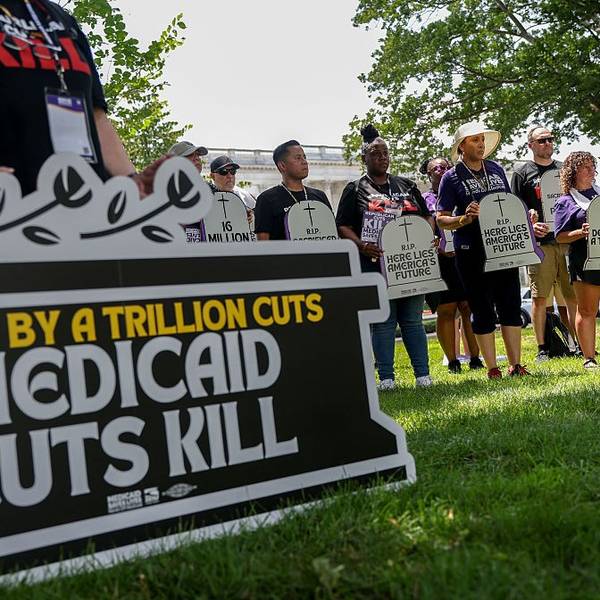
As Common Dreams reported, leading Democrats are planning nationwide rallies for January 15 to gird against this gutting of the U.S. healthcare system.