SUBSCRIBE TO OUR FREE NEWSLETTER
Daily news & progressive opinion—funded by the people, not the corporations—delivered straight to your inbox.
5
#000000
#FFFFFF
To donate by check, phone, or other method, see our More Ways to Give page.
Daily news & progressive opinion—funded by the people, not the corporations—delivered straight to your inbox.
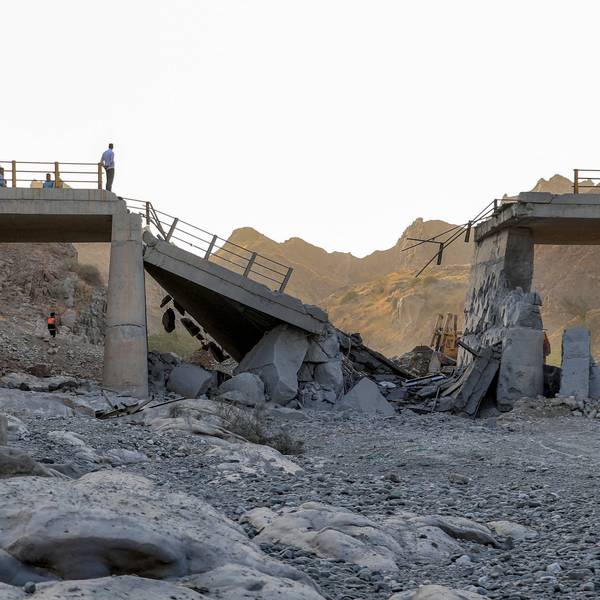
Opposition is growing on Capitol Hill and beyond to the U.S. government's planned sale of $1.15 billion worth of weapons to Saudi Arabia, whose U.S.-backed coalition has wreaked devastation and displacement on the Yemeni population.
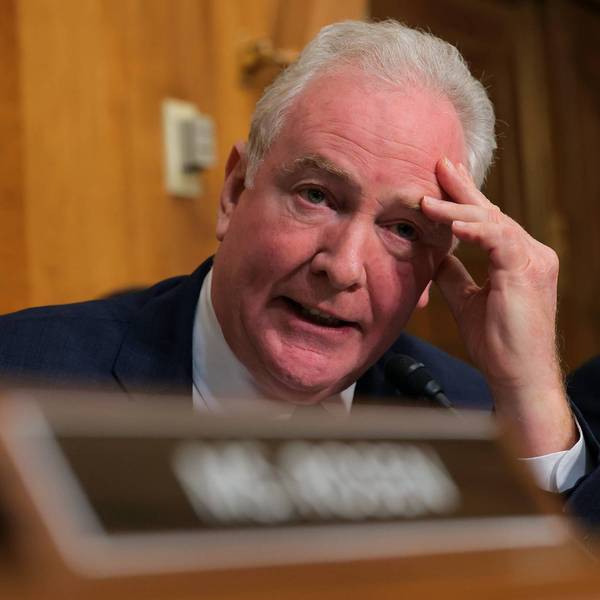
Citing "multiple congressional aides," Foreign Policy reported Wednesday that "Republican Sen. Rand Paul of Kentucky and Democratic Sen. Chris Murphy of Connecticut are preparing legislation, to be filed this week, opposing the U.S. package of tanks, ammunition, and machine guns to Saudi Arabia."
According to Foreign Policy :
The measure is expected to take the form of a non-binding resolution of disapproval that would receive a floor vote in about two weeks. But the two senators are also considering binding legislation that would block the proposed sale if they sense that the measure would pass, according to congressional aides.
This comes on the heels of a letter penned last week by a bipartisan group of 64 House members, calling on the White House "to withdraw the request for congressional approval for the sale until Congress can fully debate American military support for the Saudis," as CNN reported.
Lawmakers may have a little more breathing room to do so than they initially anticipated.
As Foreign Policy explains:
Generally, Congress has 30 days to block the sale of similar military packages of this type, meaning the clock technically could run out as soon as Thursday, as House parliamentarians believe. But Senate experts say the 30 calendar-day deadline does not apply to the upper chamber because it was adjourned for the summer recess.
And political momentum appears to be growing. In a piece published at Common Dreams this week, Robert Naiman of Just Foreign Policy outlined "four key pieces of evidence that opposing the Saudi arms deal is not futile":
1. On August 17, the New York Times editorial board called for Congress to block the deal. Former Obama Administration official Bruce Riedel says the NYT editorial "got considerable attention in the royal family."
2. On June 16, 49 percent of the House, including 91 percent of Democrats and 17 percent of Republicans, voted to block the transfer of cluster bombs to Saudi Arabia.
3. On August 31, it was reported that Textron, which had the contract to export cluster bombs to Saudi Arabia, had announced it was getting out of the cluster bomb business, citing opposition in Congress to exporting the weapons to Saudi Arabia.
4. On August 29, 64 Members of the House sent a bipartisan letter to the Administration urging that the Saudi arms deal be postponed.
Multiple petitions are also circulating online, to similar ends.
But as author and arms trade expert William Hartung wrote in a policy brief released Wednesday, "The tank deal is just one small portion of the tens of billions worth of U.S. arms that have been offered to Saudi Arabia since the beginning of the Obama administration."
To be sure, he said, "[t]he salience of the deal derives from its timing, in the midst of Saudi-led intervention in Yemen that has had devastating effects on civilians in that country."
"As long as American tanks and bombs are involved in the conflict, more lives will be lost."
--Scott Paul, Oxfam
"The debate over the deal is about more than just tanks," Hartung argued. "It is about whether the United States will continue to fuel the Saudi war effort without demanding, at a minimum, that the Saudis demonstrate a serious commitment to preventing civilian casualties."
"It's time for the Obama administration to use the best leverage it has--Saudi Arabia's dependence on U.S. weapons and support--to wage the war in Yemen in the first place," Hartung told Reuters on Wednesday. "Pulling back the current offer of battle tanks or freezing some of the tens of billions in weapons and services in the pipeline would send a strong signal to the Saudi leadership that they need stop their indiscriminate bombing campaign and take real steps to prevent civilian casualties."
Indeed, as Oxfam senior humanitarian policy advisor Scott Paul said this week after returning from Yemen: "As long as American tanks and bombs are involved in the conflict, more lives will be lost. Throughout my visit, I was asked repeatedly why the U.S. is bombing Yemen. We're technically not, but we're supporting the Saudi-led coalition that is. I didn't have a good answer."
Meanwhile, the Guardian reports that in the U.K., a "concerted attempt has been mounted to water down" a draft report from the Committee of Arms Export Controls that would recommend halting that country's arms trade with Saudi Arabia.
According to Reuters, at least nine civilians, including four children, were killed Thursday in an airstrike by the Saudi-led coalition on a residential building north of the Yemeni capital Sana'a.
Dear Common Dreams reader, It’s been nearly 30 years since I co-founded Common Dreams with my late wife, Lina Newhouser. We had the radical notion that journalism should serve the public good, not corporate profits. It was clear to us from the outset what it would take to build such a project. No paid advertisements. No corporate sponsors. No millionaire publisher telling us what to think or do. Many people said we wouldn't last a year, but we proved those doubters wrong. Together with a tremendous team of journalists and dedicated staff, we built an independent media outlet free from the constraints of profits and corporate control. Our mission has always been simple: To inform. To inspire. To ignite change for the common good. Building Common Dreams was not easy. Our survival was never guaranteed. When you take on the most powerful forces—Wall Street greed, fossil fuel industry destruction, Big Tech lobbyists, and uber-rich oligarchs who have spent billions upon billions rigging the economy and democracy in their favor—the only bulwark you have is supporters who believe in your work. But here’s the urgent message from me today. It's never been this bad out there. And it's never been this hard to keep us going. At the very moment Common Dreams is most needed, the threats we face are intensifying. We need your support now more than ever. We don't accept corporate advertising and never will. We don't have a paywall because we don't think people should be blocked from critical news based on their ability to pay. Everything we do is funded by the donations of readers like you. When everyone does the little they can afford, we are strong. But if that support retreats or dries up, so do we. Will you donate now to make sure Common Dreams not only survives but thrives? —Craig Brown, Co-founder |
Opposition is growing on Capitol Hill and beyond to the U.S. government's planned sale of $1.15 billion worth of weapons to Saudi Arabia, whose U.S.-backed coalition has wreaked devastation and displacement on the Yemeni population.
Citing "multiple congressional aides," Foreign Policy reported Wednesday that "Republican Sen. Rand Paul of Kentucky and Democratic Sen. Chris Murphy of Connecticut are preparing legislation, to be filed this week, opposing the U.S. package of tanks, ammunition, and machine guns to Saudi Arabia."
According to Foreign Policy :
The measure is expected to take the form of a non-binding resolution of disapproval that would receive a floor vote in about two weeks. But the two senators are also considering binding legislation that would block the proposed sale if they sense that the measure would pass, according to congressional aides.
This comes on the heels of a letter penned last week by a bipartisan group of 64 House members, calling on the White House "to withdraw the request for congressional approval for the sale until Congress can fully debate American military support for the Saudis," as CNN reported.
Lawmakers may have a little more breathing room to do so than they initially anticipated.
As Foreign Policy explains:
Generally, Congress has 30 days to block the sale of similar military packages of this type, meaning the clock technically could run out as soon as Thursday, as House parliamentarians believe. But Senate experts say the 30 calendar-day deadline does not apply to the upper chamber because it was adjourned for the summer recess.
And political momentum appears to be growing. In a piece published at Common Dreams this week, Robert Naiman of Just Foreign Policy outlined "four key pieces of evidence that opposing the Saudi arms deal is not futile":
1. On August 17, the New York Times editorial board called for Congress to block the deal. Former Obama Administration official Bruce Riedel says the NYT editorial "got considerable attention in the royal family."
2. On June 16, 49 percent of the House, including 91 percent of Democrats and 17 percent of Republicans, voted to block the transfer of cluster bombs to Saudi Arabia.
3. On August 31, it was reported that Textron, which had the contract to export cluster bombs to Saudi Arabia, had announced it was getting out of the cluster bomb business, citing opposition in Congress to exporting the weapons to Saudi Arabia.
4. On August 29, 64 Members of the House sent a bipartisan letter to the Administration urging that the Saudi arms deal be postponed.
Multiple petitions are also circulating online, to similar ends.
But as author and arms trade expert William Hartung wrote in a policy brief released Wednesday, "The tank deal is just one small portion of the tens of billions worth of U.S. arms that have been offered to Saudi Arabia since the beginning of the Obama administration."
To be sure, he said, "[t]he salience of the deal derives from its timing, in the midst of Saudi-led intervention in Yemen that has had devastating effects on civilians in that country."
"As long as American tanks and bombs are involved in the conflict, more lives will be lost."
--Scott Paul, Oxfam
"The debate over the deal is about more than just tanks," Hartung argued. "It is about whether the United States will continue to fuel the Saudi war effort without demanding, at a minimum, that the Saudis demonstrate a serious commitment to preventing civilian casualties."
"It's time for the Obama administration to use the best leverage it has--Saudi Arabia's dependence on U.S. weapons and support--to wage the war in Yemen in the first place," Hartung told Reuters on Wednesday. "Pulling back the current offer of battle tanks or freezing some of the tens of billions in weapons and services in the pipeline would send a strong signal to the Saudi leadership that they need stop their indiscriminate bombing campaign and take real steps to prevent civilian casualties."
Indeed, as Oxfam senior humanitarian policy advisor Scott Paul said this week after returning from Yemen: "As long as American tanks and bombs are involved in the conflict, more lives will be lost. Throughout my visit, I was asked repeatedly why the U.S. is bombing Yemen. We're technically not, but we're supporting the Saudi-led coalition that is. I didn't have a good answer."
Meanwhile, the Guardian reports that in the U.K., a "concerted attempt has been mounted to water down" a draft report from the Committee of Arms Export Controls that would recommend halting that country's arms trade with Saudi Arabia.
According to Reuters, at least nine civilians, including four children, were killed Thursday in an airstrike by the Saudi-led coalition on a residential building north of the Yemeni capital Sana'a.
Opposition is growing on Capitol Hill and beyond to the U.S. government's planned sale of $1.15 billion worth of weapons to Saudi Arabia, whose U.S.-backed coalition has wreaked devastation and displacement on the Yemeni population.
Citing "multiple congressional aides," Foreign Policy reported Wednesday that "Republican Sen. Rand Paul of Kentucky and Democratic Sen. Chris Murphy of Connecticut are preparing legislation, to be filed this week, opposing the U.S. package of tanks, ammunition, and machine guns to Saudi Arabia."
According to Foreign Policy :
The measure is expected to take the form of a non-binding resolution of disapproval that would receive a floor vote in about two weeks. But the two senators are also considering binding legislation that would block the proposed sale if they sense that the measure would pass, according to congressional aides.
This comes on the heels of a letter penned last week by a bipartisan group of 64 House members, calling on the White House "to withdraw the request for congressional approval for the sale until Congress can fully debate American military support for the Saudis," as CNN reported.
Lawmakers may have a little more breathing room to do so than they initially anticipated.
As Foreign Policy explains:
Generally, Congress has 30 days to block the sale of similar military packages of this type, meaning the clock technically could run out as soon as Thursday, as House parliamentarians believe. But Senate experts say the 30 calendar-day deadline does not apply to the upper chamber because it was adjourned for the summer recess.
And political momentum appears to be growing. In a piece published at Common Dreams this week, Robert Naiman of Just Foreign Policy outlined "four key pieces of evidence that opposing the Saudi arms deal is not futile":
1. On August 17, the New York Times editorial board called for Congress to block the deal. Former Obama Administration official Bruce Riedel says the NYT editorial "got considerable attention in the royal family."
2. On June 16, 49 percent of the House, including 91 percent of Democrats and 17 percent of Republicans, voted to block the transfer of cluster bombs to Saudi Arabia.
3. On August 31, it was reported that Textron, which had the contract to export cluster bombs to Saudi Arabia, had announced it was getting out of the cluster bomb business, citing opposition in Congress to exporting the weapons to Saudi Arabia.
4. On August 29, 64 Members of the House sent a bipartisan letter to the Administration urging that the Saudi arms deal be postponed.
Multiple petitions are also circulating online, to similar ends.
But as author and arms trade expert William Hartung wrote in a policy brief released Wednesday, "The tank deal is just one small portion of the tens of billions worth of U.S. arms that have been offered to Saudi Arabia since the beginning of the Obama administration."
To be sure, he said, "[t]he salience of the deal derives from its timing, in the midst of Saudi-led intervention in Yemen that has had devastating effects on civilians in that country."
"As long as American tanks and bombs are involved in the conflict, more lives will be lost."
--Scott Paul, Oxfam
"The debate over the deal is about more than just tanks," Hartung argued. "It is about whether the United States will continue to fuel the Saudi war effort without demanding, at a minimum, that the Saudis demonstrate a serious commitment to preventing civilian casualties."
"It's time for the Obama administration to use the best leverage it has--Saudi Arabia's dependence on U.S. weapons and support--to wage the war in Yemen in the first place," Hartung told Reuters on Wednesday. "Pulling back the current offer of battle tanks or freezing some of the tens of billions in weapons and services in the pipeline would send a strong signal to the Saudi leadership that they need stop their indiscriminate bombing campaign and take real steps to prevent civilian casualties."
Indeed, as Oxfam senior humanitarian policy advisor Scott Paul said this week after returning from Yemen: "As long as American tanks and bombs are involved in the conflict, more lives will be lost. Throughout my visit, I was asked repeatedly why the U.S. is bombing Yemen. We're technically not, but we're supporting the Saudi-led coalition that is. I didn't have a good answer."
Meanwhile, the Guardian reports that in the U.K., a "concerted attempt has been mounted to water down" a draft report from the Committee of Arms Export Controls that would recommend halting that country's arms trade with Saudi Arabia.
According to Reuters, at least nine civilians, including four children, were killed Thursday in an airstrike by the Saudi-led coalition on a residential building north of the Yemeni capital Sana'a.