SUBSCRIBE TO OUR FREE NEWSLETTER
Daily news & progressive opinion—funded by the people, not the corporations—delivered straight to your inbox.
5
#000000
#FFFFFF
To donate by check, phone, or other method, see our More Ways to Give page.
Daily news & progressive opinion—funded by the people, not the corporations—delivered straight to your inbox.
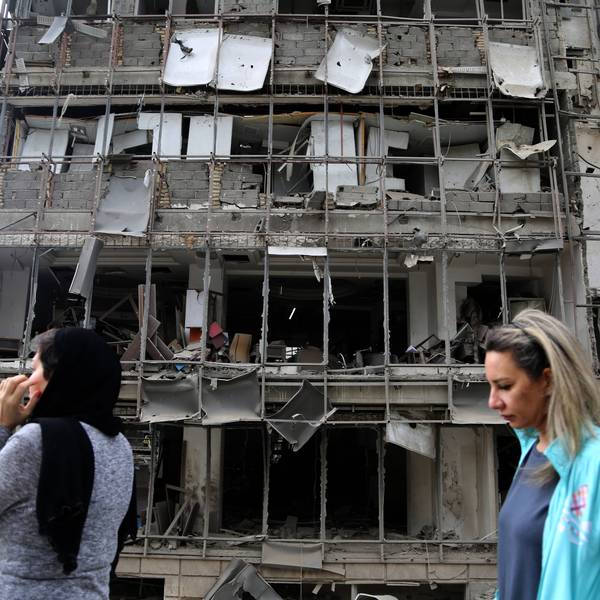
The Saudi-led military campaign that has indiscriminately killed nearly 4,000 Yemeni civilians, is the driving force behind massive humanitarian and refugee crises, and has been accused of war crimes, has not breached international law sufficiently for the United Kingdom to cease selling munitions to the Gulf nation--at least according to British foreign secretary Boris Johnson.
As members of Parliament prepare this week to debate whether to impose an arms ban on Saudi Arabia in light of the aforementioned allegations, the newly-appointed Johnson submitted a letter Monday arguing that there has been no "serious breach" of law.
"The key test for our continued arms exports to Saudi Arabia in relation to international humanitarian law is whether those weapons might be used in a commission of a serious breach of international humanitarian law," he wrote. "Having regard to all the information available to us, we assess this test has not been met."
According to the Guardian, Johnson's conclusion was "based largely on an Saudi-led inquiry into eight controversial incidents, including the bombing of hospitals. The report, published on 4 August, largely defended the bombing runs on the basis that the Saudis had received credible intelligence that enemy Houthi forces were in the area. In one case it offered compensation to the victims."
Despite documented instances where the Saudi-led coalition has targeted civilians in Yemen, munitions have continued to flow from both the U.K. and the United States.
Since the bombing campaign began last year, the U.K. alone supplied $2.8bn in weapons and provided training for Saudi forces.
Late last month, the international watchdog Control Arms Coalition (CAC) blasted western governments, particularly those that have ratified the Arms Trade Treaty (ATT), for their complicity in the carnage.
"The ATT has been in force for nearly two years but some States Parties are violating it with impunity," CAC director Anna Macdonald said at the time. "Every day, we are seeing the devastating impact of the sale of arms and ammunition for use on civilians in Yemen."
An arms embargo against Saudi Arabia is a move that has been championed by civil society as well as embattled Labour leader Jeremy Corbyn, who during a debate last month advocated for a "policy and strategy of preventing wars."
"You don't do that by selling arms to oppressive regimes like Saudi Arabia," The Mirror reported him as saying, "but you do do that by having a foreign policy based on human rights around the world."
Dear Common Dreams reader, It’s been nearly 30 years since I co-founded Common Dreams with my late wife, Lina Newhouser. We had the radical notion that journalism should serve the public good, not corporate profits. It was clear to us from the outset what it would take to build such a project. No paid advertisements. No corporate sponsors. No millionaire publisher telling us what to think or do. Many people said we wouldn't last a year, but we proved those doubters wrong. Together with a tremendous team of journalists and dedicated staff, we built an independent media outlet free from the constraints of profits and corporate control. Our mission has always been simple: To inform. To inspire. To ignite change for the common good. Building Common Dreams was not easy. Our survival was never guaranteed. When you take on the most powerful forces—Wall Street greed, fossil fuel industry destruction, Big Tech lobbyists, and uber-rich oligarchs who have spent billions upon billions rigging the economy and democracy in their favor—the only bulwark you have is supporters who believe in your work. But here’s the urgent message from me today. It's never been this bad out there. And it's never been this hard to keep us going. At the very moment Common Dreams is most needed, the threats we face are intensifying. We need your support now more than ever. We don't accept corporate advertising and never will. We don't have a paywall because we don't think people should be blocked from critical news based on their ability to pay. Everything we do is funded by the donations of readers like you. When everyone does the little they can afford, we are strong. But if that support retreats or dries up, so do we. Will you donate now to make sure Common Dreams not only survives but thrives? —Craig Brown, Co-founder |
The Saudi-led military campaign that has indiscriminately killed nearly 4,000 Yemeni civilians, is the driving force behind massive humanitarian and refugee crises, and has been accused of war crimes, has not breached international law sufficiently for the United Kingdom to cease selling munitions to the Gulf nation--at least according to British foreign secretary Boris Johnson.
As members of Parliament prepare this week to debate whether to impose an arms ban on Saudi Arabia in light of the aforementioned allegations, the newly-appointed Johnson submitted a letter Monday arguing that there has been no "serious breach" of law.
"The key test for our continued arms exports to Saudi Arabia in relation to international humanitarian law is whether those weapons might be used in a commission of a serious breach of international humanitarian law," he wrote. "Having regard to all the information available to us, we assess this test has not been met."
According to the Guardian, Johnson's conclusion was "based largely on an Saudi-led inquiry into eight controversial incidents, including the bombing of hospitals. The report, published on 4 August, largely defended the bombing runs on the basis that the Saudis had received credible intelligence that enemy Houthi forces were in the area. In one case it offered compensation to the victims."
Despite documented instances where the Saudi-led coalition has targeted civilians in Yemen, munitions have continued to flow from both the U.K. and the United States.
Since the bombing campaign began last year, the U.K. alone supplied $2.8bn in weapons and provided training for Saudi forces.
Late last month, the international watchdog Control Arms Coalition (CAC) blasted western governments, particularly those that have ratified the Arms Trade Treaty (ATT), for their complicity in the carnage.
"The ATT has been in force for nearly two years but some States Parties are violating it with impunity," CAC director Anna Macdonald said at the time. "Every day, we are seeing the devastating impact of the sale of arms and ammunition for use on civilians in Yemen."
An arms embargo against Saudi Arabia is a move that has been championed by civil society as well as embattled Labour leader Jeremy Corbyn, who during a debate last month advocated for a "policy and strategy of preventing wars."
"You don't do that by selling arms to oppressive regimes like Saudi Arabia," The Mirror reported him as saying, "but you do do that by having a foreign policy based on human rights around the world."
The Saudi-led military campaign that has indiscriminately killed nearly 4,000 Yemeni civilians, is the driving force behind massive humanitarian and refugee crises, and has been accused of war crimes, has not breached international law sufficiently for the United Kingdom to cease selling munitions to the Gulf nation--at least according to British foreign secretary Boris Johnson.
As members of Parliament prepare this week to debate whether to impose an arms ban on Saudi Arabia in light of the aforementioned allegations, the newly-appointed Johnson submitted a letter Monday arguing that there has been no "serious breach" of law.
"The key test for our continued arms exports to Saudi Arabia in relation to international humanitarian law is whether those weapons might be used in a commission of a serious breach of international humanitarian law," he wrote. "Having regard to all the information available to us, we assess this test has not been met."
According to the Guardian, Johnson's conclusion was "based largely on an Saudi-led inquiry into eight controversial incidents, including the bombing of hospitals. The report, published on 4 August, largely defended the bombing runs on the basis that the Saudis had received credible intelligence that enemy Houthi forces were in the area. In one case it offered compensation to the victims."
Despite documented instances where the Saudi-led coalition has targeted civilians in Yemen, munitions have continued to flow from both the U.K. and the United States.
Since the bombing campaign began last year, the U.K. alone supplied $2.8bn in weapons and provided training for Saudi forces.
Late last month, the international watchdog Control Arms Coalition (CAC) blasted western governments, particularly those that have ratified the Arms Trade Treaty (ATT), for their complicity in the carnage.
"The ATT has been in force for nearly two years but some States Parties are violating it with impunity," CAC director Anna Macdonald said at the time. "Every day, we are seeing the devastating impact of the sale of arms and ammunition for use on civilians in Yemen."
An arms embargo against Saudi Arabia is a move that has been championed by civil society as well as embattled Labour leader Jeremy Corbyn, who during a debate last month advocated for a "policy and strategy of preventing wars."
"You don't do that by selling arms to oppressive regimes like Saudi Arabia," The Mirror reported him as saying, "but you do do that by having a foreign policy based on human rights around the world."