SUBSCRIBE TO OUR FREE NEWSLETTER
Daily news & progressive opinion—funded by the people, not the corporations—delivered straight to your inbox.
5
#000000
#FFFFFF
To donate by check, phone, or other method, see our More Ways to Give page.
Daily news & progressive opinion—funded by the people, not the corporations—delivered straight to your inbox.
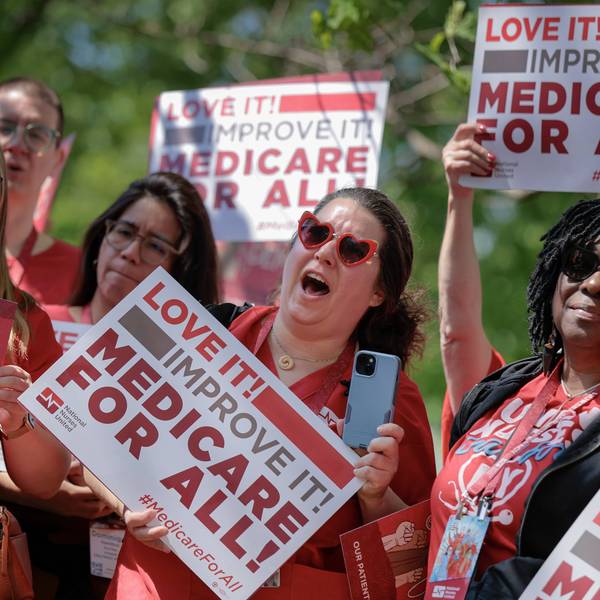
Highlighting the divisions in the Democratic party this election, Colorado's ballot measure for a universal, single-payer healthcare plan is facing unexpected resistance from the very same party that has been calling for such a healthcare plan since the 1990s.
"There is a disconnect between the powers that be and the people," said state senator Irene Aguilar, a former doctor and the chief architect of the statewide 'Medicare-for-all,' called ColoradoCare, in an interview with the Guardian. "The powers that be are incrementalists. There hasn't been a courage of conviction to try and deal with [healthcare coverage]."
If it passes, ColoradoCare would make Colorado the first state in the nation with universal healthcare.
Most Americans support replacing Obamacare with a single-payer system, and Bernie Sanders has made his support for universal healthcare a central pillar of his presidential campaign. His rival Hillary Clinton, on the other hand, continues to support the least popular position of maintaining the Affordable Care Act (ACA) with only incremental and modest changes.
Clinton's position is echoed by establishment Democrats in Colorado, including Clinton supporter and former governor Bill Ritter, who argued to the Guardian that ColoradoCare was not "practical or feasible."
"Colorado could lead the nation in moving toward a system to ensure better health care for more people at less cost."
--Sen. Bernie SandersJohn Hickenlooper, the state's current governor another prominent pro-Clinton Democrat, said in a statement, "Our reforms are just beginning to bear fruit and it would be premature to dramatically remake our health care system at this time."
(Hickenlooper is in fact so close to Clinton that he may be on the campaign's shortlist for a vice presidential pick, according to The Hill.)
Clinton's campaign is directly linked to Coloradans for Coloradans, the most prominent organization opposing ColoradoCare. Formed solely to defeat the measure, Coloradans for Coloradans is being funded by the very same consultant firm currently working for the Clinton super PAC Priorities USA, as Lee Fang reported in the Intercept.
While a stance for the ACA and against single payer is the least popular with the public, it is the most popular within a certain sector of the population: pharmaceutical and healthcare companies.
Indeed, in Colorado the "anti-single-payer effort is funded almost entirely by health care industry interests," Fang reported, "including $500,000 from Anthem Inc., the state's largest health insurance provider; $40,000 from Cigna, another large health insurer that is current in talks to merge with Anthem; $75,000 from Davita, the dialysis company; $25,000 from Delta Dental, the largest dental insurer in the state; and $100,000 from SCL Health, the faith-based hospital chain."
Moreover, Clinton herself "has received $13.2m in donations from the health sector over the years, according to nonpartisan Center for Responsive Politics. This well-funded industry is also the chief financial backer of the effort to destroy ColoradoCare," notes the Guardian.
"There is huge money from the [health insurance] industry involved in financing not only the campaign against ColoradoCare, but also in financing the politicians who decide on health care legislation," Owen Perkins, communications director for ColoradoCareYes, a group advocating for the ballot measure, told the Guardian.
"The role that big money, big medicine plays in funding campaigns and influencing political votes is certainly a good reason to take [healthcare] out of the insurance industry and politicians and put it in the hands of the people," Perkins added.
While the health sector pours funds into the fight against single payer, ColoradoCareYes told the Guardian that their fight for universal healthcare is being funded largely by small, individual donors--much like Sanders' presidential run, which has made its average donation of $27 into a touchstone of the campaign.
Sanders himself has lent support to the ballot measure. In a statement to the Colorado Independent, Sanders said, "Colorado could lead the nation in moving toward a system to ensure better health care for more people at less cost. In the richest nation on earth, we should make health care a right for all citizens. No one should go bankrupt or skip getting the care they need because they cannot afford it."
Dear Common Dreams reader, It’s been nearly 30 years since I co-founded Common Dreams with my late wife, Lina Newhouser. We had the radical notion that journalism should serve the public good, not corporate profits. It was clear to us from the outset what it would take to build such a project. No paid advertisements. No corporate sponsors. No millionaire publisher telling us what to think or do. Many people said we wouldn't last a year, but we proved those doubters wrong. Together with a tremendous team of journalists and dedicated staff, we built an independent media outlet free from the constraints of profits and corporate control. Our mission has always been simple: To inform. To inspire. To ignite change for the common good. Building Common Dreams was not easy. Our survival was never guaranteed. When you take on the most powerful forces—Wall Street greed, fossil fuel industry destruction, Big Tech lobbyists, and uber-rich oligarchs who have spent billions upon billions rigging the economy and democracy in their favor—the only bulwark you have is supporters who believe in your work. But here’s the urgent message from me today. It's never been this bad out there. And it's never been this hard to keep us going. At the very moment Common Dreams is most needed, the threats we face are intensifying. We need your support now more than ever. We don't accept corporate advertising and never will. We don't have a paywall because we don't think people should be blocked from critical news based on their ability to pay. Everything we do is funded by the donations of readers like you. When everyone does the little they can afford, we are strong. But if that support retreats or dries up, so do we. Will you donate now to make sure Common Dreams not only survives but thrives? —Craig Brown, Co-founder |
Highlighting the divisions in the Democratic party this election, Colorado's ballot measure for a universal, single-payer healthcare plan is facing unexpected resistance from the very same party that has been calling for such a healthcare plan since the 1990s.
"There is a disconnect between the powers that be and the people," said state senator Irene Aguilar, a former doctor and the chief architect of the statewide 'Medicare-for-all,' called ColoradoCare, in an interview with the Guardian. "The powers that be are incrementalists. There hasn't been a courage of conviction to try and deal with [healthcare coverage]."
If it passes, ColoradoCare would make Colorado the first state in the nation with universal healthcare.
Most Americans support replacing Obamacare with a single-payer system, and Bernie Sanders has made his support for universal healthcare a central pillar of his presidential campaign. His rival Hillary Clinton, on the other hand, continues to support the least popular position of maintaining the Affordable Care Act (ACA) with only incremental and modest changes.
Clinton's position is echoed by establishment Democrats in Colorado, including Clinton supporter and former governor Bill Ritter, who argued to the Guardian that ColoradoCare was not "practical or feasible."
"Colorado could lead the nation in moving toward a system to ensure better health care for more people at less cost."
--Sen. Bernie SandersJohn Hickenlooper, the state's current governor another prominent pro-Clinton Democrat, said in a statement, "Our reforms are just beginning to bear fruit and it would be premature to dramatically remake our health care system at this time."
(Hickenlooper is in fact so close to Clinton that he may be on the campaign's shortlist for a vice presidential pick, according to The Hill.)
Clinton's campaign is directly linked to Coloradans for Coloradans, the most prominent organization opposing ColoradoCare. Formed solely to defeat the measure, Coloradans for Coloradans is being funded by the very same consultant firm currently working for the Clinton super PAC Priorities USA, as Lee Fang reported in the Intercept.
While a stance for the ACA and against single payer is the least popular with the public, it is the most popular within a certain sector of the population: pharmaceutical and healthcare companies.
Indeed, in Colorado the "anti-single-payer effort is funded almost entirely by health care industry interests," Fang reported, "including $500,000 from Anthem Inc., the state's largest health insurance provider; $40,000 from Cigna, another large health insurer that is current in talks to merge with Anthem; $75,000 from Davita, the dialysis company; $25,000 from Delta Dental, the largest dental insurer in the state; and $100,000 from SCL Health, the faith-based hospital chain."
Moreover, Clinton herself "has received $13.2m in donations from the health sector over the years, according to nonpartisan Center for Responsive Politics. This well-funded industry is also the chief financial backer of the effort to destroy ColoradoCare," notes the Guardian.
"There is huge money from the [health insurance] industry involved in financing not only the campaign against ColoradoCare, but also in financing the politicians who decide on health care legislation," Owen Perkins, communications director for ColoradoCareYes, a group advocating for the ballot measure, told the Guardian.
"The role that big money, big medicine plays in funding campaigns and influencing political votes is certainly a good reason to take [healthcare] out of the insurance industry and politicians and put it in the hands of the people," Perkins added.
While the health sector pours funds into the fight against single payer, ColoradoCareYes told the Guardian that their fight for universal healthcare is being funded largely by small, individual donors--much like Sanders' presidential run, which has made its average donation of $27 into a touchstone of the campaign.
Sanders himself has lent support to the ballot measure. In a statement to the Colorado Independent, Sanders said, "Colorado could lead the nation in moving toward a system to ensure better health care for more people at less cost. In the richest nation on earth, we should make health care a right for all citizens. No one should go bankrupt or skip getting the care they need because they cannot afford it."
Highlighting the divisions in the Democratic party this election, Colorado's ballot measure for a universal, single-payer healthcare plan is facing unexpected resistance from the very same party that has been calling for such a healthcare plan since the 1990s.
"There is a disconnect between the powers that be and the people," said state senator Irene Aguilar, a former doctor and the chief architect of the statewide 'Medicare-for-all,' called ColoradoCare, in an interview with the Guardian. "The powers that be are incrementalists. There hasn't been a courage of conviction to try and deal with [healthcare coverage]."
If it passes, ColoradoCare would make Colorado the first state in the nation with universal healthcare.
Most Americans support replacing Obamacare with a single-payer system, and Bernie Sanders has made his support for universal healthcare a central pillar of his presidential campaign. His rival Hillary Clinton, on the other hand, continues to support the least popular position of maintaining the Affordable Care Act (ACA) with only incremental and modest changes.
Clinton's position is echoed by establishment Democrats in Colorado, including Clinton supporter and former governor Bill Ritter, who argued to the Guardian that ColoradoCare was not "practical or feasible."
"Colorado could lead the nation in moving toward a system to ensure better health care for more people at less cost."
--Sen. Bernie SandersJohn Hickenlooper, the state's current governor another prominent pro-Clinton Democrat, said in a statement, "Our reforms are just beginning to bear fruit and it would be premature to dramatically remake our health care system at this time."
(Hickenlooper is in fact so close to Clinton that he may be on the campaign's shortlist for a vice presidential pick, according to The Hill.)
Clinton's campaign is directly linked to Coloradans for Coloradans, the most prominent organization opposing ColoradoCare. Formed solely to defeat the measure, Coloradans for Coloradans is being funded by the very same consultant firm currently working for the Clinton super PAC Priorities USA, as Lee Fang reported in the Intercept.
While a stance for the ACA and against single payer is the least popular with the public, it is the most popular within a certain sector of the population: pharmaceutical and healthcare companies.
Indeed, in Colorado the "anti-single-payer effort is funded almost entirely by health care industry interests," Fang reported, "including $500,000 from Anthem Inc., the state's largest health insurance provider; $40,000 from Cigna, another large health insurer that is current in talks to merge with Anthem; $75,000 from Davita, the dialysis company; $25,000 from Delta Dental, the largest dental insurer in the state; and $100,000 from SCL Health, the faith-based hospital chain."
Moreover, Clinton herself "has received $13.2m in donations from the health sector over the years, according to nonpartisan Center for Responsive Politics. This well-funded industry is also the chief financial backer of the effort to destroy ColoradoCare," notes the Guardian.
"There is huge money from the [health insurance] industry involved in financing not only the campaign against ColoradoCare, but also in financing the politicians who decide on health care legislation," Owen Perkins, communications director for ColoradoCareYes, a group advocating for the ballot measure, told the Guardian.
"The role that big money, big medicine plays in funding campaigns and influencing political votes is certainly a good reason to take [healthcare] out of the insurance industry and politicians and put it in the hands of the people," Perkins added.
While the health sector pours funds into the fight against single payer, ColoradoCareYes told the Guardian that their fight for universal healthcare is being funded largely by small, individual donors--much like Sanders' presidential run, which has made its average donation of $27 into a touchstone of the campaign.
Sanders himself has lent support to the ballot measure. In a statement to the Colorado Independent, Sanders said, "Colorado could lead the nation in moving toward a system to ensure better health care for more people at less cost. In the richest nation on earth, we should make health care a right for all citizens. No one should go bankrupt or skip getting the care they need because they cannot afford it."