SUBSCRIBE TO OUR FREE NEWSLETTER
Daily news & progressive opinion—funded by the people, not the corporations—delivered straight to your inbox.
5
#000000
#FFFFFF
To donate by check, phone, or other method, see our More Ways to Give page.
Hillary Clinton's potential general election vulnerabilities were on display Tuesday in Michigan, and Republican presidential frontrunner Donald Trump said as much.
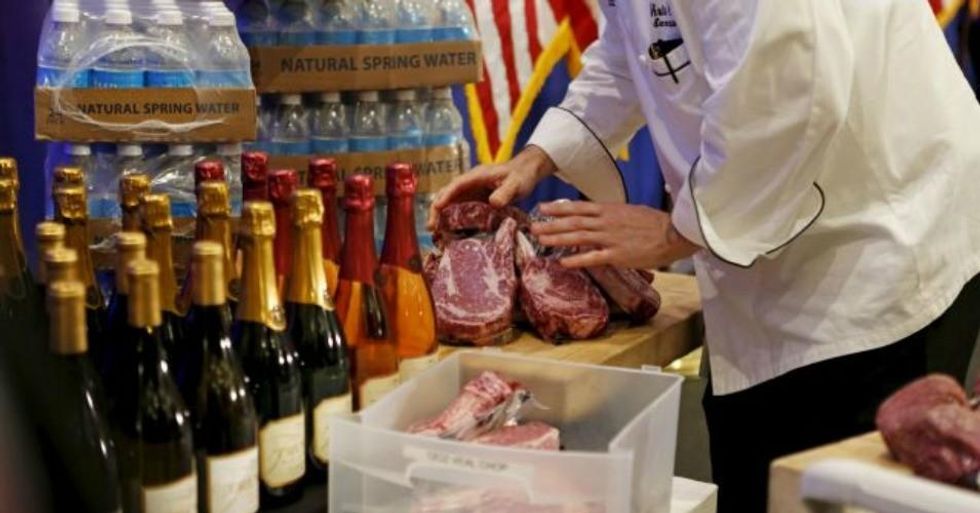
"Hillary's going to be very easy to beat," Trump said at a news conference Tuesday night, flanked by wine and meat after winning the Republican primaries in Michigan and Mississippi. "She's a very flawed candidate. I believe [she's] going to be a very, very easy target."
In fact, polls continue to show that Clinton would triumph over Trump in a head-to-head match-up--though not by the same wide margin as her rival for the Democratic nomination, Bernie Sanders.
The latest NBC News/Washington Post survey, released Wednesday, found that in a general election contest, Sanders would trump Trump by 18 points, 55 to 37 percent. Clinton, meanwhile, would win against Trump by 13 points, 51 percent to 38 percent.
Still, the dynamics at play in Michigan's Democratic primary--which saw Sanders pull an impressive upset after being way behind in polling--further suggest that Clinton's weaknesses on issues like trade and Wall Street reform could be her Achilles heel, both before and after the nominating convention in June.
Much has been made of Sanders' consistent opposition to corporate-friendly trade deals that have devastated the Rust Belt. On the Republican side, however, Trump's bombastic bigotry often eclipses the fact that by some measures, "trade may be his single biggest concern," as Thomas Frank argued in the Guardian this week.
"Ill-considered trade deals and generous bank bailouts and guaranteed profits for insurance companies but no recovery for average people, ever--these policies have taken their toll," across the U.S., Frank said.
"Many of Trump's followers are bigots, no doubt," he continued, "but many more are probably excited by the prospect of a president who seems to mean it when he denounces our trade agreements and promises to bring the hammer down on the CEO that fired you and wrecked your town, unlike Barack Obama and Hillary Clinton."
Indeed, Frank's colleague Lucia Graves pointed out: "A majority of Democrats and Republicans in Michigan have reported that recent trade deals have given people like them the shaft. On the Democratic side, six in 10 Michigan voters thought trade takes away jobs and the majority of those voters supported Sanders; on the Republican side, four in 10 thought trade costs the country jobs, and the majority of them supported Trump."
Lori Wallach, director of Public Citizen's Global Trade Watch, added on Wednesday: "Americans' opposition to job-killing trade policies fueled the stunning Bernie Sanders upset victory in Michigan. But it also could be a deciding factor in the general election, especially with Donald Trump being the likely GOP nominee."
"The outcome of the Michigan primary shows the potency of trade issues," she said, "and foreshadows the trouble Hillary Clinton could face winning key Midwestern states in a race against Trump."
Hillary Clinton's potential general election vulnerabilities were on display Tuesday in Michigan, and Republican presidential frontrunner Donald Trump said as much.
"Hillary's going to be very easy to beat," Trump said at a news conference Tuesday night, flanked by wine and meat after winning the Republican primaries in Michigan and Mississippi. "She's a very flawed candidate. I believe [she's] going to be a very, very easy target."
In fact, polls continue to show that Clinton would triumph over Trump in a head-to-head match-up--though not by the same wide margin as her rival for the Democratic nomination, Bernie Sanders.
The latest NBC News/Washington Post survey, released Wednesday, found that in a general election contest, Sanders would trump Trump by 18 points, 55 to 37 percent. Clinton, meanwhile, would win against Trump by 13 points, 51 percent to 38 percent.
Still, the dynamics at play in Michigan's Democratic primary--which saw Sanders pull an impressive upset after being way behind in polling--further suggest that Clinton's weaknesses on issues like trade and Wall Street reform could be her Achilles heel, both before and after the nominating convention in June.
Much has been made of Sanders' consistent opposition to corporate-friendly trade deals that have devastated the Rust Belt. On the Republican side, however, Trump's bombastic bigotry often eclipses the fact that by some measures, "trade may be his single biggest concern," as Thomas Frank argued in the Guardian this week.
"Ill-considered trade deals and generous bank bailouts and guaranteed profits for insurance companies but no recovery for average people, ever--these policies have taken their toll," across the U.S., Frank said.
"Many of Trump's followers are bigots, no doubt," he continued, "but many more are probably excited by the prospect of a president who seems to mean it when he denounces our trade agreements and promises to bring the hammer down on the CEO that fired you and wrecked your town, unlike Barack Obama and Hillary Clinton."
Indeed, Frank's colleague Lucia Graves pointed out: "A majority of Democrats and Republicans in Michigan have reported that recent trade deals have given people like them the shaft. On the Democratic side, six in 10 Michigan voters thought trade takes away jobs and the majority of those voters supported Sanders; on the Republican side, four in 10 thought trade costs the country jobs, and the majority of them supported Trump."
Lori Wallach, director of Public Citizen's Global Trade Watch, added on Wednesday: "Americans' opposition to job-killing trade policies fueled the stunning Bernie Sanders upset victory in Michigan. But it also could be a deciding factor in the general election, especially with Donald Trump being the likely GOP nominee."
"The outcome of the Michigan primary shows the potency of trade issues," she said, "and foreshadows the trouble Hillary Clinton could face winning key Midwestern states in a race against Trump."
Hillary Clinton's potential general election vulnerabilities were on display Tuesday in Michigan, and Republican presidential frontrunner Donald Trump said as much.
"Hillary's going to be very easy to beat," Trump said at a news conference Tuesday night, flanked by wine and meat after winning the Republican primaries in Michigan and Mississippi. "She's a very flawed candidate. I believe [she's] going to be a very, very easy target."
In fact, polls continue to show that Clinton would triumph over Trump in a head-to-head match-up--though not by the same wide margin as her rival for the Democratic nomination, Bernie Sanders.
The latest NBC News/Washington Post survey, released Wednesday, found that in a general election contest, Sanders would trump Trump by 18 points, 55 to 37 percent. Clinton, meanwhile, would win against Trump by 13 points, 51 percent to 38 percent.
Still, the dynamics at play in Michigan's Democratic primary--which saw Sanders pull an impressive upset after being way behind in polling--further suggest that Clinton's weaknesses on issues like trade and Wall Street reform could be her Achilles heel, both before and after the nominating convention in June.
Much has been made of Sanders' consistent opposition to corporate-friendly trade deals that have devastated the Rust Belt. On the Republican side, however, Trump's bombastic bigotry often eclipses the fact that by some measures, "trade may be his single biggest concern," as Thomas Frank argued in the Guardian this week.
"Ill-considered trade deals and generous bank bailouts and guaranteed profits for insurance companies but no recovery for average people, ever--these policies have taken their toll," across the U.S., Frank said.
"Many of Trump's followers are bigots, no doubt," he continued, "but many more are probably excited by the prospect of a president who seems to mean it when he denounces our trade agreements and promises to bring the hammer down on the CEO that fired you and wrecked your town, unlike Barack Obama and Hillary Clinton."
Indeed, Frank's colleague Lucia Graves pointed out: "A majority of Democrats and Republicans in Michigan have reported that recent trade deals have given people like them the shaft. On the Democratic side, six in 10 Michigan voters thought trade takes away jobs and the majority of those voters supported Sanders; on the Republican side, four in 10 thought trade costs the country jobs, and the majority of them supported Trump."
Lori Wallach, director of Public Citizen's Global Trade Watch, added on Wednesday: "Americans' opposition to job-killing trade policies fueled the stunning Bernie Sanders upset victory in Michigan. But it also could be a deciding factor in the general election, especially with Donald Trump being the likely GOP nominee."
"The outcome of the Michigan primary shows the potency of trade issues," she said, "and foreshadows the trouble Hillary Clinton could face winning key Midwestern states in a race against Trump."