SUBSCRIBE TO OUR FREE NEWSLETTER
Daily news & progressive opinion—funded by the people, not the corporations—delivered straight to your inbox.
5
#000000
#FFFFFF
To donate by check, phone, or other method, see our More Ways to Give page.


Daily news & progressive opinion—funded by the people, not the corporations—delivered straight to your inbox.

The officials are Jonathan Banks, the agency's former station chief in Pakistan who left the country in 2010 after he was outed as holding the spy post, and John A. Rizzo, former general counsel.
According to the Islamabad-based legal charity Foundation for Fundamental Rights, the men face charges of murder, conspiracy, waging war against Pakistan, and terrorism. Pakistan's The Nation reports that this marks the third time the court has ordered the case against the men.
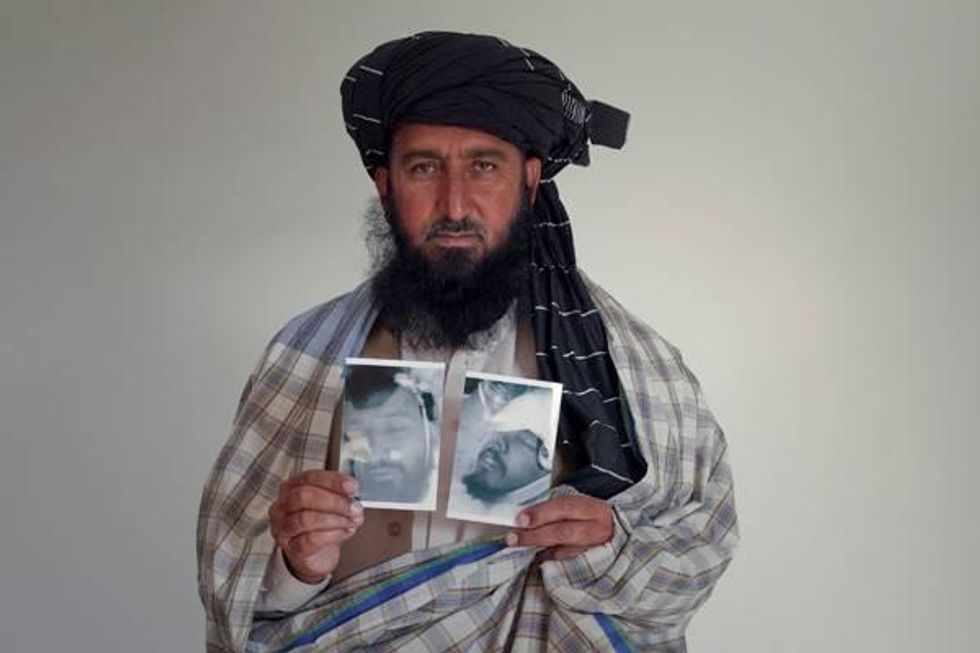
The order follows a petition by vocal drone critic Karim Khan, whose teenage son and brother were killed in the drone strike in North Waziristan, and who began in 2010 his legal battle seeking U.S. accountability for the attack.
The Islamabad High Court judge ordered the police to file the criminal case despite a plea by the Inspector General of Islamabad Capital Territory, Tahir Alam Khan, that such a move would put U.S.-Pakistan relations in peril.
CODEPINK co-founder Medea Benjamin, who met with Khan in Pakistan in 2012, described the background:
Khan's tragic story began on December 31, 2009. He had been working as a journalist in the capital, Islamabad, leaving his family back home in Waziristan. On New Year's Eve, he got an urgent call from his family: their home had just been struck by a US drone, and three people were dead; Kahn's 18 year-old son Zahinullah, his brother Asif Iqbal and a visiting stonemason who was working on the village mosque.
The news reports alleged that the target of the strike had been a Taliban commander, Haji Omar, but Khan insisted that Haji Omar was nowhere near the village that night. Khan also told us that the same Taliban commander had been reported dead several times by the media. "How many times could the same man be killed?," Khan asked.

Ahead of a 2014 visit to Europe to speak about the impact of drones, Khan was kidnapped from his home and beaten.
Khan's lawyer, Shahzad Akbar with the Foundation for Fundamental Rights, spoke with Democracy Now! last year about Khan's mysterious abduction, and said his client was among those that show "that these strikes are not precisions, as President Obama would like to sell this to people in America, because this is what the human face of the victims is. And it's important that American people are told about who these people are--they are being targeted in the name of national security--because what we see on ground, that it is not really serving a national security interest of anyone, be it United States or their ally Pakistan, which is a front-line state in this war against terror. And it's really counterproductive, and it's not really making any friends."
In a statement Tuesday, Akbar called the court's order a vindication for innocent victims of U.S. drone strikes.
"There is no doubt under Pakistani and International law that the US officials are committing an act of murder through drone strikes in Pakistan and today's decision simply vindicate this very point and after this order all those who have been killed in drone strikes have a right to proceed in similar criminal actions against the CIA officials and others involved.
"This remarkable order also highlights the strength of independence of judiciary in Pakistan which is truly protecting the rights of citizens of Pakistan under the Constitution," Akbar stated.
The Guardian notes, however, that "[w]ith no chance of either of the two Americans traveling to Pakistan to face their day in court, the case is unlikely to go anywhere."
The Bureau of Investigative Journalism estimates that CIA drone strikes since 2004 in Pakistan have killed as many as 3,945 people, including as many as 960 civilians.

Dear Common Dreams reader, It’s been nearly 30 years since I co-founded Common Dreams with my late wife, Lina Newhouser. We had the radical notion that journalism should serve the public good, not corporate profits. It was clear to us from the outset what it would take to build such a project. No paid advertisements. No corporate sponsors. No millionaire publisher telling us what to think or do. Many people said we wouldn't last a year, but we proved those doubters wrong. Together with a tremendous team of journalists and dedicated staff, we built an independent media outlet free from the constraints of profits and corporate control. Our mission has always been simple: To inform. To inspire. To ignite change for the common good. Building Common Dreams was not easy. Our survival was never guaranteed. When you take on the most powerful forces—Wall Street greed, fossil fuel industry destruction, Big Tech lobbyists, and uber-rich oligarchs who have spent billions upon billions rigging the economy and democracy in their favor—the only bulwark you have is supporters who believe in your work. But here’s the urgent message from me today. It's never been this bad out there. And it's never been this hard to keep us going. At the very moment Common Dreams is most needed, the threats we face are intensifying. We need your support now more than ever. We don't accept corporate advertising and never will. We don't have a paywall because we don't think people should be blocked from critical news based on their ability to pay. Everything we do is funded by the donations of readers like you. When everyone does the little they can afford, we are strong. But if that support retreats or dries up, so do we. Will you donate now to make sure Common Dreams not only survives but thrives? —Craig Brown, Co-founder |

The officials are Jonathan Banks, the agency's former station chief in Pakistan who left the country in 2010 after he was outed as holding the spy post, and John A. Rizzo, former general counsel.
According to the Islamabad-based legal charity Foundation for Fundamental Rights, the men face charges of murder, conspiracy, waging war against Pakistan, and terrorism. Pakistan's The Nation reports that this marks the third time the court has ordered the case against the men.
The order follows a petition by vocal drone critic Karim Khan, whose teenage son and brother were killed in the drone strike in North Waziristan, and who began in 2010 his legal battle seeking U.S. accountability for the attack.
The Islamabad High Court judge ordered the police to file the criminal case despite a plea by the Inspector General of Islamabad Capital Territory, Tahir Alam Khan, that such a move would put U.S.-Pakistan relations in peril.
CODEPINK co-founder Medea Benjamin, who met with Khan in Pakistan in 2012, described the background:
Khan's tragic story began on December 31, 2009. He had been working as a journalist in the capital, Islamabad, leaving his family back home in Waziristan. On New Year's Eve, he got an urgent call from his family: their home had just been struck by a US drone, and three people were dead; Kahn's 18 year-old son Zahinullah, his brother Asif Iqbal and a visiting stonemason who was working on the village mosque.
The news reports alleged that the target of the strike had been a Taliban commander, Haji Omar, but Khan insisted that Haji Omar was nowhere near the village that night. Khan also told us that the same Taliban commander had been reported dead several times by the media. "How many times could the same man be killed?," Khan asked.

Ahead of a 2014 visit to Europe to speak about the impact of drones, Khan was kidnapped from his home and beaten.
Khan's lawyer, Shahzad Akbar with the Foundation for Fundamental Rights, spoke with Democracy Now! last year about Khan's mysterious abduction, and said his client was among those that show "that these strikes are not precisions, as President Obama would like to sell this to people in America, because this is what the human face of the victims is. And it's important that American people are told about who these people are--they are being targeted in the name of national security--because what we see on ground, that it is not really serving a national security interest of anyone, be it United States or their ally Pakistan, which is a front-line state in this war against terror. And it's really counterproductive, and it's not really making any friends."
In a statement Tuesday, Akbar called the court's order a vindication for innocent victims of U.S. drone strikes.
"There is no doubt under Pakistani and International law that the US officials are committing an act of murder through drone strikes in Pakistan and today's decision simply vindicate this very point and after this order all those who have been killed in drone strikes have a right to proceed in similar criminal actions against the CIA officials and others involved.
"This remarkable order also highlights the strength of independence of judiciary in Pakistan which is truly protecting the rights of citizens of Pakistan under the Constitution," Akbar stated.
The Guardian notes, however, that "[w]ith no chance of either of the two Americans traveling to Pakistan to face their day in court, the case is unlikely to go anywhere."
The Bureau of Investigative Journalism estimates that CIA drone strikes since 2004 in Pakistan have killed as many as 3,945 people, including as many as 960 civilians.


The officials are Jonathan Banks, the agency's former station chief in Pakistan who left the country in 2010 after he was outed as holding the spy post, and John A. Rizzo, former general counsel.
According to the Islamabad-based legal charity Foundation for Fundamental Rights, the men face charges of murder, conspiracy, waging war against Pakistan, and terrorism. Pakistan's The Nation reports that this marks the third time the court has ordered the case against the men.
The order follows a petition by vocal drone critic Karim Khan, whose teenage son and brother were killed in the drone strike in North Waziristan, and who began in 2010 his legal battle seeking U.S. accountability for the attack.
The Islamabad High Court judge ordered the police to file the criminal case despite a plea by the Inspector General of Islamabad Capital Territory, Tahir Alam Khan, that such a move would put U.S.-Pakistan relations in peril.
CODEPINK co-founder Medea Benjamin, who met with Khan in Pakistan in 2012, described the background:
Khan's tragic story began on December 31, 2009. He had been working as a journalist in the capital, Islamabad, leaving his family back home in Waziristan. On New Year's Eve, he got an urgent call from his family: their home had just been struck by a US drone, and three people were dead; Kahn's 18 year-old son Zahinullah, his brother Asif Iqbal and a visiting stonemason who was working on the village mosque.
The news reports alleged that the target of the strike had been a Taliban commander, Haji Omar, but Khan insisted that Haji Omar was nowhere near the village that night. Khan also told us that the same Taliban commander had been reported dead several times by the media. "How many times could the same man be killed?," Khan asked.

Ahead of a 2014 visit to Europe to speak about the impact of drones, Khan was kidnapped from his home and beaten.
Khan's lawyer, Shahzad Akbar with the Foundation for Fundamental Rights, spoke with Democracy Now! last year about Khan's mysterious abduction, and said his client was among those that show "that these strikes are not precisions, as President Obama would like to sell this to people in America, because this is what the human face of the victims is. And it's important that American people are told about who these people are--they are being targeted in the name of national security--because what we see on ground, that it is not really serving a national security interest of anyone, be it United States or their ally Pakistan, which is a front-line state in this war against terror. And it's really counterproductive, and it's not really making any friends."
In a statement Tuesday, Akbar called the court's order a vindication for innocent victims of U.S. drone strikes.
"There is no doubt under Pakistani and International law that the US officials are committing an act of murder through drone strikes in Pakistan and today's decision simply vindicate this very point and after this order all those who have been killed in drone strikes have a right to proceed in similar criminal actions against the CIA officials and others involved.
"This remarkable order also highlights the strength of independence of judiciary in Pakistan which is truly protecting the rights of citizens of Pakistan under the Constitution," Akbar stated.
The Guardian notes, however, that "[w]ith no chance of either of the two Americans traveling to Pakistan to face their day in court, the case is unlikely to go anywhere."
The Bureau of Investigative Journalism estimates that CIA drone strikes since 2004 in Pakistan have killed as many as 3,945 people, including as many as 960 civilians.