SUBSCRIBE TO OUR FREE NEWSLETTER
Daily news & progressive opinion—funded by the people, not the corporations—delivered straight to your inbox.
5
#000000
#FFFFFF
To donate by check, phone, or other method, see our More Ways to Give page.
Daily news & progressive opinion—funded by the people, not the corporations—delivered straight to your inbox.
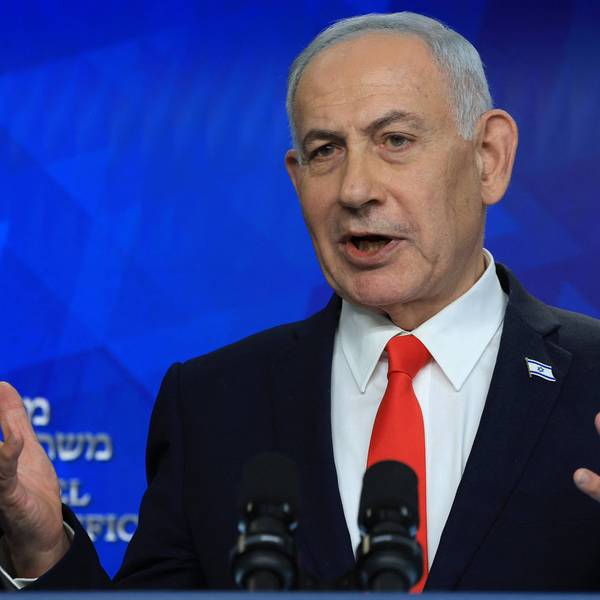
At the invitation of Republican House Speaker John A. Boehner, Israeli Prime Minister Benjamin Netanyahu will travel to Washington in March to directly address Congress on Iran, side-stepping the White House in a maneuver that analysts say is aimed at sabotaging diplomatic talks.
If negotiations are torpedoed, critics warn, this would likely ratchet up escalation and even threaten war.
"What is at risk if the talks fall apart is a rapid escalation, maybe starting in the U.S., maybe in Iran," Jamal Abdi, policy director for the National Iranian American Council, told Common Dreams. "Either way it will be a process that can't be contained. We would very quickly see snowball effect where war becomes more and more likely."
Netanyahu's unusual bypassing of the U.S. president, which was described by White House spokesperson Josh Earnest as a departure from "typical protocol," was made public less than 24 hours after President Barack Obama pledged in his State of the Union address to veto a congressional effort to pass new sanctions on Iran in the midst of talks. Obama revealed on Thursday that he will decline to meet with Netanyahu during the Prime Minister's visit, which falls shortly before Israel's general elections.
"As a matter of long-standing practice and principle, we do not see heads of state or candidates in close proximity to their elections, so as to avoid the appearance of influencing a democratic election in a foreign country," said National Security Council Spokesperson Bernadette Meehan.
Voices from within Israel have criticized the visit as a cynical political move to influence the vote.
In a rare move, Israel's Mossad spy agency has publicly broken with the Prime Minister and urged U.S. law makers to avoid passing new sanctions on Iran.
Nonetheless, Netanyahu confirmed that he plans to move forward with the trip. According to a tweet from Boehner, Netanyahu adjusted the date of his planned visit in order to attend a conference put on by the American Israeli Public Affairs Committee (AIPAC), one of the most powerful lobbying groups in Washington.
Phyllis Bennis, senior fellow at the Institute for Policy Studies, told Common Dreams that Boehner's invitation to Netanyahu was a "partisan double-play" to undermine Obama. "But more important than partisan games is the policy question at stake," Bennis added.
Senators Mark Kirk (R-Ill.) and Robert Menendez (D-N.Y.), with the backing of Netanyahu and AIPAC, are currently pressing for a new bill to press sanctions on Iran in the midst of talks with the P5+1 countries. Meanwhile, Senator Bob Corker (R-Tenn.), with the backing of Lindsay Graham (R-S.C.) and John McCain (R-Ariz.), is pushing for legislation that would force the White House to put any potential pact to a vote.
Netanyahu is expected to use the visit, in the words of Bloomberg writers Josh Rogin and Eli Lake, to "deliver full-throated support for sanctions."
According to Bennis, "People supporting these sanctions are supporting war. If new sanctions are imposed, all bets are off and there is not going to be an agreement. That puts the threat of war front and center."
After 23 weeks and nearly 2,000 coalition strikes of the U.S.-led military operation against ISIS forces in both Iraq and Syria, critics warn that news of Netanyahu's political maneuver, and the congressional push for sanctions, come at a dangerous time. "The notion that the U.S. is threatening to end negotiations and start new war at a moment the Middle East is already engulfed in war is particularly dangerous," said Bennis.
A bipartisan team of U.S. lawmakers launched a similar effort last year, with the backing of AIPAC, to pass new sanctions in the midst of talks. That effort was narrowly defeated, thanks in part to a grassroots pressure campaign, which included street protests.
But as the talks continue to move forward, the already-existing U.S. sanctions regime, imposed since 1979, continues to devastate ordinary Iranians. A study released in 2013 by the International Campaign for Human Rights in Iran found that "international sanctions and Iranian government policies are combining to bring about a severe deterioration in the ability of many Iranians to pursue their economic and social rights to healthcare, employment, and adequate nutrition."
Iranians from within the country and the diaspora have long argued that, in addition to poverty and hardship, sanctions also strengthen repressive and hardline forces in Iran. In their statement of principles, the organization Havaar--a group of Iranians, Iranian-Americans, and allies who oppose sanctions, war, and state repression--declares, "Not only does the Iranian government use sanctions and the threat of war as a rallying cry, but war also provides a pretext for further repression."
Dear Common Dreams reader, It’s been nearly 30 years since I co-founded Common Dreams with my late wife, Lina Newhouser. We had the radical notion that journalism should serve the public good, not corporate profits. It was clear to us from the outset what it would take to build such a project. No paid advertisements. No corporate sponsors. No millionaire publisher telling us what to think or do. Many people said we wouldn't last a year, but we proved those doubters wrong. Together with a tremendous team of journalists and dedicated staff, we built an independent media outlet free from the constraints of profits and corporate control. Our mission has always been simple: To inform. To inspire. To ignite change for the common good. Building Common Dreams was not easy. Our survival was never guaranteed. When you take on the most powerful forces—Wall Street greed, fossil fuel industry destruction, Big Tech lobbyists, and uber-rich oligarchs who have spent billions upon billions rigging the economy and democracy in their favor—the only bulwark you have is supporters who believe in your work. But here’s the urgent message from me today. It's never been this bad out there. And it's never been this hard to keep us going. At the very moment Common Dreams is most needed, the threats we face are intensifying. We need your support now more than ever. We don't accept corporate advertising and never will. We don't have a paywall because we don't think people should be blocked from critical news based on their ability to pay. Everything we do is funded by the donations of readers like you. When everyone does the little they can afford, we are strong. But if that support retreats or dries up, so do we. Will you donate now to make sure Common Dreams not only survives but thrives? —Craig Brown, Co-founder |
At the invitation of Republican House Speaker John A. Boehner, Israeli Prime Minister Benjamin Netanyahu will travel to Washington in March to directly address Congress on Iran, side-stepping the White House in a maneuver that analysts say is aimed at sabotaging diplomatic talks.
If negotiations are torpedoed, critics warn, this would likely ratchet up escalation and even threaten war.
"What is at risk if the talks fall apart is a rapid escalation, maybe starting in the U.S., maybe in Iran," Jamal Abdi, policy director for the National Iranian American Council, told Common Dreams. "Either way it will be a process that can't be contained. We would very quickly see snowball effect where war becomes more and more likely."
Netanyahu's unusual bypassing of the U.S. president, which was described by White House spokesperson Josh Earnest as a departure from "typical protocol," was made public less than 24 hours after President Barack Obama pledged in his State of the Union address to veto a congressional effort to pass new sanctions on Iran in the midst of talks. Obama revealed on Thursday that he will decline to meet with Netanyahu during the Prime Minister's visit, which falls shortly before Israel's general elections.
"As a matter of long-standing practice and principle, we do not see heads of state or candidates in close proximity to their elections, so as to avoid the appearance of influencing a democratic election in a foreign country," said National Security Council Spokesperson Bernadette Meehan.
Voices from within Israel have criticized the visit as a cynical political move to influence the vote.
In a rare move, Israel's Mossad spy agency has publicly broken with the Prime Minister and urged U.S. law makers to avoid passing new sanctions on Iran.
Nonetheless, Netanyahu confirmed that he plans to move forward with the trip. According to a tweet from Boehner, Netanyahu adjusted the date of his planned visit in order to attend a conference put on by the American Israeli Public Affairs Committee (AIPAC), one of the most powerful lobbying groups in Washington.
Phyllis Bennis, senior fellow at the Institute for Policy Studies, told Common Dreams that Boehner's invitation to Netanyahu was a "partisan double-play" to undermine Obama. "But more important than partisan games is the policy question at stake," Bennis added.
Senators Mark Kirk (R-Ill.) and Robert Menendez (D-N.Y.), with the backing of Netanyahu and AIPAC, are currently pressing for a new bill to press sanctions on Iran in the midst of talks with the P5+1 countries. Meanwhile, Senator Bob Corker (R-Tenn.), with the backing of Lindsay Graham (R-S.C.) and John McCain (R-Ariz.), is pushing for legislation that would force the White House to put any potential pact to a vote.
Netanyahu is expected to use the visit, in the words of Bloomberg writers Josh Rogin and Eli Lake, to "deliver full-throated support for sanctions."
According to Bennis, "People supporting these sanctions are supporting war. If new sanctions are imposed, all bets are off and there is not going to be an agreement. That puts the threat of war front and center."
After 23 weeks and nearly 2,000 coalition strikes of the U.S.-led military operation against ISIS forces in both Iraq and Syria, critics warn that news of Netanyahu's political maneuver, and the congressional push for sanctions, come at a dangerous time. "The notion that the U.S. is threatening to end negotiations and start new war at a moment the Middle East is already engulfed in war is particularly dangerous," said Bennis.
A bipartisan team of U.S. lawmakers launched a similar effort last year, with the backing of AIPAC, to pass new sanctions in the midst of talks. That effort was narrowly defeated, thanks in part to a grassroots pressure campaign, which included street protests.
But as the talks continue to move forward, the already-existing U.S. sanctions regime, imposed since 1979, continues to devastate ordinary Iranians. A study released in 2013 by the International Campaign for Human Rights in Iran found that "international sanctions and Iranian government policies are combining to bring about a severe deterioration in the ability of many Iranians to pursue their economic and social rights to healthcare, employment, and adequate nutrition."
Iranians from within the country and the diaspora have long argued that, in addition to poverty and hardship, sanctions also strengthen repressive and hardline forces in Iran. In their statement of principles, the organization Havaar--a group of Iranians, Iranian-Americans, and allies who oppose sanctions, war, and state repression--declares, "Not only does the Iranian government use sanctions and the threat of war as a rallying cry, but war also provides a pretext for further repression."
At the invitation of Republican House Speaker John A. Boehner, Israeli Prime Minister Benjamin Netanyahu will travel to Washington in March to directly address Congress on Iran, side-stepping the White House in a maneuver that analysts say is aimed at sabotaging diplomatic talks.
If negotiations are torpedoed, critics warn, this would likely ratchet up escalation and even threaten war.
"What is at risk if the talks fall apart is a rapid escalation, maybe starting in the U.S., maybe in Iran," Jamal Abdi, policy director for the National Iranian American Council, told Common Dreams. "Either way it will be a process that can't be contained. We would very quickly see snowball effect where war becomes more and more likely."
Netanyahu's unusual bypassing of the U.S. president, which was described by White House spokesperson Josh Earnest as a departure from "typical protocol," was made public less than 24 hours after President Barack Obama pledged in his State of the Union address to veto a congressional effort to pass new sanctions on Iran in the midst of talks. Obama revealed on Thursday that he will decline to meet with Netanyahu during the Prime Minister's visit, which falls shortly before Israel's general elections.
"As a matter of long-standing practice and principle, we do not see heads of state or candidates in close proximity to their elections, so as to avoid the appearance of influencing a democratic election in a foreign country," said National Security Council Spokesperson Bernadette Meehan.
Voices from within Israel have criticized the visit as a cynical political move to influence the vote.
In a rare move, Israel's Mossad spy agency has publicly broken with the Prime Minister and urged U.S. law makers to avoid passing new sanctions on Iran.
Nonetheless, Netanyahu confirmed that he plans to move forward with the trip. According to a tweet from Boehner, Netanyahu adjusted the date of his planned visit in order to attend a conference put on by the American Israeli Public Affairs Committee (AIPAC), one of the most powerful lobbying groups in Washington.
Phyllis Bennis, senior fellow at the Institute for Policy Studies, told Common Dreams that Boehner's invitation to Netanyahu was a "partisan double-play" to undermine Obama. "But more important than partisan games is the policy question at stake," Bennis added.
Senators Mark Kirk (R-Ill.) and Robert Menendez (D-N.Y.), with the backing of Netanyahu and AIPAC, are currently pressing for a new bill to press sanctions on Iran in the midst of talks with the P5+1 countries. Meanwhile, Senator Bob Corker (R-Tenn.), with the backing of Lindsay Graham (R-S.C.) and John McCain (R-Ariz.), is pushing for legislation that would force the White House to put any potential pact to a vote.
Netanyahu is expected to use the visit, in the words of Bloomberg writers Josh Rogin and Eli Lake, to "deliver full-throated support for sanctions."
According to Bennis, "People supporting these sanctions are supporting war. If new sanctions are imposed, all bets are off and there is not going to be an agreement. That puts the threat of war front and center."
After 23 weeks and nearly 2,000 coalition strikes of the U.S.-led military operation against ISIS forces in both Iraq and Syria, critics warn that news of Netanyahu's political maneuver, and the congressional push for sanctions, come at a dangerous time. "The notion that the U.S. is threatening to end negotiations and start new war at a moment the Middle East is already engulfed in war is particularly dangerous," said Bennis.
A bipartisan team of U.S. lawmakers launched a similar effort last year, with the backing of AIPAC, to pass new sanctions in the midst of talks. That effort was narrowly defeated, thanks in part to a grassroots pressure campaign, which included street protests.
But as the talks continue to move forward, the already-existing U.S. sanctions regime, imposed since 1979, continues to devastate ordinary Iranians. A study released in 2013 by the International Campaign for Human Rights in Iran found that "international sanctions and Iranian government policies are combining to bring about a severe deterioration in the ability of many Iranians to pursue their economic and social rights to healthcare, employment, and adequate nutrition."
Iranians from within the country and the diaspora have long argued that, in addition to poverty and hardship, sanctions also strengthen repressive and hardline forces in Iran. In their statement of principles, the organization Havaar--a group of Iranians, Iranian-Americans, and allies who oppose sanctions, war, and state repression--declares, "Not only does the Iranian government use sanctions and the threat of war as a rallying cry, but war also provides a pretext for further repression."