

SUBSCRIBE TO OUR FREE NEWSLETTER
Daily news & progressive opinion—funded by the people, not the corporations—delivered straight to your inbox.
5
#000000
#FFFFFF
To donate by check, phone, or other method, see our More Ways to Give page.
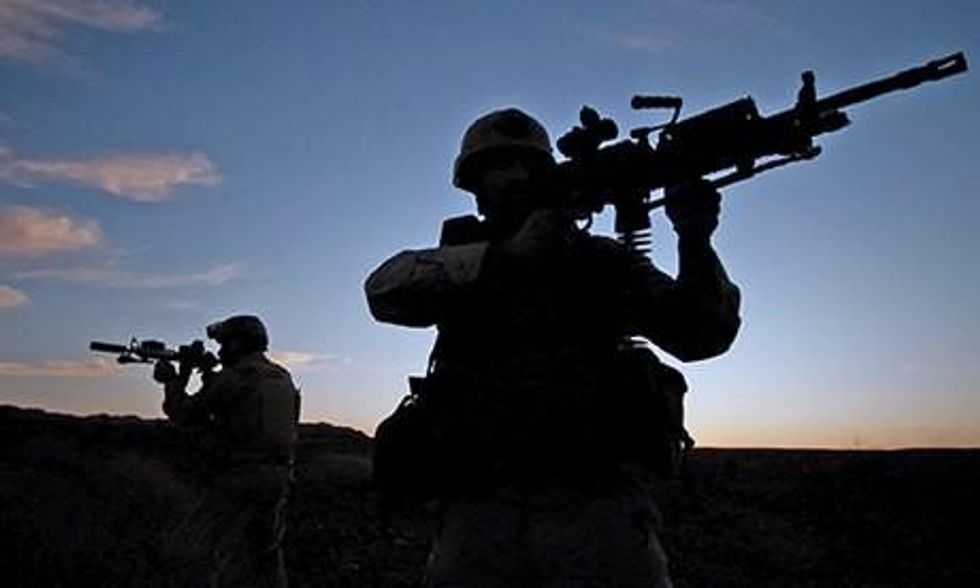
Both in Libya and Somalia on Saturday, so-called 'capture or kill' operations were launched--speaheaded by the Joint Special Operations Command (JSOC)--in which high-value leaders of Islamic militant groups were targeted for assassination or kidnapping.
In Libya on Saturday, a raid backed by the FBI and CIA but reportedly executed by elite military personnel, led to the reported capture of Nazih Abdul-Hamed al-Ruqqai--better known by his alias Abu Anas al Libi--an alleged high-level al Qaeda operative wanted in connection to several bombings leading back to the late 1990's.
Also on Saturday, on the other side of the continent in Somalia, an apparently unsuccessful raid by US Navy Seals on a seaside villa led to an extended fire fight between the elite soldiers and individuals at the house that ended in retreat. Speculation remained about the intended target and who was or wasn't killed during the operation, but outlets report the raid was planned in the aftermath of the recent Westgate Mall attack in Kenya which left nearly 70 people dead. Al Shabab claimed responsibility for that attack, saying it was retaliation for Kenya's military intervention in Somalia.
The New York Times reports:
The Navy SEALs approached the Somali coast under cover of darkness for what was supposed to be a stealthy snatch-and-grab operation from a seaside villa in the port town of Baraawe.
But instead of slipping away with the senior militant they had come to capture, the SEALs found themselves under sustained fire. The American troops retreated unharmed after inflicting casualties on the Shabab defenders, but the militant group has claimed victory in the skirmish on Saturday.
Speaking about both raids, Defense Secretary Chuck Hagel on Sunday said they "demonstrate the unparalleled precision, global reach and capabilities of the United States military." Speaking separately, Secretary of State John Kerry warned critics of the raids that they should be careful not to "sympathize" with known terrorists.
Independent journalist Jeremy Scahill, who has covered US military actions and policy in the region for years, responded to the weekend news by cautioning people against accepting early reports about either raid. He tweeted:
And then later:
Based on what was known, however, critics argue the pair of raids in Africa reveal just how overt--and dangerously counter-productive-- the so-called 'global war on terrorism' has become when the US sends military forces into two separate countries in one day in an attempt to kill "or" capture individuals without due process or legitimate legal authority.
As The Guardian reports:
The dual raids were a vivid of expression of how the US has quietly been building its military capacity in Africa. Kerry, who is in Indonesia for an economic summit, said: "We hope that this makes clear that the United States of America will never stop in the effort to hold those accountable who conduct acts of terror. Members of al-Qaida and other terrorist organisations literally can run but they can't hide."
But a diplomatic source focused on Somalia said: "This is knee-jerk stuff and smacks of a massive failure of intelligence. Are extrajudicial killings and covert kidnapping raids the best way of dealing with the problem? Why is the international response so feeble?"
But Dr Adekeye Adebajo, executive director of the Centre for Conflict Resolution in South Africa, said that while it was in the interest of African governments to fight terrorism, he does not "think the heavy-handed and unilateral way the US acts is helpful and it risks causing further instability, especially where there are weak governments like in Libya and Somalia".
McClatchy news reports that President Obama personally approved the raid in Libya, but the leaders of the interim government there were voicing protest agains the raid. According to The Guardian:
Libya has demanded an explanation for the "kidnapping" of one of its citizens by American special forces, hours after a separate US military raid on a terrorist target in Somalia ended in apparent failure and retreat.
In Tripoli the US army's Delta force seized alleged al-Qaida leader Nazih Abdul-Hamed al-Ruqai, known by his alias Abu Anas al-Liby and wanted for the 1998 bombings of the US embassies in Kenya and Tanzania that killed more than 220 people.
The New York Times reported that Liby was being held in military custody and interrogated on board a navy ship, the USS Antonio, in the Mediterranean.
____________________________________________________
Both in Libya and Somalia on Saturday, so-called 'capture or kill' operations were launched--speaheaded by the Joint Special Operations Command (JSOC)--in which high-value leaders of Islamic militant groups were targeted for assassination or kidnapping.
In Libya on Saturday, a raid backed by the FBI and CIA but reportedly executed by elite military personnel, led to the reported capture of Nazih Abdul-Hamed al-Ruqqai--better known by his alias Abu Anas al Libi--an alleged high-level al Qaeda operative wanted in connection to several bombings leading back to the late 1990's.
Also on Saturday, on the other side of the continent in Somalia, an apparently unsuccessful raid by US Navy Seals on a seaside villa led to an extended fire fight between the elite soldiers and individuals at the house that ended in retreat. Speculation remained about the intended target and who was or wasn't killed during the operation, but outlets report the raid was planned in the aftermath of the recent Westgate Mall attack in Kenya which left nearly 70 people dead. Al Shabab claimed responsibility for that attack, saying it was retaliation for Kenya's military intervention in Somalia.
The New York Times reports:
The Navy SEALs approached the Somali coast under cover of darkness for what was supposed to be a stealthy snatch-and-grab operation from a seaside villa in the port town of Baraawe.
But instead of slipping away with the senior militant they had come to capture, the SEALs found themselves under sustained fire. The American troops retreated unharmed after inflicting casualties on the Shabab defenders, but the militant group has claimed victory in the skirmish on Saturday.
Speaking about both raids, Defense Secretary Chuck Hagel on Sunday said they "demonstrate the unparalleled precision, global reach and capabilities of the United States military." Speaking separately, Secretary of State John Kerry warned critics of the raids that they should be careful not to "sympathize" with known terrorists.
Independent journalist Jeremy Scahill, who has covered US military actions and policy in the region for years, responded to the weekend news by cautioning people against accepting early reports about either raid. He tweeted:
And then later:
Based on what was known, however, critics argue the pair of raids in Africa reveal just how overt--and dangerously counter-productive-- the so-called 'global war on terrorism' has become when the US sends military forces into two separate countries in one day in an attempt to kill "or" capture individuals without due process or legitimate legal authority.
As The Guardian reports:
The dual raids were a vivid of expression of how the US has quietly been building its military capacity in Africa. Kerry, who is in Indonesia for an economic summit, said: "We hope that this makes clear that the United States of America will never stop in the effort to hold those accountable who conduct acts of terror. Members of al-Qaida and other terrorist organisations literally can run but they can't hide."
But a diplomatic source focused on Somalia said: "This is knee-jerk stuff and smacks of a massive failure of intelligence. Are extrajudicial killings and covert kidnapping raids the best way of dealing with the problem? Why is the international response so feeble?"
But Dr Adekeye Adebajo, executive director of the Centre for Conflict Resolution in South Africa, said that while it was in the interest of African governments to fight terrorism, he does not "think the heavy-handed and unilateral way the US acts is helpful and it risks causing further instability, especially where there are weak governments like in Libya and Somalia".
McClatchy news reports that President Obama personally approved the raid in Libya, but the leaders of the interim government there were voicing protest agains the raid. According to The Guardian:
Libya has demanded an explanation for the "kidnapping" of one of its citizens by American special forces, hours after a separate US military raid on a terrorist target in Somalia ended in apparent failure and retreat.
In Tripoli the US army's Delta force seized alleged al-Qaida leader Nazih Abdul-Hamed al-Ruqai, known by his alias Abu Anas al-Liby and wanted for the 1998 bombings of the US embassies in Kenya and Tanzania that killed more than 220 people.
The New York Times reported that Liby was being held in military custody and interrogated on board a navy ship, the USS Antonio, in the Mediterranean.
____________________________________________________
Both in Libya and Somalia on Saturday, so-called 'capture or kill' operations were launched--speaheaded by the Joint Special Operations Command (JSOC)--in which high-value leaders of Islamic militant groups were targeted for assassination or kidnapping.
In Libya on Saturday, a raid backed by the FBI and CIA but reportedly executed by elite military personnel, led to the reported capture of Nazih Abdul-Hamed al-Ruqqai--better known by his alias Abu Anas al Libi--an alleged high-level al Qaeda operative wanted in connection to several bombings leading back to the late 1990's.
Also on Saturday, on the other side of the continent in Somalia, an apparently unsuccessful raid by US Navy Seals on a seaside villa led to an extended fire fight between the elite soldiers and individuals at the house that ended in retreat. Speculation remained about the intended target and who was or wasn't killed during the operation, but outlets report the raid was planned in the aftermath of the recent Westgate Mall attack in Kenya which left nearly 70 people dead. Al Shabab claimed responsibility for that attack, saying it was retaliation for Kenya's military intervention in Somalia.
The New York Times reports:
The Navy SEALs approached the Somali coast under cover of darkness for what was supposed to be a stealthy snatch-and-grab operation from a seaside villa in the port town of Baraawe.
But instead of slipping away with the senior militant they had come to capture, the SEALs found themselves under sustained fire. The American troops retreated unharmed after inflicting casualties on the Shabab defenders, but the militant group has claimed victory in the skirmish on Saturday.
Speaking about both raids, Defense Secretary Chuck Hagel on Sunday said they "demonstrate the unparalleled precision, global reach and capabilities of the United States military." Speaking separately, Secretary of State John Kerry warned critics of the raids that they should be careful not to "sympathize" with known terrorists.
Independent journalist Jeremy Scahill, who has covered US military actions and policy in the region for years, responded to the weekend news by cautioning people against accepting early reports about either raid. He tweeted:
And then later:
Based on what was known, however, critics argue the pair of raids in Africa reveal just how overt--and dangerously counter-productive-- the so-called 'global war on terrorism' has become when the US sends military forces into two separate countries in one day in an attempt to kill "or" capture individuals without due process or legitimate legal authority.
As The Guardian reports:
The dual raids were a vivid of expression of how the US has quietly been building its military capacity in Africa. Kerry, who is in Indonesia for an economic summit, said: "We hope that this makes clear that the United States of America will never stop in the effort to hold those accountable who conduct acts of terror. Members of al-Qaida and other terrorist organisations literally can run but they can't hide."
But a diplomatic source focused on Somalia said: "This is knee-jerk stuff and smacks of a massive failure of intelligence. Are extrajudicial killings and covert kidnapping raids the best way of dealing with the problem? Why is the international response so feeble?"
But Dr Adekeye Adebajo, executive director of the Centre for Conflict Resolution in South Africa, said that while it was in the interest of African governments to fight terrorism, he does not "think the heavy-handed and unilateral way the US acts is helpful and it risks causing further instability, especially where there are weak governments like in Libya and Somalia".
McClatchy news reports that President Obama personally approved the raid in Libya, but the leaders of the interim government there were voicing protest agains the raid. According to The Guardian:
Libya has demanded an explanation for the "kidnapping" of one of its citizens by American special forces, hours after a separate US military raid on a terrorist target in Somalia ended in apparent failure and retreat.
In Tripoli the US army's Delta force seized alleged al-Qaida leader Nazih Abdul-Hamed al-Ruqai, known by his alias Abu Anas al-Liby and wanted for the 1998 bombings of the US embassies in Kenya and Tanzania that killed more than 220 people.
The New York Times reported that Liby was being held in military custody and interrogated on board a navy ship, the USS Antonio, in the Mediterranean.
____________________________________________________

