SUBSCRIBE TO OUR FREE NEWSLETTER
Daily news & progressive opinion—funded by the people, not the corporations—delivered straight to your inbox.
5
#000000
#FFFFFF
To donate by check, phone, or other method, see our More Ways to Give page.
Daily news & progressive opinion—funded by the people, not the corporations—delivered straight to your inbox.
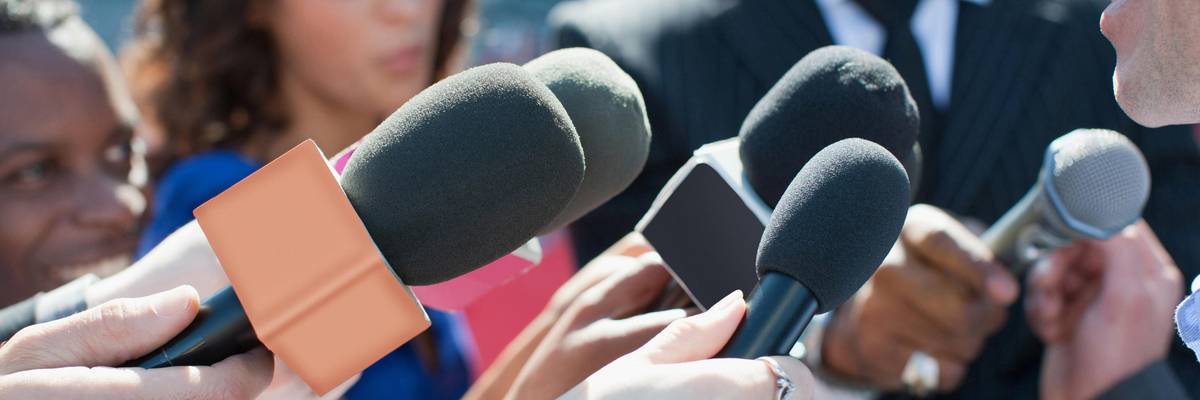
Lying in politics may seem like a problem that's impossible to tackle, but there are several steps that we can take to make things better. (Photo: Getty/Paul Bradbury)
You may be familiar with "Just the facts ma'am," the line from the 1960s TV drama Dragnet. The detective asked witnesses to state exactly what happened, without embellishments or exaggerations. We need to take action to develop a similar benchmark in our politics and news media.
For a democracy to function properly, we need politicians and news outlets to provide facts to the public. George Orwell once said, "Political language ... is designed to make lies sound truthful and murder respectable." Falsehoods about the COVID-19 vaccine and the embrace of Kyle Rittenhouse--resulting in a preventable death toll and a killer who is invited to give speeches around the country--are just two examples that make his warning relevant today.
There's no absolute truth in the political world or in news in general, but, at the most basic level, truth is a matter of accuracy and context.
A functioning society needs a common set of facts that everyone can rely on. From there, each of us can develop our own well-informed opinions.
We tend to focus on these issues only at a national level, but we face the same rhetoric and dishonesty here in Pennsylvania. I don't believe that it is just one party or one news station that misrepresents the facts. Misinformation and lying in politics and dishonesty in the media have become epidemic.
There's no absolute truth in the political world or in news in general, but, at the most basic level, truth is a matter of accuracy and context. Politicians increasingly use language not to clarify but to muddy the waters. The new technique is to double down on lies in the belief that constantly repeating a lie will bury the truth or reinforce an alternative set of "facts." This makes agreement on a shared reality impossible.
Because they are trusted sources of information for their supporters or readers, both politicians and journalists have an even higher duty than others to investigate and to speak or report truthfully. They have an obligation to distinguish between fact and opinion so everyone is on the same page.
A few ethical standards attempt to constrain politicians. Usually, the main element to be considered is "malice"--a statement made or published that was made by an official knowing that it was false and inaccurate and "acting with reckless disregard for the statement's truth or falsity." But all hope is not lost. Lying in politics may seem like a problem that's impossible to tackle, but here are several steps that we can take to make things better:
1. Write and call your representatives in Congress to persuade the FCC and other regulators to work with news agencies and social media outlets to create a labeling system--similar to movie and video game ratings--so viewers can understand whether facts or opinions are being stated.
2. Lobby state and local legislatures to strengthen defamation laws and codes of ethics so politicians can be held accountable for their lies, particularly those that cause harm to individuals or communities. Stronger laws, codes, and enforcement can help restrain politicians who consider lying just another tool in their toolbox.
3. Persuade politicians, candidates, and journalists to take a truth pledge. For example, the Pro-Truth Pledge encourages politicians and everyone else to commit to truth-oriented behaviors and protect facts and civility.
Rabbi Shimon Ben Gamaliel (10 B.C.-70 A.D.) said that three virtues sustain the world: justice, truth, and peace. For any society to flourish, truth must be preserved and protected, especially by its leaders, politicians, and journalists.
Dear Common Dreams reader, It’s been nearly 30 years since I co-founded Common Dreams with my late wife, Lina Newhouser. We had the radical notion that journalism should serve the public good, not corporate profits. It was clear to us from the outset what it would take to build such a project. No paid advertisements. No corporate sponsors. No millionaire publisher telling us what to think or do. Many people said we wouldn't last a year, but we proved those doubters wrong. Together with a tremendous team of journalists and dedicated staff, we built an independent media outlet free from the constraints of profits and corporate control. Our mission has always been simple: To inform. To inspire. To ignite change for the common good. Building Common Dreams was not easy. Our survival was never guaranteed. When you take on the most powerful forces—Wall Street greed, fossil fuel industry destruction, Big Tech lobbyists, and uber-rich oligarchs who have spent billions upon billions rigging the economy and democracy in their favor—the only bulwark you have is supporters who believe in your work. But here’s the urgent message from me today. It's never been this bad out there. And it's never been this hard to keep us going. At the very moment Common Dreams is most needed, the threats we face are intensifying. We need your support now more than ever. We don't accept corporate advertising and never will. We don't have a paywall because we don't think people should be blocked from critical news based on their ability to pay. Everything we do is funded by the donations of readers like you. When everyone does the little they can afford, we are strong. But if that support retreats or dries up, so do we. Will you donate now to make sure Common Dreams not only survives but thrives? —Craig Brown, Co-founder |
You may be familiar with "Just the facts ma'am," the line from the 1960s TV drama Dragnet. The detective asked witnesses to state exactly what happened, without embellishments or exaggerations. We need to take action to develop a similar benchmark in our politics and news media.
For a democracy to function properly, we need politicians and news outlets to provide facts to the public. George Orwell once said, "Political language ... is designed to make lies sound truthful and murder respectable." Falsehoods about the COVID-19 vaccine and the embrace of Kyle Rittenhouse--resulting in a preventable death toll and a killer who is invited to give speeches around the country--are just two examples that make his warning relevant today.
There's no absolute truth in the political world or in news in general, but, at the most basic level, truth is a matter of accuracy and context.
A functioning society needs a common set of facts that everyone can rely on. From there, each of us can develop our own well-informed opinions.
We tend to focus on these issues only at a national level, but we face the same rhetoric and dishonesty here in Pennsylvania. I don't believe that it is just one party or one news station that misrepresents the facts. Misinformation and lying in politics and dishonesty in the media have become epidemic.
There's no absolute truth in the political world or in news in general, but, at the most basic level, truth is a matter of accuracy and context. Politicians increasingly use language not to clarify but to muddy the waters. The new technique is to double down on lies in the belief that constantly repeating a lie will bury the truth or reinforce an alternative set of "facts." This makes agreement on a shared reality impossible.
Because they are trusted sources of information for their supporters or readers, both politicians and journalists have an even higher duty than others to investigate and to speak or report truthfully. They have an obligation to distinguish between fact and opinion so everyone is on the same page.
A few ethical standards attempt to constrain politicians. Usually, the main element to be considered is "malice"--a statement made or published that was made by an official knowing that it was false and inaccurate and "acting with reckless disregard for the statement's truth or falsity." But all hope is not lost. Lying in politics may seem like a problem that's impossible to tackle, but here are several steps that we can take to make things better:
1. Write and call your representatives in Congress to persuade the FCC and other regulators to work with news agencies and social media outlets to create a labeling system--similar to movie and video game ratings--so viewers can understand whether facts or opinions are being stated.
2. Lobby state and local legislatures to strengthen defamation laws and codes of ethics so politicians can be held accountable for their lies, particularly those that cause harm to individuals or communities. Stronger laws, codes, and enforcement can help restrain politicians who consider lying just another tool in their toolbox.
3. Persuade politicians, candidates, and journalists to take a truth pledge. For example, the Pro-Truth Pledge encourages politicians and everyone else to commit to truth-oriented behaviors and protect facts and civility.
Rabbi Shimon Ben Gamaliel (10 B.C.-70 A.D.) said that three virtues sustain the world: justice, truth, and peace. For any society to flourish, truth must be preserved and protected, especially by its leaders, politicians, and journalists.
You may be familiar with "Just the facts ma'am," the line from the 1960s TV drama Dragnet. The detective asked witnesses to state exactly what happened, without embellishments or exaggerations. We need to take action to develop a similar benchmark in our politics and news media.
For a democracy to function properly, we need politicians and news outlets to provide facts to the public. George Orwell once said, "Political language ... is designed to make lies sound truthful and murder respectable." Falsehoods about the COVID-19 vaccine and the embrace of Kyle Rittenhouse--resulting in a preventable death toll and a killer who is invited to give speeches around the country--are just two examples that make his warning relevant today.
There's no absolute truth in the political world or in news in general, but, at the most basic level, truth is a matter of accuracy and context.
A functioning society needs a common set of facts that everyone can rely on. From there, each of us can develop our own well-informed opinions.
We tend to focus on these issues only at a national level, but we face the same rhetoric and dishonesty here in Pennsylvania. I don't believe that it is just one party or one news station that misrepresents the facts. Misinformation and lying in politics and dishonesty in the media have become epidemic.
There's no absolute truth in the political world or in news in general, but, at the most basic level, truth is a matter of accuracy and context. Politicians increasingly use language not to clarify but to muddy the waters. The new technique is to double down on lies in the belief that constantly repeating a lie will bury the truth or reinforce an alternative set of "facts." This makes agreement on a shared reality impossible.
Because they are trusted sources of information for their supporters or readers, both politicians and journalists have an even higher duty than others to investigate and to speak or report truthfully. They have an obligation to distinguish between fact and opinion so everyone is on the same page.
A few ethical standards attempt to constrain politicians. Usually, the main element to be considered is "malice"--a statement made or published that was made by an official knowing that it was false and inaccurate and "acting with reckless disregard for the statement's truth or falsity." But all hope is not lost. Lying in politics may seem like a problem that's impossible to tackle, but here are several steps that we can take to make things better:
1. Write and call your representatives in Congress to persuade the FCC and other regulators to work with news agencies and social media outlets to create a labeling system--similar to movie and video game ratings--so viewers can understand whether facts or opinions are being stated.
2. Lobby state and local legislatures to strengthen defamation laws and codes of ethics so politicians can be held accountable for their lies, particularly those that cause harm to individuals or communities. Stronger laws, codes, and enforcement can help restrain politicians who consider lying just another tool in their toolbox.
3. Persuade politicians, candidates, and journalists to take a truth pledge. For example, the Pro-Truth Pledge encourages politicians and everyone else to commit to truth-oriented behaviors and protect facts and civility.
Rabbi Shimon Ben Gamaliel (10 B.C.-70 A.D.) said that three virtues sustain the world: justice, truth, and peace. For any society to flourish, truth must be preserved and protected, especially by its leaders, politicians, and journalists.