
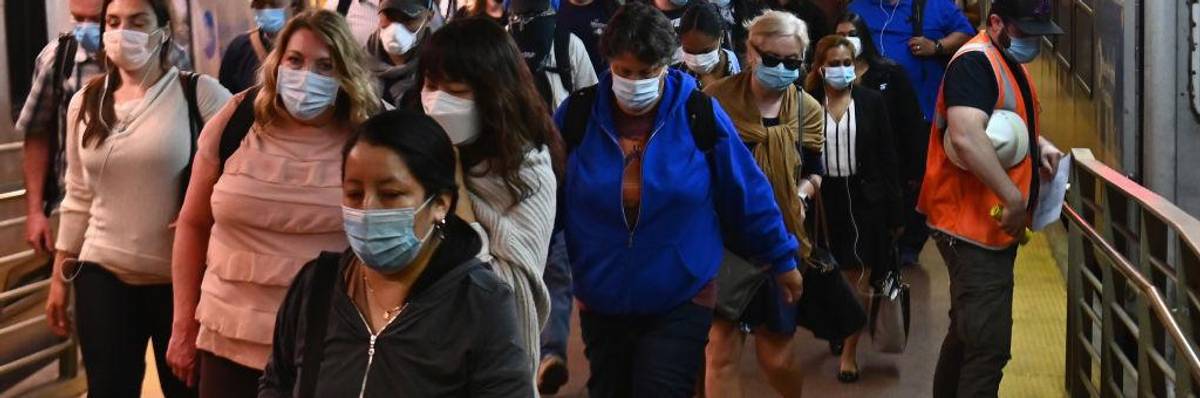
Neoliberalism didn't just distort our economy, it dismembered our picture of our democracy. (Photo by ANGELA WEISS/AFP via Getty Images)
The Media's Quadrennial Eclipse
We need coverage of people as active citizens, not just as consumers.
Whatever will he do next? The cable newscasters cry, eager to ply their audiences with more of the drip, drip that keeps advertisers hooked. If you're feeling withdrawal from Disaster Don's tweets, there are pictures of his golf cart and non-news of his non-lawsuits. And Joe, oh Joe, and the next four years. How will he handle the world and the pandemic and the heartbreak we call our economy? How will the Dow Jones react? And did you know the Bidens will be bringing to DC the White House's first-ever rescue pet?
All this how's-he-doing coverage is par for the course as we transition to the next administration, but someone's missing from this picture of our politics. It's us.
Neoliberalism as you'll recall, is that governing theory that came of age with Reagan and Thatcher by which society is seen purely as a market and the needs of humans are second to profit. Mostly gone from the scene already are the men and women who, for a few weeks this year, were interrupted over breakfast in Iowa or bothered over burgers in Pittsburgh by reporters curious to know what they think.
It's the quadrennial eclipse. Every election season, our picture of power momentarily opens up to include something resembling a society before it snaps back to narrow in on a few so-called "power brokers" in Washington and on Wall Street.
It's that eclipsing of the demos that leads me to think that neo-liberalism's not dead yet. Neoliberalism as you'll recall, is that governing theory that came of age with Reagan and Thatcher by which society is seen purely as a market and the needs of humans are second to profit. Some--progressives mostly--have started saying that after Covid, Trump and climate catastrophe, it's in trouble.
There's certainly reason to believe voters want a shift. Look across the country at the many ballot initiatives that won majority support for raising minimum wages and taxing-over the top wealth. Seventy-eight percent of Oregonian voters approved reining in corporate spending in elections, and 57% of voters in Colorado demanded workers get a fair chance to earn paid time off.
Votes like that suggest that a majority of Americans might be ready for a change in priorities, not just some new people in government.
But neoliberalism didn't just distort our economy, it dismembered our picture of our democracy. We need coverage of people as active citizens, not just as consumers. Reporting on society as if social life mattered, not just the course of the market. We need reporting on democracy that includes the actual demos. And that begins with the media.
We're coming up on Giving Tuesday. How about you take a look around and support the media that sees you back?
An Urgent Message From Our Co-Founder
Dear Common Dreams reader, It’s been nearly 30 years since I co-founded Common Dreams with my late wife, Lina Newhouser. We had the radical notion that journalism should serve the public good, not corporate profits. It was clear to us from the outset what it would take to build such a project. No paid advertisements. No corporate sponsors. No millionaire publisher telling us what to think or do. Many people said we wouldn't last a year, but we proved those doubters wrong. Together with a tremendous team of journalists and dedicated staff, we built an independent media outlet free from the constraints of profits and corporate control. Our mission has always been simple: To inform. To inspire. To ignite change for the common good. Building Common Dreams was not easy. Our survival was never guaranteed. When you take on the most powerful forces—Wall Street greed, fossil fuel industry destruction, Big Tech lobbyists, and uber-rich oligarchs who have spent billions upon billions rigging the economy and democracy in their favor—the only bulwark you have is supporters who believe in your work. But here’s the urgent message from me today. It's never been this bad out there. And it's never been this hard to keep us going. At the very moment Common Dreams is most needed, the threats we face are intensifying. We need your support now more than ever. We don't accept corporate advertising and never will. We don't have a paywall because we don't think people should be blocked from critical news based on their ability to pay. Everything we do is funded by the donations of readers like you. When everyone does the little they can afford, we are strong. But if that support retreats or dries up, so do we. Will you donate now to make sure Common Dreams not only survives but thrives? —Craig Brown, Co-founder |
Whatever will he do next? The cable newscasters cry, eager to ply their audiences with more of the drip, drip that keeps advertisers hooked. If you're feeling withdrawal from Disaster Don's tweets, there are pictures of his golf cart and non-news of his non-lawsuits. And Joe, oh Joe, and the next four years. How will he handle the world and the pandemic and the heartbreak we call our economy? How will the Dow Jones react? And did you know the Bidens will be bringing to DC the White House's first-ever rescue pet?
All this how's-he-doing coverage is par for the course as we transition to the next administration, but someone's missing from this picture of our politics. It's us.
Neoliberalism as you'll recall, is that governing theory that came of age with Reagan and Thatcher by which society is seen purely as a market and the needs of humans are second to profit. Mostly gone from the scene already are the men and women who, for a few weeks this year, were interrupted over breakfast in Iowa or bothered over burgers in Pittsburgh by reporters curious to know what they think.
It's the quadrennial eclipse. Every election season, our picture of power momentarily opens up to include something resembling a society before it snaps back to narrow in on a few so-called "power brokers" in Washington and on Wall Street.
It's that eclipsing of the demos that leads me to think that neo-liberalism's not dead yet. Neoliberalism as you'll recall, is that governing theory that came of age with Reagan and Thatcher by which society is seen purely as a market and the needs of humans are second to profit. Some--progressives mostly--have started saying that after Covid, Trump and climate catastrophe, it's in trouble.
There's certainly reason to believe voters want a shift. Look across the country at the many ballot initiatives that won majority support for raising minimum wages and taxing-over the top wealth. Seventy-eight percent of Oregonian voters approved reining in corporate spending in elections, and 57% of voters in Colorado demanded workers get a fair chance to earn paid time off.
Votes like that suggest that a majority of Americans might be ready for a change in priorities, not just some new people in government.
But neoliberalism didn't just distort our economy, it dismembered our picture of our democracy. We need coverage of people as active citizens, not just as consumers. Reporting on society as if social life mattered, not just the course of the market. We need reporting on democracy that includes the actual demos. And that begins with the media.
We're coming up on Giving Tuesday. How about you take a look around and support the media that sees you back?
Whatever will he do next? The cable newscasters cry, eager to ply their audiences with more of the drip, drip that keeps advertisers hooked. If you're feeling withdrawal from Disaster Don's tweets, there are pictures of his golf cart and non-news of his non-lawsuits. And Joe, oh Joe, and the next four years. How will he handle the world and the pandemic and the heartbreak we call our economy? How will the Dow Jones react? And did you know the Bidens will be bringing to DC the White House's first-ever rescue pet?
All this how's-he-doing coverage is par for the course as we transition to the next administration, but someone's missing from this picture of our politics. It's us.
Neoliberalism as you'll recall, is that governing theory that came of age with Reagan and Thatcher by which society is seen purely as a market and the needs of humans are second to profit. Mostly gone from the scene already are the men and women who, for a few weeks this year, were interrupted over breakfast in Iowa or bothered over burgers in Pittsburgh by reporters curious to know what they think.
It's the quadrennial eclipse. Every election season, our picture of power momentarily opens up to include something resembling a society before it snaps back to narrow in on a few so-called "power brokers" in Washington and on Wall Street.
It's that eclipsing of the demos that leads me to think that neo-liberalism's not dead yet. Neoliberalism as you'll recall, is that governing theory that came of age with Reagan and Thatcher by which society is seen purely as a market and the needs of humans are second to profit. Some--progressives mostly--have started saying that after Covid, Trump and climate catastrophe, it's in trouble.
There's certainly reason to believe voters want a shift. Look across the country at the many ballot initiatives that won majority support for raising minimum wages and taxing-over the top wealth. Seventy-eight percent of Oregonian voters approved reining in corporate spending in elections, and 57% of voters in Colorado demanded workers get a fair chance to earn paid time off.
Votes like that suggest that a majority of Americans might be ready for a change in priorities, not just some new people in government.
But neoliberalism didn't just distort our economy, it dismembered our picture of our democracy. We need coverage of people as active citizens, not just as consumers. Reporting on society as if social life mattered, not just the course of the market. We need reporting on democracy that includes the actual demos. And that begins with the media.
We're coming up on Giving Tuesday. How about you take a look around and support the media that sees you back?