SUBSCRIBE TO OUR FREE NEWSLETTER
Daily news & progressive opinion—funded by the people, not the corporations—delivered straight to your inbox.
5
#000000
#FFFFFF
To donate by check, phone, or other method, see our More Ways to Give page.
Daily news & progressive opinion—funded by the people, not the corporations—delivered straight to your inbox.
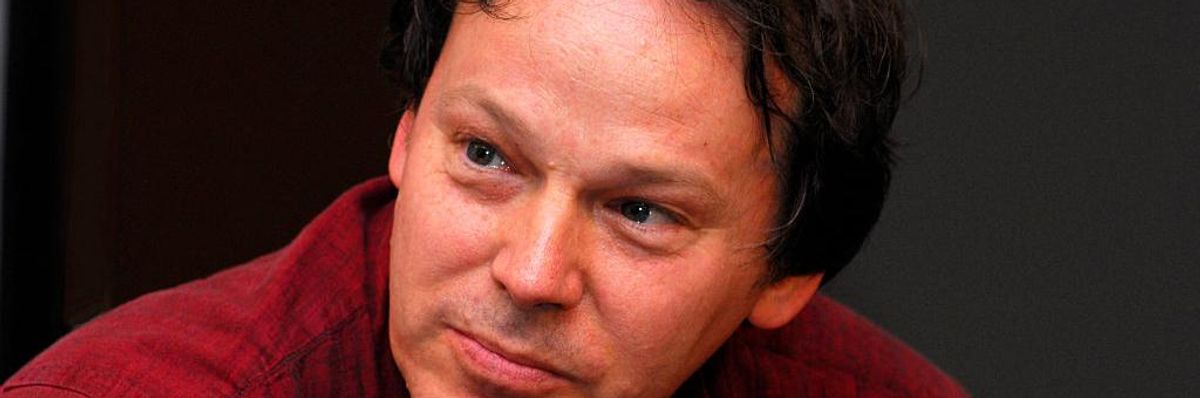
David Graeber wanted "a world where people could live fulfilling, satisfying, meaningful lives. A world where they could have more fun." (Photo: Andree/ullstein bild via Getty Images)
When I was a teenager, I overheard my bass teacher commiserating with some other jazz musicians over the premature death of a colleague. "Yeah," one said, "he was a soulful cat." Of all the memories that might have resurfaced all these decades later, that was the one that came to mind when I learned that David Graeber had died at the age of 59.
But then, why shouldn't it? True, Graeber was a triple-A figure--anthropologist, activist, and author--or a 4A one, if you add "anarchist" to the list. He was a public intellectual, in an era when public intellectuals had largely become a thing of the past. But, above all else, he was soulful. That's rare and important. Intellect without heart can bring forth monsters. But intellect with heart is a crucible for beauty. Together, they produce wisdom. David Graeber was wise.
I first heard about David from his work with Occupy. Friends later introduced me to his book, Debt: The First 5,000 Years, which inspired me to read more of his work. I interviewed him twice for my radio/TV program, and we had several other conversations. That, plus some emails and the occasional Twitter interaction, was the extent of our relationship. It's not a lot of contact, but it meant a lot to me.
Our conversations will stay with me forever, ranging (as David's thinking did) everything from superheroes to structural violence, from crematoria to comic books. In one exchange, his comments led me to wonder whether our comic-book culture hadn't helped spawn Donald Trump. As in: If the so-called 'heroes' can't help us, let's see what the villain can do.
He replied by describing Trump shaking hands with other world leaders at a G8 summit or similar event. "It was as if, you know. this badly-drawn cartoon character had walked into a group of real people and they all had to imagine he was real."
David described Trump's election as "a practical joke played by a certain sector of the electorate on the political class. Because what they're saying is, 'When we see you, we see what you see when you see Donald Trump ... This is you: greedy, narcissistic, and completely corrupt ... He's just honest about it.'"
Not that David was interested in takedowns. He wanted to know why things happened: Why was Trump elected? Why did so many people think their jobs were pointless? Why were economists so wrong all the time? Why do so many scientists think animals are machines? His search for answers resulted in books like Bullshit Jobs, and essays like "Against Economics" and "What's the Point If We Can't Have Fun?"
"David Graeber's work is a testament to the human imagination, and a call to be more imaginative."
As presumptuous as it may sound, given the thinness of our actual contact, I considered him a friend. In the course of our few conversations, we discovered that both of us had used the 1960s cartoon The Jetsons in our writing, and that both of us appreciated the phrase, "the war against the imagination." When I told him the phrase came from a poem by Diane DiPrima, he asked me to send it to him. I hope he appreciated it. I imagine he did.
"(T)he only war that matters is the war against the imagination. All other wars are subsumed in it ... no one can fight it but you/ & no one can fight it for you."
David Graeber's work is a testament to the human imagination, and a call to be more imaginative. That's especially important here in Washington DC, where you're considered a delusional Utopian if you call for a percentage shift in the corporate tax code. David looked to the distant past, and to the future, to imagine truly radical changes in the human community.
"History," as DiPrima says, "is a living weapon in (your) hand."
DiPrima also wrote, "there is no part of yourself you can separate out, saying, this is memory, this is sensation, this is the work I care about, this is how I make a living."
I think David understood that intuitively. His work seemed to integrate seamlessly with his personality as a whole. From what I can tell, it fulfilled and enriched him. I know he had fun. And that's what he wanted for everyone: a world where people could live fulfilling, satisfying, meaningful lives. A world where they could have more fun.
David Graeber wanted that world because he could see it, in his mind's eye. He wanted that world because he was compassionate. He wanted that world because, like that jazzman, he was a soulful cat.
History was a living weapon in his hand. He will be missed.
David Graeber in conversation: Heroes, Kings, and Movements
David Graeber in conversation: Bullshit Jobs
Dear Common Dreams reader, It’s been nearly 30 years since I co-founded Common Dreams with my late wife, Lina Newhouser. We had the radical notion that journalism should serve the public good, not corporate profits. It was clear to us from the outset what it would take to build such a project. No paid advertisements. No corporate sponsors. No millionaire publisher telling us what to think or do. Many people said we wouldn't last a year, but we proved those doubters wrong. Together with a tremendous team of journalists and dedicated staff, we built an independent media outlet free from the constraints of profits and corporate control. Our mission has always been simple: To inform. To inspire. To ignite change for the common good. Building Common Dreams was not easy. Our survival was never guaranteed. When you take on the most powerful forces—Wall Street greed, fossil fuel industry destruction, Big Tech lobbyists, and uber-rich oligarchs who have spent billions upon billions rigging the economy and democracy in their favor—the only bulwark you have is supporters who believe in your work. But here’s the urgent message from me today. It's never been this bad out there. And it's never been this hard to keep us going. At the very moment Common Dreams is most needed, the threats we face are intensifying. We need your support now more than ever. We don't accept corporate advertising and never will. We don't have a paywall because we don't think people should be blocked from critical news based on their ability to pay. Everything we do is funded by the donations of readers like you. When everyone does the little they can afford, we are strong. But if that support retreats or dries up, so do we. Will you donate now to make sure Common Dreams not only survives but thrives? —Craig Brown, Co-founder |
Richard (RJ) Eskow is a journalist who has written for a number of major publications. His weekly program, The Zero Hour, can be found on cable television, radio, Spotify, and podcast media.
When I was a teenager, I overheard my bass teacher commiserating with some other jazz musicians over the premature death of a colleague. "Yeah," one said, "he was a soulful cat." Of all the memories that might have resurfaced all these decades later, that was the one that came to mind when I learned that David Graeber had died at the age of 59.
But then, why shouldn't it? True, Graeber was a triple-A figure--anthropologist, activist, and author--or a 4A one, if you add "anarchist" to the list. He was a public intellectual, in an era when public intellectuals had largely become a thing of the past. But, above all else, he was soulful. That's rare and important. Intellect without heart can bring forth monsters. But intellect with heart is a crucible for beauty. Together, they produce wisdom. David Graeber was wise.
I first heard about David from his work with Occupy. Friends later introduced me to his book, Debt: The First 5,000 Years, which inspired me to read more of his work. I interviewed him twice for my radio/TV program, and we had several other conversations. That, plus some emails and the occasional Twitter interaction, was the extent of our relationship. It's not a lot of contact, but it meant a lot to me.
Our conversations will stay with me forever, ranging (as David's thinking did) everything from superheroes to structural violence, from crematoria to comic books. In one exchange, his comments led me to wonder whether our comic-book culture hadn't helped spawn Donald Trump. As in: If the so-called 'heroes' can't help us, let's see what the villain can do.
He replied by describing Trump shaking hands with other world leaders at a G8 summit or similar event. "It was as if, you know. this badly-drawn cartoon character had walked into a group of real people and they all had to imagine he was real."
David described Trump's election as "a practical joke played by a certain sector of the electorate on the political class. Because what they're saying is, 'When we see you, we see what you see when you see Donald Trump ... This is you: greedy, narcissistic, and completely corrupt ... He's just honest about it.'"
Not that David was interested in takedowns. He wanted to know why things happened: Why was Trump elected? Why did so many people think their jobs were pointless? Why were economists so wrong all the time? Why do so many scientists think animals are machines? His search for answers resulted in books like Bullshit Jobs, and essays like "Against Economics" and "What's the Point If We Can't Have Fun?"
"David Graeber's work is a testament to the human imagination, and a call to be more imaginative."
As presumptuous as it may sound, given the thinness of our actual contact, I considered him a friend. In the course of our few conversations, we discovered that both of us had used the 1960s cartoon The Jetsons in our writing, and that both of us appreciated the phrase, "the war against the imagination." When I told him the phrase came from a poem by Diane DiPrima, he asked me to send it to him. I hope he appreciated it. I imagine he did.
"(T)he only war that matters is the war against the imagination. All other wars are subsumed in it ... no one can fight it but you/ & no one can fight it for you."
David Graeber's work is a testament to the human imagination, and a call to be more imaginative. That's especially important here in Washington DC, where you're considered a delusional Utopian if you call for a percentage shift in the corporate tax code. David looked to the distant past, and to the future, to imagine truly radical changes in the human community.
"History," as DiPrima says, "is a living weapon in (your) hand."
DiPrima also wrote, "there is no part of yourself you can separate out, saying, this is memory, this is sensation, this is the work I care about, this is how I make a living."
I think David understood that intuitively. His work seemed to integrate seamlessly with his personality as a whole. From what I can tell, it fulfilled and enriched him. I know he had fun. And that's what he wanted for everyone: a world where people could live fulfilling, satisfying, meaningful lives. A world where they could have more fun.
David Graeber wanted that world because he could see it, in his mind's eye. He wanted that world because he was compassionate. He wanted that world because, like that jazzman, he was a soulful cat.
History was a living weapon in his hand. He will be missed.
David Graeber in conversation: Heroes, Kings, and Movements
David Graeber in conversation: Bullshit Jobs
Richard (RJ) Eskow is a journalist who has written for a number of major publications. His weekly program, The Zero Hour, can be found on cable television, radio, Spotify, and podcast media.
When I was a teenager, I overheard my bass teacher commiserating with some other jazz musicians over the premature death of a colleague. "Yeah," one said, "he was a soulful cat." Of all the memories that might have resurfaced all these decades later, that was the one that came to mind when I learned that David Graeber had died at the age of 59.
But then, why shouldn't it? True, Graeber was a triple-A figure--anthropologist, activist, and author--or a 4A one, if you add "anarchist" to the list. He was a public intellectual, in an era when public intellectuals had largely become a thing of the past. But, above all else, he was soulful. That's rare and important. Intellect without heart can bring forth monsters. But intellect with heart is a crucible for beauty. Together, they produce wisdom. David Graeber was wise.
I first heard about David from his work with Occupy. Friends later introduced me to his book, Debt: The First 5,000 Years, which inspired me to read more of his work. I interviewed him twice for my radio/TV program, and we had several other conversations. That, plus some emails and the occasional Twitter interaction, was the extent of our relationship. It's not a lot of contact, but it meant a lot to me.
Our conversations will stay with me forever, ranging (as David's thinking did) everything from superheroes to structural violence, from crematoria to comic books. In one exchange, his comments led me to wonder whether our comic-book culture hadn't helped spawn Donald Trump. As in: If the so-called 'heroes' can't help us, let's see what the villain can do.
He replied by describing Trump shaking hands with other world leaders at a G8 summit or similar event. "It was as if, you know. this badly-drawn cartoon character had walked into a group of real people and they all had to imagine he was real."
David described Trump's election as "a practical joke played by a certain sector of the electorate on the political class. Because what they're saying is, 'When we see you, we see what you see when you see Donald Trump ... This is you: greedy, narcissistic, and completely corrupt ... He's just honest about it.'"
Not that David was interested in takedowns. He wanted to know why things happened: Why was Trump elected? Why did so many people think their jobs were pointless? Why were economists so wrong all the time? Why do so many scientists think animals are machines? His search for answers resulted in books like Bullshit Jobs, and essays like "Against Economics" and "What's the Point If We Can't Have Fun?"
"David Graeber's work is a testament to the human imagination, and a call to be more imaginative."
As presumptuous as it may sound, given the thinness of our actual contact, I considered him a friend. In the course of our few conversations, we discovered that both of us had used the 1960s cartoon The Jetsons in our writing, and that both of us appreciated the phrase, "the war against the imagination." When I told him the phrase came from a poem by Diane DiPrima, he asked me to send it to him. I hope he appreciated it. I imagine he did.
"(T)he only war that matters is the war against the imagination. All other wars are subsumed in it ... no one can fight it but you/ & no one can fight it for you."
David Graeber's work is a testament to the human imagination, and a call to be more imaginative. That's especially important here in Washington DC, where you're considered a delusional Utopian if you call for a percentage shift in the corporate tax code. David looked to the distant past, and to the future, to imagine truly radical changes in the human community.
"History," as DiPrima says, "is a living weapon in (your) hand."
DiPrima also wrote, "there is no part of yourself you can separate out, saying, this is memory, this is sensation, this is the work I care about, this is how I make a living."
I think David understood that intuitively. His work seemed to integrate seamlessly with his personality as a whole. From what I can tell, it fulfilled and enriched him. I know he had fun. And that's what he wanted for everyone: a world where people could live fulfilling, satisfying, meaningful lives. A world where they could have more fun.
David Graeber wanted that world because he could see it, in his mind's eye. He wanted that world because he was compassionate. He wanted that world because, like that jazzman, he was a soulful cat.
History was a living weapon in his hand. He will be missed.
David Graeber in conversation: Heroes, Kings, and Movements
David Graeber in conversation: Bullshit Jobs