

SUBSCRIBE TO OUR FREE NEWSLETTER
Daily news & progressive opinion—funded by the people, not the corporations—delivered straight to your inbox.
5
#000000
#FFFFFF
To donate by check, phone, or other method, see our More Ways to Give page.
Daily news & progressive opinion—funded by the people, not the corporations—delivered straight to your inbox.
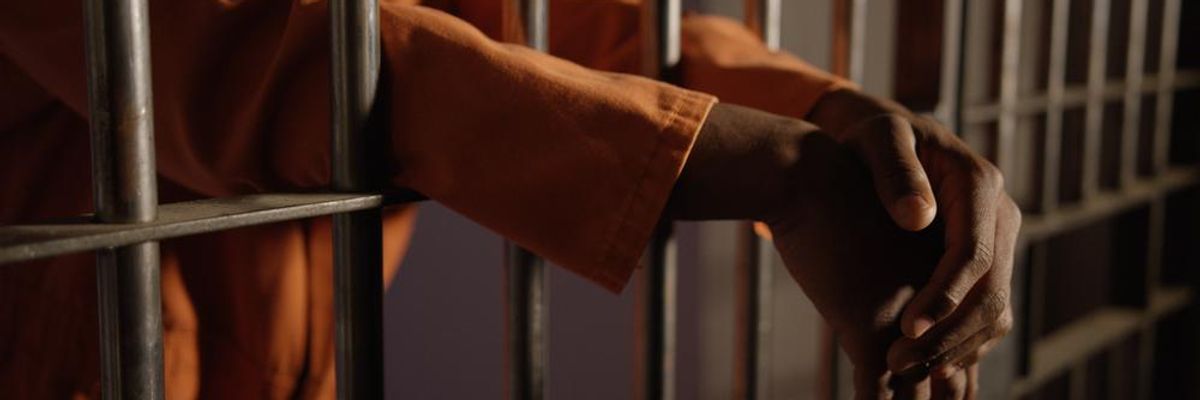
The impact of all this on our democracy is striking. (Photo: Shutterstock)
Should Americans caught up in the justice system be stripped of their right to vote?
Senator Bernie Sanders catapulted the issue into the spotlight when he declared his unequivocal support for the voting rights of prison inmates at a recent town hall.
"I think the right to vote is inherent to our democracy," he said. "Once you start chipping away and you say, that person committed a terrible crime, not gonna let him vote... you're running down a slippery slope."
Senators Kamala Harris and Elizabeth Warren were more cautious, but didn't explicitly disagree. Former Rep. Beto O'Rourke said he was in favor of allowing "non-violent" offenders to vote while incarcerated.
South Bend, Indiana mayor Pete Buttigieg, alone among Democrats, was a hard no on any inmate voting.
Republicans, by contrast, have raised the idea of Boston Marathon bomber Dzhokhar Tsarnaev or white supremacist murderer Dylan Roof voting as a way of shooting down the entire discussion.
Of course, Tsarnaev and Roof are but two of the over 2.3 million prisoners locked up in "the land of the free." Using one or two examples to justify condemning over 2 million people is always unsound. But it's especially repulsive in this instance.
In all, 14 states and D.C. bar prisoners from voting. Twenty-two other states, to varying degrees, restrict voting during parole or probation.
Twelve more ban people with felonies from voting for a time even after their release -- and in Kentucky and Iowa, permanently. (Virginia bans them permanently too, but the state's governor has been automatically restoring voting rights to people who complete their sentences).
The impact of all this on our democracy is striking.
One in 10 Kentuckians can never vote again due to a felony conviction. For black Kentuckians, the rate of permanent felony disenfranchisement is even greater, at one in four.
It's not hard to understand why Republicans want to keep it this way. Thanks to a racially biased justice system, black and Hispanic adults are much more likely to be convicted of felonies. They're also much more likely to vote for Democrats.
Republicans know this. Just last November, a super-majority of Floridians voted to re-enfranchise 1.5 million folks with prior felony convictions -- including 1 out of 5 black Floridians. Yet before the ink could even dry, Florida's GOP-led House passed legislation restricting the measure and applying a poll tax on returning voters.
The gamesmanship gets even more perverse when you consider the Census, which counts prisoners as residents of the areas where they're confined.
That inflates the populations of Republican-leaning small towns and rural areas where most state prisons are located. That means more federal money and more legislative seats, even though the inmates can't vote for who holds them. Are you seeing the hypocrisy yet?
Forbidding inmate voting, disenfranchising them after release, and counting them as residents where they're imprisoned are all components of a terrible practice known as prison gerrymandering.
It looks and smells a lot like the 3/5 compromise -- an old constitutional practice allowing Southern states to count three-fifths of their enslaved population when apportioning House seats, Electoral College votes, and federal funding.
For too long, inmates have been an easy punching bag for politicians. Voting should be an inalienable right -- even for inmates, and especially for those who've served their time. No amount of single-case scare tactics should ruin it for the lot.
Mass incarceration is now a bipartisan concern. Its effects on our democracy should be too. And if that's a problem because it could swing a few elections, the problem isn't prisoners -- it's the system that locks up an entire voting bloc.
Dear Common Dreams reader, It’s been nearly 30 years since I co-founded Common Dreams with my late wife, Lina Newhouser. We had the radical notion that journalism should serve the public good, not corporate profits. It was clear to us from the outset what it would take to build such a project. No paid advertisements. No corporate sponsors. No millionaire publisher telling us what to think or do. Many people said we wouldn't last a year, but we proved those doubters wrong. Together with a tremendous team of journalists and dedicated staff, we built an independent media outlet free from the constraints of profits and corporate control. Our mission has always been simple: To inform. To inspire. To ignite change for the common good. Building Common Dreams was not easy. Our survival was never guaranteed. When you take on the most powerful forces—Wall Street greed, fossil fuel industry destruction, Big Tech lobbyists, and uber-rich oligarchs who have spent billions upon billions rigging the economy and democracy in their favor—the only bulwark you have is supporters who believe in your work. But here’s the urgent message from me today. It's never been this bad out there. And it's never been this hard to keep us going. At the very moment Common Dreams is most needed, the threats we face are intensifying. We need your support now more than ever. We don't accept corporate advertising and never will. We don't have a paywall because we don't think people should be blocked from critical news based on their ability to pay. Everything we do is funded by the donations of readers like you. When everyone does the little they can afford, we are strong. But if that support retreats or dries up, so do we. Will you donate now to make sure Common Dreams not only survives but thrives? —Craig Brown, Co-founder |
Should Americans caught up in the justice system be stripped of their right to vote?
Senator Bernie Sanders catapulted the issue into the spotlight when he declared his unequivocal support for the voting rights of prison inmates at a recent town hall.
"I think the right to vote is inherent to our democracy," he said. "Once you start chipping away and you say, that person committed a terrible crime, not gonna let him vote... you're running down a slippery slope."
Senators Kamala Harris and Elizabeth Warren were more cautious, but didn't explicitly disagree. Former Rep. Beto O'Rourke said he was in favor of allowing "non-violent" offenders to vote while incarcerated.
South Bend, Indiana mayor Pete Buttigieg, alone among Democrats, was a hard no on any inmate voting.
Republicans, by contrast, have raised the idea of Boston Marathon bomber Dzhokhar Tsarnaev or white supremacist murderer Dylan Roof voting as a way of shooting down the entire discussion.
Of course, Tsarnaev and Roof are but two of the over 2.3 million prisoners locked up in "the land of the free." Using one or two examples to justify condemning over 2 million people is always unsound. But it's especially repulsive in this instance.
In all, 14 states and D.C. bar prisoners from voting. Twenty-two other states, to varying degrees, restrict voting during parole or probation.
Twelve more ban people with felonies from voting for a time even after their release -- and in Kentucky and Iowa, permanently. (Virginia bans them permanently too, but the state's governor has been automatically restoring voting rights to people who complete their sentences).
The impact of all this on our democracy is striking.
One in 10 Kentuckians can never vote again due to a felony conviction. For black Kentuckians, the rate of permanent felony disenfranchisement is even greater, at one in four.
It's not hard to understand why Republicans want to keep it this way. Thanks to a racially biased justice system, black and Hispanic adults are much more likely to be convicted of felonies. They're also much more likely to vote for Democrats.
Republicans know this. Just last November, a super-majority of Floridians voted to re-enfranchise 1.5 million folks with prior felony convictions -- including 1 out of 5 black Floridians. Yet before the ink could even dry, Florida's GOP-led House passed legislation restricting the measure and applying a poll tax on returning voters.
The gamesmanship gets even more perverse when you consider the Census, which counts prisoners as residents of the areas where they're confined.
That inflates the populations of Republican-leaning small towns and rural areas where most state prisons are located. That means more federal money and more legislative seats, even though the inmates can't vote for who holds them. Are you seeing the hypocrisy yet?
Forbidding inmate voting, disenfranchising them after release, and counting them as residents where they're imprisoned are all components of a terrible practice known as prison gerrymandering.
It looks and smells a lot like the 3/5 compromise -- an old constitutional practice allowing Southern states to count three-fifths of their enslaved population when apportioning House seats, Electoral College votes, and federal funding.
For too long, inmates have been an easy punching bag for politicians. Voting should be an inalienable right -- even for inmates, and especially for those who've served their time. No amount of single-case scare tactics should ruin it for the lot.
Mass incarceration is now a bipartisan concern. Its effects on our democracy should be too. And if that's a problem because it could swing a few elections, the problem isn't prisoners -- it's the system that locks up an entire voting bloc.
Should Americans caught up in the justice system be stripped of their right to vote?
Senator Bernie Sanders catapulted the issue into the spotlight when he declared his unequivocal support for the voting rights of prison inmates at a recent town hall.
"I think the right to vote is inherent to our democracy," he said. "Once you start chipping away and you say, that person committed a terrible crime, not gonna let him vote... you're running down a slippery slope."
Senators Kamala Harris and Elizabeth Warren were more cautious, but didn't explicitly disagree. Former Rep. Beto O'Rourke said he was in favor of allowing "non-violent" offenders to vote while incarcerated.
South Bend, Indiana mayor Pete Buttigieg, alone among Democrats, was a hard no on any inmate voting.
Republicans, by contrast, have raised the idea of Boston Marathon bomber Dzhokhar Tsarnaev or white supremacist murderer Dylan Roof voting as a way of shooting down the entire discussion.
Of course, Tsarnaev and Roof are but two of the over 2.3 million prisoners locked up in "the land of the free." Using one or two examples to justify condemning over 2 million people is always unsound. But it's especially repulsive in this instance.
In all, 14 states and D.C. bar prisoners from voting. Twenty-two other states, to varying degrees, restrict voting during parole or probation.
Twelve more ban people with felonies from voting for a time even after their release -- and in Kentucky and Iowa, permanently. (Virginia bans them permanently too, but the state's governor has been automatically restoring voting rights to people who complete their sentences).
The impact of all this on our democracy is striking.
One in 10 Kentuckians can never vote again due to a felony conviction. For black Kentuckians, the rate of permanent felony disenfranchisement is even greater, at one in four.
It's not hard to understand why Republicans want to keep it this way. Thanks to a racially biased justice system, black and Hispanic adults are much more likely to be convicted of felonies. They're also much more likely to vote for Democrats.
Republicans know this. Just last November, a super-majority of Floridians voted to re-enfranchise 1.5 million folks with prior felony convictions -- including 1 out of 5 black Floridians. Yet before the ink could even dry, Florida's GOP-led House passed legislation restricting the measure and applying a poll tax on returning voters.
The gamesmanship gets even more perverse when you consider the Census, which counts prisoners as residents of the areas where they're confined.
That inflates the populations of Republican-leaning small towns and rural areas where most state prisons are located. That means more federal money and more legislative seats, even though the inmates can't vote for who holds them. Are you seeing the hypocrisy yet?
Forbidding inmate voting, disenfranchising them after release, and counting them as residents where they're imprisoned are all components of a terrible practice known as prison gerrymandering.
It looks and smells a lot like the 3/5 compromise -- an old constitutional practice allowing Southern states to count three-fifths of their enslaved population when apportioning House seats, Electoral College votes, and federal funding.
For too long, inmates have been an easy punching bag for politicians. Voting should be an inalienable right -- even for inmates, and especially for those who've served their time. No amount of single-case scare tactics should ruin it for the lot.
Mass incarceration is now a bipartisan concern. Its effects on our democracy should be too. And if that's a problem because it could swing a few elections, the problem isn't prisoners -- it's the system that locks up an entire voting bloc.

