SUBSCRIBE TO OUR FREE NEWSLETTER
Daily news & progressive opinion—funded by the people, not the corporations—delivered straight to your inbox.
5
#000000
#FFFFFF
To donate by check, phone, or other method, see our More Ways to Give page.
Daily news & progressive opinion—funded by the people, not the corporations—delivered straight to your inbox.
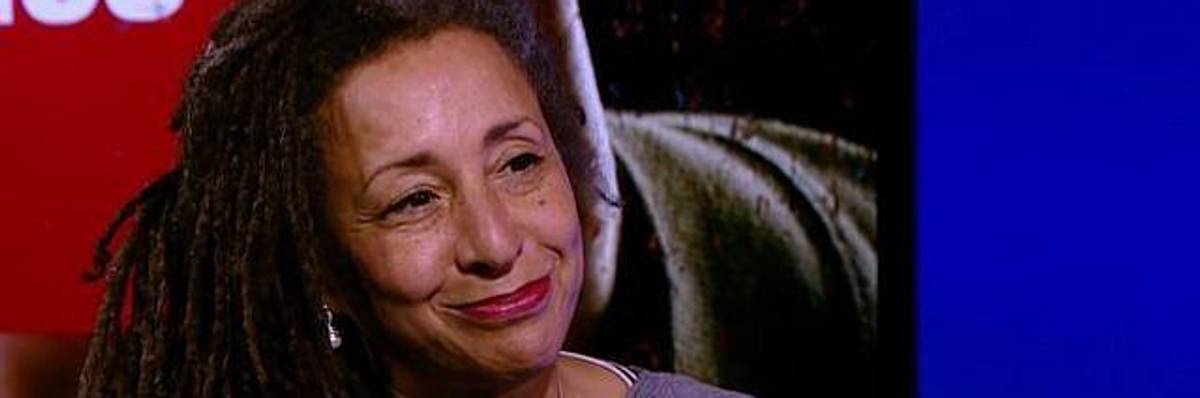
The documentary "Witch Hunt" tells the story of Jackie Walker (pictured above), the activist suspended from the Labour Party over comments that were allegedly anti-Semitic, while underscoring how "anti-Semitism" has become a weapon in the hands of those defending Israel's abusive practices. (Photo: Screenshot/YouTube)
When I received the message from Jewish Voice for Labour announcing that the screening of the documentary "Witch Hunt" in parliament and the scheduled panel to follow (which I had been invited to join) had been cancelled, I was nonplussed.
Three weeks earlier, I had watched Witch Hunt at a London cinema. The documentary tells the story of Jackie Walker, the activist suspended from the Labour Party over comments that were allegedly anti-Semitic, while underscoring how "anti-Semitism" has become a weapon in the hands of those defending Israel's abusive practices. Indeed, the film shows how accusations of anti-Semitism are increasingly being used to delegitimise critics of the Israeli government and its policies toward the Palestinians in the West Bank, Gaza Strip and East Jerusalem.
The documentary also exposes the intimate relations between the pro-Israel lobby and members of the British parliament and is quite critical of some of the ways in which the Labour party has been handling accusations of anti-Semitism. At one point, the film even suggests that the party is entering a McCarthyist era.
As if to prove these assertions right, Labour MP Chris Williamson, who had helped arrange the screening, was suspended from the party in late February. A Labour spokeswoman said it was "completely inappropriate" for Williamson to have booked a room in parliament for a screening of Witch Hunt.
The major complaint against Williamson, however, involved a remark he had made a few days earlier about Labour having "been too apologetic " when confronting those who have accused it of harbouring Jew-haters.
Let me be clear. Insofar as the Labour party represents a cross-section of British society, it likely does have some anti-Semites within its ranks, and I wholeheartedly agree with those who argue that the party should have zero tolerance for these bigots.
It's not about whether the party should tolerate anti-Semitism, but about what anti-Semitism is. However, the real point of contention between Jewish Voice for Labour, Chris Williamson and Jackie Walker on the one side, and their detractors on the other, is not about whether the party should tolerate anti-Semitism, but about what anti-Semitism is.
My assumption is that all those involved in this dispute agree that anti-Semitism is evil. Millions of Jews were once exterminated by an anti-Semitic regime as world leaders watched in silence. Anti-Semitism can lead and has led to genocide and other horrific and egregious crimes and therefore it must be rejected, combated and eradicated, regardless of its specific manifestations, the location of its occurrence or the identity of its promulgators. This, in my eyes, is self-evident and should be the starting point of any discussion on anti-Semitism.
I also assume that Williamson, Walker and their detractors would agree that anti-Semitism is on the rise: from the desecration of Jewish cemeteries in France and the horrific attack on a synagogue in the US through Prime Minister Viktor Orban's anti-Semitic campaign against Jewish phillantropist George Soros in Hungary and the "Jews not welcome" signs put up by the fascist Golden Dawn movement in Greece to the current Polish Defence Minister Antoni Macierewicz's belief that the Protocols of the Elders of Zion are authentic.
The dispute between the different sides, then, has to do with how anti-Semitism is defined. Again, I presume, everyone involved would agree with the way historians and social scientists have traditionally defined anti-Semitism: hatred of Jews per se; belief in a worldwide Jewish conspiracy; belief that Jews control capitalism; belief that Jews are naturally inferior; and so on.
The problem begins when one side conflates anti-Zionism or criticism of Israel with anti-Semitism.
Although this conflation is not entirely new, it took on new life when the International Holocaust Remembrance Alliance published its definition of anti-Semitism , providing a number of examples informed by the false assumptions that Zionism is completely identical to and with Jewishness and that a seamless equation can be drawn between the State of Israel and the Jewish people.
When examining statements made by leading members of the alt-right in the US and extreme right-wing politicians across Europe, it becomes obvious that one can be both a Zionist and an anti-Semite.
But many Jews are not Zionists, while, simultaneously, Zionism has numerous traits that are in no way embedded in or characteristic of Jewishness but, rather, have their roots in nationalist and settler ideologies of the 18th, 19th and 20th centuries.
Accordingly, a critique of Zionism or Israel is not necessarily a product of animus toward Jews, while, conversely, hatred toward Jews does not necessarily entail an anti-Zionist stance.
Indeed, when examining statements made by leading members of the alt-right in the US and extreme right-wing politicians across Europe, it becomes obvious that one can be both a Zionist and an anti-Semite. I am thinking of people like Richard Spencer from the US who characterises himself as a "white Zionist ", yet thinks that "Jews are vastly over-represented in what you could call 'the establishment'." In a similar vein, Orban, who has professed his admiration of Zionism, has, on other occasions, revealed his anti-Semitic tendencies.
The important point is that these right-wing politicians can be Zionist and anti-Semitic at the same time and with intellectual consistency. And if Zionism and anti-Semitism can coincide, then, according to the law of contradiction, anti-Zionism and anti-Semitism are not reducible one to the other.
Let there be no mistake, in certain instances anti-Zionists are indeed anti-Semitic, but this in and of itself does not say much since a variety of views and ideologies can coincide with anti-Semitism. One can, for example, be a capitalist or a socialist or a libertarian and still be an anti-Semite, but the fact that anti-Semitism can align with these ideologies does not tell us very much about their essence.
Perhaps the greatest irony regarding those who demanded that Williamson cancel the screening of Witch Hunt at Westminster is that their position is in direction opposition to the Jewish tradition and, indeed, to the great Jewish prophets - people like Amos, Jeramiah and Elisha - who were extremely critical of the people of Israel.
The frightening reality is that if these prophets were living in Britain today and were to reiterate words enshrined in the Bible, they, too, would be branded anti-Semites.
First published at Al Jazeera
Dear Common Dreams reader, It’s been nearly 30 years since I co-founded Common Dreams with my late wife, Lina Newhouser. We had the radical notion that journalism should serve the public good, not corporate profits. It was clear to us from the outset what it would take to build such a project. No paid advertisements. No corporate sponsors. No millionaire publisher telling us what to think or do. Many people said we wouldn't last a year, but we proved those doubters wrong. Together with a tremendous team of journalists and dedicated staff, we built an independent media outlet free from the constraints of profits and corporate control. Our mission has always been simple: To inform. To inspire. To ignite change for the common good. Building Common Dreams was not easy. Our survival was never guaranteed. When you take on the most powerful forces—Wall Street greed, fossil fuel industry destruction, Big Tech lobbyists, and uber-rich oligarchs who have spent billions upon billions rigging the economy and democracy in their favor—the only bulwark you have is supporters who believe in your work. But here’s the urgent message from me today. It's never been this bad out there. And it's never been this hard to keep us going. At the very moment Common Dreams is most needed, the threats we face are intensifying. We need your support now more than ever. We don't accept corporate advertising and never will. We don't have a paywall because we don't think people should be blocked from critical news based on their ability to pay. Everything we do is funded by the donations of readers like you. When everyone does the little they can afford, we are strong. But if that support retreats or dries up, so do we. Will you donate now to make sure Common Dreams not only survives but thrives? —Craig Brown, Co-founder |
When I received the message from Jewish Voice for Labour announcing that the screening of the documentary "Witch Hunt" in parliament and the scheduled panel to follow (which I had been invited to join) had been cancelled, I was nonplussed.
Three weeks earlier, I had watched Witch Hunt at a London cinema. The documentary tells the story of Jackie Walker, the activist suspended from the Labour Party over comments that were allegedly anti-Semitic, while underscoring how "anti-Semitism" has become a weapon in the hands of those defending Israel's abusive practices. Indeed, the film shows how accusations of anti-Semitism are increasingly being used to delegitimise critics of the Israeli government and its policies toward the Palestinians in the West Bank, Gaza Strip and East Jerusalem.
The documentary also exposes the intimate relations between the pro-Israel lobby and members of the British parliament and is quite critical of some of the ways in which the Labour party has been handling accusations of anti-Semitism. At one point, the film even suggests that the party is entering a McCarthyist era.
As if to prove these assertions right, Labour MP Chris Williamson, who had helped arrange the screening, was suspended from the party in late February. A Labour spokeswoman said it was "completely inappropriate" for Williamson to have booked a room in parliament for a screening of Witch Hunt.
The major complaint against Williamson, however, involved a remark he had made a few days earlier about Labour having "been too apologetic " when confronting those who have accused it of harbouring Jew-haters.
Let me be clear. Insofar as the Labour party represents a cross-section of British society, it likely does have some anti-Semites within its ranks, and I wholeheartedly agree with those who argue that the party should have zero tolerance for these bigots.
It's not about whether the party should tolerate anti-Semitism, but about what anti-Semitism is. However, the real point of contention between Jewish Voice for Labour, Chris Williamson and Jackie Walker on the one side, and their detractors on the other, is not about whether the party should tolerate anti-Semitism, but about what anti-Semitism is.
My assumption is that all those involved in this dispute agree that anti-Semitism is evil. Millions of Jews were once exterminated by an anti-Semitic regime as world leaders watched in silence. Anti-Semitism can lead and has led to genocide and other horrific and egregious crimes and therefore it must be rejected, combated and eradicated, regardless of its specific manifestations, the location of its occurrence or the identity of its promulgators. This, in my eyes, is self-evident and should be the starting point of any discussion on anti-Semitism.
I also assume that Williamson, Walker and their detractors would agree that anti-Semitism is on the rise: from the desecration of Jewish cemeteries in France and the horrific attack on a synagogue in the US through Prime Minister Viktor Orban's anti-Semitic campaign against Jewish phillantropist George Soros in Hungary and the "Jews not welcome" signs put up by the fascist Golden Dawn movement in Greece to the current Polish Defence Minister Antoni Macierewicz's belief that the Protocols of the Elders of Zion are authentic.
The dispute between the different sides, then, has to do with how anti-Semitism is defined. Again, I presume, everyone involved would agree with the way historians and social scientists have traditionally defined anti-Semitism: hatred of Jews per se; belief in a worldwide Jewish conspiracy; belief that Jews control capitalism; belief that Jews are naturally inferior; and so on.
The problem begins when one side conflates anti-Zionism or criticism of Israel with anti-Semitism.
Although this conflation is not entirely new, it took on new life when the International Holocaust Remembrance Alliance published its definition of anti-Semitism , providing a number of examples informed by the false assumptions that Zionism is completely identical to and with Jewishness and that a seamless equation can be drawn between the State of Israel and the Jewish people.
When examining statements made by leading members of the alt-right in the US and extreme right-wing politicians across Europe, it becomes obvious that one can be both a Zionist and an anti-Semite.
But many Jews are not Zionists, while, simultaneously, Zionism has numerous traits that are in no way embedded in or characteristic of Jewishness but, rather, have their roots in nationalist and settler ideologies of the 18th, 19th and 20th centuries.
Accordingly, a critique of Zionism or Israel is not necessarily a product of animus toward Jews, while, conversely, hatred toward Jews does not necessarily entail an anti-Zionist stance.
Indeed, when examining statements made by leading members of the alt-right in the US and extreme right-wing politicians across Europe, it becomes obvious that one can be both a Zionist and an anti-Semite. I am thinking of people like Richard Spencer from the US who characterises himself as a "white Zionist ", yet thinks that "Jews are vastly over-represented in what you could call 'the establishment'." In a similar vein, Orban, who has professed his admiration of Zionism, has, on other occasions, revealed his anti-Semitic tendencies.
The important point is that these right-wing politicians can be Zionist and anti-Semitic at the same time and with intellectual consistency. And if Zionism and anti-Semitism can coincide, then, according to the law of contradiction, anti-Zionism and anti-Semitism are not reducible one to the other.
Let there be no mistake, in certain instances anti-Zionists are indeed anti-Semitic, but this in and of itself does not say much since a variety of views and ideologies can coincide with anti-Semitism. One can, for example, be a capitalist or a socialist or a libertarian and still be an anti-Semite, but the fact that anti-Semitism can align with these ideologies does not tell us very much about their essence.
Perhaps the greatest irony regarding those who demanded that Williamson cancel the screening of Witch Hunt at Westminster is that their position is in direction opposition to the Jewish tradition and, indeed, to the great Jewish prophets - people like Amos, Jeramiah and Elisha - who were extremely critical of the people of Israel.
The frightening reality is that if these prophets were living in Britain today and were to reiterate words enshrined in the Bible, they, too, would be branded anti-Semites.
First published at Al Jazeera
When I received the message from Jewish Voice for Labour announcing that the screening of the documentary "Witch Hunt" in parliament and the scheduled panel to follow (which I had been invited to join) had been cancelled, I was nonplussed.
Three weeks earlier, I had watched Witch Hunt at a London cinema. The documentary tells the story of Jackie Walker, the activist suspended from the Labour Party over comments that were allegedly anti-Semitic, while underscoring how "anti-Semitism" has become a weapon in the hands of those defending Israel's abusive practices. Indeed, the film shows how accusations of anti-Semitism are increasingly being used to delegitimise critics of the Israeli government and its policies toward the Palestinians in the West Bank, Gaza Strip and East Jerusalem.
The documentary also exposes the intimate relations between the pro-Israel lobby and members of the British parliament and is quite critical of some of the ways in which the Labour party has been handling accusations of anti-Semitism. At one point, the film even suggests that the party is entering a McCarthyist era.
As if to prove these assertions right, Labour MP Chris Williamson, who had helped arrange the screening, was suspended from the party in late February. A Labour spokeswoman said it was "completely inappropriate" for Williamson to have booked a room in parliament for a screening of Witch Hunt.
The major complaint against Williamson, however, involved a remark he had made a few days earlier about Labour having "been too apologetic " when confronting those who have accused it of harbouring Jew-haters.
Let me be clear. Insofar as the Labour party represents a cross-section of British society, it likely does have some anti-Semites within its ranks, and I wholeheartedly agree with those who argue that the party should have zero tolerance for these bigots.
It's not about whether the party should tolerate anti-Semitism, but about what anti-Semitism is. However, the real point of contention between Jewish Voice for Labour, Chris Williamson and Jackie Walker on the one side, and their detractors on the other, is not about whether the party should tolerate anti-Semitism, but about what anti-Semitism is.
My assumption is that all those involved in this dispute agree that anti-Semitism is evil. Millions of Jews were once exterminated by an anti-Semitic regime as world leaders watched in silence. Anti-Semitism can lead and has led to genocide and other horrific and egregious crimes and therefore it must be rejected, combated and eradicated, regardless of its specific manifestations, the location of its occurrence or the identity of its promulgators. This, in my eyes, is self-evident and should be the starting point of any discussion on anti-Semitism.
I also assume that Williamson, Walker and their detractors would agree that anti-Semitism is on the rise: from the desecration of Jewish cemeteries in France and the horrific attack on a synagogue in the US through Prime Minister Viktor Orban's anti-Semitic campaign against Jewish phillantropist George Soros in Hungary and the "Jews not welcome" signs put up by the fascist Golden Dawn movement in Greece to the current Polish Defence Minister Antoni Macierewicz's belief that the Protocols of the Elders of Zion are authentic.
The dispute between the different sides, then, has to do with how anti-Semitism is defined. Again, I presume, everyone involved would agree with the way historians and social scientists have traditionally defined anti-Semitism: hatred of Jews per se; belief in a worldwide Jewish conspiracy; belief that Jews control capitalism; belief that Jews are naturally inferior; and so on.
The problem begins when one side conflates anti-Zionism or criticism of Israel with anti-Semitism.
Although this conflation is not entirely new, it took on new life when the International Holocaust Remembrance Alliance published its definition of anti-Semitism , providing a number of examples informed by the false assumptions that Zionism is completely identical to and with Jewishness and that a seamless equation can be drawn between the State of Israel and the Jewish people.
When examining statements made by leading members of the alt-right in the US and extreme right-wing politicians across Europe, it becomes obvious that one can be both a Zionist and an anti-Semite.
But many Jews are not Zionists, while, simultaneously, Zionism has numerous traits that are in no way embedded in or characteristic of Jewishness but, rather, have their roots in nationalist and settler ideologies of the 18th, 19th and 20th centuries.
Accordingly, a critique of Zionism or Israel is not necessarily a product of animus toward Jews, while, conversely, hatred toward Jews does not necessarily entail an anti-Zionist stance.
Indeed, when examining statements made by leading members of the alt-right in the US and extreme right-wing politicians across Europe, it becomes obvious that one can be both a Zionist and an anti-Semite. I am thinking of people like Richard Spencer from the US who characterises himself as a "white Zionist ", yet thinks that "Jews are vastly over-represented in what you could call 'the establishment'." In a similar vein, Orban, who has professed his admiration of Zionism, has, on other occasions, revealed his anti-Semitic tendencies.
The important point is that these right-wing politicians can be Zionist and anti-Semitic at the same time and with intellectual consistency. And if Zionism and anti-Semitism can coincide, then, according to the law of contradiction, anti-Zionism and anti-Semitism are not reducible one to the other.
Let there be no mistake, in certain instances anti-Zionists are indeed anti-Semitic, but this in and of itself does not say much since a variety of views and ideologies can coincide with anti-Semitism. One can, for example, be a capitalist or a socialist or a libertarian and still be an anti-Semite, but the fact that anti-Semitism can align with these ideologies does not tell us very much about their essence.
Perhaps the greatest irony regarding those who demanded that Williamson cancel the screening of Witch Hunt at Westminster is that their position is in direction opposition to the Jewish tradition and, indeed, to the great Jewish prophets - people like Amos, Jeramiah and Elisha - who were extremely critical of the people of Israel.
The frightening reality is that if these prophets were living in Britain today and were to reiterate words enshrined in the Bible, they, too, would be branded anti-Semites.
First published at Al Jazeera