SUBSCRIBE TO OUR FREE NEWSLETTER
Daily news & progressive opinion—funded by the people, not the corporations—delivered straight to your inbox.
5
#000000
#FFFFFF
To donate by check, phone, or other method, see our More Ways to Give page.
Daily news & progressive opinion—funded by the people, not the corporations—delivered straight to your inbox.
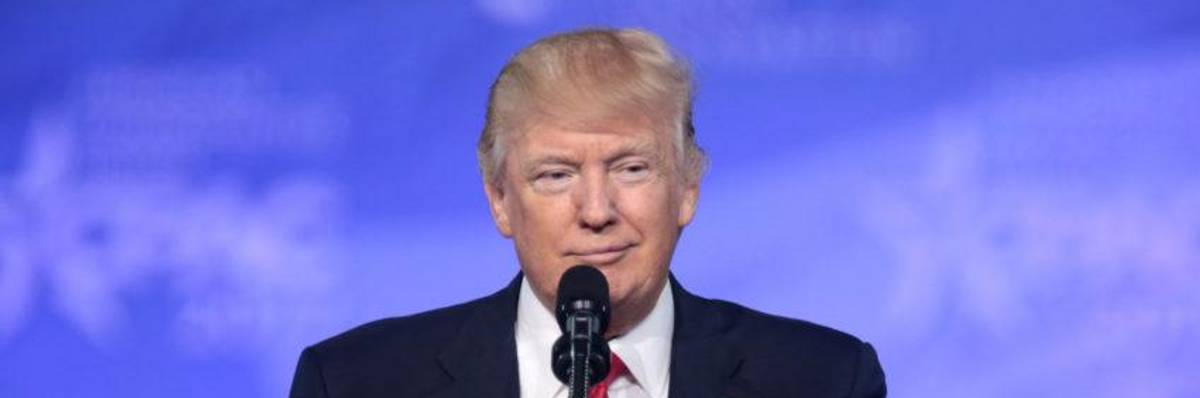
"The devil is in the details, as the saying goes, and those details get hammered out in congressional appropriations and other large bills, like the upcoming farm bill." (Photo: Gage Skidmore / CC BY-SA 2.0)
On Monday, President Donald Trump released his proposed budget for 2019. On the heels of his only legislative accomplishment to date, the massive tax cut that favors the wealthiest individuals and corporations, Trump's budget would slash or completely eliminate core anti-poverty programs that form the heart of the U.S. social safety net, from childhood nutrition to care for the elderly and job training. It blatantly violates one of his key campaign promises, to leave untouched Medicare, Medicaid and Social Security. The Trump budget is a document of towering immorality, a wish list of extreme right-wing cuts to federal spending that would destroy a century of progressive legislative achievements. Congress will be in recess for the next week, and elected representatives who support Trump's cruel agenda should expect a wave of opposition as people organize resistance from coast to coast.
"This budget is the budget of the Koch brothers. It is the budget of the billionaire class. And the American people understand it," Vermont's independent senator, Bernie Sanders, said, railing against Charles and David Koch, the two billionaire industrialist brothers who have poured hundreds of millions of dollars into U.S. elections in order to promote their far-right agenda.
Sanders continued: "This is a budget which will make it harder for our children to get a decent education, harder for working families to get the health care they desperately need, harder to protect the air that we breathe and the water we drink, and harder for the elderly to live out their retirement years with dignity and respect. This is not a budget, as candidate Donald Trump talked about, that takes on the political establishment. This is a budget of the political establishment. This is the Robin Hood principle in reverse: It is a budget that takes from the poor and gives to the very wealthy."
Seattle Congressmember Pramila Jayapal calls it the "three strikes you're out" budget. She explained on the "Democracy Now!" news hour: "Strike one was to actually transfer $1.3 trillion in wealth from working people and the poor to the wealthiest through the GOP tax scam. To their credit, they are finally saying, in this budget, that those GOP tax cuts don't pay for themselves, because they're projecting these enormous deficits as a result of the tax cuts. Strike two is that they're essentially going to balloon the deficit, $7 trillion over 10 years, a trillion dollars next year alone. And strike three is cutting every program that allows people to live with any shred of dignity, any shred of hope, any shred of opportunity."
The federal budget is a massive document, representing $4.4 trillion of spending for just one year. Republicans have long claimed cutting the budget and eliminating budget deficits as their raison d'etre. Now, with both houses of Congress and the White House under Republican control, they have, apparently, abandoned their principles. A spending bill, passed with bipartisan support Feb. 9 in order to avoid a government shutdown, increased military spending, a Trump priority, as well as spending in domestic programs, which the Democrats wanted. It also raised federal borrowing limits and spending caps.
But that spending deal doesn't compel the government to spend funds as agreed to. The devil is in the details, as the saying goes, and those details get hammered out in congressional appropriations and other large bills, like the upcoming farm bill.
"As an example, let's just look at SNAP, the Supplemental Nutrition Assistance Program," Congressmember Jayapal told us. "They are proposing a $213 billion cut to SNAP, [so] people have to work in order to get these benefits ... three-quarters of all the SNAP recipients are the elderly, the disabled and families with children, and the average per-person, per-meal benefit that people get on SNAP is $1.40." Similar changes are proposed that would cut funding to Medicaid, Social Security Disability Insurance (SSDI) and housing assistance, as well as force onerous work requirements on recipients, despite evidence that such recipients are often unable to work.
Many Beltway observers concede that the Trump budget has almost no chance of being passed. Of course, these are the same people who said Trump had no chance of being elected. But the budget relays a vision for the country held by the president and the Republican Party. This budget signals a dark, heartless and cruel future, exacerbating poverty, inequality and suffering. It is a budget that the people of the United States cannot afford.
Dear Common Dreams reader, It’s been nearly 30 years since I co-founded Common Dreams with my late wife, Lina Newhouser. We had the radical notion that journalism should serve the public good, not corporate profits. It was clear to us from the outset what it would take to build such a project. No paid advertisements. No corporate sponsors. No millionaire publisher telling us what to think or do. Many people said we wouldn't last a year, but we proved those doubters wrong. Together with a tremendous team of journalists and dedicated staff, we built an independent media outlet free from the constraints of profits and corporate control. Our mission has always been simple: To inform. To inspire. To ignite change for the common good. Building Common Dreams was not easy. Our survival was never guaranteed. When you take on the most powerful forces—Wall Street greed, fossil fuel industry destruction, Big Tech lobbyists, and uber-rich oligarchs who have spent billions upon billions rigging the economy and democracy in their favor—the only bulwark you have is supporters who believe in your work. But here’s the urgent message from me today. It's never been this bad out there. And it's never been this hard to keep us going. At the very moment Common Dreams is most needed, the threats we face are intensifying. We need your support now more than ever. We don't accept corporate advertising and never will. We don't have a paywall because we don't think people should be blocked from critical news based on their ability to pay. Everything we do is funded by the donations of readers like you. When everyone does the little they can afford, we are strong. But if that support retreats or dries up, so do we. Will you donate now to make sure Common Dreams not only survives but thrives? —Craig Brown, Co-founder |
On Monday, President Donald Trump released his proposed budget for 2019. On the heels of his only legislative accomplishment to date, the massive tax cut that favors the wealthiest individuals and corporations, Trump's budget would slash or completely eliminate core anti-poverty programs that form the heart of the U.S. social safety net, from childhood nutrition to care for the elderly and job training. It blatantly violates one of his key campaign promises, to leave untouched Medicare, Medicaid and Social Security. The Trump budget is a document of towering immorality, a wish list of extreme right-wing cuts to federal spending that would destroy a century of progressive legislative achievements. Congress will be in recess for the next week, and elected representatives who support Trump's cruel agenda should expect a wave of opposition as people organize resistance from coast to coast.
"This budget is the budget of the Koch brothers. It is the budget of the billionaire class. And the American people understand it," Vermont's independent senator, Bernie Sanders, said, railing against Charles and David Koch, the two billionaire industrialist brothers who have poured hundreds of millions of dollars into U.S. elections in order to promote their far-right agenda.
Sanders continued: "This is a budget which will make it harder for our children to get a decent education, harder for working families to get the health care they desperately need, harder to protect the air that we breathe and the water we drink, and harder for the elderly to live out their retirement years with dignity and respect. This is not a budget, as candidate Donald Trump talked about, that takes on the political establishment. This is a budget of the political establishment. This is the Robin Hood principle in reverse: It is a budget that takes from the poor and gives to the very wealthy."
Seattle Congressmember Pramila Jayapal calls it the "three strikes you're out" budget. She explained on the "Democracy Now!" news hour: "Strike one was to actually transfer $1.3 trillion in wealth from working people and the poor to the wealthiest through the GOP tax scam. To their credit, they are finally saying, in this budget, that those GOP tax cuts don't pay for themselves, because they're projecting these enormous deficits as a result of the tax cuts. Strike two is that they're essentially going to balloon the deficit, $7 trillion over 10 years, a trillion dollars next year alone. And strike three is cutting every program that allows people to live with any shred of dignity, any shred of hope, any shred of opportunity."
The federal budget is a massive document, representing $4.4 trillion of spending for just one year. Republicans have long claimed cutting the budget and eliminating budget deficits as their raison d'etre. Now, with both houses of Congress and the White House under Republican control, they have, apparently, abandoned their principles. A spending bill, passed with bipartisan support Feb. 9 in order to avoid a government shutdown, increased military spending, a Trump priority, as well as spending in domestic programs, which the Democrats wanted. It also raised federal borrowing limits and spending caps.
But that spending deal doesn't compel the government to spend funds as agreed to. The devil is in the details, as the saying goes, and those details get hammered out in congressional appropriations and other large bills, like the upcoming farm bill.
"As an example, let's just look at SNAP, the Supplemental Nutrition Assistance Program," Congressmember Jayapal told us. "They are proposing a $213 billion cut to SNAP, [so] people have to work in order to get these benefits ... three-quarters of all the SNAP recipients are the elderly, the disabled and families with children, and the average per-person, per-meal benefit that people get on SNAP is $1.40." Similar changes are proposed that would cut funding to Medicaid, Social Security Disability Insurance (SSDI) and housing assistance, as well as force onerous work requirements on recipients, despite evidence that such recipients are often unable to work.
Many Beltway observers concede that the Trump budget has almost no chance of being passed. Of course, these are the same people who said Trump had no chance of being elected. But the budget relays a vision for the country held by the president and the Republican Party. This budget signals a dark, heartless and cruel future, exacerbating poverty, inequality and suffering. It is a budget that the people of the United States cannot afford.
On Monday, President Donald Trump released his proposed budget for 2019. On the heels of his only legislative accomplishment to date, the massive tax cut that favors the wealthiest individuals and corporations, Trump's budget would slash or completely eliminate core anti-poverty programs that form the heart of the U.S. social safety net, from childhood nutrition to care for the elderly and job training. It blatantly violates one of his key campaign promises, to leave untouched Medicare, Medicaid and Social Security. The Trump budget is a document of towering immorality, a wish list of extreme right-wing cuts to federal spending that would destroy a century of progressive legislative achievements. Congress will be in recess for the next week, and elected representatives who support Trump's cruel agenda should expect a wave of opposition as people organize resistance from coast to coast.
"This budget is the budget of the Koch brothers. It is the budget of the billionaire class. And the American people understand it," Vermont's independent senator, Bernie Sanders, said, railing against Charles and David Koch, the two billionaire industrialist brothers who have poured hundreds of millions of dollars into U.S. elections in order to promote their far-right agenda.
Sanders continued: "This is a budget which will make it harder for our children to get a decent education, harder for working families to get the health care they desperately need, harder to protect the air that we breathe and the water we drink, and harder for the elderly to live out their retirement years with dignity and respect. This is not a budget, as candidate Donald Trump talked about, that takes on the political establishment. This is a budget of the political establishment. This is the Robin Hood principle in reverse: It is a budget that takes from the poor and gives to the very wealthy."
Seattle Congressmember Pramila Jayapal calls it the "three strikes you're out" budget. She explained on the "Democracy Now!" news hour: "Strike one was to actually transfer $1.3 trillion in wealth from working people and the poor to the wealthiest through the GOP tax scam. To their credit, they are finally saying, in this budget, that those GOP tax cuts don't pay for themselves, because they're projecting these enormous deficits as a result of the tax cuts. Strike two is that they're essentially going to balloon the deficit, $7 trillion over 10 years, a trillion dollars next year alone. And strike three is cutting every program that allows people to live with any shred of dignity, any shred of hope, any shred of opportunity."
The federal budget is a massive document, representing $4.4 trillion of spending for just one year. Republicans have long claimed cutting the budget and eliminating budget deficits as their raison d'etre. Now, with both houses of Congress and the White House under Republican control, they have, apparently, abandoned their principles. A spending bill, passed with bipartisan support Feb. 9 in order to avoid a government shutdown, increased military spending, a Trump priority, as well as spending in domestic programs, which the Democrats wanted. It also raised federal borrowing limits and spending caps.
But that spending deal doesn't compel the government to spend funds as agreed to. The devil is in the details, as the saying goes, and those details get hammered out in congressional appropriations and other large bills, like the upcoming farm bill.
"As an example, let's just look at SNAP, the Supplemental Nutrition Assistance Program," Congressmember Jayapal told us. "They are proposing a $213 billion cut to SNAP, [so] people have to work in order to get these benefits ... three-quarters of all the SNAP recipients are the elderly, the disabled and families with children, and the average per-person, per-meal benefit that people get on SNAP is $1.40." Similar changes are proposed that would cut funding to Medicaid, Social Security Disability Insurance (SSDI) and housing assistance, as well as force onerous work requirements on recipients, despite evidence that such recipients are often unable to work.
Many Beltway observers concede that the Trump budget has almost no chance of being passed. Of course, these are the same people who said Trump had no chance of being elected. But the budget relays a vision for the country held by the president and the Republican Party. This budget signals a dark, heartless and cruel future, exacerbating poverty, inequality and suffering. It is a budget that the people of the United States cannot afford.