SUBSCRIBE TO OUR FREE NEWSLETTER
Daily news & progressive opinion—funded by the people, not the corporations—delivered straight to your inbox.
5
#000000
#FFFFFF
To donate by check, phone, or other method, see our More Ways to Give page.
Daily news & progressive opinion—funded by the people, not the corporations—delivered straight to your inbox.
The Costs of War project at Brown University documented that the U.S. federal government has spent or obligated $4.8 trillion dollars on wars in the Middle East. Most Americans are not aware of that enormous waste of money and human lives. Professor Andrew Bacevich has argued that our military is on autopilot and these foreign wars are not putting Americans first. ( Photo: Courtesy of Author)
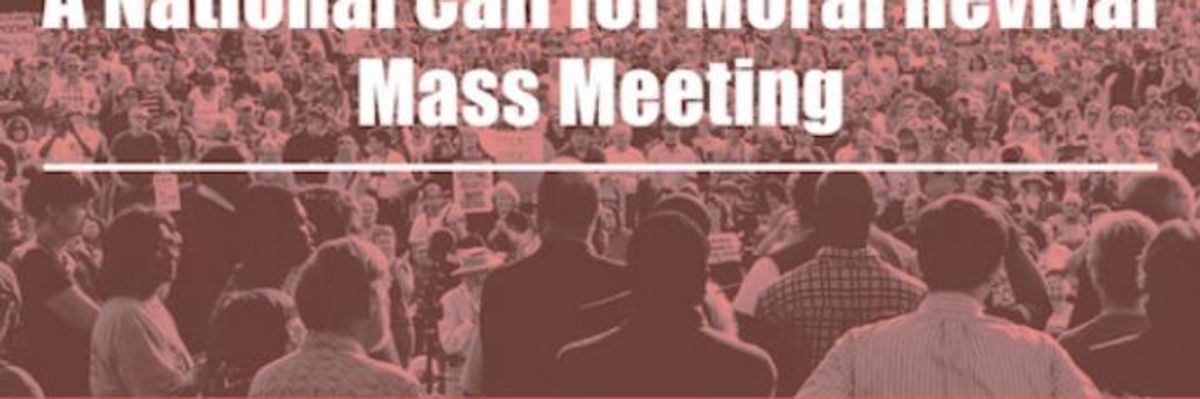
The mass meeting at Boston's historic Trinity Church on October 19 was packed with men, women, and children, rich and poor, of all races and ethnicities.
The jazz band warmed up, a piano, bass guitar, and drums. And we sang, call and response:
Woke up this morning with my mind stayed on freedom
I said I woke up this morning with my mind stayed on freedom
Well I woke up this morning with my mind stayed on freedom
Hallelu, hallelu, Hallelu, Hallelu, hallelujah
The moral revival signaled the kickoff of a modern civil rights movement and launch of a new Poor People's Campaign. We were revitalizing what the Reverend Dr. Martin Luther King Jr. had started before his assassination.
In the 1960's, Dr. King had surprised many by adding opposition to the Vietnam War to the civil rights campaign he was leading. The same linkage of struggle on behalf of the poor, with opposition to militarism, is now a logical path.
Reverends Liz Theoharis and William J. Barber II, leaders of the Poor People's Campaign, took the stage at Trinity Church and both spoke with a prophetic fire. We must challenge systemic racism, poverty, voter suppression, environmental destruction, and militarism, they argued. Wars increase social upheaval and hurt the poor. Instead, invest in schools, affordable housing, job training, and healthcare for all.
But how to finance the Poor People's Campaign?
The answer is simple.
The Costs of War project at Brown University documented that the U.S. federal government has spent or obligated $4.8 trillion dollars on wars in the Middle East. Most Americans are not aware of that enormous waste of money and human lives. Professor Andrew Bacevich has argued that our military is on autopilot and these foreign wars are not putting Americans first.
But what part of the military budget should be cut first?
The 2017 Nobel Peace Prize was awarded on October 6 to the International Campaign to Abolish Nuclear Weapons, or ICAN, a coalition of nongovernmental organizations in more than 100 countries. ICAN received the Nobel Prize for their work supporting a new nuclear ban treaty.
I am a practicing doctor, and my organization, Physicians for Social Responsibility, emphasizes the humanitarian consequences of nuclear war. Health professionals argue that the complete abolition of nuclear weapons is the only cure to the grave threat that these weapons represent.
How much money would the adoption of the nuclear ban treaty save? America's annual expenditure on nuclear weapons is approximately $60 billion dollars. That money could help fix our struggling schools and broken social safety net.
A grassroots nonviolent protest movement linking the Poor People's Campaign and abolition of nuclear weapons is desperately needed. Such a movement should be led by the poor and working class. In the 1960s, Ella Baker, co-founder of the Student Non-Violent Coordinating Committee, stated, "Strong people don't need strong leaders."
At Trinity Church, Reverend Barber brought us to our feet, with the words of Amos 5:16. Go out into the streets and lament loudly. Get everyone who is willing to fill up the malls and shops with cries of doom. Empty the stores, offices, workplaces, and enlist everybody in a general cry. When I hear you crying in the streets, then I'll help you.
Join the Poor People's Campaign. Sing for freedom, for an end to nuclear weapons, for peace and social justice. For all our children.
Dear Common Dreams reader, It’s been nearly 30 years since I co-founded Common Dreams with my late wife, Lina Newhouser. We had the radical notion that journalism should serve the public good, not corporate profits. It was clear to us from the outset what it would take to build such a project. No paid advertisements. No corporate sponsors. No millionaire publisher telling us what to think or do. Many people said we wouldn't last a year, but we proved those doubters wrong. Together with a tremendous team of journalists and dedicated staff, we built an independent media outlet free from the constraints of profits and corporate control. Our mission has always been simple: To inform. To inspire. To ignite change for the common good. Building Common Dreams was not easy. Our survival was never guaranteed. When you take on the most powerful forces—Wall Street greed, fossil fuel industry destruction, Big Tech lobbyists, and uber-rich oligarchs who have spent billions upon billions rigging the economy and democracy in their favor—the only bulwark you have is supporters who believe in your work. But here’s the urgent message from me today. It's never been this bad out there. And it's never been this hard to keep us going. At the very moment Common Dreams is most needed, the threats we face are intensifying. We need your support now more than ever. We don't accept corporate advertising and never will. We don't have a paywall because we don't think people should be blocked from critical news based on their ability to pay. Everything we do is funded by the donations of readers like you. When everyone does the little they can afford, we are strong. But if that support retreats or dries up, so do we. Will you donate now to make sure Common Dreams not only survives but thrives? —Craig Brown, Co-founder |
The mass meeting at Boston's historic Trinity Church on October 19 was packed with men, women, and children, rich and poor, of all races and ethnicities.
The jazz band warmed up, a piano, bass guitar, and drums. And we sang, call and response:
Woke up this morning with my mind stayed on freedom
I said I woke up this morning with my mind stayed on freedom
Well I woke up this morning with my mind stayed on freedom
Hallelu, hallelu, Hallelu, Hallelu, hallelujah
The moral revival signaled the kickoff of a modern civil rights movement and launch of a new Poor People's Campaign. We were revitalizing what the Reverend Dr. Martin Luther King Jr. had started before his assassination.
In the 1960's, Dr. King had surprised many by adding opposition to the Vietnam War to the civil rights campaign he was leading. The same linkage of struggle on behalf of the poor, with opposition to militarism, is now a logical path.
Reverends Liz Theoharis and William J. Barber II, leaders of the Poor People's Campaign, took the stage at Trinity Church and both spoke with a prophetic fire. We must challenge systemic racism, poverty, voter suppression, environmental destruction, and militarism, they argued. Wars increase social upheaval and hurt the poor. Instead, invest in schools, affordable housing, job training, and healthcare for all.
But how to finance the Poor People's Campaign?
The answer is simple.
The Costs of War project at Brown University documented that the U.S. federal government has spent or obligated $4.8 trillion dollars on wars in the Middle East. Most Americans are not aware of that enormous waste of money and human lives. Professor Andrew Bacevich has argued that our military is on autopilot and these foreign wars are not putting Americans first.
But what part of the military budget should be cut first?
The 2017 Nobel Peace Prize was awarded on October 6 to the International Campaign to Abolish Nuclear Weapons, or ICAN, a coalition of nongovernmental organizations in more than 100 countries. ICAN received the Nobel Prize for their work supporting a new nuclear ban treaty.
I am a practicing doctor, and my organization, Physicians for Social Responsibility, emphasizes the humanitarian consequences of nuclear war. Health professionals argue that the complete abolition of nuclear weapons is the only cure to the grave threat that these weapons represent.
How much money would the adoption of the nuclear ban treaty save? America's annual expenditure on nuclear weapons is approximately $60 billion dollars. That money could help fix our struggling schools and broken social safety net.
A grassroots nonviolent protest movement linking the Poor People's Campaign and abolition of nuclear weapons is desperately needed. Such a movement should be led by the poor and working class. In the 1960s, Ella Baker, co-founder of the Student Non-Violent Coordinating Committee, stated, "Strong people don't need strong leaders."
At Trinity Church, Reverend Barber brought us to our feet, with the words of Amos 5:16. Go out into the streets and lament loudly. Get everyone who is willing to fill up the malls and shops with cries of doom. Empty the stores, offices, workplaces, and enlist everybody in a general cry. When I hear you crying in the streets, then I'll help you.
Join the Poor People's Campaign. Sing for freedom, for an end to nuclear weapons, for peace and social justice. For all our children.
The mass meeting at Boston's historic Trinity Church on October 19 was packed with men, women, and children, rich and poor, of all races and ethnicities.
The jazz band warmed up, a piano, bass guitar, and drums. And we sang, call and response:
Woke up this morning with my mind stayed on freedom
I said I woke up this morning with my mind stayed on freedom
Well I woke up this morning with my mind stayed on freedom
Hallelu, hallelu, Hallelu, Hallelu, hallelujah
The moral revival signaled the kickoff of a modern civil rights movement and launch of a new Poor People's Campaign. We were revitalizing what the Reverend Dr. Martin Luther King Jr. had started before his assassination.
In the 1960's, Dr. King had surprised many by adding opposition to the Vietnam War to the civil rights campaign he was leading. The same linkage of struggle on behalf of the poor, with opposition to militarism, is now a logical path.
Reverends Liz Theoharis and William J. Barber II, leaders of the Poor People's Campaign, took the stage at Trinity Church and both spoke with a prophetic fire. We must challenge systemic racism, poverty, voter suppression, environmental destruction, and militarism, they argued. Wars increase social upheaval and hurt the poor. Instead, invest in schools, affordable housing, job training, and healthcare for all.
But how to finance the Poor People's Campaign?
The answer is simple.
The Costs of War project at Brown University documented that the U.S. federal government has spent or obligated $4.8 trillion dollars on wars in the Middle East. Most Americans are not aware of that enormous waste of money and human lives. Professor Andrew Bacevich has argued that our military is on autopilot and these foreign wars are not putting Americans first.
But what part of the military budget should be cut first?
The 2017 Nobel Peace Prize was awarded on October 6 to the International Campaign to Abolish Nuclear Weapons, or ICAN, a coalition of nongovernmental organizations in more than 100 countries. ICAN received the Nobel Prize for their work supporting a new nuclear ban treaty.
I am a practicing doctor, and my organization, Physicians for Social Responsibility, emphasizes the humanitarian consequences of nuclear war. Health professionals argue that the complete abolition of nuclear weapons is the only cure to the grave threat that these weapons represent.
How much money would the adoption of the nuclear ban treaty save? America's annual expenditure on nuclear weapons is approximately $60 billion dollars. That money could help fix our struggling schools and broken social safety net.
A grassroots nonviolent protest movement linking the Poor People's Campaign and abolition of nuclear weapons is desperately needed. Such a movement should be led by the poor and working class. In the 1960s, Ella Baker, co-founder of the Student Non-Violent Coordinating Committee, stated, "Strong people don't need strong leaders."
At Trinity Church, Reverend Barber brought us to our feet, with the words of Amos 5:16. Go out into the streets and lament loudly. Get everyone who is willing to fill up the malls and shops with cries of doom. Empty the stores, offices, workplaces, and enlist everybody in a general cry. When I hear you crying in the streets, then I'll help you.
Join the Poor People's Campaign. Sing for freedom, for an end to nuclear weapons, for peace and social justice. For all our children.