SUBSCRIBE TO OUR FREE NEWSLETTER
Daily news & progressive opinion—funded by the people, not the corporations—delivered straight to your inbox.
5
#000000
#FFFFFF
To donate by check, phone, or other method, see our More Ways to Give page.
Daily news & progressive opinion—funded by the people, not the corporations—delivered straight to your inbox.
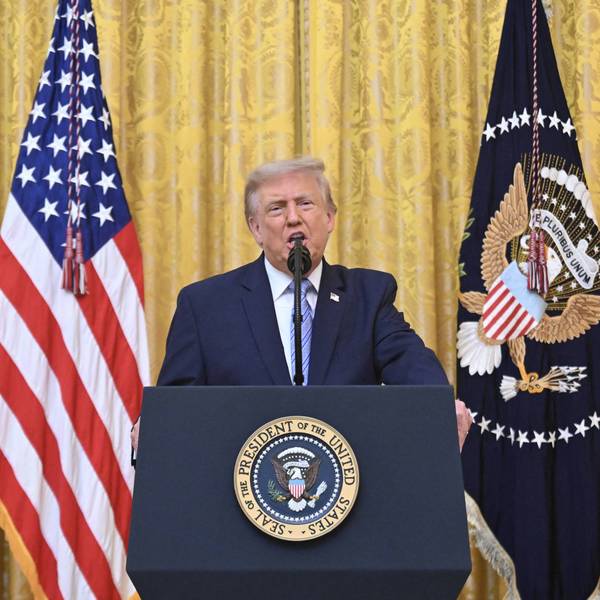
Thirty-five Democrats in the House have sent a letter to Attorney General Loretta Lynch urging her to appoint an independent Special Counsel because Donald Trump "has repeatedly engaged in actions constituting unauthorized foreign policy in violation of the Logan Act."
Dating back to 1799, the law has resulted in a grand total of one indictment (during Thomas Jefferson's presidency) and no conviction. But the Logan Act remains a convenient statute to brandish against disruptors of foreign-policy orthodoxies.
The Jan. 12 letter -- relying on an arcane and wobbly relic of a law -- is an example of opportunism that isn't even opportune. Worse, it's an effort to spur Justice Department action that would establish a dangerous precedent.
When the letter charges that "in several cases Mr. Trump's actions directly contravene and undermine official positions of the United States government," the complaint rings hollow. In our lifetimes, countless private citizens -- and quite a few members of Congress -- have sought to contravene and undermine official U.S. positions. Often that has been for the better.
The members of Congress who signed the letter should know that. Many are ostensibly aligned with the kind of dissent that has been -- and will be -- essential to pull this country away from disastrous wars overseas. More than half of the letter's signers -- 19 of the 35 -- are in the Congressional Progressive Caucus.
It should be obvious that the Logan Act is antithetical to free speech and other vital liberties. The law provides for up to three years in prison for "any citizen of the United States" who -- without authorization from the U.S. government -- "directly or indirectly commences or carries on any correspondence or intercourse with any foreign government," with intent to influence that government "in relation to disputes or controversies with the United States."
Steve Vladeck, a professor of law at the University of Texas, points out that the First and Fifth Amendments "do not look too kindly on either content-based restrictions on speech (which the Logan Act clearly is), or criminal laws that do not clearly articulate the line between lawful and unlawful conduct (which the Logan Act may well not do)."
In recent decades, the specter of the Logan Act has been used to threaten legislators who went outside an administration's policy boundaries. In 1975, Sens. George McGovern and John Sparkman faced accusations that they'd violated the Act by going to Havana and talking with Cuban officials. In 1984, President Ronald Reagan said that Jesse Jackson's efforts in Cuba and Nicaragua may have violated the Logan Act.
Later in the 1980s, Reagan's National Security Council considered invoking the Logan Act to stop House Speaker Jim Wright's involvement in negotiations between the Sandinista government and the Contra forces that the CIA made possible in Nicaragua. Twenty years later, in 2007, another House speaker -- Nancy Pelosi -- faced accusations that she'd run afoul of the Logan Act by going to Damascus and negotiating with Syria's President Bashar al-Assad.
Now, it's sad to see dozens of Democrats trying to throw the Logan Act at Trump when there are so many crucial matters to address -- healthcare, civil rights, environmental protection, social programs and much more. While a multitude of legitimate and profound issues are at hand -- with an urgent need to concentrate on blocking the GOP's legislative agenda -- the letter clamoring for a Logan Act investigation of Trump is an instance of counterproductive partisan zeal run amuck.
The idea that a U.S. citizen -- whether Donald Trump, Jesse Jackson or anyone else -- does not have a right to dialogue with officials of foreign governments is pernicious and undemocratic. We should assert that right, no matter who is in the Oval Office.
While some members of Congress are indignant that Trump's actions "directly contravene and undermine official positions of the United States government," the history of U.S. foreign policy warns against automatic deference to official U.S. positions. Citizens have often been wise when they sought to contravene and undermine the U.S. government's positions.
Today, entrenched forces in Washington remain committed to foreign policies more in line with what Martin Luther King Jr. called "the madness of militarism" than the statecraft of real diplomacy. Citizens should push back against officials at either end of Pennsylvania Avenue who cite the Logan Act as an argument for conformity or use it as a tool for intimidation.
Dear Common Dreams reader, It’s been nearly 30 years since I co-founded Common Dreams with my late wife, Lina Newhouser. We had the radical notion that journalism should serve the public good, not corporate profits. It was clear to us from the outset what it would take to build such a project. No paid advertisements. No corporate sponsors. No millionaire publisher telling us what to think or do. Many people said we wouldn't last a year, but we proved those doubters wrong. Together with a tremendous team of journalists and dedicated staff, we built an independent media outlet free from the constraints of profits and corporate control. Our mission has always been simple: To inform. To inspire. To ignite change for the common good. Building Common Dreams was not easy. Our survival was never guaranteed. When you take on the most powerful forces—Wall Street greed, fossil fuel industry destruction, Big Tech lobbyists, and uber-rich oligarchs who have spent billions upon billions rigging the economy and democracy in their favor—the only bulwark you have is supporters who believe in your work. But here’s the urgent message from me today. It's never been this bad out there. And it's never been this hard to keep us going. At the very moment Common Dreams is most needed, the threats we face are intensifying. We need your support now more than ever. We don't accept corporate advertising and never will. We don't have a paywall because we don't think people should be blocked from critical news based on their ability to pay. Everything we do is funded by the donations of readers like you. When everyone does the little they can afford, we are strong. But if that support retreats or dries up, so do we. Will you donate now to make sure Common Dreams not only survives but thrives? —Craig Brown, Co-founder |
Norman Solomon is the national director of RootsAction.org and executive director of the Institute for Public Accuracy. The paperback edition of his latest book, War Made Invisible: How America Hides the Human Toll of Its Military Machine, includes an afterword about the Gaza war.
Thirty-five Democrats in the House have sent a letter to Attorney General Loretta Lynch urging her to appoint an independent Special Counsel because Donald Trump "has repeatedly engaged in actions constituting unauthorized foreign policy in violation of the Logan Act."
Dating back to 1799, the law has resulted in a grand total of one indictment (during Thomas Jefferson's presidency) and no conviction. But the Logan Act remains a convenient statute to brandish against disruptors of foreign-policy orthodoxies.
The Jan. 12 letter -- relying on an arcane and wobbly relic of a law -- is an example of opportunism that isn't even opportune. Worse, it's an effort to spur Justice Department action that would establish a dangerous precedent.
When the letter charges that "in several cases Mr. Trump's actions directly contravene and undermine official positions of the United States government," the complaint rings hollow. In our lifetimes, countless private citizens -- and quite a few members of Congress -- have sought to contravene and undermine official U.S. positions. Often that has been for the better.
The members of Congress who signed the letter should know that. Many are ostensibly aligned with the kind of dissent that has been -- and will be -- essential to pull this country away from disastrous wars overseas. More than half of the letter's signers -- 19 of the 35 -- are in the Congressional Progressive Caucus.
It should be obvious that the Logan Act is antithetical to free speech and other vital liberties. The law provides for up to three years in prison for "any citizen of the United States" who -- without authorization from the U.S. government -- "directly or indirectly commences or carries on any correspondence or intercourse with any foreign government," with intent to influence that government "in relation to disputes or controversies with the United States."
Steve Vladeck, a professor of law at the University of Texas, points out that the First and Fifth Amendments "do not look too kindly on either content-based restrictions on speech (which the Logan Act clearly is), or criminal laws that do not clearly articulate the line between lawful and unlawful conduct (which the Logan Act may well not do)."
In recent decades, the specter of the Logan Act has been used to threaten legislators who went outside an administration's policy boundaries. In 1975, Sens. George McGovern and John Sparkman faced accusations that they'd violated the Act by going to Havana and talking with Cuban officials. In 1984, President Ronald Reagan said that Jesse Jackson's efforts in Cuba and Nicaragua may have violated the Logan Act.
Later in the 1980s, Reagan's National Security Council considered invoking the Logan Act to stop House Speaker Jim Wright's involvement in negotiations between the Sandinista government and the Contra forces that the CIA made possible in Nicaragua. Twenty years later, in 2007, another House speaker -- Nancy Pelosi -- faced accusations that she'd run afoul of the Logan Act by going to Damascus and negotiating with Syria's President Bashar al-Assad.
Now, it's sad to see dozens of Democrats trying to throw the Logan Act at Trump when there are so many crucial matters to address -- healthcare, civil rights, environmental protection, social programs and much more. While a multitude of legitimate and profound issues are at hand -- with an urgent need to concentrate on blocking the GOP's legislative agenda -- the letter clamoring for a Logan Act investigation of Trump is an instance of counterproductive partisan zeal run amuck.
The idea that a U.S. citizen -- whether Donald Trump, Jesse Jackson or anyone else -- does not have a right to dialogue with officials of foreign governments is pernicious and undemocratic. We should assert that right, no matter who is in the Oval Office.
While some members of Congress are indignant that Trump's actions "directly contravene and undermine official positions of the United States government," the history of U.S. foreign policy warns against automatic deference to official U.S. positions. Citizens have often been wise when they sought to contravene and undermine the U.S. government's positions.
Today, entrenched forces in Washington remain committed to foreign policies more in line with what Martin Luther King Jr. called "the madness of militarism" than the statecraft of real diplomacy. Citizens should push back against officials at either end of Pennsylvania Avenue who cite the Logan Act as an argument for conformity or use it as a tool for intimidation.
Norman Solomon is the national director of RootsAction.org and executive director of the Institute for Public Accuracy. The paperback edition of his latest book, War Made Invisible: How America Hides the Human Toll of Its Military Machine, includes an afterword about the Gaza war.
Thirty-five Democrats in the House have sent a letter to Attorney General Loretta Lynch urging her to appoint an independent Special Counsel because Donald Trump "has repeatedly engaged in actions constituting unauthorized foreign policy in violation of the Logan Act."
Dating back to 1799, the law has resulted in a grand total of one indictment (during Thomas Jefferson's presidency) and no conviction. But the Logan Act remains a convenient statute to brandish against disruptors of foreign-policy orthodoxies.
The Jan. 12 letter -- relying on an arcane and wobbly relic of a law -- is an example of opportunism that isn't even opportune. Worse, it's an effort to spur Justice Department action that would establish a dangerous precedent.
When the letter charges that "in several cases Mr. Trump's actions directly contravene and undermine official positions of the United States government," the complaint rings hollow. In our lifetimes, countless private citizens -- and quite a few members of Congress -- have sought to contravene and undermine official U.S. positions. Often that has been for the better.
The members of Congress who signed the letter should know that. Many are ostensibly aligned with the kind of dissent that has been -- and will be -- essential to pull this country away from disastrous wars overseas. More than half of the letter's signers -- 19 of the 35 -- are in the Congressional Progressive Caucus.
It should be obvious that the Logan Act is antithetical to free speech and other vital liberties. The law provides for up to three years in prison for "any citizen of the United States" who -- without authorization from the U.S. government -- "directly or indirectly commences or carries on any correspondence or intercourse with any foreign government," with intent to influence that government "in relation to disputes or controversies with the United States."
Steve Vladeck, a professor of law at the University of Texas, points out that the First and Fifth Amendments "do not look too kindly on either content-based restrictions on speech (which the Logan Act clearly is), or criminal laws that do not clearly articulate the line between lawful and unlawful conduct (which the Logan Act may well not do)."
In recent decades, the specter of the Logan Act has been used to threaten legislators who went outside an administration's policy boundaries. In 1975, Sens. George McGovern and John Sparkman faced accusations that they'd violated the Act by going to Havana and talking with Cuban officials. In 1984, President Ronald Reagan said that Jesse Jackson's efforts in Cuba and Nicaragua may have violated the Logan Act.
Later in the 1980s, Reagan's National Security Council considered invoking the Logan Act to stop House Speaker Jim Wright's involvement in negotiations between the Sandinista government and the Contra forces that the CIA made possible in Nicaragua. Twenty years later, in 2007, another House speaker -- Nancy Pelosi -- faced accusations that she'd run afoul of the Logan Act by going to Damascus and negotiating with Syria's President Bashar al-Assad.
Now, it's sad to see dozens of Democrats trying to throw the Logan Act at Trump when there are so many crucial matters to address -- healthcare, civil rights, environmental protection, social programs and much more. While a multitude of legitimate and profound issues are at hand -- with an urgent need to concentrate on blocking the GOP's legislative agenda -- the letter clamoring for a Logan Act investigation of Trump is an instance of counterproductive partisan zeal run amuck.
The idea that a U.S. citizen -- whether Donald Trump, Jesse Jackson or anyone else -- does not have a right to dialogue with officials of foreign governments is pernicious and undemocratic. We should assert that right, no matter who is in the Oval Office.
While some members of Congress are indignant that Trump's actions "directly contravene and undermine official positions of the United States government," the history of U.S. foreign policy warns against automatic deference to official U.S. positions. Citizens have often been wise when they sought to contravene and undermine the U.S. government's positions.
Today, entrenched forces in Washington remain committed to foreign policies more in line with what Martin Luther King Jr. called "the madness of militarism" than the statecraft of real diplomacy. Citizens should push back against officials at either end of Pennsylvania Avenue who cite the Logan Act as an argument for conformity or use it as a tool for intimidation.