SUBSCRIBE TO OUR FREE NEWSLETTER
Daily news & progressive opinion—funded by the people, not the corporations—delivered straight to your inbox.
5
#000000
#FFFFFF
To donate by check, phone, or other method, see our More Ways to Give page.
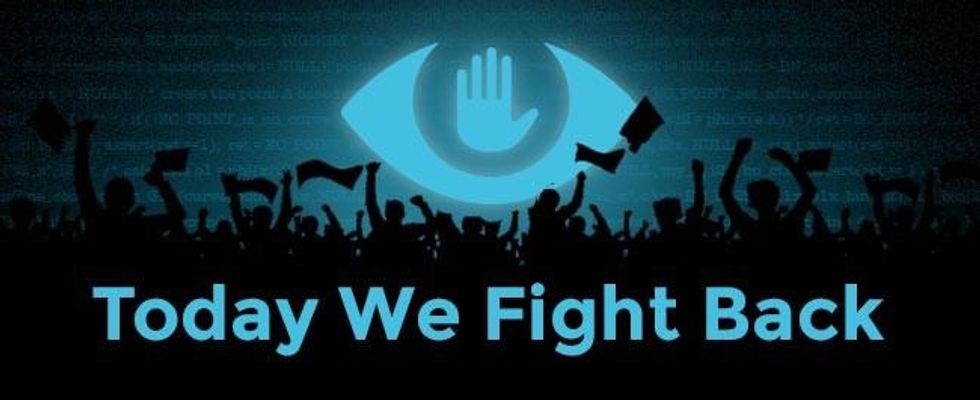
That's why, today, on February 11th, around the world, from Argentina to Uganda, from Colombia to the Philippines, the people of the Internet have united to fight back.
The Day We Fight Back's main global action is to sign and promote the 13 Principles, a set of fundamental rules that, in clear language, tells lawmakers and governments how to apply existing human rights law to these new forms of surveillance. With the support of thousands of Net users, we'll use your voice to demand that all governments comply with their obligation to protect privacy against unchecked surveillance.
But there's more to today's global action than the Principles. Hundreds of digital rights and privacy groups, thousands of individual Net users, in dozens of countries, have come together to protest surveillance by governments at home and abroad. Here's just a sampling of the campaigns and events happening today:
In Argentina, the Asociacion por los Derechos Civiles and Via Libre Foundation is suing the Argentinian Congressional surveillance oversight commission for withholding basic information on surveillance practices in the country.
In Australia, a coalition of groups under the banner Citizens Not Suspects, is joining to demand a government investigation of the practices of the notorious "Five Eyes" countries -- the nations, including Australia, which share intelligence with the NSA.
In Brazil, where the upcoming Marco Civil bill promises to encode human rights into the country's Internet law, citizens are renewing their demands to include strong privacy protections.
In Canada, more than 45 major organizations, and tens of thousands of Canadians are calling their elected representatives to stop illegal spying by Communications Security Establishment Canada (CSEC), Canada's spying agency.
Colombians have launched "Internet sin Chuzadas", a campaign calling for the end of unchecked surveillance at home and abroad.
France's La Quadrature Du Net have started an NSA Observer program to inform people of the NSA's global surveillance. The Philippines' Internet Freedom Alliance (PIFA) is organizing a day of mass action against the country's draconian Cybercrime Prevention Act.
Poland's Panoptykon Foundation is demanding answers from the Polish government and Barack Obama.
The Netherlands' Bits of Freedom will call on Dutch citizens to join their campaign to stop mass surveillance: bespiedonsniet.nl ("Don't Spy On Us").
In Serbia, SHARE Foundation, one of the earliest supporters of the 13 Principles, is renewing their campaign against surveillance locally and internationally.
In Uganda, Unwanted Witness will be urging their local telephone companies to stop sharing private data with politicians.
And in the United Kingdom, a huge coalition of Britain's privacy groups is launching DontSpyOnUs.org.uk, to pressure the UK's GCHQ to stop its global mass surveillance apparatus.
Where ever you live, you can join them: you can visit Necessary And Proportionate, the home of the 13 Principles, and add your name to our action, and find out what is happening in your own country. Write your own posts of opposition, and spread the word through the hashtag #stopspying.
That's why, today, on February 11th, around the world, from Argentina to Uganda, from Colombia to the Philippines, the people of the Internet have united to fight back.
The Day We Fight Back's main global action is to sign and promote the 13 Principles, a set of fundamental rules that, in clear language, tells lawmakers and governments how to apply existing human rights law to these new forms of surveillance. With the support of thousands of Net users, we'll use your voice to demand that all governments comply with their obligation to protect privacy against unchecked surveillance.
But there's more to today's global action than the Principles. Hundreds of digital rights and privacy groups, thousands of individual Net users, in dozens of countries, have come together to protest surveillance by governments at home and abroad. Here's just a sampling of the campaigns and events happening today:
In Argentina, the Asociacion por los Derechos Civiles and Via Libre Foundation is suing the Argentinian Congressional surveillance oversight commission for withholding basic information on surveillance practices in the country.
In Australia, a coalition of groups under the banner Citizens Not Suspects, is joining to demand a government investigation of the practices of the notorious "Five Eyes" countries -- the nations, including Australia, which share intelligence with the NSA.
In Brazil, where the upcoming Marco Civil bill promises to encode human rights into the country's Internet law, citizens are renewing their demands to include strong privacy protections.
In Canada, more than 45 major organizations, and tens of thousands of Canadians are calling their elected representatives to stop illegal spying by Communications Security Establishment Canada (CSEC), Canada's spying agency.
Colombians have launched "Internet sin Chuzadas", a campaign calling for the end of unchecked surveillance at home and abroad.
France's La Quadrature Du Net have started an NSA Observer program to inform people of the NSA's global surveillance. The Philippines' Internet Freedom Alliance (PIFA) is organizing a day of mass action against the country's draconian Cybercrime Prevention Act.
Poland's Panoptykon Foundation is demanding answers from the Polish government and Barack Obama.
The Netherlands' Bits of Freedom will call on Dutch citizens to join their campaign to stop mass surveillance: bespiedonsniet.nl ("Don't Spy On Us").
In Serbia, SHARE Foundation, one of the earliest supporters of the 13 Principles, is renewing their campaign against surveillance locally and internationally.
In Uganda, Unwanted Witness will be urging their local telephone companies to stop sharing private data with politicians.
And in the United Kingdom, a huge coalition of Britain's privacy groups is launching DontSpyOnUs.org.uk, to pressure the UK's GCHQ to stop its global mass surveillance apparatus.
Where ever you live, you can join them: you can visit Necessary And Proportionate, the home of the 13 Principles, and add your name to our action, and find out what is happening in your own country. Write your own posts of opposition, and spread the word through the hashtag #stopspying.
That's why, today, on February 11th, around the world, from Argentina to Uganda, from Colombia to the Philippines, the people of the Internet have united to fight back.
The Day We Fight Back's main global action is to sign and promote the 13 Principles, a set of fundamental rules that, in clear language, tells lawmakers and governments how to apply existing human rights law to these new forms of surveillance. With the support of thousands of Net users, we'll use your voice to demand that all governments comply with their obligation to protect privacy against unchecked surveillance.
But there's more to today's global action than the Principles. Hundreds of digital rights and privacy groups, thousands of individual Net users, in dozens of countries, have come together to protest surveillance by governments at home and abroad. Here's just a sampling of the campaigns and events happening today:
In Argentina, the Asociacion por los Derechos Civiles and Via Libre Foundation is suing the Argentinian Congressional surveillance oversight commission for withholding basic information on surveillance practices in the country.
In Australia, a coalition of groups under the banner Citizens Not Suspects, is joining to demand a government investigation of the practices of the notorious "Five Eyes" countries -- the nations, including Australia, which share intelligence with the NSA.
In Brazil, where the upcoming Marco Civil bill promises to encode human rights into the country's Internet law, citizens are renewing their demands to include strong privacy protections.
In Canada, more than 45 major organizations, and tens of thousands of Canadians are calling their elected representatives to stop illegal spying by Communications Security Establishment Canada (CSEC), Canada's spying agency.
Colombians have launched "Internet sin Chuzadas", a campaign calling for the end of unchecked surveillance at home and abroad.
France's La Quadrature Du Net have started an NSA Observer program to inform people of the NSA's global surveillance. The Philippines' Internet Freedom Alliance (PIFA) is organizing a day of mass action against the country's draconian Cybercrime Prevention Act.
Poland's Panoptykon Foundation is demanding answers from the Polish government and Barack Obama.
The Netherlands' Bits of Freedom will call on Dutch citizens to join their campaign to stop mass surveillance: bespiedonsniet.nl ("Don't Spy On Us").
In Serbia, SHARE Foundation, one of the earliest supporters of the 13 Principles, is renewing their campaign against surveillance locally and internationally.
In Uganda, Unwanted Witness will be urging their local telephone companies to stop sharing private data with politicians.
And in the United Kingdom, a huge coalition of Britain's privacy groups is launching DontSpyOnUs.org.uk, to pressure the UK's GCHQ to stop its global mass surveillance apparatus.
Where ever you live, you can join them: you can visit Necessary And Proportionate, the home of the 13 Principles, and add your name to our action, and find out what is happening in your own country. Write your own posts of opposition, and spread the word through the hashtag #stopspying.