
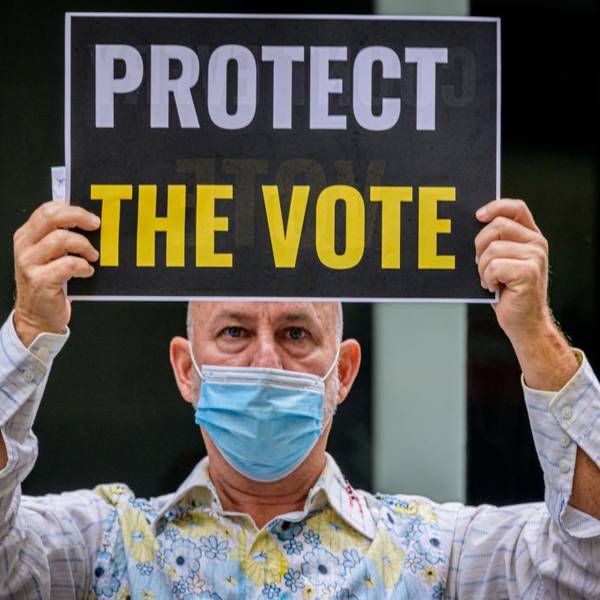
The tasks Bill McKibben set for himself were monumental. Start a genuinely grassroots movement at a time when many big environmental groups focus on mouse-click petitions, fundraising, and lobbying done by professionals. Marshal enough political will to put a finger in the proverbial dike: to hold back climate change, the worst crisis to face society. It has been exhausting work, and to maintain his sense of perspective, he returns again and again to a plot of land he owns in rural Vermont, where a friend has set up a beekeeping business.
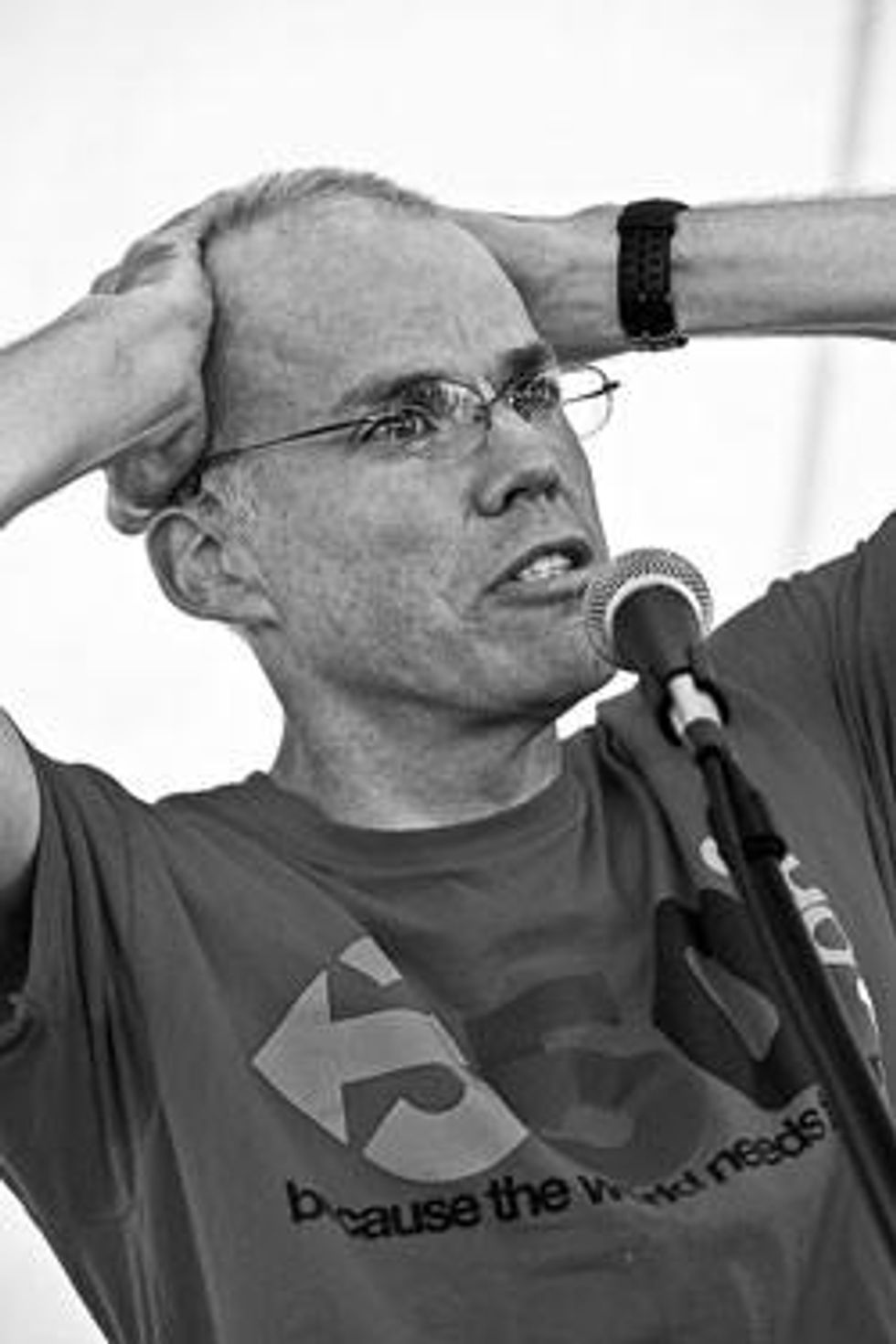
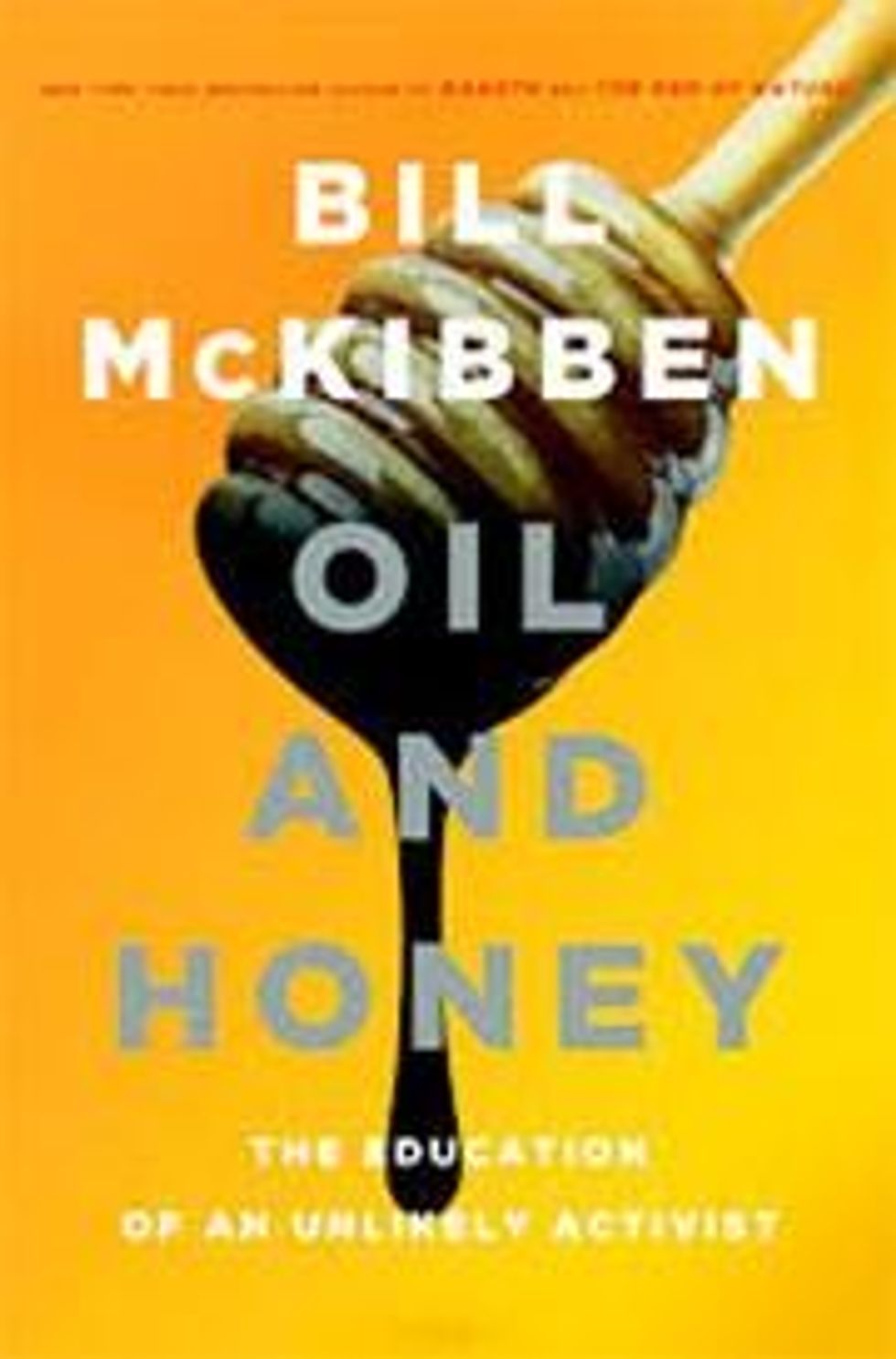
McKibben's latest book, Oil and Honey, chronicles his journey into ever-riskier and more confrontational activism over the past two years. The work has changed him: A former staff writer for The New Yorker, a thoughtful scholar, and a polite New Englander, he was never inclined to break the law or start political fights. After writing The End of Nature (1989), the first book to explain the hazards of climate change to a general audience, McKibben remained mostly a purveyor of ideas--and continued writing about everything from economics to genetic engineering.
"Sometime in the course of the past decade I figured out that I needed to do more than write--if this fight was about power, then we who wanted change had to assemble some," he writes in Oil and Honey.
In 2007 and 2008, McKibben and a group of recent graduates from Middlebury College founded the organization 350.org. The name refers to scientist James Hansen's quantification of the maximum concentration of carbon dioxide (350 parts per million, or ppm) the atmosphere can contain while still offering "a safe operating space for humanity." (The planet is currently at 400 ppm, and rising.) The organization sparked what is arguably the most significant grassroots environmental movement in the world: It has coordinated dozens of campaigns and inspired tens of thousands of people to stage demonstrations in nearly every country, set up giant art projects visible from space, and hold community-based work parties in neighborhoods all over the planet.
Still, McKibben felt they needed stronger and more direct tactics. "Global warming was accelerating--2010 had just set the new record for the hottest year ever recorded. It was time to pick up the pace and move from engagement to resistance," he writes. Oil and Honey begins in the summer of 2011, when he launched a campaign against the massive oil pipeline project, Keystone XL--as part of a larger strategy to diminish the impact and political power of big oil, coal, and gas. McKibben and James Hansen argued that the pipeline would lead the world to a point of no return for climate change, by ramping up extraction of Canadian tar sands oil--a dirty, carbon-intense source of fuel.
350.org recruited more than 1,200 people to get arrested in front of the White House that August and September in the first major civil disobedience action against climate change. Obama's loyal base came out against Keystone XL, and despite immense pressure from the oil industry and the Canadian government, permission for the pipeline remains in limbo, awaiting presidential approval or refusal.
The political campaigning he describes is heady and overwhelming. McKibben speaks to packed lecture halls, appears on the Colbert Report, and debates members of Congress. Oil and Honey leads the reader through the curious dance that happens when activists attempt to sway politicians, who are alternately indifferent, cagey, or sympathetic, depending on the circumstances. For instance, McKibben describes conversing with then White House staffer Jon Carson, who tipped him off when the president was planning to give a pro-drilling message at an oil depot in Cushing, Okla.: "He'd called to soften the blow," McKibben writes.
The "ritual nature of political action," as McKibben describes it, is strange and exhausting for the earnest, introspective writer. He finds respite back in Vermont in the beeyards. Beekeeping is practical and heartening (it's hard to be cynical while watching bees haul spring pollen back to the hive) and, done right, is one of the healthy relationships human beings have with the natural world. He immerses himself in "the thrum of bees ... the comforting sound of life on automatic, the planet working as it should." Through whirlwind cross-country tours, as he gathers resistance to the fossil-fuel industry, the bees are a metaphor and an inspiration: McKibben "lugged bee books with me all across the country," including a volume called Honeybee Democracy, about the well-documented ways bees make decisions by consensus about the locations of hives.
Oil and Honey tells the story of a person of conscience as he becomes one of the country's most effective activists. McKibben is sometimes uncomfortable with his role at the helm, but he's determined to be honest and forthright with himself and the thousands who have joined this movement. "If I was going to ask people to do something hard ... then I'd better be ready to take charge," he reflects, as he drafts the speech for the climate-change road show he led in cities around the country this past spring.
With occasional wry humor, McKibben deftly and astutely leads you into a conversation about the world's most sobering ecological crisis. His experiences offer lessons in determination and humility, remaining steady and strategic, and keeping sight of what matters.
This article was written for How To Eat Like Our Lives Depend On It, the Winter 2014 issue of YES! Magazine.
The tasks Bill McKibben set for himself were monumental. Start a genuinely grassroots movement at a time when many big environmental groups focus on mouse-click petitions, fundraising, and lobbying done by professionals. Marshal enough political will to put a finger in the proverbial dike: to hold back climate change, the worst crisis to face society. It has been exhausting work, and to maintain his sense of perspective, he returns again and again to a plot of land he owns in rural Vermont, where a friend has set up a beekeeping business.
McKibben's latest book, Oil and Honey, chronicles his journey into ever-riskier and more confrontational activism over the past two years. The work has changed him: A former staff writer for The New Yorker, a thoughtful scholar, and a polite New Englander, he was never inclined to break the law or start political fights. After writing The End of Nature (1989), the first book to explain the hazards of climate change to a general audience, McKibben remained mostly a purveyor of ideas--and continued writing about everything from economics to genetic engineering.
"Sometime in the course of the past decade I figured out that I needed to do more than write--if this fight was about power, then we who wanted change had to assemble some," he writes in Oil and Honey.
In 2007 and 2008, McKibben and a group of recent graduates from Middlebury College founded the organization 350.org. The name refers to scientist James Hansen's quantification of the maximum concentration of carbon dioxide (350 parts per million, or ppm) the atmosphere can contain while still offering "a safe operating space for humanity." (The planet is currently at 400 ppm, and rising.) The organization sparked what is arguably the most significant grassroots environmental movement in the world: It has coordinated dozens of campaigns and inspired tens of thousands of people to stage demonstrations in nearly every country, set up giant art projects visible from space, and hold community-based work parties in neighborhoods all over the planet.
Still, McKibben felt they needed stronger and more direct tactics. "Global warming was accelerating--2010 had just set the new record for the hottest year ever recorded. It was time to pick up the pace and move from engagement to resistance," he writes. Oil and Honey begins in the summer of 2011, when he launched a campaign against the massive oil pipeline project, Keystone XL--as part of a larger strategy to diminish the impact and political power of big oil, coal, and gas. McKibben and James Hansen argued that the pipeline would lead the world to a point of no return for climate change, by ramping up extraction of Canadian tar sands oil--a dirty, carbon-intense source of fuel.
350.org recruited more than 1,200 people to get arrested in front of the White House that August and September in the first major civil disobedience action against climate change. Obama's loyal base came out against Keystone XL, and despite immense pressure from the oil industry and the Canadian government, permission for the pipeline remains in limbo, awaiting presidential approval or refusal.
The political campaigning he describes is heady and overwhelming. McKibben speaks to packed lecture halls, appears on the Colbert Report, and debates members of Congress. Oil and Honey leads the reader through the curious dance that happens when activists attempt to sway politicians, who are alternately indifferent, cagey, or sympathetic, depending on the circumstances. For instance, McKibben describes conversing with then White House staffer Jon Carson, who tipped him off when the president was planning to give a pro-drilling message at an oil depot in Cushing, Okla.: "He'd called to soften the blow," McKibben writes.
The "ritual nature of political action," as McKibben describes it, is strange and exhausting for the earnest, introspective writer. He finds respite back in Vermont in the beeyards. Beekeeping is practical and heartening (it's hard to be cynical while watching bees haul spring pollen back to the hive) and, done right, is one of the healthy relationships human beings have with the natural world. He immerses himself in "the thrum of bees ... the comforting sound of life on automatic, the planet working as it should." Through whirlwind cross-country tours, as he gathers resistance to the fossil-fuel industry, the bees are a metaphor and an inspiration: McKibben "lugged bee books with me all across the country," including a volume called Honeybee Democracy, about the well-documented ways bees make decisions by consensus about the locations of hives.
Oil and Honey tells the story of a person of conscience as he becomes one of the country's most effective activists. McKibben is sometimes uncomfortable with his role at the helm, but he's determined to be honest and forthright with himself and the thousands who have joined this movement. "If I was going to ask people to do something hard ... then I'd better be ready to take charge," he reflects, as he drafts the speech for the climate-change road show he led in cities around the country this past spring.
With occasional wry humor, McKibben deftly and astutely leads you into a conversation about the world's most sobering ecological crisis. His experiences offer lessons in determination and humility, remaining steady and strategic, and keeping sight of what matters.
This article was written for How To Eat Like Our Lives Depend On It, the Winter 2014 issue of YES! Magazine.
The tasks Bill McKibben set for himself were monumental. Start a genuinely grassroots movement at a time when many big environmental groups focus on mouse-click petitions, fundraising, and lobbying done by professionals. Marshal enough political will to put a finger in the proverbial dike: to hold back climate change, the worst crisis to face society. It has been exhausting work, and to maintain his sense of perspective, he returns again and again to a plot of land he owns in rural Vermont, where a friend has set up a beekeeping business.
McKibben's latest book, Oil and Honey, chronicles his journey into ever-riskier and more confrontational activism over the past two years. The work has changed him: A former staff writer for The New Yorker, a thoughtful scholar, and a polite New Englander, he was never inclined to break the law or start political fights. After writing The End of Nature (1989), the first book to explain the hazards of climate change to a general audience, McKibben remained mostly a purveyor of ideas--and continued writing about everything from economics to genetic engineering.
"Sometime in the course of the past decade I figured out that I needed to do more than write--if this fight was about power, then we who wanted change had to assemble some," he writes in Oil and Honey.
In 2007 and 2008, McKibben and a group of recent graduates from Middlebury College founded the organization 350.org. The name refers to scientist James Hansen's quantification of the maximum concentration of carbon dioxide (350 parts per million, or ppm) the atmosphere can contain while still offering "a safe operating space for humanity." (The planet is currently at 400 ppm, and rising.) The organization sparked what is arguably the most significant grassroots environmental movement in the world: It has coordinated dozens of campaigns and inspired tens of thousands of people to stage demonstrations in nearly every country, set up giant art projects visible from space, and hold community-based work parties in neighborhoods all over the planet.
Still, McKibben felt they needed stronger and more direct tactics. "Global warming was accelerating--2010 had just set the new record for the hottest year ever recorded. It was time to pick up the pace and move from engagement to resistance," he writes. Oil and Honey begins in the summer of 2011, when he launched a campaign against the massive oil pipeline project, Keystone XL--as part of a larger strategy to diminish the impact and political power of big oil, coal, and gas. McKibben and James Hansen argued that the pipeline would lead the world to a point of no return for climate change, by ramping up extraction of Canadian tar sands oil--a dirty, carbon-intense source of fuel.
350.org recruited more than 1,200 people to get arrested in front of the White House that August and September in the first major civil disobedience action against climate change. Obama's loyal base came out against Keystone XL, and despite immense pressure from the oil industry and the Canadian government, permission for the pipeline remains in limbo, awaiting presidential approval or refusal.
The political campaigning he describes is heady and overwhelming. McKibben speaks to packed lecture halls, appears on the Colbert Report, and debates members of Congress. Oil and Honey leads the reader through the curious dance that happens when activists attempt to sway politicians, who are alternately indifferent, cagey, or sympathetic, depending on the circumstances. For instance, McKibben describes conversing with then White House staffer Jon Carson, who tipped him off when the president was planning to give a pro-drilling message at an oil depot in Cushing, Okla.: "He'd called to soften the blow," McKibben writes.
The "ritual nature of political action," as McKibben describes it, is strange and exhausting for the earnest, introspective writer. He finds respite back in Vermont in the beeyards. Beekeeping is practical and heartening (it's hard to be cynical while watching bees haul spring pollen back to the hive) and, done right, is one of the healthy relationships human beings have with the natural world. He immerses himself in "the thrum of bees ... the comforting sound of life on automatic, the planet working as it should." Through whirlwind cross-country tours, as he gathers resistance to the fossil-fuel industry, the bees are a metaphor and an inspiration: McKibben "lugged bee books with me all across the country," including a volume called Honeybee Democracy, about the well-documented ways bees make decisions by consensus about the locations of hives.
Oil and Honey tells the story of a person of conscience as he becomes one of the country's most effective activists. McKibben is sometimes uncomfortable with his role at the helm, but he's determined to be honest and forthright with himself and the thousands who have joined this movement. "If I was going to ask people to do something hard ... then I'd better be ready to take charge," he reflects, as he drafts the speech for the climate-change road show he led in cities around the country this past spring.
With occasional wry humor, McKibben deftly and astutely leads you into a conversation about the world's most sobering ecological crisis. His experiences offer lessons in determination and humility, remaining steady and strategic, and keeping sight of what matters.
This article was written for How To Eat Like Our Lives Depend On It, the Winter 2014 issue of YES! Magazine.