SUBSCRIBE TO OUR FREE NEWSLETTER
Daily news & progressive opinion—funded by the people, not the corporations—delivered straight to your inbox.
5
#000000
#FFFFFF
To donate by check, phone, or other method, see our More Ways to Give page.
"If Efrain Rios Montt, and by extension the Guatemalan military, are guilty of the crime of genocide, the U.S. government and its officials are just as guilty."
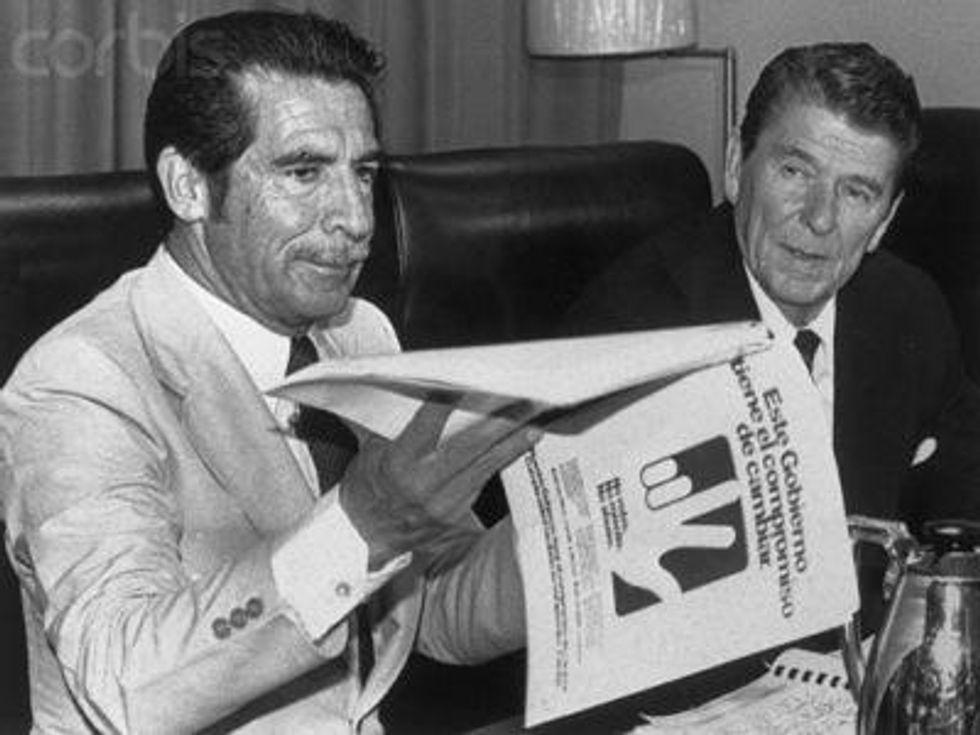
This is a tremendous victory for the people of Guatemala that is a powerful expression of justice and accountability for human rights abuses that offers hope to the many victims of atrocities around the world. This victory, however, doesn't end with the sentence of the Guatemalan dictator. Another chapter needs to be opened with a more thorough examination of the relationship between Montt, the Guatemalan military and the United States government which, if examined objectively, establishes a clear chain of moral and legal culpability. A relationship that even with a cursory understanding of the history of the conflict in Guatemala would lead logically to the inescapable conclusion that if Efrain Rios Montt, and by extension the Guatemalan military, are guilty of the crime of genocide, the U.S. government and its officials are just as guilty as Rio Montt and that justice in Guatemala remains unfulfilled until everyone, including those responsible for pulling the strings in Guatemala, are also brought to justice.
"President Ronald Reagan called Rios Montt 'a man of great personal integrity and commitment.'"
The story of Rio Montt and the U.S. government was uncovered in the bloodstained, declassified U.S. government documents that graphically detail how U.S. officials were fully aware of the pogrom against the Ixil people in the mountains of Guatemala at the very moment that the U.S. government was involved in training and arming the Guatemalan military, passing intelligence to its clandestine services, and providing political and diplomatic support to the government. President Ronald Reagan called Rios Montt "a man of great personal integrity and commitment" even as he was receiving reports from his intelligence agencies documenting the scorched- earth policies of the Guatemalan military in its' campaign against the Ixil.
As horrible as that 17 month period during the Reagan administration was for the indigenous people of Guatemala it was only a brief moment of horror in the macabre drama of U.S.-Guatemala relations. For many in the world there is no doubt that U.S. support, encouragement and guidance made it culpable in the genocidal policies of its' client State during that 17-month period. The history of U.S. and Guatemalan relations since the U.S. inspired coup of 1954 that overthrew Guatemala's reformist President Jacobo Arbenz has been a sordid history of criminal collusion against the people of Guatemala.
From the moment the U.S. Ambassador met with the military leaders of the coup to give them their instructions and deliver a list of radical opponents to be eliminated, the country's future would be marked by systematic brutality. Thousands were arrested in those early days with many tortured and killed and a period of bloodshed ushered in that would define everyday life in the country over the next decades.
"There is no doubt that U.S. support, encouragement and guidance made it culpable in the genocidal policies of its' client State during that 17-month period."
The cost for the people of Central America as a result of U.S. support for tyrannical regimes across the region has been staggering. Just in the 80s, over a 100,000 people lost their lives in in Guatemala, 70,000 in El Salvador and 20,000 in the U.S. destabilization of Nicaragua. Honduras was turned into a staging base for U.S. intervention throughout the region from Panama to Nicaragua with murder and political "disappearances" the weapon to bludgeon the Honduran population into compliance.
The people of Guatemala have made the first courageous step toward real accountability. Now it is up to the international community to take the next step to bring full justice to the victims. For those of us who lived through the 1980s and opposed the genocidal policies in Guatemala, we celebrate the small sliver of justice that the conviction of Rios Montt represents. But our moment of satisfaction is tempered by the awful memories of what occurred in that country, our knowledge of the role that the U.S. played in those horrors and the possibility that the hegemonic puppeteer might once again escape accountability if we don't act.
"If Efrain Rios Montt, and by extension the Guatemalan military, are guilty of the crime of genocide, the U.S. government and its officials are just as guilty."
This is a tremendous victory for the people of Guatemala that is a powerful expression of justice and accountability for human rights abuses that offers hope to the many victims of atrocities around the world. This victory, however, doesn't end with the sentence of the Guatemalan dictator. Another chapter needs to be opened with a more thorough examination of the relationship between Montt, the Guatemalan military and the United States government which, if examined objectively, establishes a clear chain of moral and legal culpability. A relationship that even with a cursory understanding of the history of the conflict in Guatemala would lead logically to the inescapable conclusion that if Efrain Rios Montt, and by extension the Guatemalan military, are guilty of the crime of genocide, the U.S. government and its officials are just as guilty as Rio Montt and that justice in Guatemala remains unfulfilled until everyone, including those responsible for pulling the strings in Guatemala, are also brought to justice.
"President Ronald Reagan called Rios Montt 'a man of great personal integrity and commitment.'"
The story of Rio Montt and the U.S. government was uncovered in the bloodstained, declassified U.S. government documents that graphically detail how U.S. officials were fully aware of the pogrom against the Ixil people in the mountains of Guatemala at the very moment that the U.S. government was involved in training and arming the Guatemalan military, passing intelligence to its clandestine services, and providing political and diplomatic support to the government. President Ronald Reagan called Rios Montt "a man of great personal integrity and commitment" even as he was receiving reports from his intelligence agencies documenting the scorched- earth policies of the Guatemalan military in its' campaign against the Ixil.
As horrible as that 17 month period during the Reagan administration was for the indigenous people of Guatemala it was only a brief moment of horror in the macabre drama of U.S.-Guatemala relations. For many in the world there is no doubt that U.S. support, encouragement and guidance made it culpable in the genocidal policies of its' client State during that 17-month period. The history of U.S. and Guatemalan relations since the U.S. inspired coup of 1954 that overthrew Guatemala's reformist President Jacobo Arbenz has been a sordid history of criminal collusion against the people of Guatemala.
From the moment the U.S. Ambassador met with the military leaders of the coup to give them their instructions and deliver a list of radical opponents to be eliminated, the country's future would be marked by systematic brutality. Thousands were arrested in those early days with many tortured and killed and a period of bloodshed ushered in that would define everyday life in the country over the next decades.
"There is no doubt that U.S. support, encouragement and guidance made it culpable in the genocidal policies of its' client State during that 17-month period."
The cost for the people of Central America as a result of U.S. support for tyrannical regimes across the region has been staggering. Just in the 80s, over a 100,000 people lost their lives in in Guatemala, 70,000 in El Salvador and 20,000 in the U.S. destabilization of Nicaragua. Honduras was turned into a staging base for U.S. intervention throughout the region from Panama to Nicaragua with murder and political "disappearances" the weapon to bludgeon the Honduran population into compliance.
The people of Guatemala have made the first courageous step toward real accountability. Now it is up to the international community to take the next step to bring full justice to the victims. For those of us who lived through the 1980s and opposed the genocidal policies in Guatemala, we celebrate the small sliver of justice that the conviction of Rios Montt represents. But our moment of satisfaction is tempered by the awful memories of what occurred in that country, our knowledge of the role that the U.S. played in those horrors and the possibility that the hegemonic puppeteer might once again escape accountability if we don't act.
"If Efrain Rios Montt, and by extension the Guatemalan military, are guilty of the crime of genocide, the U.S. government and its officials are just as guilty."
This is a tremendous victory for the people of Guatemala that is a powerful expression of justice and accountability for human rights abuses that offers hope to the many victims of atrocities around the world. This victory, however, doesn't end with the sentence of the Guatemalan dictator. Another chapter needs to be opened with a more thorough examination of the relationship between Montt, the Guatemalan military and the United States government which, if examined objectively, establishes a clear chain of moral and legal culpability. A relationship that even with a cursory understanding of the history of the conflict in Guatemala would lead logically to the inescapable conclusion that if Efrain Rios Montt, and by extension the Guatemalan military, are guilty of the crime of genocide, the U.S. government and its officials are just as guilty as Rio Montt and that justice in Guatemala remains unfulfilled until everyone, including those responsible for pulling the strings in Guatemala, are also brought to justice.
"President Ronald Reagan called Rios Montt 'a man of great personal integrity and commitment.'"
The story of Rio Montt and the U.S. government was uncovered in the bloodstained, declassified U.S. government documents that graphically detail how U.S. officials were fully aware of the pogrom against the Ixil people in the mountains of Guatemala at the very moment that the U.S. government was involved in training and arming the Guatemalan military, passing intelligence to its clandestine services, and providing political and diplomatic support to the government. President Ronald Reagan called Rios Montt "a man of great personal integrity and commitment" even as he was receiving reports from his intelligence agencies documenting the scorched- earth policies of the Guatemalan military in its' campaign against the Ixil.
As horrible as that 17 month period during the Reagan administration was for the indigenous people of Guatemala it was only a brief moment of horror in the macabre drama of U.S.-Guatemala relations. For many in the world there is no doubt that U.S. support, encouragement and guidance made it culpable in the genocidal policies of its' client State during that 17-month period. The history of U.S. and Guatemalan relations since the U.S. inspired coup of 1954 that overthrew Guatemala's reformist President Jacobo Arbenz has been a sordid history of criminal collusion against the people of Guatemala.
From the moment the U.S. Ambassador met with the military leaders of the coup to give them their instructions and deliver a list of radical opponents to be eliminated, the country's future would be marked by systematic brutality. Thousands were arrested in those early days with many tortured and killed and a period of bloodshed ushered in that would define everyday life in the country over the next decades.
"There is no doubt that U.S. support, encouragement and guidance made it culpable in the genocidal policies of its' client State during that 17-month period."
The cost for the people of Central America as a result of U.S. support for tyrannical regimes across the region has been staggering. Just in the 80s, over a 100,000 people lost their lives in in Guatemala, 70,000 in El Salvador and 20,000 in the U.S. destabilization of Nicaragua. Honduras was turned into a staging base for U.S. intervention throughout the region from Panama to Nicaragua with murder and political "disappearances" the weapon to bludgeon the Honduran population into compliance.
The people of Guatemala have made the first courageous step toward real accountability. Now it is up to the international community to take the next step to bring full justice to the victims. For those of us who lived through the 1980s and opposed the genocidal policies in Guatemala, we celebrate the small sliver of justice that the conviction of Rios Montt represents. But our moment of satisfaction is tempered by the awful memories of what occurred in that country, our knowledge of the role that the U.S. played in those horrors and the possibility that the hegemonic puppeteer might once again escape accountability if we don't act.