SUBSCRIBE TO OUR FREE NEWSLETTER
Daily news & progressive opinion—funded by the people, not the corporations—delivered straight to your inbox.
5
#000000
#FFFFFF
To donate by check, phone, or other method, see our More Ways to Give page.
You could say that a filibuster occurs when a senator drones on and on. The problem with the U.S. Senate was that there were too few senators speaking about drones this week.
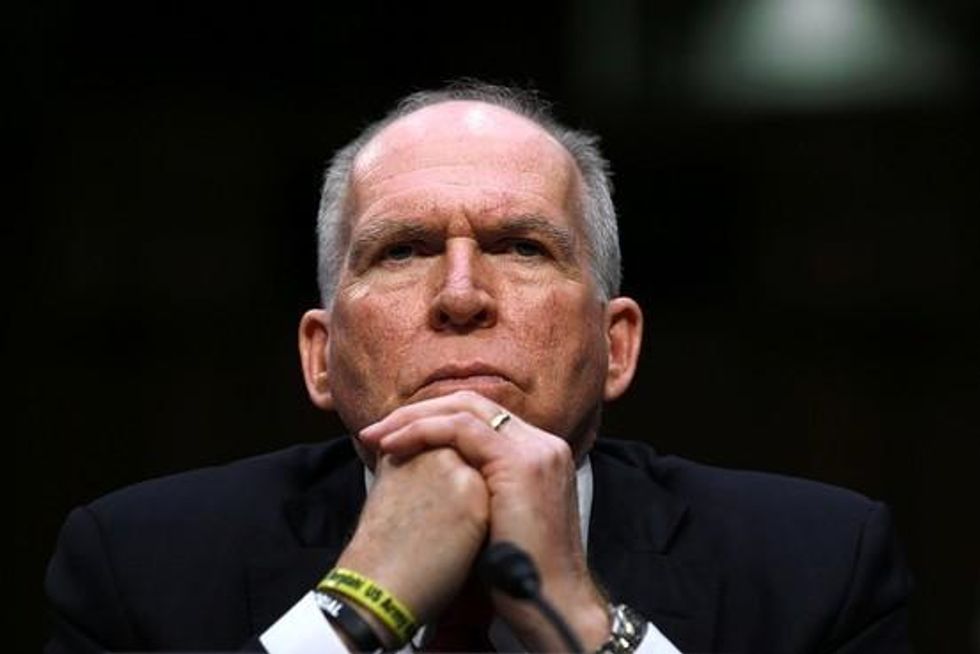
Members of Congress, tasked with oversight of intelligence and military matters, have repeatedly demanded the memoranda from the White House detailing the legal basis for the drone program, only to be repeatedly denied. The nomination of Brennan has opened up the debate, forcing the Obama administration to make nominal gestures of compliance. The answers so far have not satisfied Sen. Paul.
Nearing hour six of his filibuster, Sen. Paul admitted: "I can't ultimately stop the nomination, but what I can do is try to draw attention to this and try to get an answer ... that would be something if we could get an answer from the president ... if he would say explicitly that noncombatants in America won't be killed by drones. The reason it has to be answered is because our foreign drone strike program does kill noncombatants. They may argue that they are conspiring or they may someday be combatants, but if that is the same standard that we are going to use in the United States, it is a far different country than I know about."
The issue of extrajudicial execution of U.S. citizens, whether on U.S. soil or elsewhere, is clearly vital. But also important is the U.S. government's now-seemingly routine killing of civilians around the world, whether by drone strikes, night raids conducted by special operations forces or other lethal means.
Rand Paul's filibuster followed a curious route, including references to Lewis Carroll's "Alice in Wonderland," and quotes from noted progressive, constitutional attorney and Guardian columnist Glenn Greenwald and blogger Kevin Gosztala of Firedoglake.
U.S. Attorney General Eric Holder sent a letter to Sen. Paul March 4, writing, "It is possible, I suppose, to imagine an extraordinary circumstance in which it would be necessary and appropriate under the Constitution and applicable laws of the United States for the President to authorize the military to use lethal force within the territory of the United States."
Holder noted that Paul's question was "entirely hypothetical." So, on the Senate floor, Paul brought up the case of two actual U.S. citizens killed by drone strikes, Anwar al-Awlaki and his son, Abdulrahman. Anwar al-Awlaki was killed by a U.S. drone strike in Yemen on Sept. 30, 2011. Two weeks later, also in Yemen, his 16-year-old son Abdulrahman, a Denver native, was also killed by a drone strike. Paul asked during his filibuster, "If you happen to be the son of a bad person, is that enough to kill you?"
As Sen. Paul filibustered, Will Fitzgibbon wrote from the Bureau of Investigative Journalism in London: "Last month, we launched a new drones project: Naming the Dead. The aim of this project is to identify as many of the more than 2,500 victims of US drone strikes in Pakistan as possible. Given we currently do not know the identities of 80 percent of those killed, we believe this is a crucial and missing step to having a more transparent drones debate. ... With all the attention being recently paid to American citizens killed by drones and with the drone debate growing, we thought it would be a good time to remind ourselves of the individual human stories of drone victims. Those we know about and those we don't."
Barack Obama and John Brennan direct the drone strikes that are killing thousands of civilians. It doesn't make us safer. It makes whole populations, from Yemen to Pakistan, hate us. Sen. Paul's outrage with the president's claimed right to kill U.S. citizens is entirely appropriate. That there is not more outrage at the thousands killed around the globe is shameful ... and dangerous.
Denis Moynihan contributed research to this column.
You could say that a filibuster occurs when a senator drones on and on. The problem with the U.S. Senate was that there were too few senators speaking about drones this week.
Members of Congress, tasked with oversight of intelligence and military matters, have repeatedly demanded the memoranda from the White House detailing the legal basis for the drone program, only to be repeatedly denied. The nomination of Brennan has opened up the debate, forcing the Obama administration to make nominal gestures of compliance. The answers so far have not satisfied Sen. Paul.
Nearing hour six of his filibuster, Sen. Paul admitted: "I can't ultimately stop the nomination, but what I can do is try to draw attention to this and try to get an answer ... that would be something if we could get an answer from the president ... if he would say explicitly that noncombatants in America won't be killed by drones. The reason it has to be answered is because our foreign drone strike program does kill noncombatants. They may argue that they are conspiring or they may someday be combatants, but if that is the same standard that we are going to use in the United States, it is a far different country than I know about."
The issue of extrajudicial execution of U.S. citizens, whether on U.S. soil or elsewhere, is clearly vital. But also important is the U.S. government's now-seemingly routine killing of civilians around the world, whether by drone strikes, night raids conducted by special operations forces or other lethal means.
Rand Paul's filibuster followed a curious route, including references to Lewis Carroll's "Alice in Wonderland," and quotes from noted progressive, constitutional attorney and Guardian columnist Glenn Greenwald and blogger Kevin Gosztala of Firedoglake.
U.S. Attorney General Eric Holder sent a letter to Sen. Paul March 4, writing, "It is possible, I suppose, to imagine an extraordinary circumstance in which it would be necessary and appropriate under the Constitution and applicable laws of the United States for the President to authorize the military to use lethal force within the territory of the United States."
Holder noted that Paul's question was "entirely hypothetical." So, on the Senate floor, Paul brought up the case of two actual U.S. citizens killed by drone strikes, Anwar al-Awlaki and his son, Abdulrahman. Anwar al-Awlaki was killed by a U.S. drone strike in Yemen on Sept. 30, 2011. Two weeks later, also in Yemen, his 16-year-old son Abdulrahman, a Denver native, was also killed by a drone strike. Paul asked during his filibuster, "If you happen to be the son of a bad person, is that enough to kill you?"
As Sen. Paul filibustered, Will Fitzgibbon wrote from the Bureau of Investigative Journalism in London: "Last month, we launched a new drones project: Naming the Dead. The aim of this project is to identify as many of the more than 2,500 victims of US drone strikes in Pakistan as possible. Given we currently do not know the identities of 80 percent of those killed, we believe this is a crucial and missing step to having a more transparent drones debate. ... With all the attention being recently paid to American citizens killed by drones and with the drone debate growing, we thought it would be a good time to remind ourselves of the individual human stories of drone victims. Those we know about and those we don't."
Barack Obama and John Brennan direct the drone strikes that are killing thousands of civilians. It doesn't make us safer. It makes whole populations, from Yemen to Pakistan, hate us. Sen. Paul's outrage with the president's claimed right to kill U.S. citizens is entirely appropriate. That there is not more outrage at the thousands killed around the globe is shameful ... and dangerous.
Denis Moynihan contributed research to this column.
You could say that a filibuster occurs when a senator drones on and on. The problem with the U.S. Senate was that there were too few senators speaking about drones this week.
Members of Congress, tasked with oversight of intelligence and military matters, have repeatedly demanded the memoranda from the White House detailing the legal basis for the drone program, only to be repeatedly denied. The nomination of Brennan has opened up the debate, forcing the Obama administration to make nominal gestures of compliance. The answers so far have not satisfied Sen. Paul.
Nearing hour six of his filibuster, Sen. Paul admitted: "I can't ultimately stop the nomination, but what I can do is try to draw attention to this and try to get an answer ... that would be something if we could get an answer from the president ... if he would say explicitly that noncombatants in America won't be killed by drones. The reason it has to be answered is because our foreign drone strike program does kill noncombatants. They may argue that they are conspiring or they may someday be combatants, but if that is the same standard that we are going to use in the United States, it is a far different country than I know about."
The issue of extrajudicial execution of U.S. citizens, whether on U.S. soil or elsewhere, is clearly vital. But also important is the U.S. government's now-seemingly routine killing of civilians around the world, whether by drone strikes, night raids conducted by special operations forces or other lethal means.
Rand Paul's filibuster followed a curious route, including references to Lewis Carroll's "Alice in Wonderland," and quotes from noted progressive, constitutional attorney and Guardian columnist Glenn Greenwald and blogger Kevin Gosztala of Firedoglake.
U.S. Attorney General Eric Holder sent a letter to Sen. Paul March 4, writing, "It is possible, I suppose, to imagine an extraordinary circumstance in which it would be necessary and appropriate under the Constitution and applicable laws of the United States for the President to authorize the military to use lethal force within the territory of the United States."
Holder noted that Paul's question was "entirely hypothetical." So, on the Senate floor, Paul brought up the case of two actual U.S. citizens killed by drone strikes, Anwar al-Awlaki and his son, Abdulrahman. Anwar al-Awlaki was killed by a U.S. drone strike in Yemen on Sept. 30, 2011. Two weeks later, also in Yemen, his 16-year-old son Abdulrahman, a Denver native, was also killed by a drone strike. Paul asked during his filibuster, "If you happen to be the son of a bad person, is that enough to kill you?"
As Sen. Paul filibustered, Will Fitzgibbon wrote from the Bureau of Investigative Journalism in London: "Last month, we launched a new drones project: Naming the Dead. The aim of this project is to identify as many of the more than 2,500 victims of US drone strikes in Pakistan as possible. Given we currently do not know the identities of 80 percent of those killed, we believe this is a crucial and missing step to having a more transparent drones debate. ... With all the attention being recently paid to American citizens killed by drones and with the drone debate growing, we thought it would be a good time to remind ourselves of the individual human stories of drone victims. Those we know about and those we don't."
Barack Obama and John Brennan direct the drone strikes that are killing thousands of civilians. It doesn't make us safer. It makes whole populations, from Yemen to Pakistan, hate us. Sen. Paul's outrage with the president's claimed right to kill U.S. citizens is entirely appropriate. That there is not more outrage at the thousands killed around the globe is shameful ... and dangerous.
Denis Moynihan contributed research to this column.