SUBSCRIBE TO OUR FREE NEWSLETTER
Daily news & progressive opinion—funded by the people, not the corporations—delivered straight to your inbox.
5
#000000
#FFFFFF
To donate by check, phone, or other method, see our More Ways to Give page.
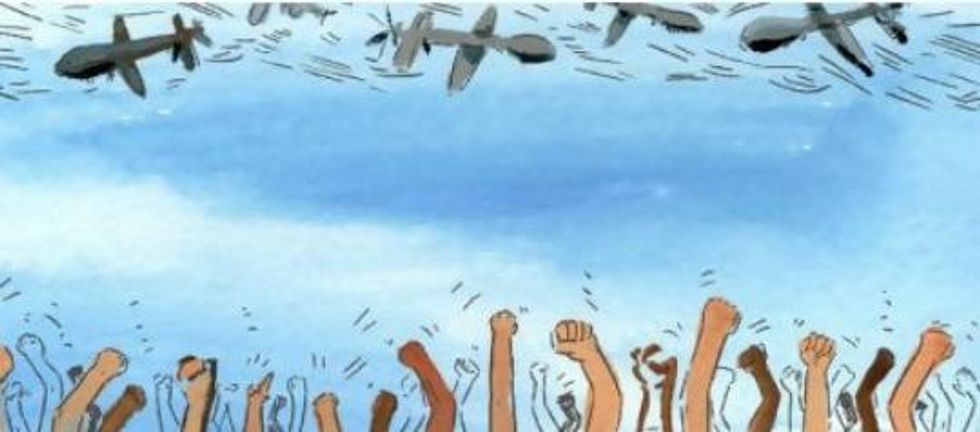
Despite growing international outrage over its controversial remote-control killing programme, the CIA is seeking to expand its fleet of missile-deploying drones by about one-third, The Washington Post has reported.
Far from quelling Islamist insurgencies in places such as Pakistan and Yemen, however, the US spy agency's move to escalate its aerial campaign is likely to further radicalise civilian populations, driving otherwise peaceful people into the arms of militant groups, say observers.
Speaking about drone-inflicted civilian casualties in Yemen, Robert Grenier, a former CIA station chief in Pakistan, told The Guardian newspaper: "If you strike them indiscriminately, you are running the risk of creating a terrific amount of popular anger. They have tribes and clans and large families. Now all of a sudden you have a big problem ... I am very concerned about the creation of a larger terrorist safe haven in Yemen."
A report by Columbia Law School's Human Rights Clinic and Center for Civilians in Conflict supports this view: "Policymakers are failing to ask the hard questions here, including whether other tactics or strategies are more appropriate than drone strikes, and whether US expansion of drone operations is causing more harm than good."
Former British army captain James Jeffrey was monitoring live pictures transmitted from a drone in Afghanistan during a "signature strike" operation in 2009 when he thought he saw an insurgent planting a bomb in the middle of a road. Highlighting the serious threat this type of warfare poses to civilians, Jeffrey told the BBC: "This individual walked up, [but he] was a lot larger, indicating that it was probably a child in the middle of the road, just playing, and so obviously at that point the engagement was totally called off. But it was an unsettling experience because I had come fairly close to engaging that target, which was a child."
According to a recent study by academics at Stanford and New York University, between 2,562 and 3,325 people have been killed in Pakistan since strikes began there in 2004. Of those killed, up to 881 were civilians and 176 of them were children. Only 41 turned out to be "high-value" terrorist targets.
Most would agree that the US drone programme has had some significant successes, including the elimination of numerous senior Al Qaeda militants, and it offers the advantage of addressing threats without putting soldiers' lives at risk. However, the callous disregard for civilian life exhibited by those running the programme has led to accusations that the US itself is guilty of terrorism. Reinforcing this perception, a recent report from the Bureau of Investigative Journalism details how, following an initial drone strike, the CIA mimics the "double tap" strategy employed by terrorist groups, targeting residents and rescuers arriving at the scene, and then mourners at the funerals that soon follow.
If you look at it from the perspective of civilians living in targeted areas, the perception that the programme is terrorist in nature is understandable. How great is the moral distinction between an insurgent group killing 20 innocent people in a bomb attack intended to kill a top official, and the CIA inflicting similar casualties with a Predator drone targeting a senior militant - fully aware that the strike will result in considerable "collateral damage"?
Those who doubt the "blowback" potential of drone warfare should consider the words of Nasr Abdullah, a witness to a strike that killed 13 Yemeni civilians last month. He told CNN: "I would not be surprised if a hundred tribesmen joined the lines of Al Qaeda as a result of the latest drone mistake. This part of Yemen takes revenge very seriously."
Despite growing international outrage over its controversial remote-control killing programme, the CIA is seeking to expand its fleet of missile-deploying drones by about one-third, The Washington Post has reported.
Far from quelling Islamist insurgencies in places such as Pakistan and Yemen, however, the US spy agency's move to escalate its aerial campaign is likely to further radicalise civilian populations, driving otherwise peaceful people into the arms of militant groups, say observers.
Speaking about drone-inflicted civilian casualties in Yemen, Robert Grenier, a former CIA station chief in Pakistan, told The Guardian newspaper: "If you strike them indiscriminately, you are running the risk of creating a terrific amount of popular anger. They have tribes and clans and large families. Now all of a sudden you have a big problem ... I am very concerned about the creation of a larger terrorist safe haven in Yemen."
A report by Columbia Law School's Human Rights Clinic and Center for Civilians in Conflict supports this view: "Policymakers are failing to ask the hard questions here, including whether other tactics or strategies are more appropriate than drone strikes, and whether US expansion of drone operations is causing more harm than good."
Former British army captain James Jeffrey was monitoring live pictures transmitted from a drone in Afghanistan during a "signature strike" operation in 2009 when he thought he saw an insurgent planting a bomb in the middle of a road. Highlighting the serious threat this type of warfare poses to civilians, Jeffrey told the BBC: "This individual walked up, [but he] was a lot larger, indicating that it was probably a child in the middle of the road, just playing, and so obviously at that point the engagement was totally called off. But it was an unsettling experience because I had come fairly close to engaging that target, which was a child."
According to a recent study by academics at Stanford and New York University, between 2,562 and 3,325 people have been killed in Pakistan since strikes began there in 2004. Of those killed, up to 881 were civilians and 176 of them were children. Only 41 turned out to be "high-value" terrorist targets.
Most would agree that the US drone programme has had some significant successes, including the elimination of numerous senior Al Qaeda militants, and it offers the advantage of addressing threats without putting soldiers' lives at risk. However, the callous disregard for civilian life exhibited by those running the programme has led to accusations that the US itself is guilty of terrorism. Reinforcing this perception, a recent report from the Bureau of Investigative Journalism details how, following an initial drone strike, the CIA mimics the "double tap" strategy employed by terrorist groups, targeting residents and rescuers arriving at the scene, and then mourners at the funerals that soon follow.
If you look at it from the perspective of civilians living in targeted areas, the perception that the programme is terrorist in nature is understandable. How great is the moral distinction between an insurgent group killing 20 innocent people in a bomb attack intended to kill a top official, and the CIA inflicting similar casualties with a Predator drone targeting a senior militant - fully aware that the strike will result in considerable "collateral damage"?
Those who doubt the "blowback" potential of drone warfare should consider the words of Nasr Abdullah, a witness to a strike that killed 13 Yemeni civilians last month. He told CNN: "I would not be surprised if a hundred tribesmen joined the lines of Al Qaeda as a result of the latest drone mistake. This part of Yemen takes revenge very seriously."
Despite growing international outrage over its controversial remote-control killing programme, the CIA is seeking to expand its fleet of missile-deploying drones by about one-third, The Washington Post has reported.
Far from quelling Islamist insurgencies in places such as Pakistan and Yemen, however, the US spy agency's move to escalate its aerial campaign is likely to further radicalise civilian populations, driving otherwise peaceful people into the arms of militant groups, say observers.
Speaking about drone-inflicted civilian casualties in Yemen, Robert Grenier, a former CIA station chief in Pakistan, told The Guardian newspaper: "If you strike them indiscriminately, you are running the risk of creating a terrific amount of popular anger. They have tribes and clans and large families. Now all of a sudden you have a big problem ... I am very concerned about the creation of a larger terrorist safe haven in Yemen."
A report by Columbia Law School's Human Rights Clinic and Center for Civilians in Conflict supports this view: "Policymakers are failing to ask the hard questions here, including whether other tactics or strategies are more appropriate than drone strikes, and whether US expansion of drone operations is causing more harm than good."
Former British army captain James Jeffrey was monitoring live pictures transmitted from a drone in Afghanistan during a "signature strike" operation in 2009 when he thought he saw an insurgent planting a bomb in the middle of a road. Highlighting the serious threat this type of warfare poses to civilians, Jeffrey told the BBC: "This individual walked up, [but he] was a lot larger, indicating that it was probably a child in the middle of the road, just playing, and so obviously at that point the engagement was totally called off. But it was an unsettling experience because I had come fairly close to engaging that target, which was a child."
According to a recent study by academics at Stanford and New York University, between 2,562 and 3,325 people have been killed in Pakistan since strikes began there in 2004. Of those killed, up to 881 were civilians and 176 of them were children. Only 41 turned out to be "high-value" terrorist targets.
Most would agree that the US drone programme has had some significant successes, including the elimination of numerous senior Al Qaeda militants, and it offers the advantage of addressing threats without putting soldiers' lives at risk. However, the callous disregard for civilian life exhibited by those running the programme has led to accusations that the US itself is guilty of terrorism. Reinforcing this perception, a recent report from the Bureau of Investigative Journalism details how, following an initial drone strike, the CIA mimics the "double tap" strategy employed by terrorist groups, targeting residents and rescuers arriving at the scene, and then mourners at the funerals that soon follow.
If you look at it from the perspective of civilians living in targeted areas, the perception that the programme is terrorist in nature is understandable. How great is the moral distinction between an insurgent group killing 20 innocent people in a bomb attack intended to kill a top official, and the CIA inflicting similar casualties with a Predator drone targeting a senior militant - fully aware that the strike will result in considerable "collateral damage"?
Those who doubt the "blowback" potential of drone warfare should consider the words of Nasr Abdullah, a witness to a strike that killed 13 Yemeni civilians last month. He told CNN: "I would not be surprised if a hundred tribesmen joined the lines of Al Qaeda as a result of the latest drone mistake. This part of Yemen takes revenge very seriously."