SUBSCRIBE TO OUR FREE NEWSLETTER
Daily news & progressive opinion—funded by the people, not the corporations—delivered straight to your inbox.
5
#000000
#FFFFFF
To donate by check, phone, or other method, see our More Ways to Give page.
The laws of physics tell us we can't build a rocket that will travel faster than the speed of light, that gravity governs objects on Earth, and that perpetual motion machines are not possible. In chemistry, diffusion constants, reaction rates, and atomic properties set the limits of chemical reactions and types of molecules that can be synthesized. Biology dictates our absolute need for clean air, clean water, clean soil, clean energy, and biodiversity for our survival and health.
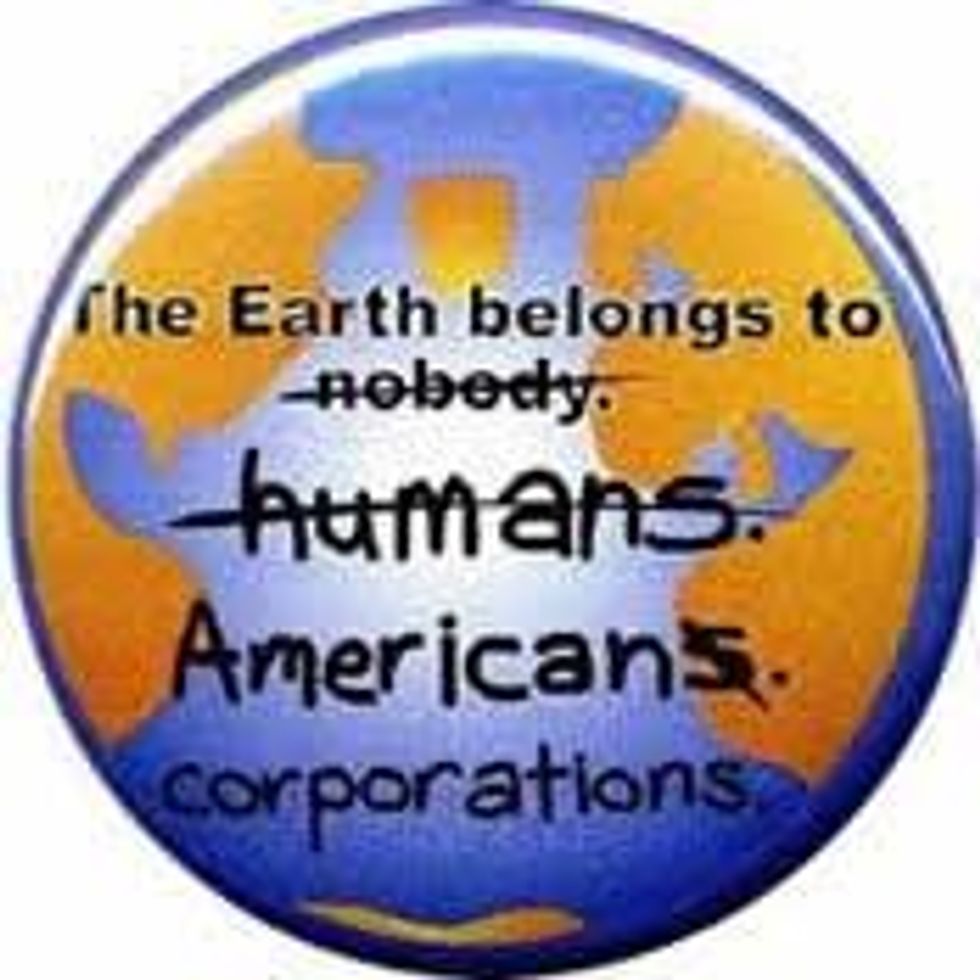
Instead we try to alter nature to fit our priorities. Look at what happened at the Copenhagen Climate Summit in December 2009. We saw 192 nations gathered to deal with the atmosphere that belongs to no one -- 192 national borders, 192 economic priorities, trying to shoehorn nature to fit our creations! We should be looking for ways to make our systems work with nature, not the other way around.
It's a message that's starting to emerge from the Occupy movement. It's not just about the one per cent who rake in an ever-increasing proportion of society's wealth while 99 per cent bear the real costs. It's also about corporate power and the systems that facilitate it. A few corporations have become bigger than most governments.
Occupiers know, because so many are young, that the inequities represented by the one per cent today are also intergenerational. Although not all corporations are bad, many of them, and the super-rich who run them, are increasing their wealth at the expense of generations to come -- exhausting resources, extinguishing species, and poisoning air, water, and soil. The costs of those problems will be most strongly felt by successive generations to come, yet economists discount them.
Why do the governments we elect to look after our well-being and future act as cheerleaders for the corporate sector? Because money talks.
Corporations may produce or do things that we need and that are good for society, but their real mandate is to make money, and the more they make and the faster they make it, the better. Corporations are said to be the economic engines of society. But as Joel Bakan explains in his book The Corporation, when profit is their primary goal, corporate leaders will fight to reduce their share of taxes, demand subsidies, oppose regulations, and fire hundreds of employees for the sake of the bottom line.
Globalization does not encourage the highest standards for workers, communities, or ecosystems. Instead, corporations often go for the lowest standards of medical care, wages, and environmental regulations because it's all about maximizing profit. The global economy means our garbage and toxic effluents are shared with the world, dumped into the air, water, and land.
When you buy running shoes, a cell phone, or a car, it's almost impossible to know whether slave or child labor was involved in its production. How can you be aware of the ecological impacts or the toxic materials that may be generated in the manufacturing process? These costs are hidden, yet each time we make a purchase, we become part of that system that exploits people and ecosystems.
To me, the Occupy movement is about putting decisions and democracy back into the hands of people. We need democracy for people, not corporations; we want greater equity; we demand social justice; and we want to recognize and protect our most fundamental needs -- clean air, clean water, clean soil, clean energy, biological diversity, and communities that support our children with love and care.
My generation and the boomers who followed have lived like reckless royalty and thoughtlessly partied like there's no tomorrow. We forgot the lessons taught to us by our parents and grandparents who came through the Great Depression: live within your means and save some for tomorrow; satisfy your needs and not your wants; help your neighbors; share and don't be greedy; money doesn't make you a better or more important person. Well, the party's over. It's time to clean up our mess and think about our children and grandchildren.
The laws of physics tell us we can't build a rocket that will travel faster than the speed of light, that gravity governs objects on Earth, and that perpetual motion machines are not possible. In chemistry, diffusion constants, reaction rates, and atomic properties set the limits of chemical reactions and types of molecules that can be synthesized. Biology dictates our absolute need for clean air, clean water, clean soil, clean energy, and biodiversity for our survival and health.
Instead we try to alter nature to fit our priorities. Look at what happened at the Copenhagen Climate Summit in December 2009. We saw 192 nations gathered to deal with the atmosphere that belongs to no one -- 192 national borders, 192 economic priorities, trying to shoehorn nature to fit our creations! We should be looking for ways to make our systems work with nature, not the other way around.
It's a message that's starting to emerge from the Occupy movement. It's not just about the one per cent who rake in an ever-increasing proportion of society's wealth while 99 per cent bear the real costs. It's also about corporate power and the systems that facilitate it. A few corporations have become bigger than most governments.
Occupiers know, because so many are young, that the inequities represented by the one per cent today are also intergenerational. Although not all corporations are bad, many of them, and the super-rich who run them, are increasing their wealth at the expense of generations to come -- exhausting resources, extinguishing species, and poisoning air, water, and soil. The costs of those problems will be most strongly felt by successive generations to come, yet economists discount them.
Why do the governments we elect to look after our well-being and future act as cheerleaders for the corporate sector? Because money talks.
Corporations may produce or do things that we need and that are good for society, but their real mandate is to make money, and the more they make and the faster they make it, the better. Corporations are said to be the economic engines of society. But as Joel Bakan explains in his book The Corporation, when profit is their primary goal, corporate leaders will fight to reduce their share of taxes, demand subsidies, oppose regulations, and fire hundreds of employees for the sake of the bottom line.
Globalization does not encourage the highest standards for workers, communities, or ecosystems. Instead, corporations often go for the lowest standards of medical care, wages, and environmental regulations because it's all about maximizing profit. The global economy means our garbage and toxic effluents are shared with the world, dumped into the air, water, and land.
When you buy running shoes, a cell phone, or a car, it's almost impossible to know whether slave or child labor was involved in its production. How can you be aware of the ecological impacts or the toxic materials that may be generated in the manufacturing process? These costs are hidden, yet each time we make a purchase, we become part of that system that exploits people and ecosystems.
To me, the Occupy movement is about putting decisions and democracy back into the hands of people. We need democracy for people, not corporations; we want greater equity; we demand social justice; and we want to recognize and protect our most fundamental needs -- clean air, clean water, clean soil, clean energy, biological diversity, and communities that support our children with love and care.
My generation and the boomers who followed have lived like reckless royalty and thoughtlessly partied like there's no tomorrow. We forgot the lessons taught to us by our parents and grandparents who came through the Great Depression: live within your means and save some for tomorrow; satisfy your needs and not your wants; help your neighbors; share and don't be greedy; money doesn't make you a better or more important person. Well, the party's over. It's time to clean up our mess and think about our children and grandchildren.
The laws of physics tell us we can't build a rocket that will travel faster than the speed of light, that gravity governs objects on Earth, and that perpetual motion machines are not possible. In chemistry, diffusion constants, reaction rates, and atomic properties set the limits of chemical reactions and types of molecules that can be synthesized. Biology dictates our absolute need for clean air, clean water, clean soil, clean energy, and biodiversity for our survival and health.
Instead we try to alter nature to fit our priorities. Look at what happened at the Copenhagen Climate Summit in December 2009. We saw 192 nations gathered to deal with the atmosphere that belongs to no one -- 192 national borders, 192 economic priorities, trying to shoehorn nature to fit our creations! We should be looking for ways to make our systems work with nature, not the other way around.
It's a message that's starting to emerge from the Occupy movement. It's not just about the one per cent who rake in an ever-increasing proportion of society's wealth while 99 per cent bear the real costs. It's also about corporate power and the systems that facilitate it. A few corporations have become bigger than most governments.
Occupiers know, because so many are young, that the inequities represented by the one per cent today are also intergenerational. Although not all corporations are bad, many of them, and the super-rich who run them, are increasing their wealth at the expense of generations to come -- exhausting resources, extinguishing species, and poisoning air, water, and soil. The costs of those problems will be most strongly felt by successive generations to come, yet economists discount them.
Why do the governments we elect to look after our well-being and future act as cheerleaders for the corporate sector? Because money talks.
Corporations may produce or do things that we need and that are good for society, but their real mandate is to make money, and the more they make and the faster they make it, the better. Corporations are said to be the economic engines of society. But as Joel Bakan explains in his book The Corporation, when profit is their primary goal, corporate leaders will fight to reduce their share of taxes, demand subsidies, oppose regulations, and fire hundreds of employees for the sake of the bottom line.
Globalization does not encourage the highest standards for workers, communities, or ecosystems. Instead, corporations often go for the lowest standards of medical care, wages, and environmental regulations because it's all about maximizing profit. The global economy means our garbage and toxic effluents are shared with the world, dumped into the air, water, and land.
When you buy running shoes, a cell phone, or a car, it's almost impossible to know whether slave or child labor was involved in its production. How can you be aware of the ecological impacts or the toxic materials that may be generated in the manufacturing process? These costs are hidden, yet each time we make a purchase, we become part of that system that exploits people and ecosystems.
To me, the Occupy movement is about putting decisions and democracy back into the hands of people. We need democracy for people, not corporations; we want greater equity; we demand social justice; and we want to recognize and protect our most fundamental needs -- clean air, clean water, clean soil, clean energy, biological diversity, and communities that support our children with love and care.
My generation and the boomers who followed have lived like reckless royalty and thoughtlessly partied like there's no tomorrow. We forgot the lessons taught to us by our parents and grandparents who came through the Great Depression: live within your means and save some for tomorrow; satisfy your needs and not your wants; help your neighbors; share and don't be greedy; money doesn't make you a better or more important person. Well, the party's over. It's time to clean up our mess and think about our children and grandchildren.