SUBSCRIBE TO OUR FREE NEWSLETTER
Daily news & progressive opinion—funded by the people, not the corporations—delivered straight to your inbox.
5
#000000
#FFFFFF
To donate by check, phone, or other method, see our More Ways to Give page.
Operation Enduring Freedom - the dreadfully misnamed ten-year US occupation of Afghanistan - has turned into Operation Enduring Misery.
The renowned military strategist, Maj. Gen. J.F.C Fuller, defined war's true objective as achieving desired political results, not killing enemies.
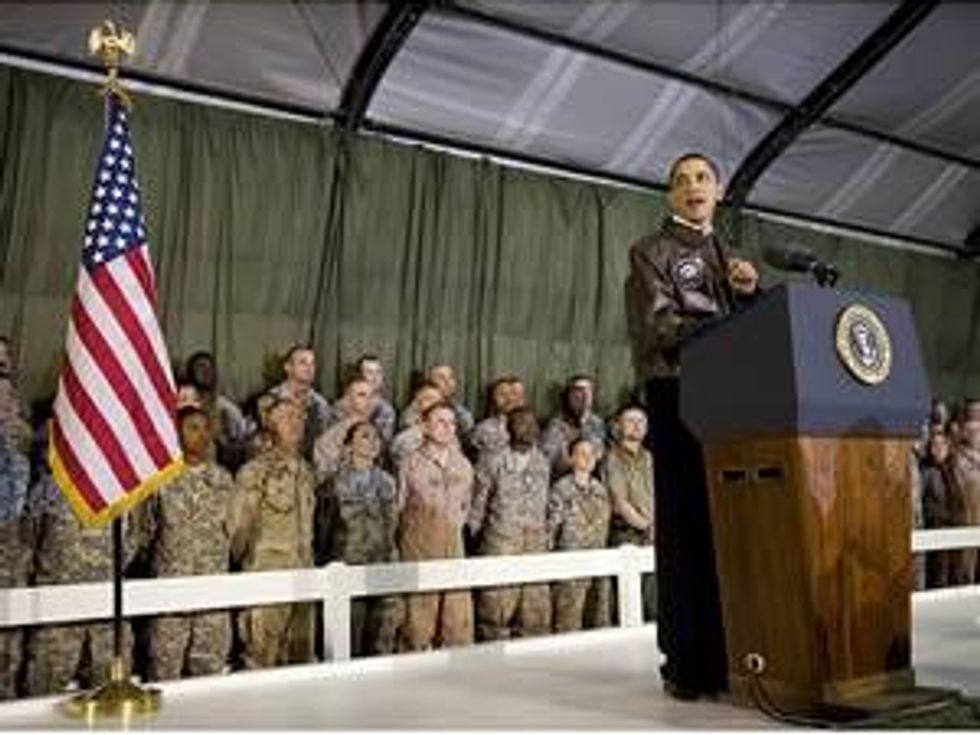
Each US soldier in Afghanistan costs $1 million per annum. CIA employs 80,000 mercenaries there, cost unknown. The US spends a staggering $20.2 billion alone annually air conditioning troop quarters in Afghanistan and Iraq.
The most damning assessment comes from the US-installed Afghan leader, Hamid Karzai: America's war has been "ineffective, apart from causing civilian casualties."
Washington's goal was a favorable political settlement producing a pacified Afghan state run by a regime totally responsive to US political, economic and strategic interests; a native sepoy army led by white officers; and US bases that threaten Iran, watch China, and control the energy-rich Caspian Basin.
All the claims made about fighting "terrorism and al-Qaida," liberating Afghan women and bringing democracy are pro-war window dressing. CIA chief Leon Panetta admitted there were no more than 25-50 al-Qaida members in Afghanistan. Why are there 150,000 US and NATO troops there?
Washington's real objective was clearly defined in 2007 by US Assistant Secretary of State Richard Boucher: to "stabilize Afghanistan so it can become a conduit and hub between South and Central Asia - so energy can flow south."
The Turkmenistan-Afghan-Pakistan TAPI gas pipeline that the US has sought since 1998 is finally nearing completion. But whether it can operate in the face of sabotage remains to be seen.
Meanwhile, Washington has been unable to create a stable government in Kabul. The primary reason: ethnic politics. Over half the population is Pashtun (or Pathan), from whose ranks come Taliban. Tajik, Uzbek and Hazara minorities fiercely oppose the Pashtun. All three collaborated with the Soviet occupation from 1979-1989; today they collaborate with the US and NATO occupation.
Most of the Afghan army and police, on which the US spends $6 billion annually, are Tajiks and Uzbek, many members of the old Afghan Communist Party. To Pashtun, they are bitter enemies. In Afghanistan, the US has built its political house on ethnic quicksands.
Worse, US-run Afghanistan now produces 93% of the world's most dangerous narcotic, heroin. Under Taliban, drug production virtually ended, according to the UN. Today, the Afghan drug business is booming. The US tries to blame Taliban; but the real culprits are high government officials in Kabul and US-backed warlords.
A senior UN drug official recently asserted that Afghan heroin killed 10,000 people in NATO countries last year. And this does not include Russia, a primary destination for Afghan heroin.
So the United States is now the proud owner of the world's leading narco-state and deeply involved with the Afghan Tajik drug mafia.
The US is bleeding billions in Afghanistan. Forty-four cents of every dollar spent by Washington is borrowed from China and Japan. While the US has wasted $1.283 trillion on the so-called "war on terror," China has been busy buying up resources and making new friends and markets. The ghost of Osama bin Laden must be smiling.
The US can't afford this endless war against the fierce Pashtun people, renowned for making Afghanistan "the Graveyard of Empires." But the imperial establishment in Washington wants to hold on to strategic Afghanistan, particularly the ex-Soviet air bases at Bagram and Kandahar. The US is building its biggest embassy in the world in Kabul, an $800 million fortress with 1,000 personnel, protected by a small army of mercenary gunmen. So much for withdrawal plans.
The stumbling, confused US war in Afghanistan has now lasted longer than the two world wars. The former US commander in Afghanistan, Gen. Stanley McCrystal, just said Washington's view of that nation is "frighteningly simplistic." That's an understatement.
Facing the possibility of stalemate or even defeat in Afghanistan, Washington is trying to push India deeper into the conflict. This desperate ploy, and nurturing ethnic conflict, will ensure another decade of misery for Afghanistan.
Operation Enduring Freedom - the dreadfully misnamed ten-year US occupation of Afghanistan - has turned into Operation Enduring Misery.
The renowned military strategist, Maj. Gen. J.F.C Fuller, defined war's true objective as achieving desired political results, not killing enemies.
Each US soldier in Afghanistan costs $1 million per annum. CIA employs 80,000 mercenaries there, cost unknown. The US spends a staggering $20.2 billion alone annually air conditioning troop quarters in Afghanistan and Iraq.
The most damning assessment comes from the US-installed Afghan leader, Hamid Karzai: America's war has been "ineffective, apart from causing civilian casualties."
Washington's goal was a favorable political settlement producing a pacified Afghan state run by a regime totally responsive to US political, economic and strategic interests; a native sepoy army led by white officers; and US bases that threaten Iran, watch China, and control the energy-rich Caspian Basin.
All the claims made about fighting "terrorism and al-Qaida," liberating Afghan women and bringing democracy are pro-war window dressing. CIA chief Leon Panetta admitted there were no more than 25-50 al-Qaida members in Afghanistan. Why are there 150,000 US and NATO troops there?
Washington's real objective was clearly defined in 2007 by US Assistant Secretary of State Richard Boucher: to "stabilize Afghanistan so it can become a conduit and hub between South and Central Asia - so energy can flow south."
The Turkmenistan-Afghan-Pakistan TAPI gas pipeline that the US has sought since 1998 is finally nearing completion. But whether it can operate in the face of sabotage remains to be seen.
Meanwhile, Washington has been unable to create a stable government in Kabul. The primary reason: ethnic politics. Over half the population is Pashtun (or Pathan), from whose ranks come Taliban. Tajik, Uzbek and Hazara minorities fiercely oppose the Pashtun. All three collaborated with the Soviet occupation from 1979-1989; today they collaborate with the US and NATO occupation.
Most of the Afghan army and police, on which the US spends $6 billion annually, are Tajiks and Uzbek, many members of the old Afghan Communist Party. To Pashtun, they are bitter enemies. In Afghanistan, the US has built its political house on ethnic quicksands.
Worse, US-run Afghanistan now produces 93% of the world's most dangerous narcotic, heroin. Under Taliban, drug production virtually ended, according to the UN. Today, the Afghan drug business is booming. The US tries to blame Taliban; but the real culprits are high government officials in Kabul and US-backed warlords.
A senior UN drug official recently asserted that Afghan heroin killed 10,000 people in NATO countries last year. And this does not include Russia, a primary destination for Afghan heroin.
So the United States is now the proud owner of the world's leading narco-state and deeply involved with the Afghan Tajik drug mafia.
The US is bleeding billions in Afghanistan. Forty-four cents of every dollar spent by Washington is borrowed from China and Japan. While the US has wasted $1.283 trillion on the so-called "war on terror," China has been busy buying up resources and making new friends and markets. The ghost of Osama bin Laden must be smiling.
The US can't afford this endless war against the fierce Pashtun people, renowned for making Afghanistan "the Graveyard of Empires." But the imperial establishment in Washington wants to hold on to strategic Afghanistan, particularly the ex-Soviet air bases at Bagram and Kandahar. The US is building its biggest embassy in the world in Kabul, an $800 million fortress with 1,000 personnel, protected by a small army of mercenary gunmen. So much for withdrawal plans.
The stumbling, confused US war in Afghanistan has now lasted longer than the two world wars. The former US commander in Afghanistan, Gen. Stanley McCrystal, just said Washington's view of that nation is "frighteningly simplistic." That's an understatement.
Facing the possibility of stalemate or even defeat in Afghanistan, Washington is trying to push India deeper into the conflict. This desperate ploy, and nurturing ethnic conflict, will ensure another decade of misery for Afghanistan.
Operation Enduring Freedom - the dreadfully misnamed ten-year US occupation of Afghanistan - has turned into Operation Enduring Misery.
The renowned military strategist, Maj. Gen. J.F.C Fuller, defined war's true objective as achieving desired political results, not killing enemies.
Each US soldier in Afghanistan costs $1 million per annum. CIA employs 80,000 mercenaries there, cost unknown. The US spends a staggering $20.2 billion alone annually air conditioning troop quarters in Afghanistan and Iraq.
The most damning assessment comes from the US-installed Afghan leader, Hamid Karzai: America's war has been "ineffective, apart from causing civilian casualties."
Washington's goal was a favorable political settlement producing a pacified Afghan state run by a regime totally responsive to US political, economic and strategic interests; a native sepoy army led by white officers; and US bases that threaten Iran, watch China, and control the energy-rich Caspian Basin.
All the claims made about fighting "terrorism and al-Qaida," liberating Afghan women and bringing democracy are pro-war window dressing. CIA chief Leon Panetta admitted there were no more than 25-50 al-Qaida members in Afghanistan. Why are there 150,000 US and NATO troops there?
Washington's real objective was clearly defined in 2007 by US Assistant Secretary of State Richard Boucher: to "stabilize Afghanistan so it can become a conduit and hub between South and Central Asia - so energy can flow south."
The Turkmenistan-Afghan-Pakistan TAPI gas pipeline that the US has sought since 1998 is finally nearing completion. But whether it can operate in the face of sabotage remains to be seen.
Meanwhile, Washington has been unable to create a stable government in Kabul. The primary reason: ethnic politics. Over half the population is Pashtun (or Pathan), from whose ranks come Taliban. Tajik, Uzbek and Hazara minorities fiercely oppose the Pashtun. All three collaborated with the Soviet occupation from 1979-1989; today they collaborate with the US and NATO occupation.
Most of the Afghan army and police, on which the US spends $6 billion annually, are Tajiks and Uzbek, many members of the old Afghan Communist Party. To Pashtun, they are bitter enemies. In Afghanistan, the US has built its political house on ethnic quicksands.
Worse, US-run Afghanistan now produces 93% of the world's most dangerous narcotic, heroin. Under Taliban, drug production virtually ended, according to the UN. Today, the Afghan drug business is booming. The US tries to blame Taliban; but the real culprits are high government officials in Kabul and US-backed warlords.
A senior UN drug official recently asserted that Afghan heroin killed 10,000 people in NATO countries last year. And this does not include Russia, a primary destination for Afghan heroin.
So the United States is now the proud owner of the world's leading narco-state and deeply involved with the Afghan Tajik drug mafia.
The US is bleeding billions in Afghanistan. Forty-four cents of every dollar spent by Washington is borrowed from China and Japan. While the US has wasted $1.283 trillion on the so-called "war on terror," China has been busy buying up resources and making new friends and markets. The ghost of Osama bin Laden must be smiling.
The US can't afford this endless war against the fierce Pashtun people, renowned for making Afghanistan "the Graveyard of Empires." But the imperial establishment in Washington wants to hold on to strategic Afghanistan, particularly the ex-Soviet air bases at Bagram and Kandahar. The US is building its biggest embassy in the world in Kabul, an $800 million fortress with 1,000 personnel, protected by a small army of mercenary gunmen. So much for withdrawal plans.
The stumbling, confused US war in Afghanistan has now lasted longer than the two world wars. The former US commander in Afghanistan, Gen. Stanley McCrystal, just said Washington's view of that nation is "frighteningly simplistic." That's an understatement.
Facing the possibility of stalemate or even defeat in Afghanistan, Washington is trying to push India deeper into the conflict. This desperate ploy, and nurturing ethnic conflict, will ensure another decade of misery for Afghanistan.