SUBSCRIBE TO OUR FREE NEWSLETTER
Daily news & progressive opinion—funded by the people, not the corporations—delivered straight to your inbox.
5
#000000
#FFFFFF
To donate by check, phone, or other method, see our More Ways to Give page.
When McDonald's sneezes, the media jumps. Such was the case yesterday when the company announced it was giving the Happy Meal a makeover. Well not really, but that's how it got reported, because the media loves simple stories. But when it comes to marketing and PR by multinational corporations, nothing is ever that simple.
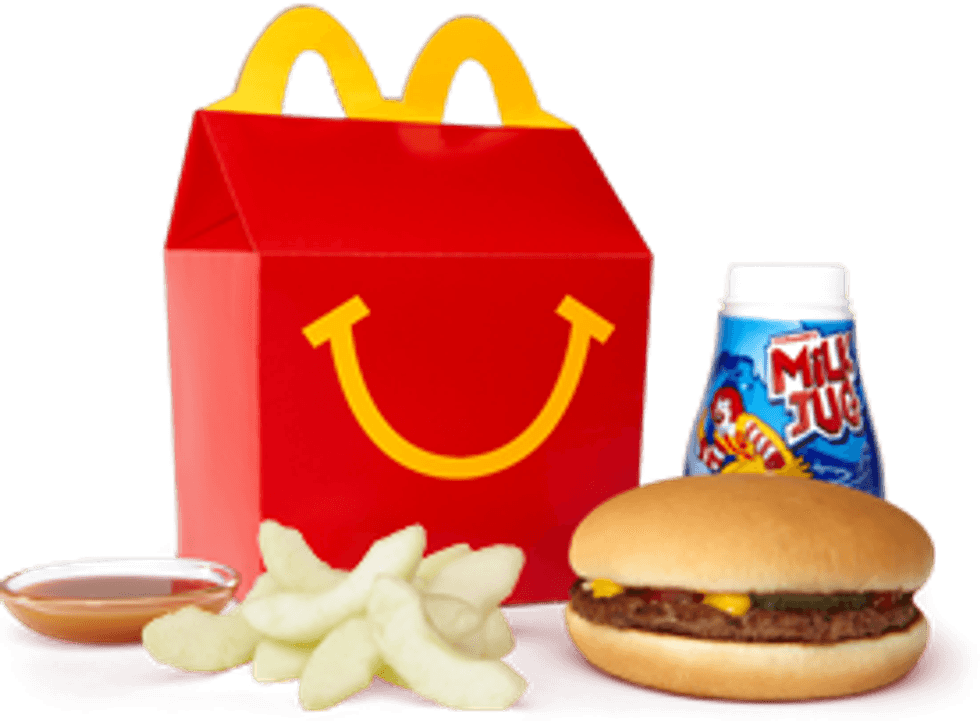
While my colleagues have done a great job of explaining why nutritionally, this move is little more than PR (see Marion Nestle and Andy Bellatti), missing from the analysis so far is this: what McDonald's really wants is to remain in charge.
The fast food giant's motivation beyond the obvious positive PR spin is to stave off more laws like the one passed in San Francisco to set nutrition standards for Happy Meals, not to mention lawsuits like the one filed by the Center for Science in the Public Interest based on deceptive marketing.
No doubt McDonald's is gearing up to challenge the San Francisco ordinance in court the minute it goes in effect later this year. A similar bill has been proposed New York City while other localities wait to see the legal outcome. Now, McDonald's gets to claim to any lawmaker or judge who will listen: "We don't need no stinking laws, we got it covered with our new and improved Happy Meals. We got the message loud and clear, so now we're cleaning up act all on our own. Nothing to see here, move along."
As I explained in my book, Big Food announcements of improved corporate behavior are for two reasons only: positive PR and staving off government regulation (and in this case, more litigation).
While the former is more obvious, the latter should cause you to ask: Who is in charge here? McDonald's ultimate goal is to make as little change as possible to get media attention (and praise from the likes of the first lady), while distracting policymakers from doing its job setting the boundaries of corporate behavior.
One argument I often hear about why we should praise these sort of industry moves is that "it's a step in the right direction." But in what direction exactly? A direction in which McDonald's and friends continue to get to call all the shots for how we eat and how our children are marketed to? What is the end game in a world where we accept "incremental change" from corporations who answer only to shareholders? Somehow I don't see that in 200 more steps Happy Meal boxes will morph into CSA boxes full of fresh, local produce.
Rather than praise corporations like McDonald's for such meaningless and most likely temporary "improvements" let's call them out for the distractions they are. We can at least celebrate that years of advocacy efforts to curb marketing to children is causing McDonald's to take notice, as lame as it is.
Then let's get back to the much harder job of policy change: to convince our democratically-elected leaders (or judges if that's what it takes) that McDonald's should not be allowed to market to children, period. No matter how many ounces of French fries or apple slices Happy Meals contain.
When McDonald's sneezes, the media jumps. Such was the case yesterday when the company announced it was giving the Happy Meal a makeover. Well not really, but that's how it got reported, because the media loves simple stories. But when it comes to marketing and PR by multinational corporations, nothing is ever that simple.
While my colleagues have done a great job of explaining why nutritionally, this move is little more than PR (see Marion Nestle and Andy Bellatti), missing from the analysis so far is this: what McDonald's really wants is to remain in charge.
The fast food giant's motivation beyond the obvious positive PR spin is to stave off more laws like the one passed in San Francisco to set nutrition standards for Happy Meals, not to mention lawsuits like the one filed by the Center for Science in the Public Interest based on deceptive marketing.
No doubt McDonald's is gearing up to challenge the San Francisco ordinance in court the minute it goes in effect later this year. A similar bill has been proposed New York City while other localities wait to see the legal outcome. Now, McDonald's gets to claim to any lawmaker or judge who will listen: "We don't need no stinking laws, we got it covered with our new and improved Happy Meals. We got the message loud and clear, so now we're cleaning up act all on our own. Nothing to see here, move along."
As I explained in my book, Big Food announcements of improved corporate behavior are for two reasons only: positive PR and staving off government regulation (and in this case, more litigation).
While the former is more obvious, the latter should cause you to ask: Who is in charge here? McDonald's ultimate goal is to make as little change as possible to get media attention (and praise from the likes of the first lady), while distracting policymakers from doing its job setting the boundaries of corporate behavior.
One argument I often hear about why we should praise these sort of industry moves is that "it's a step in the right direction." But in what direction exactly? A direction in which McDonald's and friends continue to get to call all the shots for how we eat and how our children are marketed to? What is the end game in a world where we accept "incremental change" from corporations who answer only to shareholders? Somehow I don't see that in 200 more steps Happy Meal boxes will morph into CSA boxes full of fresh, local produce.
Rather than praise corporations like McDonald's for such meaningless and most likely temporary "improvements" let's call them out for the distractions they are. We can at least celebrate that years of advocacy efforts to curb marketing to children is causing McDonald's to take notice, as lame as it is.
Then let's get back to the much harder job of policy change: to convince our democratically-elected leaders (or judges if that's what it takes) that McDonald's should not be allowed to market to children, period. No matter how many ounces of French fries or apple slices Happy Meals contain.
When McDonald's sneezes, the media jumps. Such was the case yesterday when the company announced it was giving the Happy Meal a makeover. Well not really, but that's how it got reported, because the media loves simple stories. But when it comes to marketing and PR by multinational corporations, nothing is ever that simple.
While my colleagues have done a great job of explaining why nutritionally, this move is little more than PR (see Marion Nestle and Andy Bellatti), missing from the analysis so far is this: what McDonald's really wants is to remain in charge.
The fast food giant's motivation beyond the obvious positive PR spin is to stave off more laws like the one passed in San Francisco to set nutrition standards for Happy Meals, not to mention lawsuits like the one filed by the Center for Science in the Public Interest based on deceptive marketing.
No doubt McDonald's is gearing up to challenge the San Francisco ordinance in court the minute it goes in effect later this year. A similar bill has been proposed New York City while other localities wait to see the legal outcome. Now, McDonald's gets to claim to any lawmaker or judge who will listen: "We don't need no stinking laws, we got it covered with our new and improved Happy Meals. We got the message loud and clear, so now we're cleaning up act all on our own. Nothing to see here, move along."
As I explained in my book, Big Food announcements of improved corporate behavior are for two reasons only: positive PR and staving off government regulation (and in this case, more litigation).
While the former is more obvious, the latter should cause you to ask: Who is in charge here? McDonald's ultimate goal is to make as little change as possible to get media attention (and praise from the likes of the first lady), while distracting policymakers from doing its job setting the boundaries of corporate behavior.
One argument I often hear about why we should praise these sort of industry moves is that "it's a step in the right direction." But in what direction exactly? A direction in which McDonald's and friends continue to get to call all the shots for how we eat and how our children are marketed to? What is the end game in a world where we accept "incremental change" from corporations who answer only to shareholders? Somehow I don't see that in 200 more steps Happy Meal boxes will morph into CSA boxes full of fresh, local produce.
Rather than praise corporations like McDonald's for such meaningless and most likely temporary "improvements" let's call them out for the distractions they are. We can at least celebrate that years of advocacy efforts to curb marketing to children is causing McDonald's to take notice, as lame as it is.
Then let's get back to the much harder job of policy change: to convince our democratically-elected leaders (or judges if that's what it takes) that McDonald's should not be allowed to market to children, period. No matter how many ounces of French fries or apple slices Happy Meals contain.