SUBSCRIBE TO OUR FREE NEWSLETTER
Daily news & progressive opinion—funded by the people, not the corporations—delivered straight to your inbox.
5
#000000
#FFFFFF
To donate by check, phone, or other method, see our More Ways to Give page.
Daily news & progressive opinion—funded by the people, not the corporations—delivered straight to your inbox.
Nearly two centuries after it won nominal independence and
Washington declared it a backyard, Latin America is standing up. The
tide of progressive change that has swept the continent for the past
decade has brought to power a string of social democratic and radical
socialist governments that have attacked social and racial privilege,
rejected neoliberal orthodoxy and challenged imperial domination of the
region.
Its significance is often underestimated or trivialised in
Europe and North America. But along with the rise of China, the
economic crash of 2008 and the demonstration of the limits of US power
in the "war on terror", the emergence of an independent Latin America is
one of a handful of developments reshaping the global order. From
Ecuador to Brazil, Bolivia to Argentina, elected leaders have turned
away from the IMF, taken back resources from corporate control, boosted
regional integration and carved out independent alliances across the
world.
Both the scale of the transformation and the
misrepresentation of what is taking place in the western media are
driven home in Oliver Stone's new film, South of the Border,
which allows six of these new wave leaders to speak for themselves.
Most striking is their mutual support and common commitment - from
Cristina Kirchner of Argentina to the more leftist Evo Morales - to take
back ownership of their continent.
Two crucial votes in the next
few weeks will put the future of this process to the test. The first are
parliamentary elections in Venezuela, whose Bolivarian revolution has
been at the cutting edge of Latin America's renewal since Hugo Chavez
was first elected president in 1998. For all his popularity at home,
Chavez has been the target for a campaign of vilification and ridicule
throughout the US, European and elite-controlled Latin American media -
which has little to do with his high-octane rhetoric and much more with
his effectiveness in using Venezuela's oil wealth to challenge US and
corporate power across the region.
Forget his success in slashing
the Venezuelan poverty rate in half, tripling social spending, rapidly
expanding healthcare and education, and fostering grassroots democracy
and worker participation. Since the beginning of the year Venezuela's
enemies have smelled blood as his government faltered in the face of
drought-triggered power cuts, a failure to ride out recession with a
stimulus package - as Morales's Bolivia did - and growing discontent
over high levels of violent crime.
So expect a flurry of new
claims that Chavez is a dictator who has stifled media freedom and
persecuted bankers and businessmen, and whose incompetent regime is
running into the sand. In reality the Venezuelan president has won more
free elections than any other world leader, the country's media are
dominated by the US-funded opposition, and his government's problems
with service delivery stem more from institutional weakness than
authoritarianism.
If Chavez's United Socialist party were defeated
next month it would certainly put his re-election in 2012 - and
Venezuela's radicalisation - in doubt. But that is looking increasingly
unlikely. The economy is picking up, a national police force is finally
being established and, crucially, Chavez last week dramatically defused
the threat of war with the pro-US government in Colombia through a
regionally brokered rapprochement.
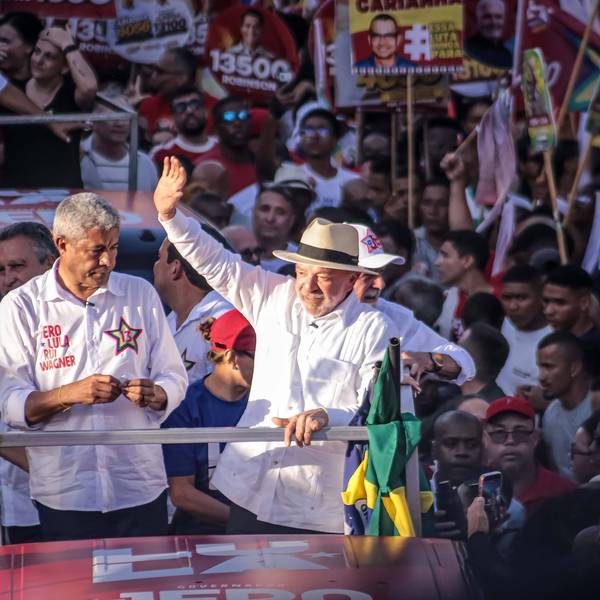
Even more critical will be the
presidential elections in Brazil in October. Brazil's emergence as an
economic powerhouse under Lula's leadership has underpinned the wider
changes across Latin America. Less radical than Chavez or Morales, the
Brazilian president has nevertheless also poured cash into anti-poverty
campaigns and provided vital support for the common project of
continental integration and independence.
Barred from standing for a third term, he has thrown his popularity behind his chief of staff Dilma Roussef, if anything more sympathetic to the Bolivarians. Unable to attack Lula's economic record, her main rightwing opponent, Jose Serra,
is now effectively running a campaign against Chavez and Morales,
denouncing Lula's support for them, his refusal to recognise the
post-coup government in Honduras and attempts to mediate between the
Iran and the US. So far that looks unlikely to work, and Serra is
trailing her badly in the polls.
If both Brazilian and Venezuelan
elections are won by the left, the US and its friends may be tempted to
look for other ways to divert Latin America from the path of
self-determination and social justice it took while George Bush was busy
fighting his enemies in the Muslim world. For all Barack Obama's
promise to "seek a new chapter of engagement" and warning that a
"terrible precedent" would be set if last year's bloody coup against the
reforming Honduran president Manuel Zelaya were allowed to stand, there
has been little change in US policy towards the region. The Honduran
coup was indeed allowed to stand - or, as Hillary Clinton put it, the
"crisis" was "managed to a successful conclusion".
The
clear message was that the radical tide can be turned and the fear is
now that another of the more vulnerable governments, such as Paraguay's
or Guatemala's, could also be "managed to a conclusion" in one form or
another. Meanwhile the US is attempting to shore up its military
presence on the continent, using the pretext of "counter-insurgency" to
station US forces in seven bases in Colombia.
But direct military
intervention looks implausible for the foreseeable future. If the
political and social movements that have driven the continent's
transformation can maintain their momentum and support, they won't only
be laying the foundation of an independent Latin America, but new forms
of socialist politics declared an impossibility in the modern era. Two
decades after we were told there was no alternative, another world is
being created.
Dear Common Dreams reader, It’s been nearly 30 years since I co-founded Common Dreams with my late wife, Lina Newhouser. We had the radical notion that journalism should serve the public good, not corporate profits. It was clear to us from the outset what it would take to build such a project. No paid advertisements. No corporate sponsors. No millionaire publisher telling us what to think or do. Many people said we wouldn't last a year, but we proved those doubters wrong. Together with a tremendous team of journalists and dedicated staff, we built an independent media outlet free from the constraints of profits and corporate control. Our mission has always been simple: To inform. To inspire. To ignite change for the common good. Building Common Dreams was not easy. Our survival was never guaranteed. When you take on the most powerful forces—Wall Street greed, fossil fuel industry destruction, Big Tech lobbyists, and uber-rich oligarchs who have spent billions upon billions rigging the economy and democracy in their favor—the only bulwark you have is supporters who believe in your work. But here’s the urgent message from me today. It's never been this bad out there. And it's never been this hard to keep us going. At the very moment Common Dreams is most needed, the threats we face are intensifying. We need your support now more than ever. We don't accept corporate advertising and never will. We don't have a paywall because we don't think people should be blocked from critical news based on their ability to pay. Everything we do is funded by the donations of readers like you. When everyone does the little they can afford, we are strong. But if that support retreats or dries up, so do we. Will you donate now to make sure Common Dreams not only survives but thrives? —Craig Brown, Co-founder |
Nearly two centuries after it won nominal independence and
Washington declared it a backyard, Latin America is standing up. The
tide of progressive change that has swept the continent for the past
decade has brought to power a string of social democratic and radical
socialist governments that have attacked social and racial privilege,
rejected neoliberal orthodoxy and challenged imperial domination of the
region.
Its significance is often underestimated or trivialised in
Europe and North America. But along with the rise of China, the
economic crash of 2008 and the demonstration of the limits of US power
in the "war on terror", the emergence of an independent Latin America is
one of a handful of developments reshaping the global order. From
Ecuador to Brazil, Bolivia to Argentina, elected leaders have turned
away from the IMF, taken back resources from corporate control, boosted
regional integration and carved out independent alliances across the
world.
Both the scale of the transformation and the
misrepresentation of what is taking place in the western media are
driven home in Oliver Stone's new film, South of the Border,
which allows six of these new wave leaders to speak for themselves.
Most striking is their mutual support and common commitment - from
Cristina Kirchner of Argentina to the more leftist Evo Morales - to take
back ownership of their continent.
Two crucial votes in the next
few weeks will put the future of this process to the test. The first are
parliamentary elections in Venezuela, whose Bolivarian revolution has
been at the cutting edge of Latin America's renewal since Hugo Chavez
was first elected president in 1998. For all his popularity at home,
Chavez has been the target for a campaign of vilification and ridicule
throughout the US, European and elite-controlled Latin American media -
which has little to do with his high-octane rhetoric and much more with
his effectiveness in using Venezuela's oil wealth to challenge US and
corporate power across the region.
Forget his success in slashing
the Venezuelan poverty rate in half, tripling social spending, rapidly
expanding healthcare and education, and fostering grassroots democracy
and worker participation. Since the beginning of the year Venezuela's
enemies have smelled blood as his government faltered in the face of
drought-triggered power cuts, a failure to ride out recession with a
stimulus package - as Morales's Bolivia did - and growing discontent
over high levels of violent crime.
So expect a flurry of new
claims that Chavez is a dictator who has stifled media freedom and
persecuted bankers and businessmen, and whose incompetent regime is
running into the sand. In reality the Venezuelan president has won more
free elections than any other world leader, the country's media are
dominated by the US-funded opposition, and his government's problems
with service delivery stem more from institutional weakness than
authoritarianism.
If Chavez's United Socialist party were defeated
next month it would certainly put his re-election in 2012 - and
Venezuela's radicalisation - in doubt. But that is looking increasingly
unlikely. The economy is picking up, a national police force is finally
being established and, crucially, Chavez last week dramatically defused
the threat of war with the pro-US government in Colombia through a
regionally brokered rapprochement.
Even more critical will be the
presidential elections in Brazil in October. Brazil's emergence as an
economic powerhouse under Lula's leadership has underpinned the wider
changes across Latin America. Less radical than Chavez or Morales, the
Brazilian president has nevertheless also poured cash into anti-poverty
campaigns and provided vital support for the common project of
continental integration and independence.
Barred from standing for a third term, he has thrown his popularity behind his chief of staff Dilma Roussef, if anything more sympathetic to the Bolivarians. Unable to attack Lula's economic record, her main rightwing opponent, Jose Serra,
is now effectively running a campaign against Chavez and Morales,
denouncing Lula's support for them, his refusal to recognise the
post-coup government in Honduras and attempts to mediate between the
Iran and the US. So far that looks unlikely to work, and Serra is
trailing her badly in the polls.
If both Brazilian and Venezuelan
elections are won by the left, the US and its friends may be tempted to
look for other ways to divert Latin America from the path of
self-determination and social justice it took while George Bush was busy
fighting his enemies in the Muslim world. For all Barack Obama's
promise to "seek a new chapter of engagement" and warning that a
"terrible precedent" would be set if last year's bloody coup against the
reforming Honduran president Manuel Zelaya were allowed to stand, there
has been little change in US policy towards the region. The Honduran
coup was indeed allowed to stand - or, as Hillary Clinton put it, the
"crisis" was "managed to a successful conclusion".
The
clear message was that the radical tide can be turned and the fear is
now that another of the more vulnerable governments, such as Paraguay's
or Guatemala's, could also be "managed to a conclusion" in one form or
another. Meanwhile the US is attempting to shore up its military
presence on the continent, using the pretext of "counter-insurgency" to
station US forces in seven bases in Colombia.
But direct military
intervention looks implausible for the foreseeable future. If the
political and social movements that have driven the continent's
transformation can maintain their momentum and support, they won't only
be laying the foundation of an independent Latin America, but new forms
of socialist politics declared an impossibility in the modern era. Two
decades after we were told there was no alternative, another world is
being created.
Nearly two centuries after it won nominal independence and
Washington declared it a backyard, Latin America is standing up. The
tide of progressive change that has swept the continent for the past
decade has brought to power a string of social democratic and radical
socialist governments that have attacked social and racial privilege,
rejected neoliberal orthodoxy and challenged imperial domination of the
region.
Its significance is often underestimated or trivialised in
Europe and North America. But along with the rise of China, the
economic crash of 2008 and the demonstration of the limits of US power
in the "war on terror", the emergence of an independent Latin America is
one of a handful of developments reshaping the global order. From
Ecuador to Brazil, Bolivia to Argentina, elected leaders have turned
away from the IMF, taken back resources from corporate control, boosted
regional integration and carved out independent alliances across the
world.
Both the scale of the transformation and the
misrepresentation of what is taking place in the western media are
driven home in Oliver Stone's new film, South of the Border,
which allows six of these new wave leaders to speak for themselves.
Most striking is their mutual support and common commitment - from
Cristina Kirchner of Argentina to the more leftist Evo Morales - to take
back ownership of their continent.
Two crucial votes in the next
few weeks will put the future of this process to the test. The first are
parliamentary elections in Venezuela, whose Bolivarian revolution has
been at the cutting edge of Latin America's renewal since Hugo Chavez
was first elected president in 1998. For all his popularity at home,
Chavez has been the target for a campaign of vilification and ridicule
throughout the US, European and elite-controlled Latin American media -
which has little to do with his high-octane rhetoric and much more with
his effectiveness in using Venezuela's oil wealth to challenge US and
corporate power across the region.
Forget his success in slashing
the Venezuelan poverty rate in half, tripling social spending, rapidly
expanding healthcare and education, and fostering grassroots democracy
and worker participation. Since the beginning of the year Venezuela's
enemies have smelled blood as his government faltered in the face of
drought-triggered power cuts, a failure to ride out recession with a
stimulus package - as Morales's Bolivia did - and growing discontent
over high levels of violent crime.
So expect a flurry of new
claims that Chavez is a dictator who has stifled media freedom and
persecuted bankers and businessmen, and whose incompetent regime is
running into the sand. In reality the Venezuelan president has won more
free elections than any other world leader, the country's media are
dominated by the US-funded opposition, and his government's problems
with service delivery stem more from institutional weakness than
authoritarianism.
If Chavez's United Socialist party were defeated
next month it would certainly put his re-election in 2012 - and
Venezuela's radicalisation - in doubt. But that is looking increasingly
unlikely. The economy is picking up, a national police force is finally
being established and, crucially, Chavez last week dramatically defused
the threat of war with the pro-US government in Colombia through a
regionally brokered rapprochement.
Even more critical will be the
presidential elections in Brazil in October. Brazil's emergence as an
economic powerhouse under Lula's leadership has underpinned the wider
changes across Latin America. Less radical than Chavez or Morales, the
Brazilian president has nevertheless also poured cash into anti-poverty
campaigns and provided vital support for the common project of
continental integration and independence.
Barred from standing for a third term, he has thrown his popularity behind his chief of staff Dilma Roussef, if anything more sympathetic to the Bolivarians. Unable to attack Lula's economic record, her main rightwing opponent, Jose Serra,
is now effectively running a campaign against Chavez and Morales,
denouncing Lula's support for them, his refusal to recognise the
post-coup government in Honduras and attempts to mediate between the
Iran and the US. So far that looks unlikely to work, and Serra is
trailing her badly in the polls.
If both Brazilian and Venezuelan
elections are won by the left, the US and its friends may be tempted to
look for other ways to divert Latin America from the path of
self-determination and social justice it took while George Bush was busy
fighting his enemies in the Muslim world. For all Barack Obama's
promise to "seek a new chapter of engagement" and warning that a
"terrible precedent" would be set if last year's bloody coup against the
reforming Honduran president Manuel Zelaya were allowed to stand, there
has been little change in US policy towards the region. The Honduran
coup was indeed allowed to stand - or, as Hillary Clinton put it, the
"crisis" was "managed to a successful conclusion".
The
clear message was that the radical tide can be turned and the fear is
now that another of the more vulnerable governments, such as Paraguay's
or Guatemala's, could also be "managed to a conclusion" in one form or
another. Meanwhile the US is attempting to shore up its military
presence on the continent, using the pretext of "counter-insurgency" to
station US forces in seven bases in Colombia.
But direct military
intervention looks implausible for the foreseeable future. If the
political and social movements that have driven the continent's
transformation can maintain their momentum and support, they won't only
be laying the foundation of an independent Latin America, but new forms
of socialist politics declared an impossibility in the modern era. Two
decades after we were told there was no alternative, another world is
being created.